

Removing your upper cabinets is either the best decision you’ll make in a kitchen remodel, or the one you’ll regret every dusty Tuesday morning.
Open shelves in a kitchen change how the space looks, how it functions, and how much it costs to renovate. They are not a neutral choice.
This guide covers everything that actually matters: materials, bracket systems, shelf load capacity, styling principles, wall treatments, design styles, and honest comparisons with closed cabinetry. Including what works for renters.
By the end, you will know exactly whether open kitchen shelving fits your household, and how to do it right if it does.
What Are Open Shelves in a Kitchen?
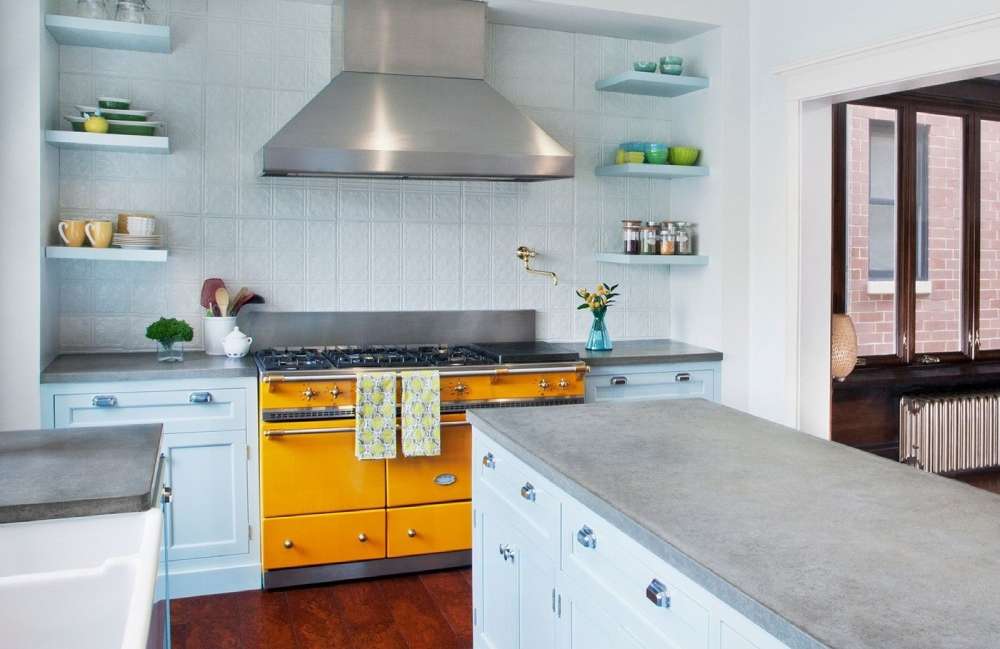
Image source: Randall Architects.
Open kitchen shelves are wall-mounted or freestanding storage surfaces with no doors, no frames, and no enclosures. Everything stored on them stays fully visible at all times.
They serve 2 purposes at once: active, accessible storage for daily-use items and a display surface for dishware, cookbooks, and decorative pieces. That dual function is what separates them from standard upper cabinets, which are purely storage.
The contrast with closed cabinetry is structural. Upper cabinets add visual weight to a kitchen wall. Open shelves remove it. That shift in visual mass is why a kitchen with floating shelves often reads as larger and more open, particularly in narrow or low-ceiling spaces.
Open shelving is not a recent invention. Pre-cabinet kitchens relied entirely on open wall shelves and plate racks for storage. The modern version, floating shelves with concealed brackets, is a refinement of that same idea applied to contemporary kitchen design.
They appear across multiple interior design styles: Scandinavian kitchens use light wood and negative space, industrial kitchens use metal brackets and raw-edge wood, and farmhouse kitchens use reclaimed timber with ceramic dishware.
The core definition stays consistent across all of them: an open shelf is a horizontal surface fixed to a wall, holding items in plain sight, with nothing to close.
What Are the Real Advantages of Open Kitchen Shelving?
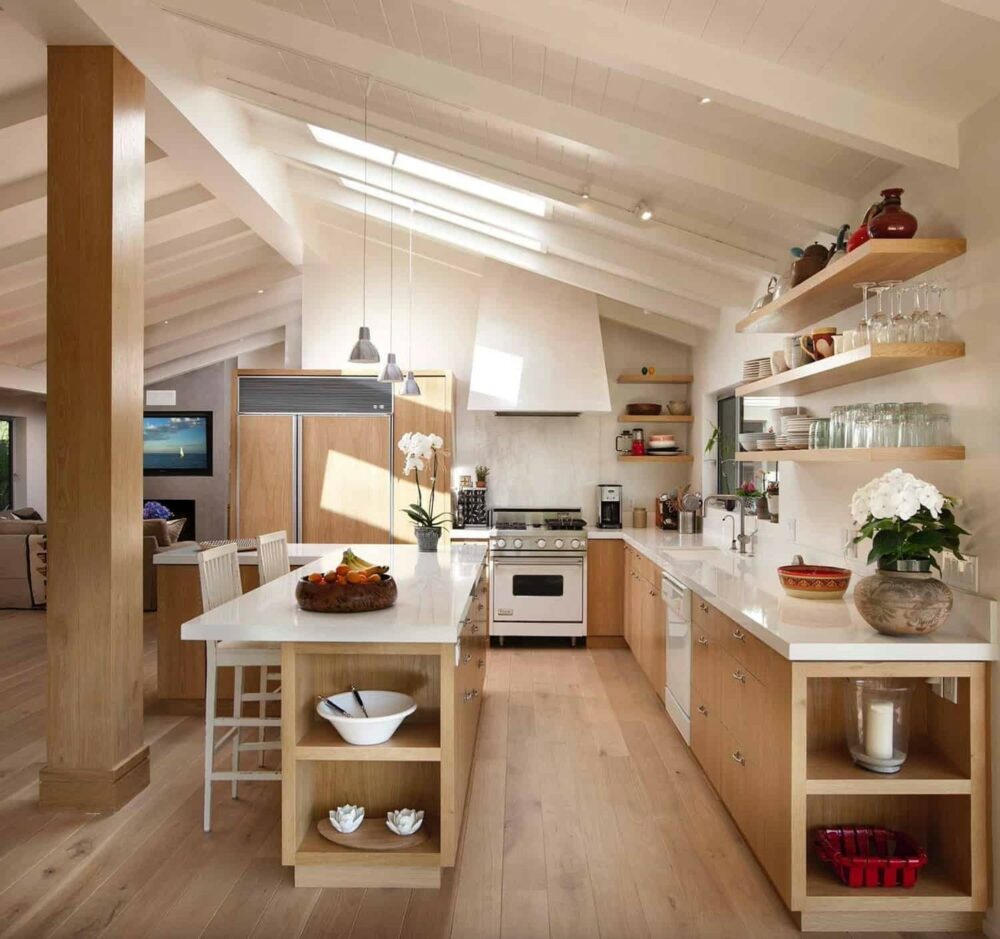
Image source: Allen Construction
Open shelves deliver 3 practical benefits that closed cabinetry cannot: faster item access, a more open visual feel, and lower cost. Those are not aesthetic claims. They are functional ones.
According to Fixr.com’s 2024 Kitchen Trends report, 17% of design professionals still name open shelving as a significant kitchen trend, even as preferences shift toward hidden storage in some segments.
How Do Open Shelves Affect Kitchen Space Perception?
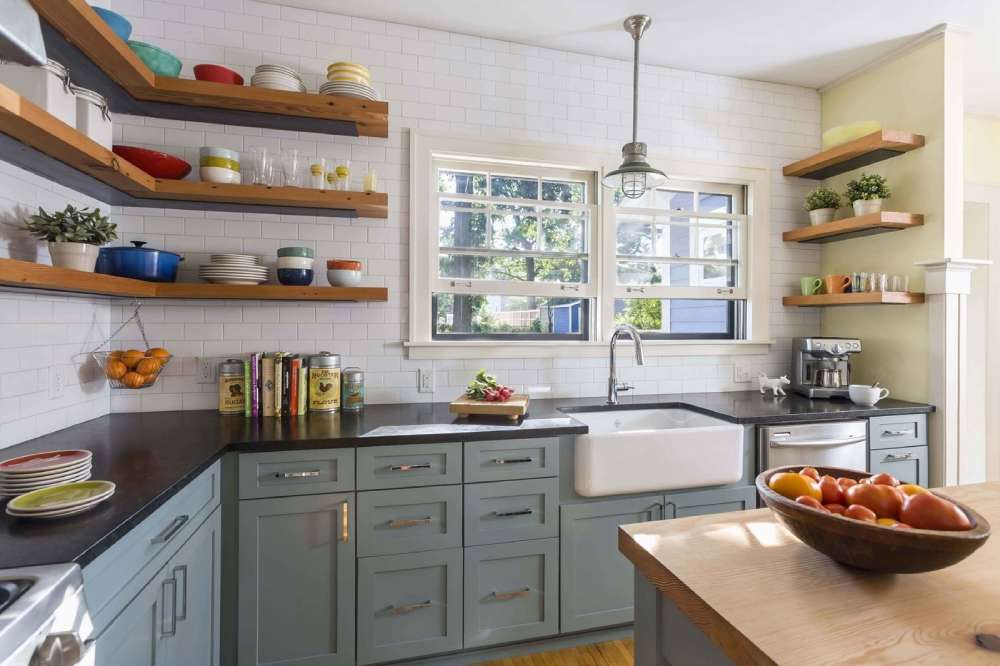
Image source: Sicora Design/Build
Visual weight matters. Solid upper cabinet doors block sightlines and make walls feel closer. Open shelves keep the wall visible behind the objects, which maintains depth perception across the room.
This effect is especially clear in kitchens under 120 square feet. Removing even one run of upper cabinets and replacing it with floating shelves changes the proportional feel of the entire wall.
- Recommended shelf depth for small kitchens: 10 to 12 inches
- Light-colored shelf materials amplify the effect on narrow walls
- Consistent dishware sets reduce visual noise on display shelves
- Negative space between objects is intentional, not wasted
The Houzz 2024 U.S. Kitchen Trends Study found 43% of homeowners planned open-concept kitchen layouts in 2024, up from 40% in 2023. Open shelving supports that preference directly by removing the visual barrier of cabinet doors.
Do Open Shelves Reduce Kitchen Renovation Costs?
Cost difference: significant. Tasting Table’s analysis puts open shelving at $50 to $100 per shelf, or roughly $1,500 total for a full kitchen installation. Custom upper cabinetry runs from $4,000 for prefab stock to $12,000 or more for custom builds.
Switching from upper cabinets to open shelves on one wall can save between $2,500 and $10,000, depending on material choice and how much cabinetry is being replaced (Tasting Table, 2024).
Less material, simpler installation, and no door hardware contribute to that gap. The trade-off is storage volume and dust protection.
Does Everyday Accessibility Actually Improve?
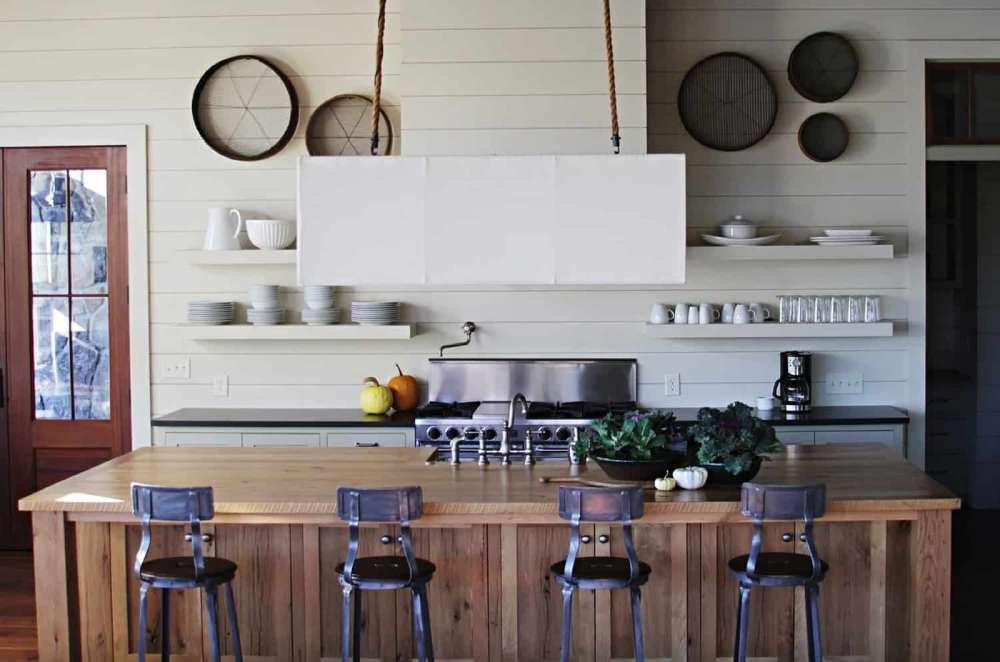
Image source: Summerour & Associates Interior
Yes. Items on open shelves require zero searching. No opening, no reaching past other objects behind a door, no guessing which cabinet holds the right glass.
For households that cook daily, that friction reduction adds up. Unloading the dishwasher is faster when items go directly back onto a visible shelf. Guests can find a mug without asking.
The limit is obvious: items that look good on a shelf stay there. Items that don’t, or that are rarely used, belong behind closed doors. Open shelving works best as part of a hybrid layout, not as a complete replacement for all upper storage.
What Are the Disadvantages of Open Kitchen Shelves?
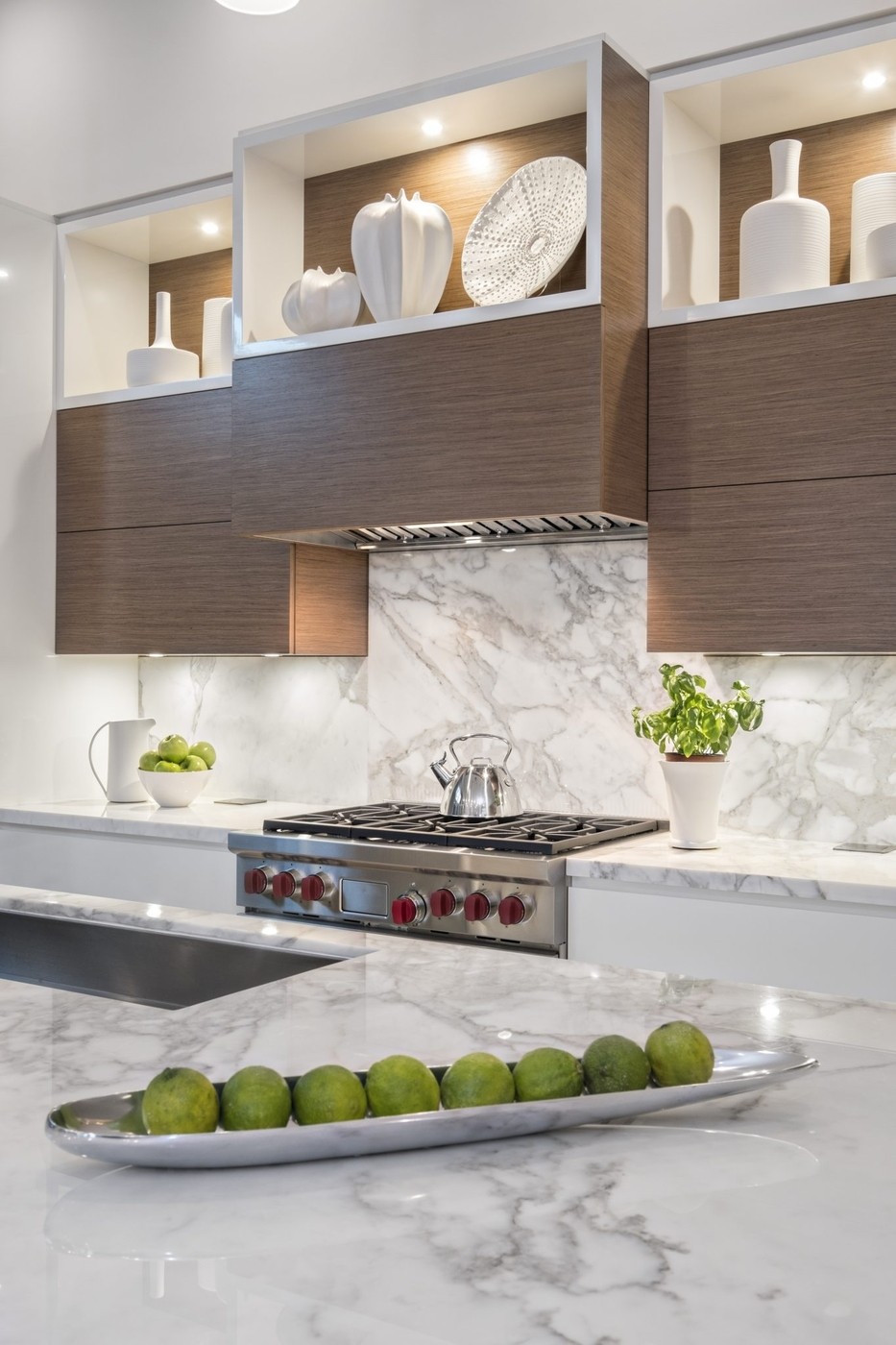
Image source: Hubley Design Interiors
The practical downsides of open kitchen shelving are real, consistent, and underreported in design content that focuses only on aesthetics.
Fixr.com’s 2024 Kitchen and Bathroom Trends Report found that 53% of designers called “hidden storage” a top trend in 2023, citing open shelving’s maintenance demands as the primary reason for the shift. That is not a small signal.
How Quickly Does Dust and Grease Build Up?
Kitchen grease is the bigger problem. Airborne cooking fat settles on every horizontal surface. Open shelves near a stovetop without adequate ventilation collect a sticky residue that bonds with dust.
A weekly wipe-down is realistic for display-only shelves. Shelves holding actively used dishware near a cooking zone need attention every 2 to 3 days.
- Shelves above or adjacent to a stovetop: highest grease exposure
- Shelves on the opposite wall from cooking: moderate dust only
Interior designer Bree Steele, trade accounts manager at RJ Living, noted in The Kitchn (2024): open shelving is “particularly noted for its impracticality in everyday use due to dust and clutter.”
What Does “Constant Organization” Actually Require?
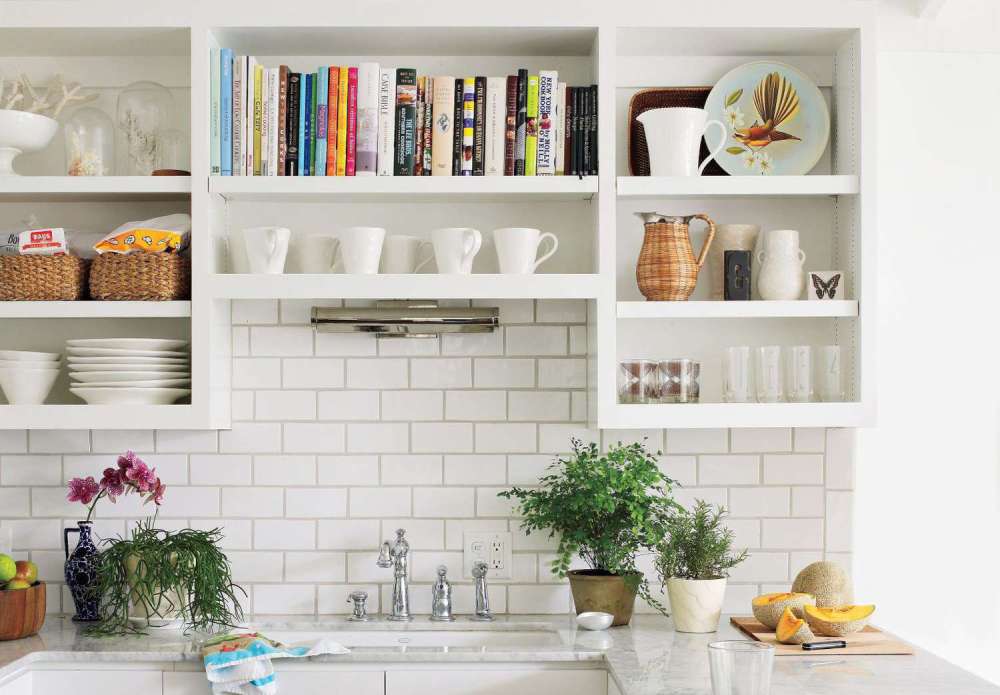
Image source: ALEXANDRA ROWLEY
Every item on an open shelf is visible to everyone in the room, all the time. That is the appeal and the problem.
Mismatched containers, stacked lids, random utensils, half-empty bottles: all of it shows. Closed cabinets hide disorganization behind doors. Open shelves make it the focal point of the kitchen.
This is not a styling problem. It is a behavioral one. Households that cook frequently and store varied items in their kitchen will find open shelving stressful to maintain. Households with curated, consistent dishware sets will find it easy.
Are There Kitchens Where Open Shelves Simply Don’t Work?
3 situations where open shelves reliably underperform:
| Kitchen Context | Why Open Shelves Fail | Better Option |
|---|---|---|
| Heavy daily cooking, no range hood | Aerosolized grease combines with ambient dust to create a sticky film on every exposed dish and surface. | Closed cabinetry, or restrictive open shelving placed far away from the active cooking zone. |
| Large, mixed dishware collection | Mismatched branding, colors, and shapes create immediate visual clutter, disrupting the intended clean aesthetic. | Glass-front upper cabinets (fluted or frosted glass) or fully solid closed storage. |
| Households with young children | Lower-tier shelves present a safety hazard with accessible breakables and require constant safety reorganization. | Secure closed lower cabinets, restricting open shelving exclusively to high-level accent zones. |
What Materials Are Used for Open Kitchen Shelves?
Material choice determines 3 things: shelf load capacity, moisture resistance, and how the shelf ages in a kitchen environment. Each material performs differently on all 3.
Wood-based materials hold 44% of the kitchen furniture and fixture market (Global Market Insights, 2023), driven by their versatility across different kitchen aesthetics and finish options.
Which Wood Type Performs Best in a Kitchen?
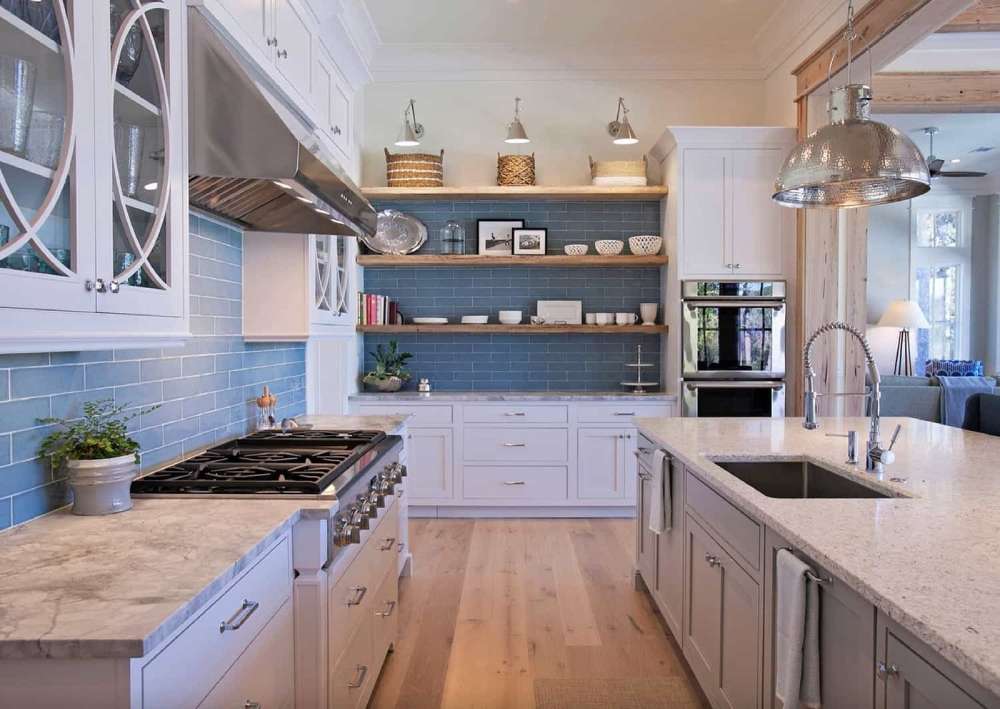
Image source: Holmes + Salter Interiors
Plywood is the most reliable choice for kitchen open shelves that will hold real weight. A 30-inch plywood shelf at 10 inches deep handles approximately 90 pounds before acceptable sag thresholds are crossed (WoodBin Sagulator data). That covers ceramic dishware, cast iron, and filled glass jars without concern.
Solid hardwood performs similarly to plywood for load but adds natural grain character. It requires sealing in kitchens with steam or humidity variation.
MDF holds 40 to 60 pounds per shelf when properly installed (No Minimalist Here, 2024). It is moisture-vulnerable at cut edges, which makes it a poor choice near sinks or stovetops without sealed edges.
What Are the Material Trade-Offs by Shelf Type?
| Material | Load Capacity | Moisture Resistance | Best For |
|---|---|---|---|
| Plywood (3/4 in+) | High (~90 lbs / 30 in span) | Good (when sealed with a proper topcoat or lacquer) | Heavy dishware, cast iron pots, and high-use storage. |
| Solid Hardwood | High | Moderate (susceptible to warping; requires proper sealing) | Farmhouse, traditional, and rustic kitchen styles. |
| MDF (Medium-Density Fireboard) | Medium (40–60 lbs) | Poor (raw edges swell easily if exposed to steam or leaks) | Lightweight display shelves and minimalist painted designs. |
| Reclaimed Wood | Variable by species | Requires comprehensive sealing due to natural porous cracks | Industrial aesthetics, accent shelving, and rustic kitchens. |
| Metal (Steel/Iron) | Very High | Excellent (when powder-coated or rust-treated) | Industrial-style spaces, commercial setups, and ultra-heavy loads. |
What Shelf Thickness Is Needed for Kitchen Use?
Minimum 3/4 inch for display shelves. 1 inch or thicker for shelves holding ceramics, cookbooks, or cast iron.
Fine Woodworking engineering data confirms that going from 3/4 inch to 1 inch thickness reduces shelf sag by a factor of 2.3 under identical loads. That is not a marginal improvement.
Bracket spacing matters as much as thickness. Place brackets every 24 to 32 inches maximum. Beyond 32 inches without a center support, visible sag develops under normal kitchen loads regardless of material.
Reclaimed wood shelves vary in density by species. Oak and maple reclaimed boards perform near solid hardwood. Pine reclaimed boards are softer and require thicker stock to compensate.
What Bracket and Mounting Systems Support Open Kitchen Shelves?
The bracket system determines whether a shelf stays on the wall permanently or pulls out under load. Material choice means nothing if the mounting fails.
KCMA (Kitchen Cabinet Manufacturers Association) standards require wall-mounted shelving to support 15 pounds per square foot of shelf space without sagging or failure. That threshold is the minimum. Kitchen shelves holding ceramic dishware and glassware routinely exceed it.
What Is the Difference Between Floating and Bracket-Mounted Systems?
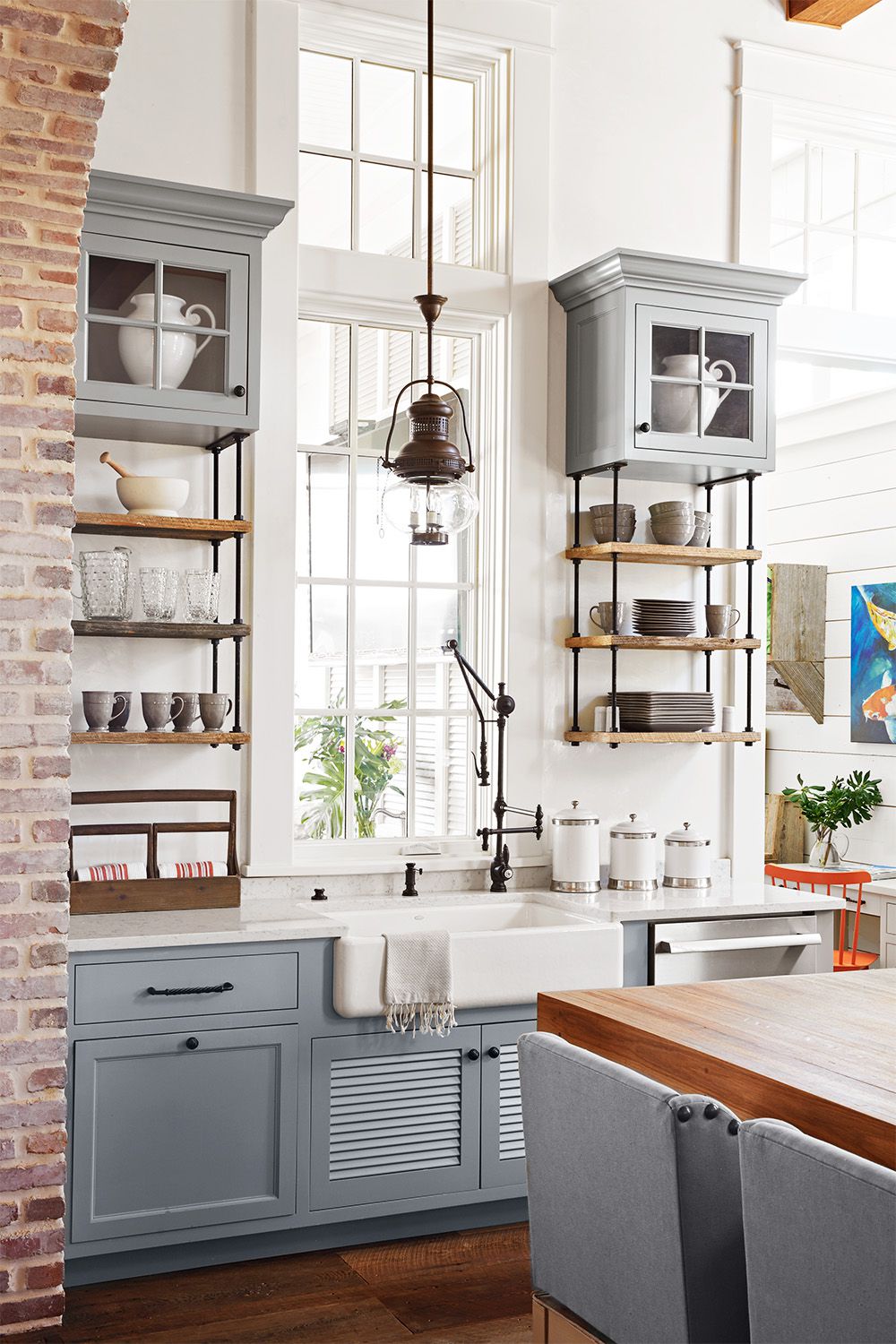
Floating shelves use a hidden rod or metal plate system drilled directly into the wall. The shelf slides over the hardware, making the mounting invisible from the outside.
Weight limit: 30 to 50 pounds per shelf on a floating system anchored into wall studs. That ceiling drops sharply if anchors go into drywall only, not studs. Floating systems fail silently: no visible bracket bending, just a pulled-out shelf.
Visible bracket systems (L-brackets, pipe and flange) carry higher loads because the bracket distributes weight along its full length. Industrial pipe systems are popular in rustic industrial kitchens precisely because exposed hardware becomes part of the aesthetic and the load capacity increases substantially.
When Do You Need Wall Studs vs. Toggle Bolts?
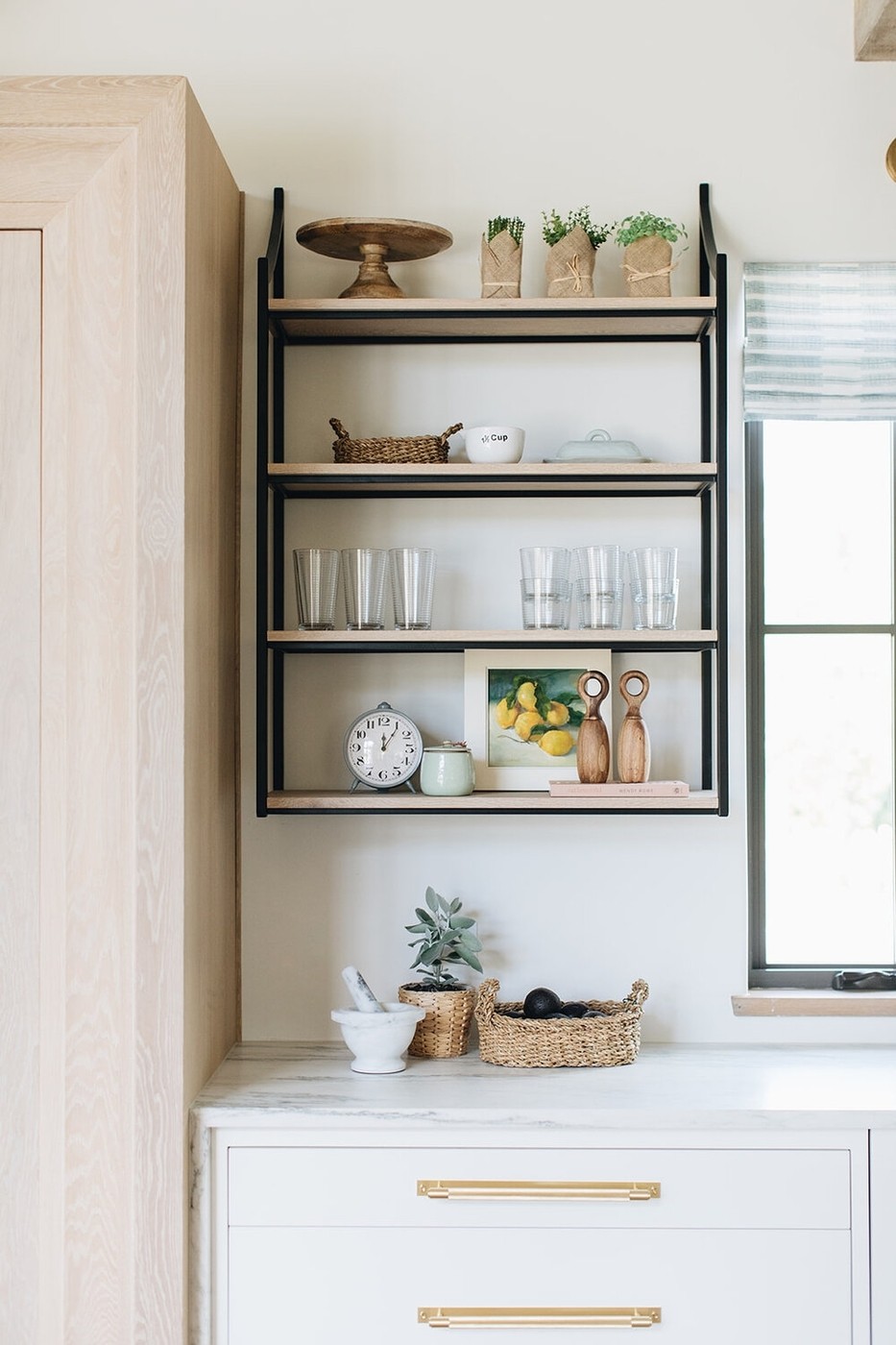
Image source: Kate Marker Interiors
Any shelf holding more than 20 pounds requires stud mounting. No exceptions.
Toggle bolts (also called butterfly anchors) work for lightweight display shelves under 15 to 20 pounds total load. They distribute pull force across drywall but have no resistance to downward shear under heavy weight over time.
- Studs: required for shelves with dishware, cookbooks, or any ceramic items
- Toggle bolts: acceptable for 1 to 3 decorative items only
- Stud spacing in US construction: 16 inches on center standard
- Always use a stud finder before drilling. Guessing costs a shelf and wall repair.
IKEA BERGSHULT paired with SANDSHULT brackets is a widely used reference point: rated for approximately 33 pounds per bracket pair when mounted into studs. Practical for lighter open shelf applications in rental kitchens or low-load display areas.
How Do You Style Open Kitchen Shelves Without Clutter?
The single biggest reason open shelves fail visually is not the shelf. It is what goes on it.
A 2024 survey from the National Kitchen and Bath Association found 68% of new kitchen builds in the US defaulted back to closed upper cabinets, with visual clutter from open shelves cited as a contributing factor. That is a styling problem as much as a practical one.
What Styling Principles Actually Work?
Three rules that hold across every kitchen style:
- 60-30-10 split: 60% functional items (everyday dishware), 30% grouped decorative objects, 10% single statement pieces or plants
- Odd-number groupings: 3 or 5 objects read as intentional. 2 or 4 read as incomplete or accidental.
- Negative space: Leave visible gaps. A shelf filled edge to edge looks like a warehouse, not a kitchen.
Matching dishware sets are the fastest route to a clean-looking open shelf. Well, the thing is: even two shelves of mismatched mugs can work if they share a color family. It is about visual cohesion, not uniformity.
What Items Work Best on Open Kitchen Shelves?
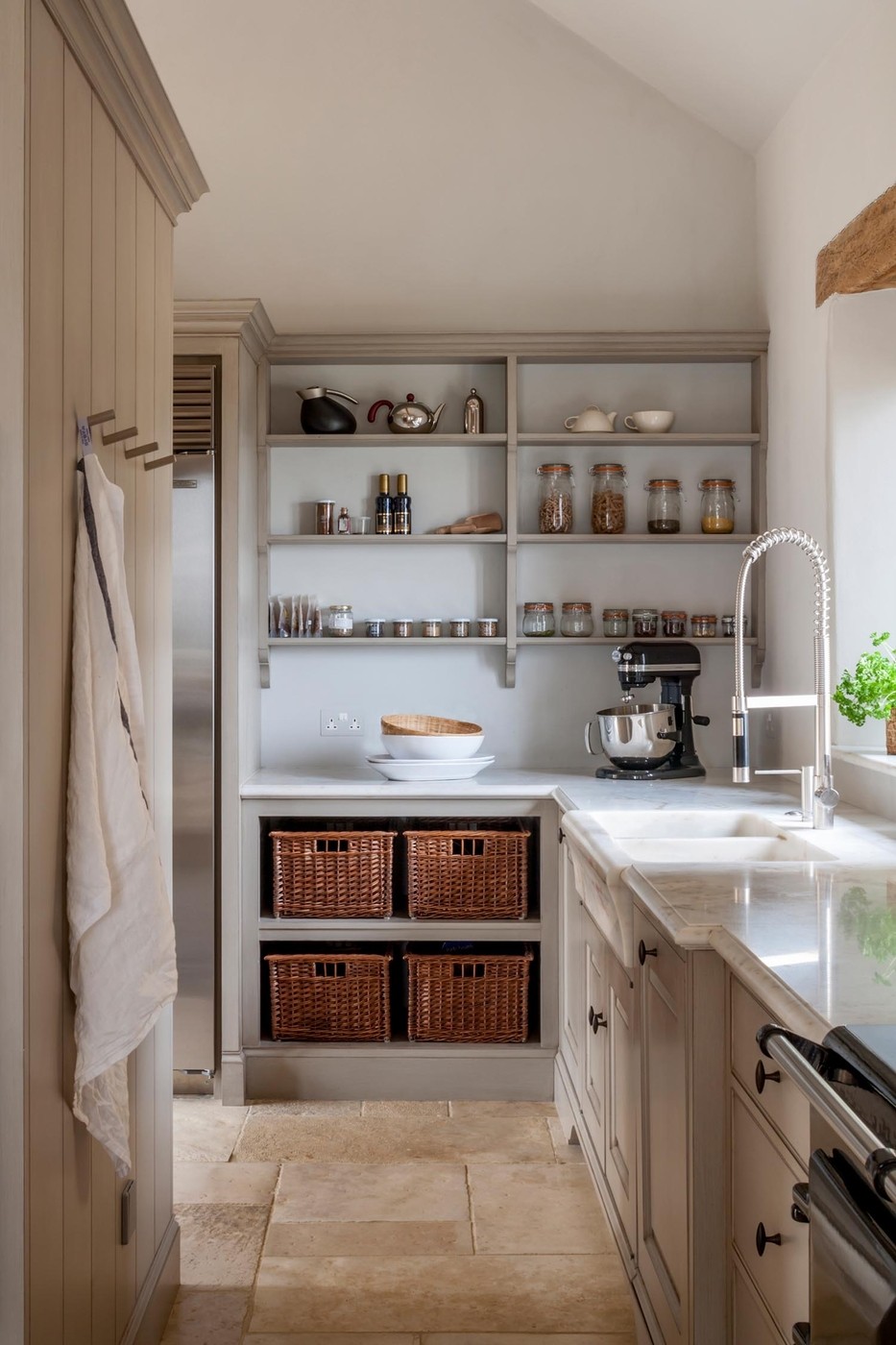
Items that earn shelf space: used daily, visually consistent, or genuinely decorative.
- Matching ceramic or stoneware sets
- Glass jars filled with dry goods (pasta, grains, legumes)
- Small potted herbs or trailing plants
- Cookbooks with spines facing outward
What doesn’t work: mismatched plastic containers, appliances used twice a year, random lids without their containers. Those belong in a closed cabinet or a drawer. Open shelving is selective storage, not a catch-all.
How Do You Keep Open Shelves Looking Clean Daily?
A consistent routine matters more than deep cleaning sessions.
Weekly minimum: wipe down shelves and all items with a damp microfiber cloth. In kitchens with active cooking, twice weekly near the cooking zone. Shelf liner materials (silicone, cork) reduce direct grease contact with the shelf surface and cut cleaning time.
Group items on small trays where possible. A tray holding 4 items counts as 1 object to move during cleaning. Without trays, cleaning around individual items on a full shelf takes 3 to 4 times longer.
What Are the Most Common Open Shelf Kitchen Designs?
Open shelving looks different depending on which design style it sits within. The shelf itself is the same object. The material, bracket, wall color, and what goes on it changes everything.
According to Fixr’s 2024 report, 73% of design experts identified wood as the most on-trend cabinetry and shelving material. Natural finishes were preferred by 67% of professionals surveyed. That preference runs directly through every shelf style listed below.
Scandinavian Open Shelf Kitchens
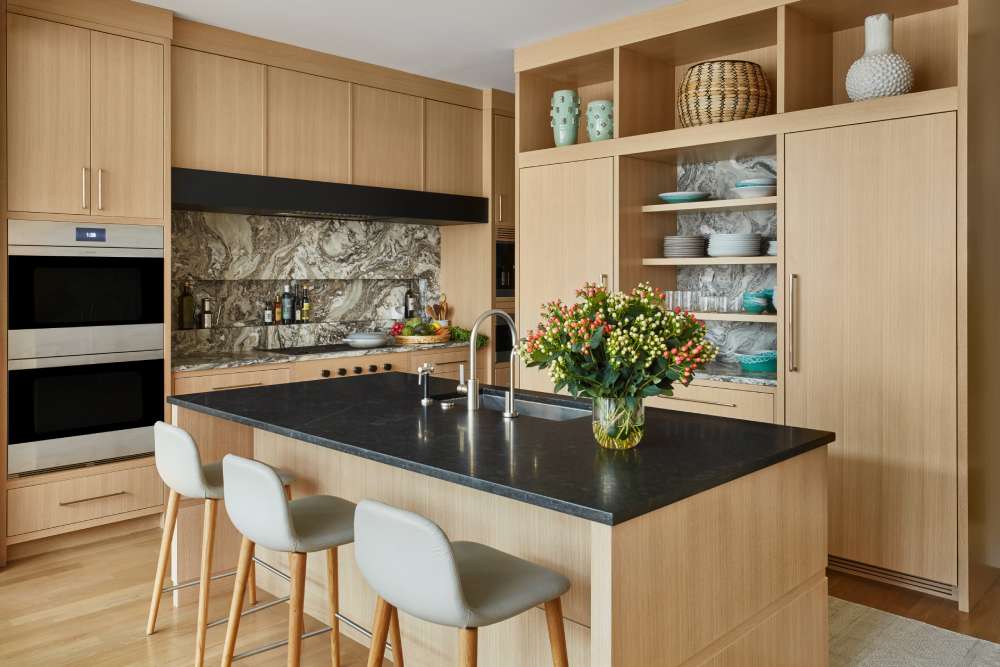
Image source: Cari Giannoulias Design
Light oak or birch shelves. White or warm-grey walls. Very few objects on each shelf with deliberate negative space between them.
The Scandinavian approach to open shelving is almost architectural. The shelf itself is as important as what’s on it. Bracket choice: minimal or concealed. Items: matching sets only, small plants, a single ceramic object.
This style suits kitchens that double as dining or living areas in open-plan layouts, where visual calm across the whole space matters.
Industrial Open Shelf Kitchens
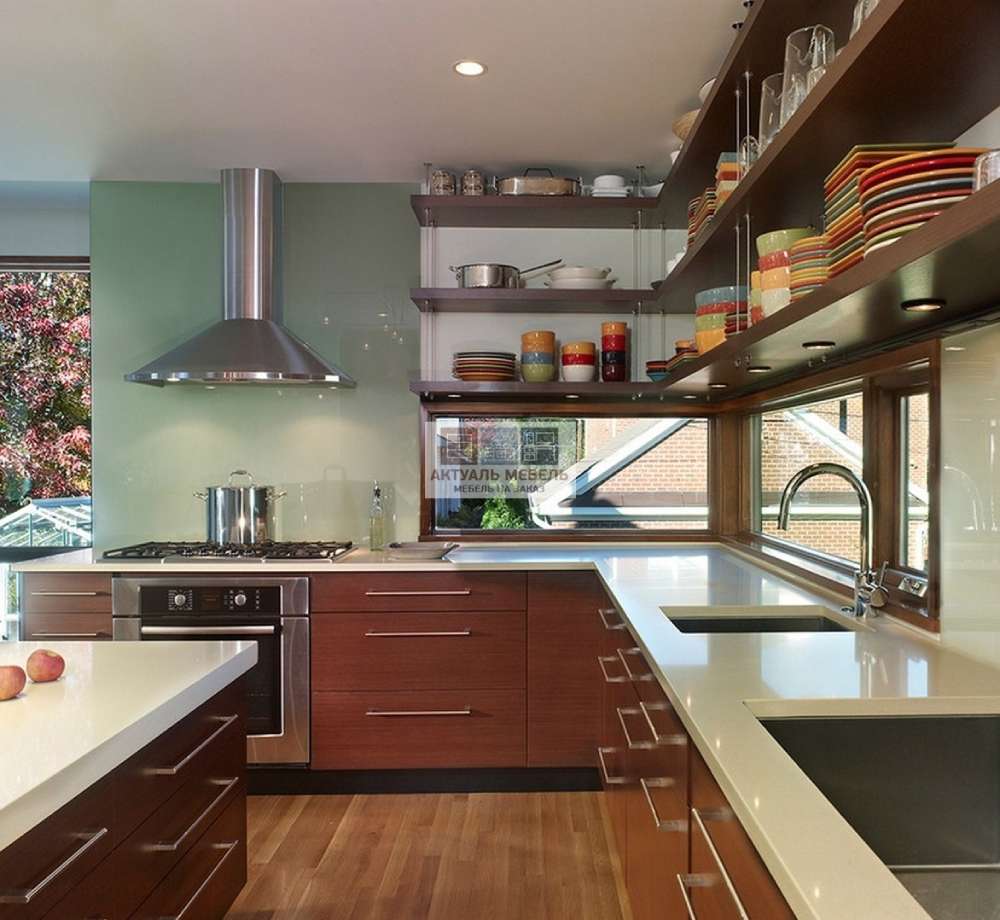
Image source: Thorsen Construction
Material pairing defines this style: dark-stained wood or concrete shelves on exposed pipe-and-flange bracket systems. The hardware is not hidden. It is the point.
Wall treatment behind industrial shelves: exposed brick, raw concrete, or matte dark paint. Items on the shelves trend toward functional over decorative: cast iron, heavy ceramics, stacked plates, glass storage jars.
Load capacity is the strongest argument for pipe-and-flange systems. A 3/4-inch pipe bracket pair mounted into studs comfortably holds 50 to 75 pounds per shelf, making it practical for heavy kitchen loads.
Farmhouse Open Shelf Kitchens
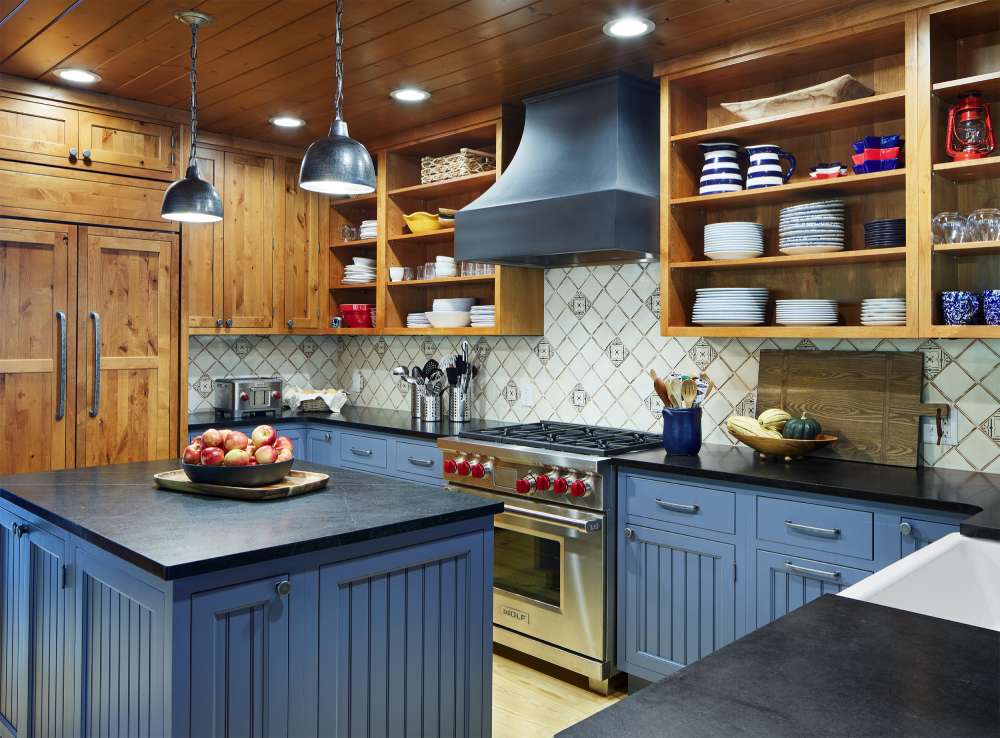
Image source: Charlie & Co. Design, Ltd
Reclaimed wood or thick-cut pine. Chunky visible brackets, often in matte black or raw iron. Dishware leans toward hand-thrown pottery, crockery, and woven baskets.
The farmhouse kitchen version of open shelving is the most tactile of the 5 styles. Texture variation is the goal: rough wood grain against smooth ceramics, iron brackets against whitewashed walls.
A note from real use: rustic shelving in this style photographs beautifully but requires more frequent dusting because the rough surface of reclaimed wood traps particles faster than sealed hardwood.
Modern Minimalist Open Shelf Kitchens
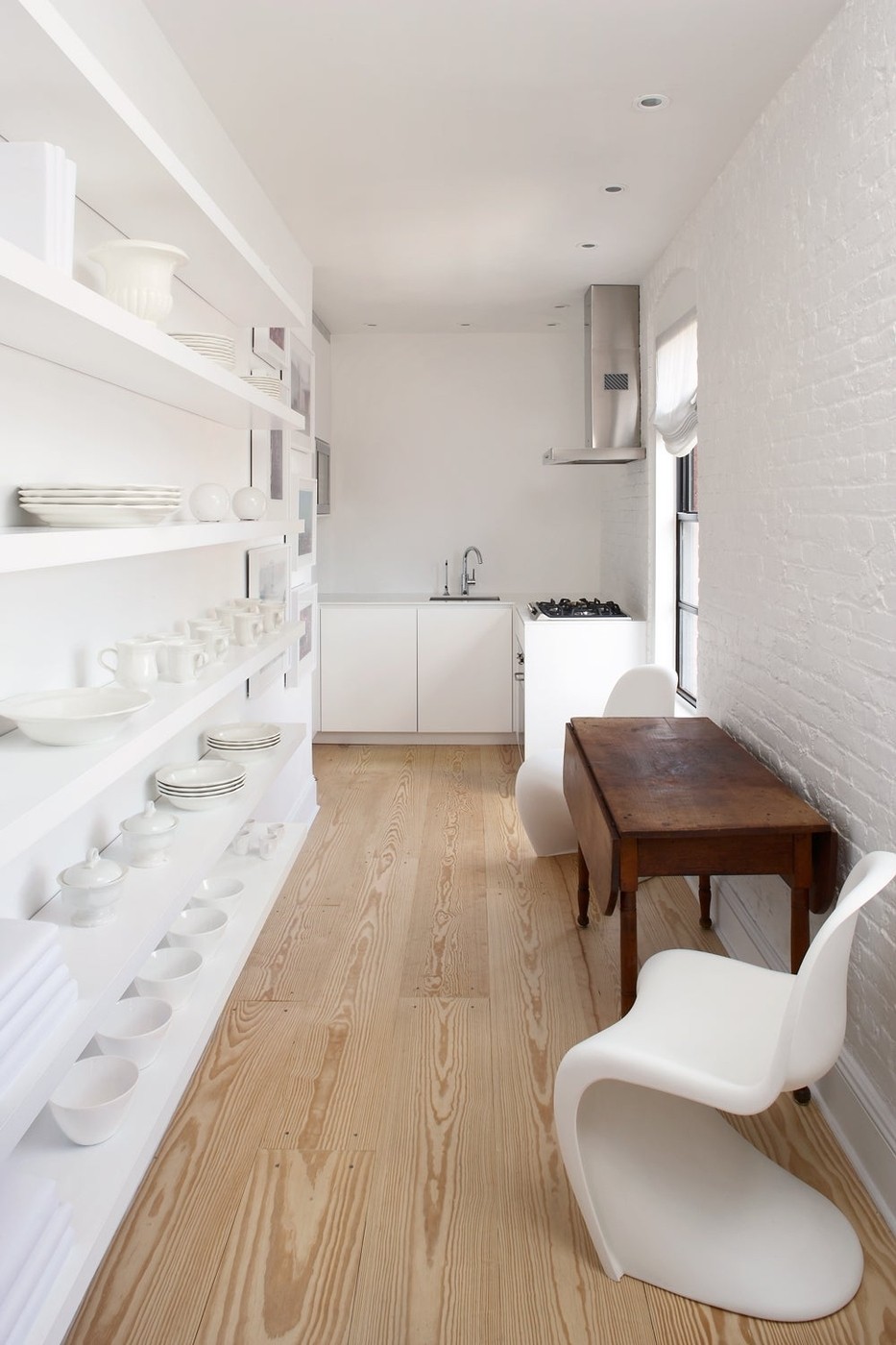
Image source: Magdalena Keck Interior Design
Monochromatic. Flush-mounted floating shelves with completely hidden brackets. No visible hardware of any kind.
Color discipline is strict here. Shelf, wall, and most items stay within the same tonal range. A single contrasting object, one dark ceramic or one plant, provides the only visual break. Everything else matches or disappears.
This style suits the minimalist kitchen approach directly: fewer items on fewer shelves, with more wall visible than shelf surface.
Mediterranean Open Shelf Kitchens
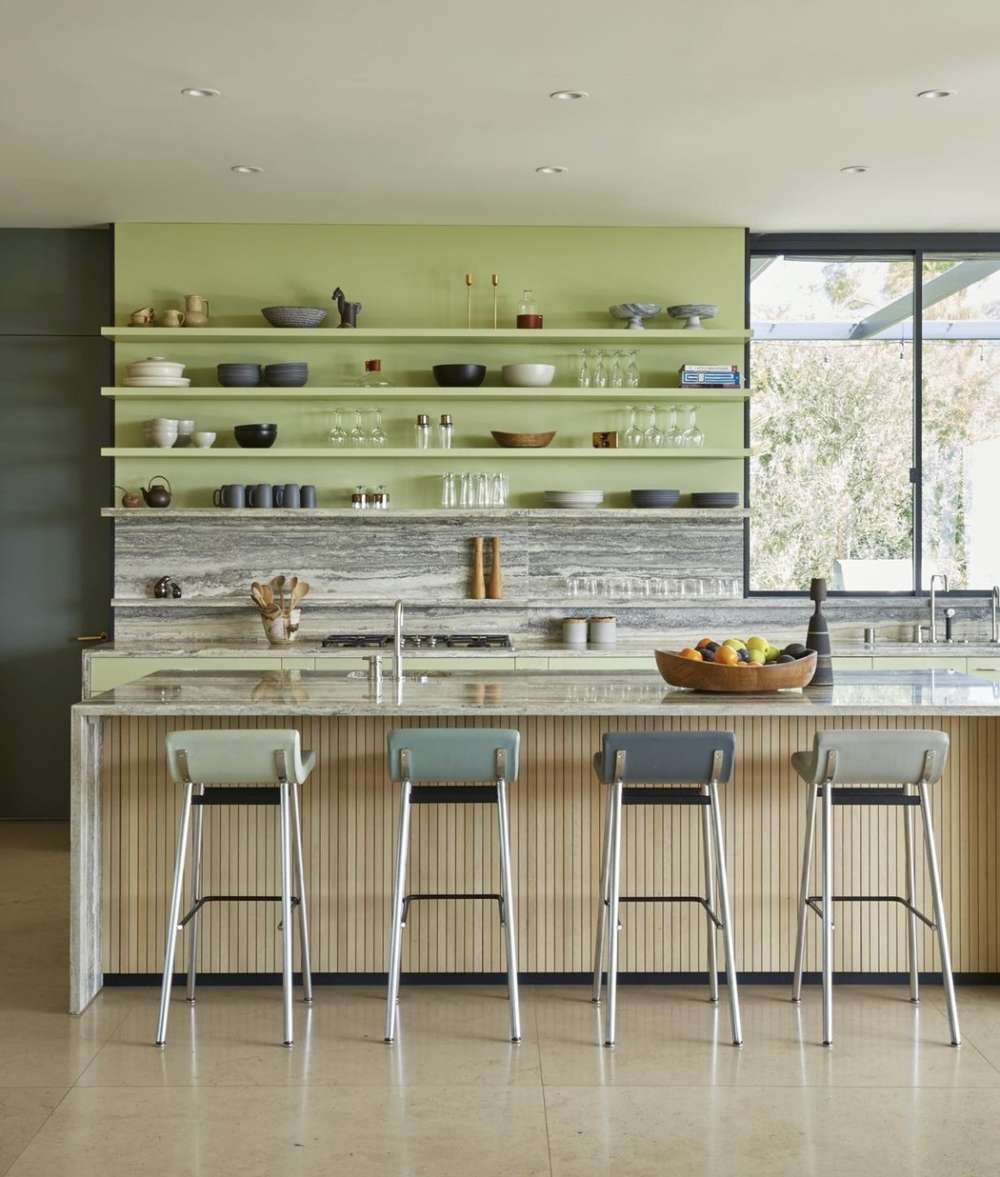
Arched wall niches with built-in shelves. Hand-painted ceramic dishware. Terracotta tones on walls and on the shelf surfaces themselves.
The Mediterranean kitchen version of open shelving is the most architecturally integrated. Shelves are often built into the wall structure rather than mounted onto it. That distinction changes both the look and the load capacity significantly.
Items on display lean toward artisan and regional objects: olive oil bottles, hand-thrown bowls, glazed tiles used as shelf liners. Color is abundant. Negative space is less important than richness.
How Do Open Shelves Compare to Upper Cabinets in Kitchen Design?

Open shelves and upper cabinets are not competing solutions. They serve different households, different cooking habits, and different resale goals.
A Rocket Homes survey found 55% of potential buyers will choose a property specifically for its kitchen quality, with cabinetry cited as one of the most influential features in that decision (House Digest, 2024).
| Factor | Open Shelves | Upper Cabinets |
|---|---|---|
| Cost (Installed) | ~$1,500 total | $4,000 – $12,000+ |
| Storage Volume | Lower capacity, highly display-oriented | Higher capacity, functional enclosed storage |
| Cleaning Frequency | Weekly minimum (prone to dust and grease buildup) | Monthly external wipe-down |
| Resale Appeal | Mixed; highly dependent on specific buyer lifestyle | Broadly preferred and expected by home buyers |
Which Option Has Better Resale Value?
Upper cabinets are the safer resale choice. Most buyers expect closed upper storage as standard, especially in traditional and transitional-style homes (Composite Carpentry, 2024).
FinanceBuzz notes that buyers view kitchens without upper cabinets as storage they will need to add, which registers as a future expense rather than a design feature.
The practical middle ground: keep upper cabinets on the primary cooking wall and use open shelves on one secondary wall. That hybrid approach preserves storage volume and satisfies buyers who want both function and visual openness.
What Does the Hybrid Approach Actually Look Like?
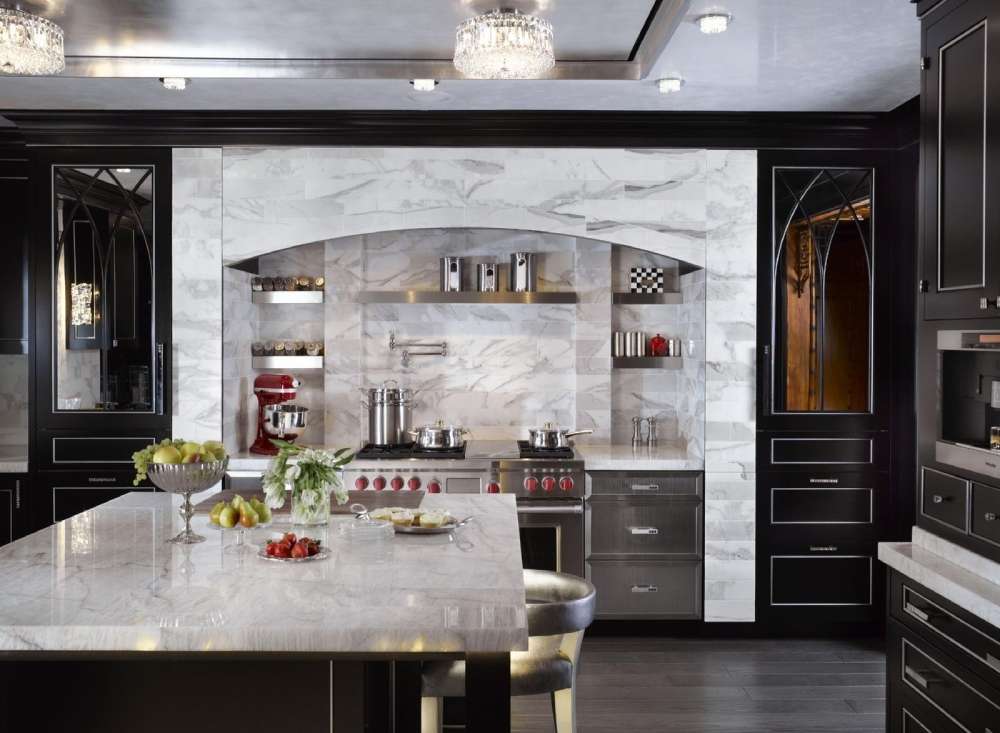
Image source: St. Charles of New York
Most successful kitchen designs use open shelving selectively, not as a full replacement for closed storage.
- Open shelves above a coffee station or bar cart area
- One floating shelf run flanking the range hood
- Open shelves on the wall opposite the cooking zone, away from grease
Houzz’s 2024 Kitchen Trends Study documented a shift back toward open-concept kitchen layouts, with 43% of homeowners choosing open-plan designs in 2024. Open shelving supports that preference without requiring full cabinet removal.
How Do You Install Open Kitchen Shelves?
Installation determines whether a shelf holds for a decade or pulls out of the wall in six months. The steps are straightforward. The mistakes are avoidable.
Floating shelves mounted into wall studs can support 200 pounds or more when brackets catch 2 or more studs. Drywall-only installs with standard anchors are not recommended for kitchen loads (Shelfology, 2024).
What Tools Do You Need Before Starting?
Required tools, no substitutes:
- Stud finder (electronic, $15-$40 at any hardware store)
- Cordless drill with 1/8″ and 1/4″ bits
- 24-inch level (phone level app works for single shelves)
- Pencil and tape measure
- #10 x 2″ wood screws for stud mounting
Bob Vila’s installation guide notes: the single most common floating shelf mistake is skipping stud location and trusting drywall anchors alone for heavy loads.
How Do You Install Floating Shelves Step by Step?
Kitchen shelf height: 18 to 20 inches above the countertop for the first shelf. 12 to 14 inches between stacked shelves (Ashdeco, 2024).
Installation sequence:
- Run stud finder across the target wall. Mark stud centers in pencil.
- Hold bracket against wall. Confirm at least 2 stud positions align with bracket holes.
- Draw a level line across the bracket mounting points.
- Drill pilot holes into studs. Drive #10 x 2″ screws firmly.
- Add drywall anchors in non-stud bracket holes as supplemental support only.
- Slide shelf over bracket rods or set shelf onto visible bracket arms.
- Pull test before loading: a bracket that moves has not caught the stud.
How Do You Install IKEA BERGSHULT Floating Shelves in a Kitchen?
BERGSHULT uses the SANDSHULT bracket system. Each bracket pair is rated for approximately 33 pounds when mounted into studs.
Key difference from standard floating shelves: BERGSHULT slides onto the SANDSHULT wall rail rather than onto rods inside the shelf body. The rail must be level across its full length before the shelf is attached, which means the leveling step is more exacting than standard bracket systems.
Suitable for display-weight shelves: ceramics, glass jars, cookbooks. Not suitable for cast iron or appliances at that weight rating.
What Paint Colors and Wall Treatments Work Behind Open Kitchen Shelves?
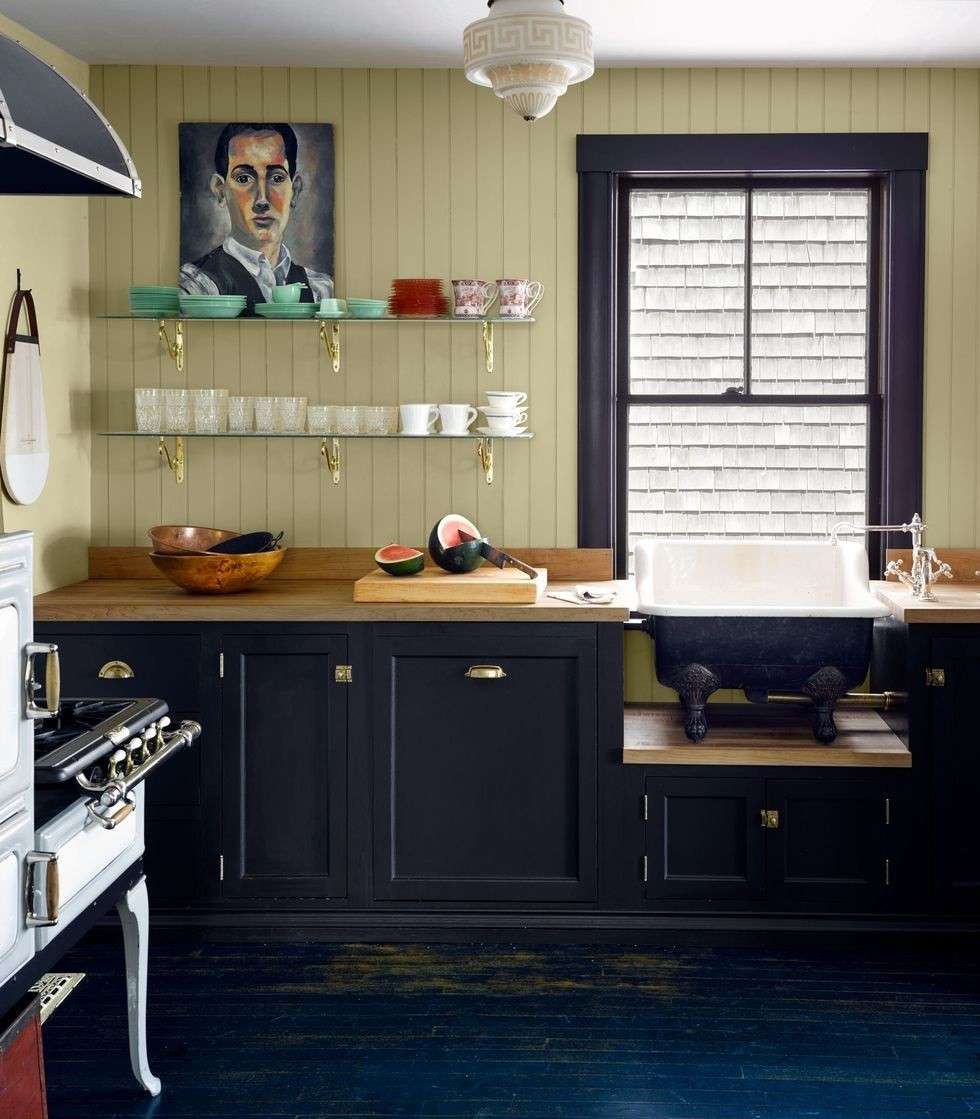
Image source: Ken Fulk
The wall behind an open shelf is visible. It is part of the design, not the background of it. That changes how color decisions work in this context.
Homes and Gardens (2024) reported a clear shift away from pure white and gray kitchen walls, with designers noting deep blues, yellows, and forest greens gaining significant traction in kitchen color choices. Open shelving benefits directly from that shift: contrast between wall and shelf reads clearly against a dark or saturated backdrop.
Do Dark Accent Walls Work Behind Open Shelves?
Yes. Dark walls are among the strongest choices for open shelving because the contrast does two things at once.
What dark walls do: they make light-colored ceramics and dishware pop forward visually, and they frame the shelf as a deliberate feature rather than a wall storage solution. Navy, forest green, and charcoal are the most common choices seen in 2024 kitchen renovations (Kitchen Cabinet Kings, 2024).
Bray and Scarff’s 2025 color guide specifically recommends pairing moody dark accent walls with open shelving to balance dramatic wall color against functional display.
What Backsplash Tile Works Best Behind Open Shelves?
3 tile types consistently perform well behind open shelves:
- Zellige tile: handmade Moroccan clay tile with slight surface variation, suits farmhouse and Mediterranean kitchens
- Subway tile: most versatile, reads neutral behind any shelf style or dishware color
- Terracotta: warm, matte surface that works especially well under reclaimed wood shelf runs
A backsplash that runs floor to ceiling behind open shelves reads as a feature wall. One that stops at standard counter height leaves the upper portion of wall as a separate visual decision.
Does Wallpaper Work Behind Open Kitchen Shelves?
Only in low-moisture zones. Wallpaper behind shelves works above a coffee or bar station, on the wall opposite the cooking zone, or in a kitchen with excellent ventilation.
Steam from boiling water and grease from the stovetop degrade standard wallpaper adhesive over time. Vinyl-coated wallpaper performs better in kitchen environments but still needs to be kept away from direct heat and moisture.
What Are the Best Open Shelf Kitchen Ideas for Renters?
Renters face one constraint that owners don’t: the walls need to look the same on move-out day as they did on move-in day. Standard shelf installation is either off the table or heavily restricted.
Command Brand adhesive strips, the most widely used renter solution, support up to 16 pounds per strip pair on smooth, clean wall surfaces (Giraffico, 2025). That covers lightweight display items but nothing close to ceramic dishware or filled glass jars.
What Are the Best No-Drill Shelf Options for Rental Kitchens?
Tension rod systems hold 15 to 30 pounds when wedged between two solid wall surfaces, verified by NAHB lab testing. They work best in narrow alcoves, between cabinetry runs, or in closet-adjacent kitchen areas.
3 renter options by weight capacity:
- Command adhesive strips: up to 16 lbs, display items only, smooth walls only
- Tension rod shelf systems: 15-30 lbs, requires two opposing surfaces to grip
- Freestanding units (IKEA KALLAX, String Pocket): no wall contact, floor-supported, highest practical load capacity
Do Freestanding Shelving Units Work in a Kitchen?
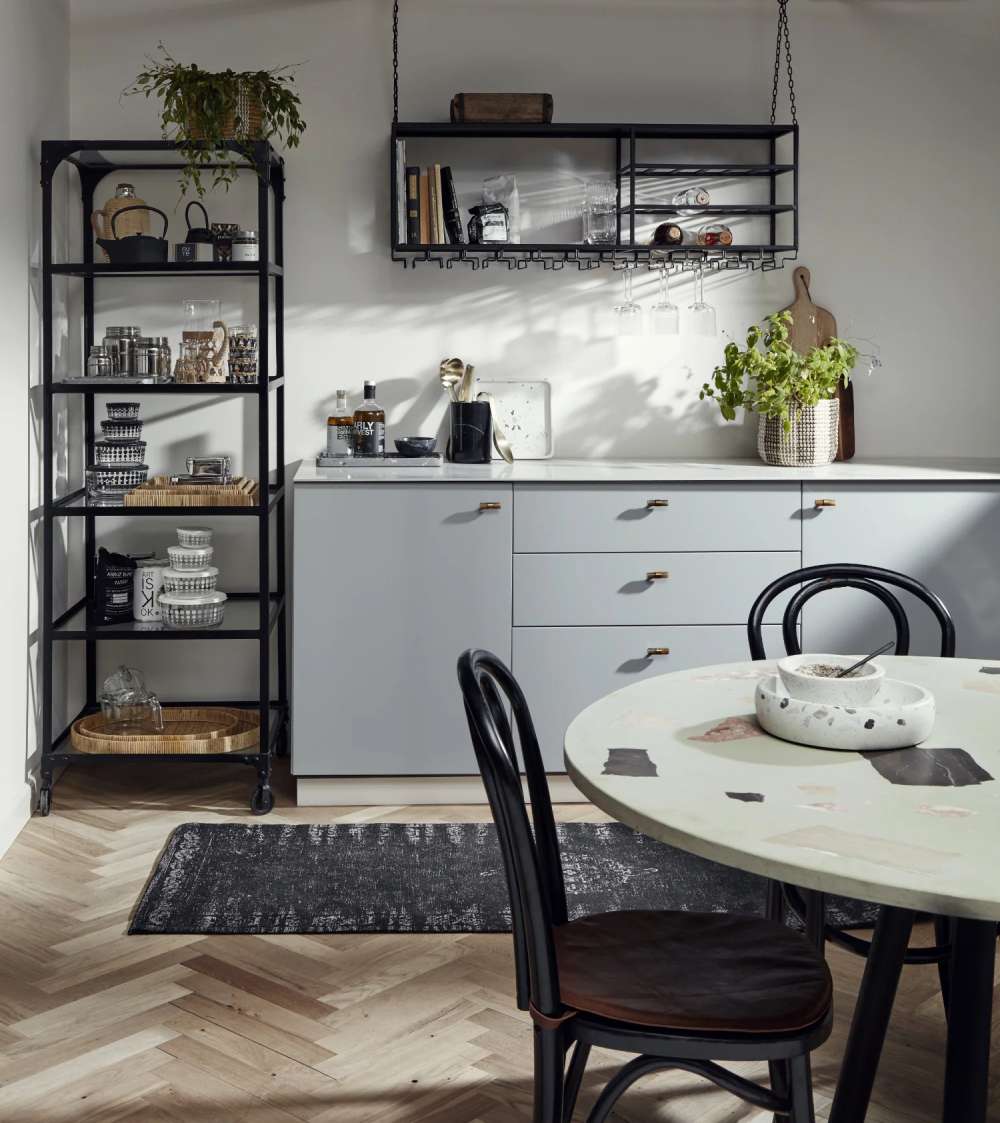
Yes. IKEA KALLAX units are designed as freestanding storage and work as open kitchen shelving when positioned against a wall.
The String Pocket system is a Swedish modular wall shelf that can be configured without drilling in some mounting variations. It supports more weight than adhesive strips and has a cleaner visual profile than most freestanding units.
Leaning ladder-style shelves require no drilling and no wall anchors. Weight capacity depends on the floor surface and the quality of the non-slip feet. Practical for lightweight display items, ceramic sets, or small appliances used occasionally.
How Much Storage Can Renters Realistically Add Without Drilling?
Realistically: enough for display, not enough for heavy kitchen loads.
A renter using Command strips gets lightweight decorative storage. A renter using KALLAX or a freestanding unit gets functional kitchen storage at full capacity. The no-drill floating shelf look requires either tension systems in the right wall configuration or accepting the weight limits of adhesive mounting.
The Scandinavian storage approach suits rental kitchens well: fewer items, lighter loads, freestanding units that move with you. Most renters who want the open shelf aesthetic get closer to it with a well-placed freestanding unit than with adhesive strips holding 3-pound items.
FAQ on Open Shelves Kitchen
Are open shelves in a kitchen a good idea?
They work well for organized households with consistent dishware. They fail fast in busy kitchens with mixed storage needs.
Open shelves cut renovation costs, improve accessibility, and add visual space. The trade-off is weekly cleaning and permanent display discipline.
Do open kitchen shelves collect dust?
Yes. Every exposed surface collects dust, and kitchen environments add grease to that. Shelves near the stovetop need wiping 2 to 3 times per week.
Shelves on the opposite wall from cooking collect standard household dust only, manageable with a weekly wipe-down.
What is the best material for open kitchen shelves?
Plywood is the strongest practical choice. A 30-inch plywood shelf handles roughly 90 pounds before visible sag.
Solid hardwood performs similarly. MDF holds 40 to 60 pounds but degrades at cut edges near moisture.
How deep should open kitchen shelves be?
10 to 12 inches suits most kitchens, especially smaller ones. Standard dinner plates need at least 10 inches of depth to sit flat.
Deeper shelves above 14 inches create visual bulk and collect more grease near cooking zones.
How do you style open shelves in a kitchen without clutter?
Use the 60-30-10 rule: 60% functional dishware, 30% grouped decorative objects, 10% single statement pieces. Leave visible gaps between groups.
Odd-number groupings and matching ceramic sets create visual cohesion faster than any other styling approach.
Are open kitchen shelves cheaper than upper cabinets?
Yes. Open shelving runs approximately $1,500 total installed. Custom upper cabinetry starts at $4,000 and reaches $12,000 or more.
Switching one cabinet wall to floating shelves can save between $2,500 and $10,000 depending on material and scope.
Do open shelves hurt kitchen resale value?
They can. Most buyers expect closed upper storage as standard. Homes with full open shelving instead of cabinets read as a future expense to many buyers.
A hybrid layout, open shelves on one wall with cabinets elsewhere, avoids that problem.
How do you install floating shelves in a kitchen?
Locate wall studs with a stud finder. Mount brackets into at least 2 studs using #10 x 2-inch screws. Confirm level before sliding the shelf onto the brackets.
Never rely on drywall anchors alone for shelves holding dishware or cookbooks.
What wall color works best behind open kitchen shelves?
Dark accent walls, navy, forest green, or charcoal, create the strongest contrast with light dishware and shelf materials.
White and off-white walls keep the focus on shelf contents. The contrast between wall color and shelf material matters more than matching either element.
Can renters install open shelves in a kitchen?
Yes, with limits. Command adhesive strips hold up to 16 pounds on smooth walls. Tension rod systems manage 15 to 30 pounds between two surfaces.
Freestanding units like IKEA KALLAX offer full storage capacity with zero wall contact, the most practical renter option.
Conclusion
This conclusion is for an article presenting open shelves kitchen as a practical storage decision, not a trend to follow blindly.
The right shelf material, bracket mounting system, and wall treatment make the difference between a kitchen that holds up daily and one that looks good only in photos.
Floating shelves work. Wall-mounted shelf organization suits households that cook with intention and maintain consistent dishware sets.
If your kitchen layout, habits, and storage needs align, open shelving delivers real value at a fraction of the cost of custom cabinetry.
If they don’t, a hybrid approach with closed upper cabinets on the cooking wall and selective open shelves elsewhere gives you both.
Choose based on how you actually live, not how a shelf looks on a design blog.

- Paint Colors That Go with Oak Floors - August 22, 2026
- Paint Colors That Go with Gray Floors - August 20, 2026
- What Color Bedding Goes with Dark Wood Furniture - August 18, 2026


