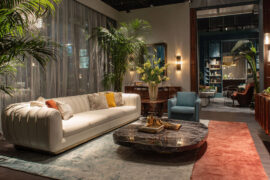
Most beach house interiors age badly. Coastal contemporary interior design does not.
It trades the driftwood clutter and nautical anchors for bleached oak floors, honed limestone, and open-plan living spaces that connect seamlessly to the outdoors.
The result is a modern coastal aesthetic that stays relevant, feels genuinely calm, and works in real homes, not just vacation properties.
This guide covers everything: the defining color palette, natural materials, spatial planning, furniture selection, lighting strategy, kitchen and bathroom finishes, outdoor spaces, and what a real project actually costs.
Whether you are renovating a waterfront home or bringing a seaside-inspired feel to an inland space, here is exactly how the style works.
What Is Coastal Contemporary Interior Design?

Coastal contemporary interior design is a residential style that combines the clean structure of modern architecture with ocean-influenced materials, natural light, and a restrained seaside color palette.
It is not the same as traditional coastal design, which leans on weathered finishes and rustic charm. And it has nothing to do with nautical decor, which relies on literal maritime symbols like ropes, anchors, and navy stripes. Coastal contemporary strips all of that away.
What remains is a style built on 3 defining tensions: warmth versus minimalism, texture versus restraint, and indoor space versus the outdoors just beyond the glass.
The style took shape in mid-2000s California and Australia, where residential architects began pairing open-plan layouts with natural stone floors, linen upholstery, and unobstructed water views. It has since become one of the most searched residential aesthetics in the U.S., particularly in coastal states like Florida, California, and the Carolinas.
The global interior design market was valued at $137.93 billion in 2024 (Grand View Research), with residential design accounting for over 60% of total market share. Coastal regions in New York, Florida, and California consistently sit at the top for luxury and high-end residential design spending.
How Coastal Contemporary Differs from Traditional Coastal Style
Traditional coastal relies on weathered, worn, and casually layered decor. Shiplap walls painted in faded blue. Distressed wood furniture. Rope accents, wicker baskets, and shells on the windowsill. It reads as relaxed to the point of being informal.
Coastal contemporary pulls the same seaside sensibility into a tighter, cleaner frame.
| Feature | Traditional Coastal | Coastal Contemporary |
|---|---|---|
| Wall treatment | Shiplap, beadboard | Smooth plaster, limewash |
| Wood finish | Distressed, whitewashed | Bleached oak, honed |
| Furniture silhouette | Casual, mismatched | Low-profile, streamlined |
| Color approach | Bright blues, nautical accents | Warm neutrals, muted ocean tones |
| Texture style | Layered, informal | Intentional, restrained |
The difference comes down to intention. Traditional coastal feels collected over time. Coastal contemporary feels considered.
How Coastal Contemporary Differs from Coastal Farmhouse
Coastal farmhouse mixes the beach-house palette with farmhouse materials: shiplap, barn doors, apron-front sinks, and black iron hardware. The result is warmer and more rustic than coastal contemporary.
Coastal contemporary avoids farmhouse references entirely. No sliding barn doors, no shiplap feature walls, no industrial black fixtures. The metal finishes run to brushed brass or unlacquered bronze. The wood is bleached or limed, not stained or distressed.
Think of it this way: coastal farmhouse is casual and collected. Coastal contemporary is calm and precise.
What Are the Core Color Palettes Used in Coastal Contemporary Design?

The coastal contemporary color palette organizes itself across 3 layers: a neutral base, a secondary ocean-influenced layer, and a small accent layer that should never exceed 10-15% of a room’s total color volume.
A 2024 survey of 71 interior design experts by Fixr.com found that 46% identified earthy tones as the dominant interior palette, while 41% pointed to warm neutrals. Neither gray-heavy Scandinavian palettes nor bright nautical schemes appeared in the top choices. Coastal contemporary sits exactly in this gap.
Primary Neutral Layer
Sandy whites, warm greiges, and soft sand tones form the backbone of the palette. These are not the cool gray-white tones associated with Scandinavian minimalism. They read warmer, more organic, and closer to beach sand than concrete.
Specific paint references that work in this layer:
- Benjamin Moore White Dove (OC-17) – a warm, slightly creamy white
- Sherwin-Williams Sea Salt (SW 6204) – a soft blue-green with gray undertones
- Farrow & Ball Borrowed Light (No. 235) – the palest blue that reads almost white
- Benjamin Moore Wind’s Breath (OC-24) – a versatile warm neutral with beige undertones
Natural light exposure matters here. South-facing rooms handle cooler versions of these neutrals well. North-facing rooms need the warmest options in this range to avoid reading flat or cold.
Secondary Ocean-Influenced Layer
Ocean-derived blues, sea glass greens, and weathered driftwood tones sit in the secondary layer. These show up in upholstery, rugs, window treatments, and occasionally an accent wall. Not all at once.
Sea glass greens (seafoam, sage, and muted aqua) are gaining ground over the traditional blue-white combination, especially in spaces with significant natural light. Designers in Florida and Southern California markets lean heavily on this combination in 2025-2026 projects.
The 82% of homeowners who report feeling more relaxed in coastal-inspired spaces (AAA Blind and Shutter Factory research) respond most strongly to this blue-green-neutral combination. The palette works because it matches the visual frequency of natural shoreline environments.
Accent Layer: Terracotta, Brass, and Muted Coral
Used sparingly. Three rules:
- Keep accent colors to 10-15% of any single room’s color volume
- Terracotta and warm coral work as textile accents, not wall colors
- Brushed brass and unlacquered bronze count as color in this context
The instinct to overload the accent layer is the most common mistake in coastal contemporary spaces. One terracotta throw pillow on a linen sofa. One brass pendant over a bleached oak dining table. That is enough.
What Materials and Textures Define Coastal Contemporary Interiors?

The material vocabulary of coastal contemporary design separates it from every adjacent style. It is specific. Getting it wrong produces either a rustic beach house or a cold modern box.
60% of interior design experts in a 2024 Fixr.com survey agreed that natural or raw finishes would become the dominant paint texture and effect. The same shift applies across all material categories in coastal contemporary work.
Natural Wood Finishes in Coastal Contemporary Spaces
Bleached oak is the dominant wood finish. It is light without being white, warm without being yellow, and coastal without being driftwood-rustic.
Whitewashed oak and limed finishes also work, particularly for cabinetry and open shelving. What does not work: dark stained oak, walnut in any finish, and pine. These read either too formal or too rustic for the style.
Specific applications:
- Wide-plank bleached oak flooring (minimum 5-inch boards)
- Whitewashed oak open shelving in kitchens and living rooms
- Limed oak cabinetry with brushed brass hardware
- Teak and ipe for outdoor decking and furniture where salt air and humidity are real factors
Stone and Tile Selection for Coastal Floors and Walls
Honed limestone and large-format porcelain are the 2 go-to hard flooring materials. Both read clean and cool underfoot, which is a real physical benefit in warm coastal climates, not just an aesthetic choice.
Travertine is having a strong run in 2024-2026 coastal contemporary projects, particularly in bathrooms where its natural veining adds organic texture without needing patterned tile.
For walls and backsplashes, 3 options fit the style:
- Handmade zellige tile in muted white or soft greige
- Large-format stone slab (continuous vein, not busy pattern)
- Soft white subway tile with wide grout joints (not the standard 1/16-inch grout line)
Soft Materials: Linen, Jute, and Seagrass
Natural fibers handle every soft surface in a proper coastal contemporary interior. Linen for upholstery and window treatments. Jute and sisal for area rugs. Seagrass for flat-weave rugs in high-traffic areas.
For actual coastal climates, performance fabrics matter more than aesthetics. Sunbrella and solution-dyed acrylics replicate the texture and drape of linen while resisting humidity, salt air, and UV degradation. Serena & Lily has built a significant share of its product line around exactly this problem.
The tension in the soft material layer is between raw, organic texture (woven, grainy, fibrous) and smooth surfaces (plaster walls, lacquered cabinetry). Both need to be present. All texture reads rustic. All smooth reads cold.
How Does Spatial Planning Work in Coastal Contemporary Homes?
Open-plan living is not optional in coastal contemporary design. It is the structural premise of the entire style. Kitchen, dining, and living zones exist in a single visual field, without walls or visual barriers between them.
This is directly tied to the style’s core goal: maximizing the experience of natural light and outdoor connection. A well-considered space plan organizes these zones so that every seat in the home has a sightline to either a window, a glass wall, or an outdoor space.
The U.S. home remodeling market hit $503 billion in 2024 (RubyHome), with open floor plan renovations among the most commonly requested structural changes in coastal residential projects.
Indoor-Outdoor Connection

The relationship between interior and exterior space is what defines a coastal contemporary home at the architectural level. Everything else is furniture and finish.
Sliding glass walls and pocket doors replace French doors in most contemporary coastal builds. When fully open, the boundary between inside and outside disappears. The interior floor continues to the patio. The ceiling line extends to a covered outdoor structure. The furniture conversation area flows outward.
3 features that make this work:
- Floor-to-ceiling glazing on ocean-facing or garden-facing walls
- Matching flooring material (honed limestone or large-format porcelain) that runs from inside to outside
- Covered outdoor living structures (lanais, pergolas) that create a transition zone rather than a hard indoor-outdoor edge
Ceiling Height and Volume
Standard 8-foot ceilings work against coastal contemporary design. The style reads best at 10 feet minimum, with vaulted or cathedral ceilings performing best of all.
Exposed beam ceilings in whitewashed or bleached oak add volume without adding visual noise. They also introduce organic texture overhead, which balances smooth plaster walls.
Fan selection matters here. In coastal contemporary spaces with exposed beam or vaulted ceilings, low-profile fans with palm or light wood blades are the correct choice. Ornate fan designs and dark blade finishes break the visual language of the room.
Furniture Arrangement in Coastal Contemporary Plans
Sofa orientation in coastal contemporary rooms prioritizes views over the television. This sounds obvious. In practice, 90% of living rooms are arranged around a focal wall with a TV on it, and the sofa faces that wall.
Coastal contemporary arrangement reverses this. The primary seating faces the window or glass wall. The TV occupies a secondary position, often recessed into a built-in or placed on a perpendicular wall. The view is the focal point. Emphasis falls on what is outside, not what is on a screen.
For smaller coastal contemporary spaces (apartments and condos), the principle adapts: use furniture with lower profiles to maintain sight lines, place mirrors opposite the primary window to double the light reading, and avoid oversized sectionals that block sightlines and shrink the perceived floor area.
What Furniture Styles Work in Coastal Contemporary Interiors?

The furniture profile for coastal contemporary design is specific: low-profile silhouettes, organic curves rather than sharp mid-century angles, and a material mix of performance fabric upholstery and natural woven accents.
Median homeowner spending on renovations in 2024 was $20,000 (Houzz), with furniture and material selection representing the largest share of discretionary budget in coastal residential projects. Getting the furniture profile wrong is the most expensive design mistake in this style.
Sofa and Seating Selection
Low-profile, streamlined silhouettes are the baseline requirement. The sofa seat height should sit between 16 and 18 inches. Overstuffed sofas with high backs read too formal and too heavy for the airy quality coastal contemporary demands.
Upholstery priority order for coastal conditions:
- Indoor-outdoor performance linen (first choice for real coastal climates)
- Solution-dyed acrylic in linen texture (Sunbrella or equivalent)
- 100% linen for inland or climate-controlled spaces
- Boucle as a secondary texture accent on occasional chairs
Avoid: velvet, heavy wool, and dark microfiber. All three read wrong in terms of color, weight, and coastal context.
Dining and Occasional Tables
Rattan and wicker, reframed in contemporary silhouettes, are the dominant occasional chair and side table material. Not grandmother’s sunroom wicker with chunky cushions. Thin-profile, low-arm rattan chairs with simple linen drop-in cushions.
Dining tables: bleached or limed oak, honed limestone or concrete top on a simple base, or large-format travertine. The table base should be clean: 4 straight legs or a trestle, not a pedestal or ornate carved base.
Budget reference points for 2024-2025: Serena & Lily and Restoration Hardware’s Coastal collection occupy the mid-to-upper range. CB2 and Article provide coastal-compatible furniture at lower price points without requiring custom orders.
How Is Lighting Designed in Coastal Contemporary Spaces?

Coastal contemporary lighting strategy divides across 3 categories: maximizing natural daylight, selecting fixtures that match the organic material vocabulary of the space, and layering artificial light sources so no single source dominates.
Research on biophilic design from Terrapin Bright Green (2014) established that maximized natural daylight reduces reliance on artificial lighting by up to 40%. In coastal contemporary design, daylight strategy is the first lighting decision, not the last.
Natural Light Maximization
Sheer linen window treatments are the default in coastal contemporary spaces. Heavy valances, blackout drapery, and structured Roman shades all block light and read too formal for the style.
3 specific practices for maximizing coastal daylight:
- Minimal window casing (simple square profile, no decorative trim)
- Sheer linen panels hung from ceiling to floor, even in rooms where the window is half that height
- Mirrors placed on walls perpendicular to the primary window, not opposite (opposite placement creates glare; perpendicular placement distributes light)
For rooms that face north or receive limited direct sun, warm-white artificial light at 2700K-3000K compensates without disrupting the organic warmth of the color palette. Cooler light temperatures (4000K and above) fight the sandy neutral palette and make the space read clinical.
Fixture Selection

Fixture materials in coastal contemporary spaces track the same organic vocabulary as the rest of the design. Whitewashed wood pendants, rattan shades, frosted glass, and brushed brass hardware are the 4 primary materials in play.
What to avoid: chrome and polished nickel (too cold), dark iron industrial fixtures (too heavy), and any fixture with nautical literal references (anchor shapes, rope wrapping, porthole forms).
Specific brands active in this space: Visual Comfort for statement pendants, Arteriors for sculptural table and floor lamps, and Pottery Barn’s coastal lighting collections for accessible mid-range options.
Layered Lighting Approach
Ambient lighting handles overall room illumination. Task lighting covers functional areas. Accent lighting draws attention to artwork, plants, and architectural features.
In coastal contemporary rooms, recessed lighting handles ambient when ceiling height allows. A single pendant or chandelier over the dining table handles both ambient and visual focal point in that zone.
The layering principle matters specifically because coastal contemporary relies on natural light during the day. At night, without layering, the space collapses into a flat wash of overhead light that erases all the texture work in the upholstery, rugs, and wall finishes.
What Art and Decor Choices Fit Coastal Contemporary Design?

The decorative layer in coastal contemporary design operates under one rule: every object earns its place or it leaves. This is not strict minimalism. Objects are welcome. Generic beach decor is not.
48% of interior design experts selected warm white as the most popular interior paint color for 2024 (Fixr.com), reflecting a broader shift toward backgrounds that support curated objects rather than compete with them. Coastal contemporary art and decor works exactly this way: the neutral palette is the stage, and each selected piece is intentional.
Art Selection: Abstract Over Literal
The instinct to hang seashell prints, ship paintings, and lighthouse photography is wrong for this style.
What works instead:
- Abstract paintings with organic shapes and ocean-adjacent colors (muted blues, greens, sand tones)
- Watercolor washes in large format (36 inches minimum width for a sofa wall)
- Aerial ocean photography that reads as abstract pattern rather than literal landscape
- Large-format woven wall hangings in neutral linen tones
Minted and Juniper Print Shop both carry strong coastal contemporary art inventory. 1stDibs is the right source for original work and vintage pieces at the upper end of budget.
Objects and Decorative Accents
One rule covers most decisions: 3 objects per surface maximum, with negative space treated as an intentional design element.
Materials that fit the vocabulary: coral-shaped ceramics, driftwood sculptures, stone bookends, hand-thrown pottery in matte white or warm beige, and sculptural objects in woven rattan or seagrass.
What to remove from the shortlist: glass fishing floats, novelty items with beach text (“Life is Better at the Beach”), and anything that looks like it came from a coastal gift shop rather than a design retailer.
Textiles as Decorative Elements
Coastal contemporary spaces use textiles to add visual and tactile texture, not to introduce pattern or color contrast. The throw on the sofa is linen or a loosely woven natural fiber in a tone that is close to (not identical to) the sofa upholstery.
Pattern use is narrow: subtle weave texture, organic stripe in tonal variation, or simple grid. Large-scale botanical prints, ikat, and geometric patterns all belong to different styles.
Throw pillow combinations follow the same restraint. For a linen sofa in warm white: 2 pillows in a slightly deeper sand tone, 1 pillow in a muted sea glass or sage. That is the full combination. Adding a fourth or fifth pillow in a contrasting pattern or color is where the style breaks.
How Are Kitchens and Bathrooms Styled in Coastal Contemporary Design?
Wet rooms in coastal contemporary homes require the most discipline. The material options are narrower, the consequences of a wrong choice are more visible, and the temptation to over-theme is highest here.
A mid-range bathroom remodel costs an average of $25,251 in 2024 and recoups about 74% of that investment in home value, according to industry data. In coastal Florida and California markets, comparable projects run 25-40% higher than national averages due to moisture protection requirements and premium finish expectations.
Coastal Contemporary Kitchen Design
Cabinet finish and hardware set the tone for the entire kitchen. White or warm greige shaker cabinetry with brushed brass hardware is the most widely executed combination. Limed oak cabinetry with open shelving in the same finish works equally well for a warmer result.
Countertop options that fit the material vocabulary:
- Honed Calacatta marble or honed white quartz (not polished)
- Honed concrete in warm gray or sand tones
- Bleached butcher block for kitchen island surfaces only
Backsplash choices follow the same restraint. Handmade zellige tile in soft white, large-format stone slab running full-height, or wide-joint subway tile. Nothing with a pattern that would read in a Mediterranean or traditional kitchen.
Serena & Lily’s Harbour Island kitchen collection, released in 2023, showed how fluted oak cabinetry with unlacquered brass hardware and honed marble performs in coastal contemporary spaces. The project drew significant attention from designers working on Florida and Hamptons residential commissions.
Coastal Contemporary Bathroom Design
Fixr.com 2025 data shows the national bathroom remodel average ranges from $6,600 to $18,000, with high-end primary bathroom overhauls reaching $50,000-$80,000 in coastal California markets.
3 defining features in a coastal contemporary bathroom:
- Freestanding soaking tub in matte white or concrete finish (not clawfoot)
- Walk-in shower with frameless glass and large-format travertine or honed stone tile
- Vanity in fluted oak, cane-front cabinetry, or limewashed plaster with vessel sink in matte white
Wall treatment options: limewash plaster, Venetian plaster in soft sand tones, or honed large-format stone tile. Standard ceramic tile, especially patterned or glossy, breaks the organic texture language of the style.
Hardware and fixtures: brushed brass or unlacquered bronze throughout. No chrome. No polished nickel. No matte black (that belongs to a different design family).
| Feature | Coastal Contemporary | What to Avoid |
|---|---|---|
| Vanity | Fluted oak, cane-front | Dark stained wood, ornate carved detail |
| Tile | Honed travertine, zellige | Glossy ceramic, patterned mosaic |
| Fixtures | Brushed brass, unlacquered bronze | Chrome, polished nickel, matte black |
| Wall finish | Limewash, Venetian plaster, stone | Standard paint with no texture interest |
What Do Outdoor and Transitional Spaces Look Like in Coastal Contemporary Homes?

The outdoor zone is not separate from the interior in coastal contemporary design. It is a direct continuation of it. The floor material continues. The color palette continues. The furniture profile continues.
78% of industry experts in 2024 identified seamless indoor-outdoor transitions as the biggest outdoor living trend (Elevate by Design). 98% agreed that an updated outdoor space has a measurable positive impact on home value (Fixr.com, 2025).
Covered Patio and Lanai Design
Covered patios are the most popular outdoor living area type, favored by 44% of experts surveyed in 2025 (Elevate by Design).
Materials that work in a coastal contemporary lanai:
- Teak or ipe decking for floor surfaces exposed to direct weather
- Honed limestone or large-format porcelain that matches interior flooring (indoor-outdoor continuity)
- Outdoor-rated linen curtains on a ceiling track (not a curtain rod) for privacy and wind management
- Ceiling fans with palm or light wood blades at the correct scale for the covered area
Lighting in outdoor transitional zones follows the same layered approach as interiors: ambient (recessed in the covered ceiling), task (over dining), and accent (uplighting trees or architectural elements).
Outdoor Furniture and Hardscape Selection
Homeowners are willing to spend 25% of their remodeling budget on outdoor living areas, according to 2025 data from Elevate by Design. In coastal contemporary homes, that budget concentrates on 3 areas: hardscape, furniture, and structure.
Hardscape: travertine pavers, honed limestone coping around pools, and large-format concrete pavers in sand or warm gray tones.
Furniture: all-weather wicker sectionals, teak dining sets with clean-lined profiles, and concrete or limestone occasional tables. Avoid heavy wrought iron and highly ornate cast aluminum. Both read too traditional for this style.
Pool design, where present: white plaster finish, travertine coping, and a tile waterline in soft blue or sea glass green. Black-bottom pools, while dramatic, belong to a different design context.
Landscape Design and Planting
39% of renovating homeowners upgraded their patio or terrace in 2024 (Houzz), with native coastal plantings increasingly cited as the preferred landscaping approach over traditional lawn grass.
Planting choices that reinforce the coastal contemporary material vocabulary:
- Ornamental grasses (muhly grass, sea oats) in sweeping drifts rather than individual specimens
- Agave and succulent beds for low-water coastal conditions
- Bougainvillea and jasmine on pergola structures
- Fiddle-leaf fig and bird-of-paradise as interior-adjacent outdoor specimens
What to avoid: overly manicured boxwood hedges, topiary shapes, and annual flower beds. All three read formal in a way that conflicts with the relaxed structure of coastal contemporary outdoor spaces.
How Do You Adapt Coastal Contemporary Design to Non-Coastal Locations?
Coastal design is as much a feeling as it is a location. That is not sentiment. It is backed by research: studies consistently show that coastal-inspired interiors produce measurable stress reduction and mood improvement regardless of actual proximity to water.
According to a study by the National Association of Realtors, coastal interior design ranks as the most searched residential aesthetic on social platforms, with significant demand from inland markets including Chicago, Denver, and Nashville.
Replacing Ocean Views with Greenery and Sky
The ocean view is the aspirational centerpiece of coastal contemporary design. Without one, the spatial planning and material strategy still work. The view just changes.
3 substitutions that hold the design logic:
- Maximized sky views in urban or suburban homes (floor-to-ceiling glass on south or west exposures)
- Courtyard garden framed by the primary living area (the greenery becomes the view)
- Interior planted wall or large indoor specimen trees used as the primary organic focal element
The principle is the same: the primary seating in the room faces toward life, light, and organic material. Whether that is the Pacific Ocean or a Japanese maple in a Chicago courtyard matters less than maintaining the sightline discipline.
Working with Low-Natural-Light Environments
North-facing rooms and urban apartments with limited sky exposure fight the coastal contemporary palette directly. The sandy whites and warm greiges that work beautifully in Florida read yellow-gray in a north-facing Manhattan apartment.
The fix is not to abandon the palette. It is to shift toward the warmer end of every color choice and increase artificial lighting density.
Specific adjustments:
- Choose Benjamin Moore White Dove over cooler whites like Chantilly Lace for north-facing walls
- Increase light layer density: 3 layers minimum in every room (ambient, task, accent)
- Add mirrors on walls perpendicular to windows to redistribute available daylight
- Use warm-white LED at 2700K-2800K throughout
Urban and Apartment Adaptations
Coastal contemporary in a loft or high-rise apartment requires 3 adjustments to the standard approach. Scale reduces. Outdoor connection shifts indoors. And the open-plan principle has to be achieved within a fixed footprint rather than through structural changes.
Low-profile furniture becomes more critical than in a full house, since it preserves the visual floor area and maintains the airy quality of the style. A 34-inch sofa back is correct. A 42-inch tufted sectional is wrong regardless of how good the fabric is.
Biophilic design principles carry more weight in landlocked or urban applications than in actual coastal homes, because the natural material connection has to be built entirely through furniture, textiles, and plant selection rather than borrowed from a real landscape. Terrapin Bright Green research (2014) found that occupants in rooms with natural materials and greenery showed measurable improvement in well-being even with no view of the outdoors.
What Does a Coastal Contemporary Interior Design Project Cost?
Real project costs for coastal contemporary interiors vary significantly by location, scope, and how much of the material premium the style requires. The natural stone, performance fabrics, bleached oak, and specialty tile that define this style do carry a cost premium over standard contemporary finishes.
The U.S. home remodeling market reached $503 billion in 2024 (RubyHome), with coastal states accounting for a disproportionate share of high-end residential design spending. West Coast projects recover renovation costs 23% better than the national average, according to HomeLight 2025 data.
Full Room Redesign: Budget Benchmarks
Interior designer project costs averaged $2,000 to $14,700 per project in 2024, not including furniture (Forbes, via BoCo Interior Designs). National hourly rates for designers ran $100-$500 per hour, with coastal metro markets at the higher end.
| Room | Mid-Market Budget (2026) | Coastal Premium Estimate |
|---|---|---|
| Living room (full redesign) | $15,000–$50,000 | Add 15–30% for performance fabrics, artisanal surfaces, and low-profile architectural seating. |
| Kitchen (mid-range remodel) | $30,000–$65,000 | Quartzite or marble slabs, zellige backsplashes, and induction upgrades add $8,000–$15,000. |
| Primary bathroom | $18,500–$35,000 | Honed travertine, wet room layouts, and freestanding stone tubs add $10,000–$25,000. |
| Outdoor patio/lanai | 15–25% of total home value | Limestone pavers and premium teak furniture sets typically start at $20,000+ for high-end builds. |
The 15-25% material premium for coastal contemporary finishes comes primarily from 3 sources: honed natural stone (vs. standard ceramic tile), performance fabric upholstery (vs. standard fabric), and specialty handmade tile for backsplashes and feature walls.
Where to Concentrate Budget
Not every line item in a coastal contemporary project demands the premium version. 3 areas where the investment is non-negotiable:
- Flooring: bleached oak or honed limestone is the foundation of the style. Compromising here affects every other decision in the room.
- Key upholstery pieces: the primary sofa in performance fabric. Everything else can be standard linen.
- Lighting fixtures: the pendant over the dining table and the primary bathroom vanity light are the 2 highest-visibility fixture positions.
Where to Save Without Losing the Look
Budget can be recovered in 4 places without visual compromise:
- Art: Minted and Juniper Print Shop offer coastal contemporary-appropriate art at $100-$800, vs. $3,000+ for original work through 1stDibs
- Secondary textiles: standard linen throws, jute rugs, and sisal perform identically to premium versions in appearance
- Accessories: stone bookends, ceramic vessels, and driftwood sculptures are available from CB2 and Article at accessible price points
- Paint: the color palette relies on specific paint choices (Benjamin Moore, Sherwin-Williams), not premium paint formulations
39% of homeowners exceeded their renovation budget in 2024 (Houzz). In coastal contemporary projects specifically, budget overruns concentrate in natural stone selections, where the cost difference between standard and premium honed limestone can be $8-$15 per square foot installed.
How Do You Work With an Interior Designer on a Coastal Contemporary Project?
The professional relationship between a homeowner and an interior designer on a coastal contemporary project has a specific set of success factors. Knowing the style deeply before hiring matters. Knowing the right questions matters more.
The average cost to hire an interior designer in 2024 ranged from $2,057 to $15,216, with most projects averaging $8,528 (Angi). Designer fees for percentage-based contracts run 10-30% of total project cost, according to Fixr.com industry data.
What to Communicate Before Hiring
The 3 things every coastal contemporary client brief needs:
- A mood board with 15-20 specific reference images (not a general “I like beach houses” statement)
- Specific brands and products you respond to (Serena & Lily, Restoration Hardware Coastal, CB2)
- A clear distinction between coastal contemporary and adjacent styles you want to avoid
The goal is to walk into a first designer meeting having already done the visual work. Designers who have not worked on coastal contemporary projects will default to generic beach house vocabulary. Reference images and specific product examples prevent this.
Questions to Ask a Designer Before Hiring
Bureau of Labor Statistics data shows the median wage for interior designers reached $63,490 in May 2024. Experience in coastal residential projects commands a significant premium over that median.
5 questions that reveal coastal project experience:
- Can you show me 3 completed coastal contemporary projects, not coastal or beach house generally?
- Which natural stone suppliers and specialty tile sources do you have trade accounts with?
- How do you handle the difference between performance fabric selection for actual coastal climates vs. inland homes?
- What is your standard approach to indoor-outdoor material continuity?
- How do you manage the procurement timeline for bleached oak flooring and honed stone?
Understanding the Design Package and Timeline
A full coastal contemporary room project runs 6-12 months from concept to installation in most U.S. markets. Material lead times for honed limestone, handmade zellige tile, and custom bleached oak cabinetry regularly extend to 12-16 weeks independently.
What a complete design package includes:
- Floor plans with furniture placement and sightline analysis
- Material schedule (flooring, wall finish, tile, countertop specifications with product sources)
- Furniture specifications with fabric callouts and COM (customer’s own material) selections
- Lighting plan with fixture specifications and switch/dimmer layout
- Procurement and project management through installation
Project management and coordination fees run an additional 10-30% of total project cost beyond the design fee, according to Angi data. This is standard industry practice, not a premium service. Build it into the budget from the start.
Red Flags in the Hiring Process
Coastal design is one of the most misrepresented categories in residential design. The word “coastal” gets applied to everything from Hamptons-inspired luxury to generic nautical decoration.
3 warning signs during a designer consultation:
- The designer’s portfolio shows rope accents, anchor motifs, or heavy driftwood-rustic styling and calls it “coastal contemporary”
- The designer cannot name specific performance fabric sources for coastal upholstery conditions
- The designer recommends contemporary vs. modern references without understanding the contemporary design vocabulary that defines this style
The right designer for a coastal contemporary project will talk about honed stone vs. polished, bleached oak vs. driftwood finish, and performance linen vs. standard upholstery without being prompted. If those distinctions do not come up naturally in the conversation, keep looking.
FAQ on Coastal Contemporary Interior Design
What is coastal contemporary interior design?
Coastal contemporary interior design combines clean modern architecture with ocean-influenced materials, natural light, and a restrained seaside color palette.
It differs from traditional coastal style by replacing weathered, rustic finishes with bleached oak, honed limestone, and streamlined open-plan living spaces.
What colors work best in a coastal contemporary interior?
The palette builds in 3 layers: warm whites and soft sand neutrals as the base, muted ocean blues and sea glass greens as secondary tones, and small accents of terracotta or brushed brass.
Benjamin Moore White Dove and Sherwin-Williams Sea Salt are two of the most commonly specified paint colors in this style.
What materials define coastal contemporary design?
Bleached oak flooring, honed limestone, travertine, linen upholstery, jute rugs, and rattan furniture in clean contemporary silhouettes.
For actual coastal climates, performance fabrics like Sunbrella replace standard linen to resist humidity, salt air, and UV exposure without sacrificing the organic texture the style requires.
How is coastal contemporary different from nautical design?
Nautical design uses literal maritime references: rope details, anchor motifs, navy stripes, and brass porthole hardware.
Coastal contemporary removes all of that. The connection to the ocean comes through color, natural materials, and indoor-outdoor spatial planning, not decorative symbols.
Can coastal contemporary design work in a non-coastal home?
Yes. The style adapts to landlocked and urban settings by substituting ocean views with maximized sky views, courtyard gardens, or large indoor specimen plants.
The material palette, open-plan layout, and biophilic design principles function independently of actual proximity to water.
What furniture works in a coastal contemporary living room?
Low-profile sofas with organic curves, upholstered in performance linen or solution-dyed acrylic. Rattan occasional chairs in contemporary thin-profile silhouettes. Bleached or limed oak coffee tables with clean bases.
Avoid oversized tufted sectionals, dark stained wood, and heavily ornate furniture that reads too formal for the style.
What lighting fixtures fit coastal contemporary interiors?
Whitewashed wood pendants, rattan shade pendants, frosted glass fixtures, and brushed brass hardware.
Lighting temperature should sit at 2700K-3000K warm white throughout to reinforce the organic warmth of the sandy neutral palette. Avoid chrome, polished nickel, and nautical-reference fixture designs.
How do you style a coastal contemporary kitchen?
White or warm greige shaker cabinetry with brushed brass hardware, honed marble or quartz countertops, and a backsplash in handmade zellige tile, wide-joint subway tile, or full-height stone slab.
Open shelving in whitewashed oak and a contemporary kitchen layout with an unobstructed sightline to outdoor spaces complete the approach.
What is the difference between coastal contemporary and coastal farmhouse?
Coastal farmhouse mixes the beach-house palette with shiplap walls, barn doors, apron-front sinks, and black iron hardware.
Coastal contemporary removes all farmhouse references entirely. Metal finishes shift to brushed brass or unlacquered bronze. Wood is bleached or limed, never distressed or heavily stained.
How much does a coastal contemporary interior design project cost?
A full living room redesign runs $15,000-$40,000 in mid-market U.S. conditions, with a 15-25% material premium for natural stone, performance fabric, and specialty tile over standard contemporary finishes.
Interior designer fees averaged $2,057-$15,216 per project in 2024, not including furniture procurement (Angi).
Conclusion
This conclusion is for an article presenting coastal contemporary interior design as a style built on precision, not decoration.
The decisions that make it work, bleached oak over distressed wood, honed travertine over ceramic tile, performance linen over standard upholstery, are specific and deliberate.
Get the material vocabulary right and the relaxed, airy quality follows naturally.
The open-plan spatial planning, layered lighting strategy, and indoor-outdoor connection are not optional extras. They are the structure the entire aesthetic depends on.
Whether you are working with a resort-style interior design brief or adapting the look to an urban apartment, the core principles stay the same.
Start with the palette, build with natural materials, and let the light do the rest.

- Paint Colors That Go with Oak Floors - August 22, 2026
- Paint Colors That Go with Gray Floors - August 20, 2026
- What Color Bedding Goes with Dark Wood Furniture - August 18, 2026