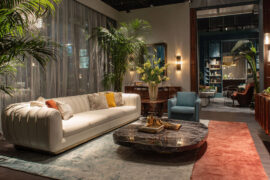
Your outdoor space deserves the same design thinking as the rooms inside your home.
Contemporary outdoor furniture sits at the intersection of clean-line aesthetics and genuine weather performance. It’s not just patio seating. It’s a material decision, a spatial decision, and a long-term investment in how you use the space.
This guide covers everything from material performance and brand tiers to space planning rules, finish types, certifications, and maintenance schedules.
Whether you’re furnishing a rooftop terrace, a pool deck, or a commercial hospitality space, you’ll find the specific data you need to make the right call.
What Is Contemporary Outdoor Furniture?

Contemporary outdoor furniture is furniture designed for outdoor use that reflects current design thinking: clean geometric lines, restrained color palettes, and weather-resistant materials chosen as much for visual clarity as for durability.
It sits at the intersection of contemporary interior design principles and outdoor performance requirements. The outdoor version carries the same commitment to simplicity and proportion, just built to live outside year-round.
The global outdoor furniture market reached USD 50.89 billion in 2024, growing at a CAGR of 6.3% through 2033 (Grand View Research, 2024). Residential buyers account for 57.55% of that demand, driven largely by the push to extend indoor living quality into outdoor spaces.
How Does Contemporary Differ from Modern Outdoor Furniture?

“Modern” and “contemporary” are not the same thing when applied to furniture. Modern refers to a fixed design era, roughly the 1930s through 1970s, shaped by Bauhaus principles, tapered legs, and organic sculptural forms.
Contemporary means now. It absorbs influences from multiple movements, including modern, and reflects what designers are building today. A contemporary outdoor sofa may borrow the low profile of mid-century design while using materials and proportions that didn’t exist in 1960.
Key distinctions:
- Modern: fixed historical reference, warm wood tones, tapered legs, specific icons (Eames, Bertoia)
- Contemporary: shifting, reflects current output, matte neutrals, heavier sectional profiles
- Contemporary absorbs and reinterprets modern; modern does not absorb contemporary
For a deeper look at how this distinction plays out indoors, the comparison between contemporary vs modern interior design covers the same logic applied to interior spaces.
What Are the Visual Markers of Contemporary Outdoor Furniture?
Low profiles and wide seating depths define most contemporary outdoor sectionals. Seat heights typically run 14 to 16 inches rather than the 18-inch standard of traditional outdoor chairs.
Neutral palettes dominate: charcoal, warm white, greige, slate. Bold color typically appears only in cushion fabric, not in frame finishes.
Geometric forms show up consistently, particularly in table bases, planter companions, and frame cross-sections. You don’t see the ornate casting of wrought iron or the traditional slatted look of classic teak garden benches.
What Materials Define Contemporary Outdoor Furniture?

Material choice is where contemporary outdoor furniture earns or loses its credibility. The 6 core materials are powder-coated aluminum, FSC-certified teak, all-weather HDPE wicker, recycled HDPE lumber, concrete, and marine-grade 316 stainless steel. Each brings a specific performance profile and a different visual weight.
Seating sets lead the outdoor furniture category with 37.4% market share in 2024, and most of that volume runs on aluminum frames (Market.us, 2024). The metal segment is projected to grow at a CAGR of 7.0% through 2033, the fastest rate of any material category (Grand View Research, 2024).
Aluminum vs. Teak: Which Material Performs Better Outdoors?
Both materials dominate the contemporary outdoor furniture space. Aluminum leads on maintenance and weight; teak leads on longevity and warmth.
| Attribute | Powder-Coated Aluminum | FSC-Certified Teak |
|---|---|---|
| Lifespan | 15–20 years with minimal upkeep | 40–75+ years with proper care |
| Maintenance | Wipe-down only; no sealing | Annual oiling or sealing required |
| Weight | Lightweight; easy to move | Dense (650–750 kg/m3); stable in wind |
| Coastal use | Rust-free; marine-grade possible | High oil content resists salt air |
| Visual profile | Sleek, industrial, minimal | Warm, natural, textural |
Teak furniture can last 75 years or more in any climate when properly maintained (Neighbor, 2023). Powder-coated aluminum with 60-80 microns of polyester resin coating blocks UV rays, prevents oxidation up to 180 degrees Celsius, and needs no sealing (Peak Home Furnishings, 2024).
Gloster, one of the leading contemporary outdoor furniture brands, uses FSC-certified teak across its collections and pairs frames with Sunbrella cushions for a full weather-resistant system.
All-Weather Wicker and HDPE Resin Construction

HDPE (High-Density Polyethylene) wicker is the standard for contemporary all-weather wicker furniture. It holds color, resists UV degradation, and stays stable between -40 degrees Celsius and 80 degrees Celsius without cracking (Peak Home Furnishings, 2024).
What separates quality HDPE wicker from budget alternatives:
- Frame underneath: aluminum subframe resists rust; steel subframes corrode within a few seasons
- Weave density: commercial-grade weave runs tighter and won’t unravel at connection points
- Resin type: HDPE holds color far longer than PVC, which yellows and becomes brittle
POLYWOOD’s 2025 collaboration with Draper James used recycled HDPE lumber, a solid-form variant, for a collection that combines contemporary aesthetics with near-zero maintenance requirements (Grand View Research, 2024).
Concrete, Stainless Steel, and Emerging Materials
Concrete outdoor furniture has grown into a serious contemporary category, mostly for tables, benches, and accent pieces. Glass fiber reinforced concrete (GRC) is lighter and stronger than standard cast concrete, and won’t crack from seasonal expansion.
Marine-grade 316 stainless steel contains 18% chromium and 8% nickel, forming a corrosion-resistant oxide layer that maintains over 515 MPa tensile strength in salt air (Peak Home Furnishings, 2024). It’s the correct hardware specification for any coastal contemporary installation, not the cheaper 304-grade steel found in budget product lines.
Recycled HDPE lumber, Moso bamboo, and reclaimed teak are gaining traction as sustainability credentials move from marketing footnote to purchase decision factor. In 2024, approximately 55% of American households engaged in some form of horticulture or outdoor living activity (Stellar MR, 2024), a figure that correlates with rising demand for eco-conscious outdoor product choices.
What Are the Main Categories of Contemporary Outdoor Furniture?

Contemporary outdoor furniture breaks into 7 core product categories. Each serves a distinct function and comes with specific sizing standards that affect how well the piece works in a real space.
Outdoor dining furniture held the dominant market share at USD 5.7 billion in 2024, with seating sets (sofas, sectionals, modular units) capturing 37.4% of the total outdoor furniture market (Global Market Insights, 2024). Loungers followed at 25.3% market share.
Modular Outdoor Sectionals
Modular sectionals are the defining product category of contemporary outdoor living. They offer configuration flexibility that fixed sofas cannot match, and the clean architectural profile they create suits contemporary patio design well.
Configuration options: L-shape, U-shape, straight runs, chaise additions, corner units with integrated tables.
Frame joinery matters. Interlocking brackets that pin modules together at the frame level hold configuration under repeated use. Freestanding modules that rely on weight alone shift over time and on uneven surfaces. Brands leading the modular space include Kettal, Manutti, Gloster, and B&B Italia Outdoor, each offering contract-grade construction with residential availability.
Outdoor Dining Sets
Standard dining table height runs 29 to 30 inches. Bar height tables run 40 to 42 inches. Getting this wrong makes chairs unusable, so verify the height pairing before purchasing separately sourced tables and chairs.
Contemporary dining sets in the mid-to-luxury tier typically pair powder-coated aluminum or teak frames with Sunbrella-covered cushions and tempered glass or teak slab tops. The table base design carries most of the visual weight, which is where contemporary design investment tends to show up.
Outdoor Daybeds and Lounge Chairs

Commercial-grade outdoor daybeds carry a minimum weight capacity of 400 lbs. Residential-grade products vary widely, so this is worth checking if the piece will see frequent use or if it’s going into a multifamily amenity deck.
Cushion fill options and their trade-offs:
- Open-cell foam: breathes and dries faster; better for humid and rainy climates
- Closed-cell foam: firmer support; resists moisture absorption but dries more slowly
- Dacron wrap over foam: softer profile; adds visual plushness but extends dry time
The Eames lounge chair translates into outdoor form through pieces like the Eames lounge chair’s outdoor-adapted counterparts from Vitra and similar brands, which carry the same low, reclined seat angle in weather-resistant materials.
Accent Chairs, Coffee Tables, and Bar Seating

These categories fill gaps and complete the space. Accent chairs in contemporary outdoor settings lean toward sling chairs, rope-woven shells over aluminum frames, or cast aluminum with minimal ornamentation.
Coffee table height for outdoor lounge seating typically runs 12 to 15 inches, lower than indoor equivalents, matching the lower seat height of contemporary outdoor sofas.
Bar counter seating (counter height: 34 to 36 inches; bar height: 40 to 42 inches) appears most often on rooftop terraces and pool deck installations where guests eat standing or perched rather than seated for long meals.
What Cushion and Fabric Standards Apply to Contemporary Outdoor Furniture?
Cushion performance separates outdoor furniture that stays attractive for 3 years from outdoor furniture that stays attractive for 10. The fabric, fill, and construction standard all matter.
Sunbrella Solution Dyed Acrylic is the category benchmark. Color goes through each fiber during manufacturing rather than sitting on the surface, which is why Sunbrella fabrics score 8 out of 8 on the colorfastness scale and carry up to 5-year fade warranties backed by real test data (SenseBlinds, 2025). Sunbrella’s manufacturing plant also uses solar power and has reduced CO2 emissions by over 1,000 tons through its sustainability program.
Fabric Options and Performance Trade-Offs
| Fabric Type | UV Resistance | Dry Time | Cost Level |
|---|---|---|---|
| Sunbrella Acrylic | Highest (8/8 colorfastness) | Fast | Premium |
| Outdura Acrylic | High (100% solution-dyed) | Fast | Mid-premium |
| Olefin/Polypropylene | Good; fades over 3–5 years | Very fast | Mid |
| Polyester blend | Moderate; depends on coating | Moderate | Budget |
| Textilene (PVC mesh) | High; no cushion needed | Instant (mesh) | Mid |
In April 2024, Sunbrella acquired a minority stake in Outdura, signaling consolidation at the top of the performance fabric market (Future Data Stats, 2024). Both brands now share distribution and sustainability infrastructure.
Mildew Resistance, Fill Standards, and Off-Season Storage

Mildew resistance is tested against the AATCC 30 standard. Any cushion spec sheet for a contract or hospitality application should show this rating. For residential buyers, it’s the reason to avoid polyester-fill cushions without a breathable cover in humid climates.
Off-season storage guidance by material:
- Sunbrella covers: store in UV-protected bags; mildew-proof but still benefit from dry storage
- Open-cell foam cores: allow full air dry before storing to prevent mold inside the fill
- Teak and aluminum frames: no storage needed; rated for year-round outdoor exposure
- Powder-coated aluminum: inspect annually for chips; touch up with color-matched aerosol before winter if scratched
Sunbrella’s official cleaning protocol: mild soap, thorough rinse, air dry flat. No heat drying and no machine drying, both of which degrade the acrylic fiber faster than UV exposure does.
Which Contemporary Outdoor Furniture Brands Lead the Market?
The contemporary outdoor furniture brand landscape splits clearly across 3 price tiers. Each tier carries different construction standards, warranty terms, and design depth. Knowing which tier fits the project avoids both overspending on residential casual use and underspecifying for hospitality or commercial applications.
The U.S. outdoor furniture market is growing at 3.2% annually, with the residential segment leading at 63.4% market share in 2024 (Global Market Insights, 2024). That residential dominance shapes brand strategy across all tiers.
Luxury Tier Brands
Kettal (Spain): aluminum, teak, and weatherproof rope offered across hundreds of colorways and finishes. Known for modular system patents and customization depth. Popular with architects specifying resort and residential terrace projects.
Dedon (Germany): proprietary hand-woven fiber invented specifically for outdoor use. UV-resistant and soft, with powder-coated frames. The brand of choice for luxury resort installations from Bali to Miami, where aesthetics and durability both carry equal weight.
Gloster (UK/US): FSC-certified teak sourcing, paired with Sunbrella fabric programs across hundreds of SKUs. Strong structural warranties. Contract and residential availability.
Manutti and B&B Italia Outdoor round out the luxury tier with Italian design direction and high-spec material programs. Luxury tier structural warranties run 5 to 10 years on frames.
Mid-Market Tier Brands
Brown Jordan, Janus et Cie, Telescope Casual, and Woodard occupy the mid-market tier. These brands carry genuine contract-grade construction in several lines but also serve residential buyers through showrooms and online channels.
In June 2024, Bar Harbor Web Corporation acquired Telescope Casual Furniture, indicating ongoing consolidation in the mid-market tier (Future Data Stats, 2024). Telescope Casual’s aluminum extrusion and powder-coat work remain among the better residential-grade examples in this price range.
Warranty benchmarks at mid-market: frame warranties average 3 to 5 years; fabric warranties 2 to 3 years with Sunbrella upgrades.
Accessible Tier Brands
Restoration Hardware Outdoor, Crate and Barrel, CB2 Outdoor, and Article serve buyers who want contemporary aesthetics without luxury pricing. Construction quality varies significantly by collection within each of these brands. RH Outdoor, in particular, runs some collections with contract-adjacent aluminum wall thickness.
At this tier, frame wall thickness typically runs 1.2 to 1.5mm for aluminum. Contract-grade starts at 2.0mm. For light residential use on a covered patio, the thinner spec holds. For exposed coastal installations or high-use environments, it won’t.
Warranties at the accessible tier average 1 to 3 years on structure and 1 year on fabric.
How Does Contemporary Outdoor Furniture Perform in Different Climates?
Material selection is the single most climate-dependent decision in outdoor furniture. The wrong material in the wrong climate fails fast, regardless of brand reputation or original price.
The American Society of Landscape Architects (ASLA) reported that outdoor kitchens, fire features, and covered patios were the top 3 residential landscape design requests in 2024, reflecting how seriously homeowners are now treating outdoor space as a climate-conditioned living environment (Future Market Insights, 2024).
Coastal and Salt Air Environments
Salt air is the most aggressive outdoor environment for furniture frames. Bare steel surface-corrodes within 6 to 12 months under ASTM B117 salt spray testing conditions. Wrought iron requires annual rust-prevention treatment even in mild coastal zones.
Correct material specifications for coastal installations:
- Marine-grade 316 stainless steel hardware (not 304-grade)
- Powder-coated aluminum frame with no exposed fastener points
- FSC-certified teak: high natural oil content resists salt air without treatment
- HDPE wicker over aluminum subframe; no steel subframe
Brands like Dedon and Kettal specifically test for salt air resistance as part of their product validation. This is worth asking about with any brand before specifying for a beachfront or waterfront installation.
High UV and Desert Climates
UV exposure is the primary degradation mechanism in dry, high-altitude, and desert climates. It fades fabric, chalks paint finishes, and dries out wood faster than rain ever would.
Powder-coated aluminum with 60 to 80 microns of polyester resin coating handles direct UV exposure without oxidizing. Teak in high-UV environments dries out faster than in humid climates; oiling twice per year (rather than once) keeps it stable. Sunbrella’s colorfastness score of 8 out of 8 is specifically tested against prolonged direct sun exposure.
Well-designed contemporary patio layouts in high-UV climates incorporate shade structures. The pergola is the most common architectural solution, creating filtered shade that protects both furniture and users without enclosing the space.
Freeze-Thaw and Cold Climate Performance
Freeze-thaw cycling stresses every material differently. HDPE stays stable between -40 degrees Celsius and 80 degrees Celsius, making it the most cold-climate-reliable material in the contemporary outdoor category (Peak Home Furnishings, 2024).
Powder-coat adhesion can fail below -20 degrees Fahrenheit when base metal preparation is substandard. Quality powder-coating processes include phosphate pretreatment before electrostatic application, which dramatically improves adhesion in extreme cold.
Teak contracts and expands in freeze-thaw environments. Well-built teak furniture uses floating panel joinery that accommodates movement without cracking. Budget teak with rigid dowel or glue joinery fails under this stress within 2 to 3 seasons.
High Humidity and Tropical Climates
Humidity accelerates mold, fabric degradation, and the corrosion of any exposed ferrous metal. The key specification changes for tropical use are open-cell foam cushion cores (which dry faster than closed-cell), aluminum or HDPE frames rather than steel, and Sunbrella or Outdura fabric rather than polyester blends.
HDPE wicker with an aluminum subframe is arguably the best material combination for tropical climates: completely rust-immune, fully UV-stabilized, and dries immediately after rain. Gloster’s wicker collections and Janus et Cie’s synthetic fiber ranges were both designed with this climate in mind.
What Are the Space Planning Rules for Contemporary Outdoor Furniture?

Getting the furniture right and then placing it wrong produces an uncomfortable and visually cluttered space. Space planning for outdoor environments follows the same logic as interior space planning, with specific clearances and proportion rules that apply to patios, terraces, and decks.
85% of experts surveyed by Fixr.com agreed that homeowners will devote roughly a quarter of their home remodeling budget to outdoor projects (Fixr.com, 2023). That level of investment makes correct space planning a financial priority, not just an aesthetic one.
Clearance Rules and Traffic Flow

Minimum clearances for functional outdoor dining:
- 36 inches behind dining chairs to allow seated-to-standing movement
- 48 inches in primary traffic lanes (paths people walk regularly)
- 18 inches between sofa face and coffee table surface
- 24 inches between a chaise lounge and the pool edge or fence
These aren’t arbitrary preferences. They come from the same ergonomic standards that govern ADA clearance requirements and commercial hospitality layout specifications. Tighter spacing works in photos; it fails in daily use.
Proportion and Furniture-to-Space Ratios
Furniture should occupy no more than 60% of the usable patio or terrace area. The remaining 40% functions as circulation, visual breathing room, and planting or accessory space.
Sectional depth (front to back) should not exceed one-third of the shortest wall or railing span in the space. An 8-foot-deep sectional on a 10-foot-wide terrace doesn’t work, regardless of how good the piece looks in the showroom.
Outdoor rug placement under dining sets follows the same rule as interior rugs: the rug extends a minimum of 24 inches beyond the chair legs on all sides when chairs are pulled out. This prevents the front chair legs from sitting off the rug during use, which creates an unstable seating experience and looks compositionally unresolved. For more on how scale and proportion in interior design applies more broadly, the same principles translate directly to outdoor spatial layout.
Small Balcony Space Planning
Balconies under 6 feet deep require furniture with a maximum seating depth of 24 inches. Standard outdoor sofas run 32 to 36 inches deep. That 8 to 12 inches of overage is the difference between a functional balcony and a hazard.
Space-efficient options that maintain contemporary aesthetics:
- Fermob Bellevie and HAY Palissade: both fold or stack without sacrificing visual quality
- Wall-mounted drop tables: fold flat when not in use, seat 2 to 4 when needed
- Bistro chairs: 17 to 18 inches wide versus the 24-inch width of standard dining chairs
The contemporary patio design principle that applies most directly to small balconies is restraint: one well-chosen set at the right scale outperforms three undersized pieces crowded together. For a broader look at how the same thinking applies to small-space interiors, making small rooms look bigger covers the optical and spatial strategies that work across both contexts.
How Is Contemporary Outdoor Furniture Finished and Treated?
The finish on outdoor furniture is not cosmetic. It determines how long the frame holds up, how often it needs attention, and whether a coastal or desert installation survives a decade without structural damage.
Standard powder coating on aluminum offers a baseline lifespan of 5 to 10 years in harsh conditions. Architectural-grade anodizing extends that to 15 to 30 years (Peak Home Furnishings, 2024). The process behind each finish is completely different, and the choice affects both maintenance requirements and upfront cost.
Powder Coating: Process and Performance

Powder coating bonds to aluminum through an electrostatic charge, then cures in an oven at 350 to 450 degrees Fahrenheit for 10 to 20 minutes (Flowyline, 2024). The result is a hard, continuous film that resists chipping, moisture, and UV exposure.
What separates quality powder coat from budget applications:
- Phosphate or zirconium oxide pretreatment before application significantly improves adhesion and corrosion resistance underneath
- A primer layer before the top coat adds thickness, rounds exposed edges, and fills coverage gaps
- High-performance polyester resin coatings with UV stabilizers outperform standard formulations in direct sun by a wide margin
High-performance exterior-grade powder coatings are rated to withstand up to 5 years of exposure in south Florida conditions before showing visible degradation (Products Finishing, 2024). That’s the benchmark used for quality outdoor furniture and architectural hardware.
Anodizing: When It’s the Better Choice
Anodizing is an electrochemical process. It converts the aluminum’s own surface into a protective aluminum oxide layer rather than adding a coating on top. The layer becomes part of the metal, so it cannot chip or peel.
Anodizing versus powder coating at a glance:
| Attribute | Anodizing | Powder Coating |
|---|---|---|
| Lifespan (outdoor) | 15–30 years | 5–10 years in harsh conditions |
| Chip/peel risk | None (integral to metal) | Possible at impact points |
| Color range | 10–20 metallic tones | Virtually unlimited |
| Maintenance | Soap and water only | Periodic touch-up if chipped |
| Cost | $5–$15 per sq ft | $2–$8 per sq ft |
For contemporary outdoor furniture buyers who want a true minimal-maintenance system and don’t need bold color variety, anodizing consistently outperforms powder coat over the long term. Kettal and Gloster both offer anodized aluminum options in their higher-specification commercial lines.
Teak Finish Options: Sealer vs. Oil vs. Natural Patina
Three approaches exist for finishing teak outdoor furniture, and they lead to completely different maintenance obligations.
Natural patina: No treatment required. Teak weathers to a silver-gray patina within 6 to 12 months of outdoor exposure. The wood remains structurally sound and requires only soap-and-water cleaning twice per year.
Teak sealer (water-based): Applied after cleaning, locks color with 1 initial 2-coat application, then annual recoating. Water-based sealers outperform teak oil because they don’t attract mold the way oil-based products do (Country Casual Teak, 2024).
Avoid teak oil on outdoor furniture. It’s linseed oil mixed with solvents, not actual teak tree oil. In warm, humid climates, it leaves a sticky surface that collects dirt and promotes mold growth, often turning furniture black within a season or two.
What Certifications and Standards Apply to Contemporary Outdoor Furniture?
Certifications matter most when the furniture is going into a commercial project, a healthcare environment, or any space where the buyer needs documented performance proof. For residential use, they signal quality.
Consumer demand for sustainably sourced outdoor furniture is actively driving adoption of FSC-certified teak, recycled HDPE lumber, and aluminum frames with high recycled content (Future Market Insights, 2024). Manufacturers offering FSC-certified wood and low-emission finishes are gaining a competitive edge in commercial project tenders (Grand View Research, 2024).
FSC and GREENGUARD: Sourcing and Emissions
FSC (Forest Stewardship Council) certification confirms that wood was harvested from responsibly managed forests with documented biodiversity protection and fair labor standards. For outdoor furniture, this applies most directly to teak.
Brands like Gloster and Outer source exclusively FSC-certified teak. This matters beyond environmental ethics: sustainably managed plantation teak is harvested at consistent grades, which produces more uniform furniture than illegally sourced material.
GREENGUARD Gold covers low chemical emissions from cushion and fabric materials. It applies where skin contact is frequent and indoor air quality matters: healthcare outdoor healing gardens, children’s play terraces, and wellness-focused hospitality spaces. The standard is set by UL Environment.
BIFMA: The Structural Standard for Contract Use
BIFMA (Business and Institutional Furniture Manufacturers Association) sets the structural and durability testing standards for commercial-grade furniture. BIFMA X5.1 governs seating; BIFMA X5.5 governs tables and desks. Testing cycles replicate approximately 10 years of heavy commercial use (MityLite, 2024).
In July 2025, BIFMA published its first dedicated outdoor furniture whitepaper (BIFMA OF-2025), combining its existing safety and performance standards with accelerated weathering tests covering UV exposure, high heat, humidity, cold, and moisture. This came after 3 years of development with manufacturers and weathering experts.
For hospitality and multifamily procurement, BIFMA compliance is the minimum structural proof required by most commercial specification documents.
ASTM and Oeko-Tex: Weather and Fabric Safety
ASTM G155: Accelerated UV weathering test. Determines how materials perform under prolonged simulated sunlight before color change or surface degradation occurs.
ASTM B117: Salt spray resistance test. Simulates coastal corrosion exposure. Quality powder-coated aluminum should show no corrosion after 1,000+ hours in a salt spray chamber.
Oeko-Tex Standard 100 certifies that fabric contains no harmful chemicals at concentrations that could affect human health. For cushions used in skin-contact applications, particularly in healthcare, children’s, or wellness settings, this certification is worth asking for by name.
How Does Contemporary Outdoor Furniture Differ from Contract and Residential Specifications?
The same piece can look identical in two price tiers but perform completely differently under repeated heavy use. The differences are in frame wall thickness, weight capacity ratings, testing protocols, and lead time structures.
Custom hotel furniture manufacturing typically takes 8 to 12 weeks, plus 4 to 6 weeks for ocean freight (Star Joy Global, 2024). Planning that timeline poorly is one of the most common causes of hospitality project delays.
Frame Construction Differences
Residential aluminum frames typically use 1.2 to 1.5mm wall thickness. Contract-grade starts at 2.0mm. That difference of less than a millimeter sounds small until the chair is supporting a 250-pound guest 40 times a day in a resort dining room.
Commercial-grade weight capacity requirements:
- Contract seating: rated to 500 lbs minimum under BIFMA protocols
- Commercial daybeds: minimum 400 lbs structural rating
- Residential-grade seating: typically rated 250 to 300 lbs
Woodard, which supplies outdoor furniture to properties ranging from The White House to Topgolf locations across the US, builds all contract collections to exceed BIFMA structural requirements. Their Nexteak proprietary wood alternative was specifically developed to meet commercial durability standards while eliminating the maintenance burden of real teak.
Lead Times and Procurement Documentation
Residential in-stock programs from brands like Restoration Hardware Outdoor ship within 2 to 4 weeks. Contract orders from Gloster or Kettal run 12 to 16 weeks for custom configurations. That’s not a service issue; it’s the production reality of made-to-spec commercial manufacturing.
Contract and hospitality specifications require documentation that residential buyers never see:
- COM (Customer’s Own Material) fabric approval: verifying that a specified fabric meets the brand’s performance requirements before production
- Finish samples and physical mockups for color sign-off
- CAD files for space planning and FF&E coordination
- Structural test certificates matching the project’s governing standard
Missing any of these during the specification phase can delay a full hospitality project by weeks. Smart FF&E procurement plans build in buffer time and contingency suppliers (Arcedior, 2024).
What Maintenance Schedules Keep Contemporary Outdoor Furniture in Good Condition?
Consistent, low-effort maintenance outperforms reactive deep-cleaning every time. Regular cleaning prevents organic debris from feeding mold, keeps finishes intact, and catches frame issues before they become structural problems.
Regular maintenance can reduce the risk of mold and mildew on outdoor furniture by 70% (Patio Productions, 2024). That number reflects the practical difference between twice-yearly cleaning and leaving furniture uncleaned through a full season.
Aluminum Frame Maintenance Schedule
Powder-coated aluminum is the lowest-maintenance frame material in the contemporary outdoor category. The work is minimal and infrequent.
Annual protocol: Wash with soap and water, inspect powder coat for chips or scratches. Touch up any exposed metal with color-matched aerosol before winter or before sustained rain exposure to prevent sub-surface corrosion from starting. That’s it.
Anodized aluminum needs even less. Soap and water, no waxing, no touch-up unless the frame is physically dented. Chairs from brands like HAY Palissade, which use anodized aluminum frames, survive years of outdoor exposure in commercial settings with zero finish intervention.
Teak Maintenance: What Actually Works
Clean with a soft-bristle brush and teak-specific cleaner, working with the wood grain. Rinse with a garden hose, not a pressure washer. High pressure strips natural oils from the wood surface and causes a rough, furrowed grain that then collects more water and debris.
Apply water-based sealer annually if maintaining the golden tone. Skip sealer entirely if a silver-gray patina is acceptable. Either approach keeps the wood structurally sound. Avoid teak oil outdoors (see Section 8 above).
In high-humidity climates, clean every 2 to 3 months instead of annually. In drier climates, twice per year is sufficient (Otazen, 2024). Store cushions separately from new teak furniture for the first full year: natural oils rising to the surface can stain cushion fabric during the initial acclimation period (Terra Outdoor Living).
All-Weather Wicker and Cushion Care
HDPE wicker needs a monthly rinse with low-pressure water to prevent dirt from embedding in the weave. Inspect frame welds annually, particularly at connection points where modules or legs join the main frame structure.
Cushion maintenance by season:
- Spring: full wash per Sunbrella protocol (mild soap, thorough rinse, air dry flat)
- Summer: rinse after heavy rain; stand cushions on edge to drain and dry
- Fall: full cleaning before storage or covering
- Off-season: store in UV-protected, breathable bags; avoid plastic covers that trap moisture
Never machine-dry Sunbrella or Outdura cushion covers. Heat degrades the solution-dyed acrylic fiber faster than years of UV exposure does. Air drying flat preserves both the fiber integrity and the cushion fill shape.
Where Is Contemporary Outdoor Furniture Used Beyond Residential Patios?

Contemporary outdoor furniture is now a specification category in 5 distinct commercial contexts, each with its own performance requirements and procurement logic. The contemporary garden design principles that shape residential patio furniture selection translate directly into these commercial settings, but with higher structural standards and tighter durability requirements.
Post-pandemic municipal regulations in cities across Europe and North America have permanently expanded outdoor dining permits for restaurants and cafes (Future Market Insights, 2024). That regulatory shift created a lasting structural demand for contract-grade outdoor furniture across the hospitality sector.
Hospitality: Hotels and Resorts
Hotel and resort outdoor furniture specifications run on different logic than residential purchases. Contract-grade construction, COM fabric programs, and lead-time coordination with FF&E schedules all come into play before a single chair ships.
Specific hospitality requirements:
- BIFMA-compliant frame construction minimum
- Stackability for ballroom terrace and banquet reconfiguration
- COM/COL fabric approval programs for brand color consistency
- 5-year minimum commercial warranty on structure
Dedon supplies resort installations from Bali to Miami, where UV resistance and salt air durability are non-negotiable daily requirements. Their proprietary hand-woven fiber was specifically engineered for this type of exposure.
Restaurant and Cafe Terraces
Restaurant outdoor seating turns over 3 to 5 times per service. Chairs and tables get moved, stacked, and dragged across concrete or stone on a daily basis. The durability requirements are aggressive, and aesthetics still matter because the terrace is visible to street traffic.
Stackability reduces storage footprint significantly. A chair that stacks 8 to 10 high takes up the wall space of a single unit. Most contemporary restaurant-grade chairs stack 4 to 6 high.
Vandal resistance matters in public-facing terrace settings. Welded aluminum frame joints and captured hardware (fasteners recessed rather than exposed) reduce the chance of field damage from rough handling or misuse.
Multifamily and Corporate Amenity Decks
Multifamily residential amenity decks serve dozens of residents daily. Low-maintenance priority ranks above design depth here, because property management teams need furniture that runs without scheduled upkeep beyond occasional cleaning.
HDPE lumber and powder-coated aluminum are the dominant material choices for this application. Both handle year-round exposure, high traffic, and minimal maintenance without failure. HOA and property management approvals often favor neutral finishes, charcoal and warm white, that age gracefully across multiple design refresh cycles.
The contemporary patio approach applied to corporate campus outdoor workspaces adds an ergonomic layer: seating depth and back support matter more in a work context than in a pure lounge or dining environment. Some corporate installations specify weather-rated power integration in table bases for laptop and device charging.
Healthcare and Healing Garden Applications
Healthcare outdoor spaces carry requirements that don’t appear anywhere else in the contemporary outdoor furniture spec sheet.
Healthcare-specific requirements:
- Ligature resistance: no exposed loops, gaps, or anchor points that could be misused in behavioral health settings
- Non-porous surfaces on all frame and table materials for infection control
- GREENGUARD Gold certification for cushion and fabric materials
- Stable, wide base geometry that prevents tipping for mobility-impaired users
These requirements narrow the field significantly. Powder-coated aluminum with welded joints, HDPE lumber, and smooth-face concrete satisfy the non-porous and ligature-resistance criteria simultaneously. Wicker weaves, rope furniture, and exposed fastener hardware do not.
FAQ on Contemporary Outdoor Furniture
What is contemporary outdoor furniture?
Contemporary outdoor furniture is weather-resistant patio seating, dining, and lounge furniture defined by clean geometric lines, neutral palettes, and current design thinking. It prioritizes both visual simplicity and material durability, and differs from modern furniture, which references a specific historical design era.
What is the best material for contemporary outdoor furniture?
Powder-coated aluminum is the most practical all-round choice: rust-free, lightweight, and nearly maintenance-free. FSC-certified teak offers greater longevity, lasting 40 to 75 years with proper care. The best material depends on climate, budget, and how much upkeep you’re willing to do.
How long does contemporary outdoor furniture last?
Lifespan varies by material. Teak furniture lasts 40 to 75 years outdoors. Powder-coated aluminum lasts 15 to 20 years. All-weather HDPE wicker holds up 10 to 15 years with standard care. Contract-grade construction adds several years to any material’s working life.
What is the difference between contemporary and modern outdoor furniture?
Modern outdoor furniture references mid-century design, roughly the 1930s to 1970s, with tapered legs and organic forms. Contemporary means current. It reflects what designers produce today, absorbing influences from multiple movements. The two terms are often used interchangeably but describe different things.
Is contemporary outdoor furniture suitable for coastal climates?
Yes, with the right materials. Use marine-grade 316 stainless steel hardware, powder-coated aluminum frames, and FSC-certified teak. Avoid bare steel and standard wicker over steel subframes. Both corrode rapidly in salt air, often within a single season of coastal exposure.
Which contemporary outdoor furniture brands are worth the investment?
At the luxury tier, Kettal, Gloster, and Dedon offer the strongest material programs and longest warranties. Brown Jordan and Janus et Cie lead the mid-market. For accessible pricing, Restoration Hardware Outdoor and Article offer credible contemporary aesthetics without luxury-tier cost.
What outdoor cushion fabric performs best?
Sunbrella solution-dyed acrylic is the category benchmark, scoring 8 out of 8 on the colorfastness scale with up to 5-year fade warranties. Outdura acrylic is a strong alternative. Both resist UV, mildew, and moisture far better than standard polyester blends used in budget outdoor cushions.
How do I maintain contemporary outdoor furniture?
Aluminum needs soap-and-water cleaning twice yearly, plus annual powder coat inspection. Teak requires a soft-bristle clean and water-based sealer once per year. HDPE wicker needs monthly rinsing. Store or cover cushions off-season using breathable bags, never sealed plastic covers that trap moisture.
What size outdoor furniture works for a small balcony?
Keep seating depth at 24 inches maximum on balconies under 6 feet deep. Standard outdoor sofas run 32 to 36 inches deep, which doesn’t fit. Fermob Bellevie and HAY Palissade are purpose-built space-saving patio furniture options that hold contemporary aesthetics without overcrowding compact spaces.
What certifications should I look for in outdoor furniture?
FSC certification confirms responsibly sourced teak. BIFMA compliance verifies contract-grade structural testing. ASTM B117 confirms salt spray resistance for coastal installations. GREENGUARD Gold applies to cushion materials in healthcare or children’s settings. Oeko-Tex Standard 100 covers fabric safety for skin-contact applications.
Conclusion
This conclusion is for an article presenting contemporary outdoor furniture as a category where material knowledge, space planning, and certification standards all matter equally.
Getting it right means choosing FSC-certified teak or powder-coated aluminum for the climate, specifying Sunbrella fabric for cushion longevity, and sizing modular outdoor seating to the actual footprint of the space.
Whether the project is a rooftop terrace, a pool deck lounge set, or a contract-grade hospitality installation, the decisions that hold up are the ones grounded in performance data, not trends.
The brands, certifications, and maintenance schedules covered here give you a working framework. Use it before the purchase, not after.

- Paint Colors That Go with Gray Floors - August 20, 2026
- What Color Bedding Goes with Dark Wood Furniture - August 18, 2026
- What Color Walls Go with Oak Floors - August 16, 2026