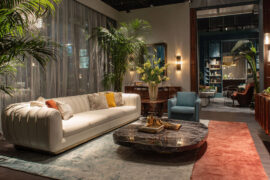
Most rooms feel unfinished not because of the furniture, but because of what is on the walls.
The right contemporary wall decor ideas can anchor a room, add texture, and reflect a design sensibility that feels current without dating itself in two years.
Wall art alone accounts for 75% of all wall decor purchases in the US market (Business Wire). Yet most people still hang pieces too high, too small, or without a clear strategy.
This guide covers everything from gallery wall layouts and large-scale canvas art to material choices, lighting, color approaches, and where to buy at every budget. Whether you are working with a living room, bedroom, or small space, you will leave with a clear plan.
What Is Contemporary Wall Decor?
Contemporary wall decor refers to decorative pieces and wall treatments that reflect current aesthetics in use right now, not a fixed historical period. Unlike mid-century modern or Art Deco, which belong to specific eras, contemporary style keeps shifting.
It absorbs influences from multiple directions at once, which is exactly what makes it tricky to pin down.
4 defining visual traits of contemporary wall decor:
- Neutral or muted base palettes with controlled color accents
- Clean lines and deliberate negative space between pieces
- Mixed materials in a single arrangement (wood, metal, textile)
- Scale awareness: one dominant piece rather than filling every inch
The global wall decor market was valued at USD 60.76 billion in 2024 and is projected to reach USD 84.87 billion by 2029 at a 7.3% CAGR (Business Research Company, 2025).
That growth is driven largely by consumers wanting personalized, aesthetically specific pieces rather than generic store fills.
How Contemporary Differs from Modern Style
Key difference: Modern refers to a movement from roughly 1920 to 1970. Contemporary means right now.
A modern interior has flat planes, Bauhaus-influenced lines, and a strict palette. A contemporary room can pull from 3 different style references at once, as long as the result reads as current and intentional.
Confusing the two leads to buying pieces that clash rather than layer.
| Aspect | Modern Style | Contemporary Style |
|---|---|---|
| Time period | Fixed: 1920s-1970s | Fluid: right now |
| Color palette | Strict neutrals, primary accents | Neutral base, variable accents |
| Materials | Steel, glass, concrete | Mixed: wood, rattan, metal, textile |
| Wall decor approach | Minimal, geometric, restrained | Curated, layered, scale-conscious |
The contemporary vs. modern distinction matters most when sourcing pieces. Getting it wrong means buying art from the wrong decade for your space.
What Wall Decor Styles Qualify as Contemporary Right Now?
Contemporary wall decor is not one single look. It is a set of active sub-styles that share enough visual DNA to read as current, even when they look very different from each other.
According to a 2024 survey of 643 designers by 1stDibs, 85% of interior designers planned to use contemporary pieces in current production for their projects, making it the most actively sourced category by a wide margin.
Minimalist and Japandi-Influenced Wall Decor
Pinterest searches for “zen house” rose 405% between June 2023 and June 2024, pointing to a clear shift toward calm, uncluttered wall arrangements (Accio, 2025).
Minimalist wall decor in a contemporary context is not bare walls. It is one or two intentional pieces with strong negative space around them.
Japandi wall decor sits at the intersection of Scandinavian and Japanese minimalism. Common pieces include:
- Framed ink brushwork or abstract print in muted tones
- Woven rattan or seagrass wall panels
- Single ceramic wall sculpture with organic form
Architectural Digest included Japandi in its list of 2024’s trendiest interior styles alongside biophilic and quiet-luxury aesthetics.
Organic Modern Wall Decor
Organic modern pulls natural textures into clean, structured compositions. Think: a raw-edge wooden frame around a botanical print, or a plaster relief panel next to a linen wall hanging.
The arts and crafts market (handmade, artisan pieces) is projected to grow from USD 45.3 billion in 2024 to USD 74.3 billion by 2033, reflecting strong consumer appetite for hand-finished, tactile wall decor over mass-produced alternatives (Business Research Insights, via Artsy).
Common organic modern materials: raw linen, terracotta clay, live-edge wood, preserved botanicals, unglazed ceramic.
Maximalist-Contemporary Wall Decor
In the 2025 1stDibs Designer Trends Survey, 33% of designers cited maximalism as their primary approach, tied with eclecticism as the top current style direction.
Maximalist-contemporary is not clutter. It is high-density, high-intention. Gallery walls with 12+ pieces, large-scale mixed-media arrangements, and layered textile wall hangings all fall here.
West Elm and Anthropologie both shifted their 2024-2025 wall decor collections toward larger, denser, more layered options to reflect this movement.
What Are the Best Contemporary Wall Decor Ideas for Living Rooms?

The living room takes the majority of wall decor investment. Wall art alone accounts for 75% of all wall decor purchases in the US market, and the US segment is forecast to grow by USD 12.6 billion between 2024 and 2029 (Business Wire / Technavio).
That concentration of spend makes the living room the highest-stakes wall in any home.
Gallery Walls in Contemporary Interiors

Gallery walls surged in 2024 and continued into 2025 as a design staple, not just a trend. Living rooms, bedrooms, and home offices were the 3 most common rooms for gallery wall installations (Urban Road, 2024).
Grid vs. organic layout: A grid arrangement reads as more contemporary and controlled. Organic or salon-style hanging reads as eclectic-contemporary. Both work; the choice depends on whether the room already has strong geometric lines or softer curves.
Frame finish choices that read as current:
- Matte black: the most widely used finish in contemporary interiors
- Brushed brass: adds warmth without veering into traditional
- Frameless float mount: most minimal option, best for acrylic or metal prints
Recommended spacing between frames is 2 to 3 inches. Tighter than that reads cluttered; wider than 4 inches breaks the visual connection between pieces.
Large-Scale Art Panels

Oversized art dominated 2024 wall decor trends, with designers and homeowners choosing single large-scale pieces over multiple smaller ones as a focal point strategy (BIG Wall Decor, 2024).
Scale rule: art width should cover 60 to 75 percent of the furniture width below it. A sofa that runs 84 inches wide needs art between 50 and 63 inches wide.
3 substrate options for large-scale contemporary art:
- Stretched canvas: classic, warm, works in most rooms
- Metal print: high contrast, suits industrial-contemporary spaces
- Acrylic float mount: sharp detail, reads modern and gallery-quality
Diptych and triptych formats work as an alternative to single oversized panels when wall width is limited. The 3-panel format in particular was flagged as a strong 2025 direction by multiple design sources.
Textured Wall Panels as Architectural Decor

Fluted wood panels, reeded MDF, and plaster wall treatments function as decor and architecture simultaneously. They create depth and shadow play without hanging a single frame.
These work especially well in living rooms where the focal point needs to be structural rather than art-driven. A reeded wood panel behind a sofa reads as intentional design, not decoration as afterthought.
Statement mirrors belong in this category too. Arched mirrors, oversized rectangular mirrors, and sunburst mirrors all serve as large-scale wall decor while doubling the apparent depth of the room. The arched mirror format was among the most searched contemporary mirror styles on Houzz and Pinterest through 2024-2025.
What Contemporary Wall Decor Works in Bedrooms?
Bedroom walls carry different constraints than living rooms: scale is tighter, mood needs to support rest, and the wall above the bed dominates everything else.
A contemporary bedroom wall arrangement usually works from one of 3 starting points.
Art and Textiles Above the Headboard
The headboard wall is the primary visual anchor in any bedroom. In contemporary interiors, this space is handled in 1 of 4 ways:
- Single oversized canvas: most common, clean impact
- Woven wall hanging: adds texture and acoustic softness
- Upholstered wall panel: merges headboard and decor into one continuous element
- Floating shelf vignette: small art leaned against the wall with objects, no drilling required
Fabric wall hangings and woven art are growing specifically because they reduce echo in hard-surface rooms while adding the layered texture organic modern spaces call for.
Monochromatic Art in Sleep-Focused Spaces
Bedroom wall decor performs best when it does not compete with rest. Monochromatic arrangements, meaning art that stays within the same color family as the walls, keep the room visually calm without making it feel bare.
This is not the same as matching art to the wall. It means choosing pieces in tones 1 to 2 steps lighter or darker, in the same hue family, so the wall reads as layered rather than flat.
The 1stDibs 2024 survey found that abstract art was the most anticipated style for designers, with 51% planning to use it across projects. In bedrooms, abstract pieces in tonal arrangements hit both the contemporary and the restful brief at once.
What Contemporary Wall Decor Ideas Work in Small Spaces?
Small spaces punish poor wall decor choices faster than large ones. One oversized piece hung too high, or a gallery wall with too many pieces, and the room feels cramped rather than curated.
Wall art alone accounts for 37.1% of all wall decor market volume by product type (Market.us, 2024). Most of that demand comes from apartment and smaller-home owners, which makes small-space application the most common real-world context.
Vertical Compositions and Visual Height
Vertical art arrangements draw the eye upward and make ceilings read higher. A pair of narrow vertical prints hung with 2 inches between them does more for perceived ceiling height than any horizontal arrangement at the same scale.
3 quick rules for small-space wall decor:
- Hang art so the center sits at 57 to 60 inches from the floor, not higher
- Use 1 to 2 pieces maximum per wall to avoid visual crowding
- Choose pieces with light or neutral backgrounds to push the wall back visually
Low-Commitment Options for Renters
Nearly 46% of wall decor purchases are already made through online channels (Market Growth Reports, 2024). A large portion of those buyers are renters who need options that do not require permanent wall damage.
Renter-friendly contemporary wall decor:
- Narrow picture ledge shelves for rotating art without new holes
- Removable wallpaper panels as a textured accent behind furniture
- Adhesive-backed wall decals in geometric or abstract formats
- Leaning oversized art against the wall rather than hanging it
IKEA’s MOSSLANDA picture ledge series and similar products from CB2 have become the go-to small-space solution precisely because art can be swapped without tools.
Mirrors as Small-Space Decor
A mirror positioned opposite a window doubles perceived room depth. This is one of the few decorating rules with no real exceptions in small spaces.
Best placement for mirrors in small rooms: end of a hallway, opposite the main window, or flanking a doorway. Placing a mirror adjacent to a window rather than opposite it wastes most of the light-bouncing benefit.
Arched mirrors in particular work well in small spaces because their vertical orientation adds height while the curved top softens the geometry of tight rectangular rooms.
What Materials Are Used in Contemporary Wall Decor?
Material choice is where contemporary wall decor diverges most clearly from traditional approaches. Wood dominated material type with a 34.3% share of the wall decor market in 2024 (Market.us), but in contemporary interiors, wood is rarely used alone.
The defining move in contemporary wall decor is mixing 2 to 3 materials in a single arrangement or within the same wall zone.
Natural Materials
Natural materials connect wall decor to the broader organic modern direction that dominated 2024-2025 interior design.
Most used natural materials in contemporary wall decor:
- Rattan and seagrass: woven panels, circular mirror frames, wall-hung baskets repurposed as art
- Raw and live-edge wood: carved wall panels, wooden frame arrangements, slatted wood feature walls
- Terracotta and unglazed ceramic: wall-mounted sculptural pieces, ceramic tile arrangements
- Linen and bouclé: stretched as canvas alternatives, used in upholstered wall panels
Preserved botanical wall art (dried pampas, pressed botanicals in frames, moss panels) fits here too. Moss wall panel installations grew significantly through 2024 as a biophilic design option that also functions as acoustic treatment.
Industrial and Hard Materials
Brushed steel, blackened iron, and concrete panels bring the kind of contrast that keeps contemporary interiors from reading as too soft or too uniform.
These materials work best in pairs with softer textures. A blackened iron wall sculpture next to a linen panel, or a concrete wall tile behind a rattan mirror frame, creates the material tension that reads as considered rather than accidental.
Texture in interior design matters here more than color. Two materials in the same neutral tone but with different surface finishes (matte linen vs. satin metal) create depth without introducing color complexity.
How to Mix Materials on One Wall
The 2-to-3 material rule keeps arrangements from becoming incoherent. More than 3 distinct materials on a single wall reads as chaotic in contemporary spaces.
| Base Material | Pairing Options | Avoid Pairing With |
|---|---|---|
| Natural wood | Brushed metal, linen, ceramic | Faux wood, high-gloss plastic |
| Woven rattan | Raw linen, matte ceramic, terracotta | Polished chrome, acrylic |
| Brushed steel | Concrete, glass, dark-stained wood | Rattan, macrame, bouclé |
| Ceramic/plaster | Linen, raw wood, seagrass | Shiny metal, patent leather |
Material choice also needs to connect to the floor and furniture materials already in the room. If the flooring is white oak and the sofa is in a textured grey fabric, wall decor in linen and brushed brass creates a coherent material thread rather than competing with it.
What Color Approaches Define Contemporary Wall Decor?
Color in contemporary wall decor follows a specific logic: the wall stays neutral, and the art or decor piece carries the color load. That structure holds across minimalist, organic modern, and maximalist-contemporary sub-styles.
The global color in interior design conversation shifted meaningfully in 2024 and 2025. The National Kitchen and Bath Association’s 2025 trend reports found 71% of designers prefer colorful spaces over all-neutral ones, but that color is concentrated in a single element rather than spread across walls, furniture, and decor simultaneously.
Neutral Base Palette with Single Color Accent
The dominant color strategy in contemporary interiors: walls in white, warm white, greige, or soft grey, with wall decor that carries one deliberate color statement.
This works because:
- The art or decor piece becomes the visual destination immediately
- Swapping one piece changes the room’s color story without repainting
- Neutral walls let mixed-material arrangements read as intentional, not busy
Pantone’s Color of the Year picks and Benjamin Moore’s annual forecasts drive specific accent color choices each year. In 2024-2025, terracotta, warm ochre, deep forest green, and muted burgundy were the most carried accent colors in contemporary wall art collections from West Elm, CB2, and Restoration Hardware.
Tonal Layering
Tonal layering means selecting wall decor in the same color family as the wall, but in different textures and finishes. A warm white wall with a cream linen panel, an off-white plaster relief, and a pale natural wood frame reads as rich and layered rather than flat or sparse.
This approach is particularly effective in bedrooms and home offices where strong color contrast would be distracting. It relies entirely on material texture to create visual interest rather than hue variation.
Contrast and Color Isolation

When contrast is the goal, contemporary color strategy uses color isolation: one piece or zone in a saturated color, everything else neutral. A single large-scale canvas in deep cobalt on a white wall is more contemporary than 3 pieces in 3 different colors.
The rule holds in reverse too. Light art on a saturated wall, such as a cream linen panel against a deep olive or charcoal wall, works as long as the wall color is the only saturated element in the room.
Color isolation connects directly to contrast principles in interior design, where the goal is a single, clear focal point rather than distributed visual competition across the room.
How Is Lighting Used with Contemporary Wall Decor?
Lighting in interior design is not a separate decision from wall decor. The two are interdependent. The wrong light source kills a good piece; the right one makes a mid-range print look like a gallery installation.
The global decorative lighting market was valued at USD 41.60 billion in 2024, growing at 2.9% CAGR through 2030 (SwiftBeacon, 2025). A meaningful portion of that spend is picture-specific and wall-adjacent lighting, not ceiling fixtures.
Picture Lights and Wall-Mounted Spotlights
Picture lights mount directly to the frame or wall above the art. They function as decor themselves in contemporary interiors, especially in brushed brass, matte black, or satin nickel finishes that match the frame hardware.
Wall-mounted adjustable spotlights, also called picture spotlights, give more flexibility. They can pivot to cover multiple pieces from a single wall plate, which makes them practical for gallery walls with changing arrangements.
Both serve a dual purpose: they illuminate the piece and they add a layer of intentional detail that signals considered design rather than accidental decoration.
LED Backlighting Behind Panels
LED strip lighting behind floating wall panels, textured wood slat walls, or floating shelves creates depth that regular overhead lighting cannot replicate. The backlit effect makes the panel appear to float and gives the wall a dimensional quality after dark.
2 technical details that matter:
- Use 2700K to 3000K (warm white) behind natural wood or rattan panels to stay consistent with the material’s warmth
- Use 4000K (neutral white) behind concrete, metal, or plaster panels to preserve their cool-toned quality
The smart lighting market is projected to reach USD 56.63 billion by 2030 at a 19.77% CAGR (ElectroIQ, 2025). Tunable and dimmable LED strips represent a growing share of that, used specifically in residential wall decor contexts.
Natural Light Direction and Art Placement
North-facing walls receive consistent, diffuse light with no direct sun glare. South-facing walls get strong direct sunlight that can fade canvas and paper prints over time.
Placement rule: hang UV-sensitive pieces (original prints, watercolor, photography) on north or east-facing walls. Reserve south and west walls for metal prints, acrylic mounts, or less light-sensitive materials.
This is the kind of detail most buyers skip until a piece fades visibly. It costs nothing to apply at the hanging stage and saves significant investment in art replacement later.
What Are DIY Contemporary Wall Decor Options?

DIY and mass-market home decor retailers are projected to grow at 8.28% annually through 2026, faster than the broader market, driven directly by cost-conscious consumer behavior (ElectroIQ, 2025).
The appetite for build-it-yourself wall decor in contemporary styles is real and measurable. These are not craft-fair projects. Several DIY methods produce results that are indistinguishable from retail pieces.
Textured Wall Treatments
Limewash paint and venetian plaster are the two most-searched DIY wall texture techniques in 2024-2025, per Google Trends data.
Limewash: applied in layers with a brush, creates a mottled, aged surface. Cost is roughly $30-$50 per gallon covering 200-300 square feet.
Venetian plaster: requires a smoothing trowel and 2-3 coats but produces a polished stone finish. More labor-intensive but achieves a luxury result on a DIY budget.
Both techniques work as full accent wall treatments or in smaller panels behind furniture. Sherwin-Williams and Benjamin Moore both carry limewash-effect paint products specifically formulated for no-primer DIY application.
Wooden Slat Panels
Peel-and-stick natural oak acoustic wood slat panels became one of the most widely adopted DIY wall decor products in 2024-2025. They require no permanent installation, absorb sound, and read as architectural rather than decorative.
Standard approach using dimensional lumber:
- 1×2 or 1×3 boards in consistent lengths, spaced 1 to 1.5 inches apart
- Painted backing surface in black or dark charcoal to deepen the shadow gap
- Applied with construction adhesive or panel clips for non-permanent installs
Cost per 4×8 foot panel runs $40-$90 in materials, compared to $200-$400 for equivalent retail versions from West Elm or CB2.
Printable and Digital Wall Art
The print-on-demand industry was valued at USD 7.4 billion in 2025 and is growing at 25.8% annually through 2030 (Printful, 2025). A large driver is downloadable art for home printing and framing, which has fundamentally changed the accessible price point for gallery-quality contemporary prints.
Canva, Society6, Etsy, and Desenio all offer instant-download files. Printed through a local print shop on archival paper and framed with a matte black or brushed brass frame, the result is functionally identical to a $150-200 retail piece at under $30 in total cost.
Best formats for DIY printable art in contemporary spaces:
- Abstract wash: organic color fields in terracotta, ochre, or sage
- Minimal line art: single continuous-line faces or botanicals
- Typographic: single word or short phrase in clean sans-serif
Preserved Botanical and Moss Panels
Preserved moss wall panels sit at the intersection of biophilic design and contemporary wall decor. They require no watering, no maintenance, and no light, making them genuinely zero-effort after installation.
DIY kits from Amazon and Etsy run $30-$80 for a 12×16 inch panel. Retail equivalents from specialty vendors start at $200. The material is the same stabilized reindeer or sheet moss; the only variable is the frame finish and assembly time.
Macrame wall hanging ideas follow the same economics. A basic diamond-pattern hanging requires under $15 in cord and a wooden dowel, with tutorials freely available. Well-made examples sell at retail for $80-$150.
Where to Buy Contemporary Wall Decor?
The e-commerce channel held 44.3% of global home decor market share in 2024, the single largest distribution channel (Market Data Forecast, 2024). For wall art specifically, the shift to online is even more pronounced: 46% of wall decor purchases are already made through digital channels.
That concentration online means buyers have access to more options than any single retailer carries. The challenge is knowing which channel fits which need.
High-End and Mid-Range Retailers
High-end options:
- Restoration Hardware: large-scale photographic prints, metal wall sculptures, textured canvas, gallery-framed art
- CB2: more contemporary edge than RH, stronger in abstract and mixed-media formats
- Article: strong on oversized abstract canvas and wooden wall panels
Wayfair reported USD 11.85 billion in revenue in 2024 and sits in the mid-range alongside Pottery Barn, West Elm, and Anthropologie. These channels dominate contemporary wall decor volume because they balance price, quantity of options, and quality threshold.
Independent Artists and Print Platforms
Saatchi Art and Artfinder connect buyers directly to original and limited-edition prints. Saatchi Art ships original works from over 100 countries. Artfinder focuses on independent European and US artists with works priced from $50 upward.
Society6 and Redbubble occupy the mid-range digital print tier. Quality varies, but both offer a wider range of aesthetic directions than retail chains, including niche contemporary sub-styles like dark japandi, maximalist-contemporary, and organic abstract.
Key considerations when buying from independent platforms:
- Print substrate (paper weight, canvas vs. poster stock)
- Whether the seller ships with a certificate of authenticity
- Frame inclusion vs. print-only and what that adds to total cost
Budget and IKEA Options
IKEA’s SYMFONISK picture frame with WiFi speaker integrates sound hardware into a wall decor format, which is a genuinely clever contemporary option. Beyond that, IKEA’s RIBBA and YLLEVAD frame lines remain the most used affordable gallery wall framing solution.
The Target Studio McGee collection covers the organic modern and minimalist-contemporary range at a mid-budget price point. Most pieces sit between $30-$150, making it accessible for full-wall arrangements without a high per-piece investment.
| Channel | Price Range | Best For |
|---|---|---|
| Restoration Hardware, CB2 | $150–$800+ | Statement pieces, large-scale art |
| West Elm, Pottery Barn, Article | $60–$400 | Gallery walls, mixed arrangements |
| Saatchi Art, Artfinder | $50–$500+ | Original art, limited editions |
| Target Studio McGee, IKEA | $15–$150 | Budget builds, frame collections |
| Etsy, Society6, Desenio | $10–$80 | Printable art, niche styles |
How to Arrange Contemporary Wall Decor Without a Designer?
The arrangement is where most people get it wrong, not the art selection itself. A well-chosen piece hung at the wrong height, in the wrong position relative to furniture, undoes most of the design intent.
The principles of interior design apply directly here, specifically balance, scale and proportion, and focal point logic. Getting these 3 right solves most arrangement problems before a single nail goes in.
The Paper Template Method
Trace each piece on kraft paper or newspaper. Cut out the shapes, tape them to the wall in your planned arrangement, and live with it for a day before committing.
This removes guesswork from gallery wall planning entirely. Adjustments cost nothing at the paper stage. At the drilling stage, each misplaced hole is a visible problem.
Gallery wall spacing rule: 2 to 3 inches between frames for a tight, curated look. Beyond 4 inches, pieces read as separate items rather than a cohesive arrangement.
Eye-Level Rule and Furniture Anchoring
Center of art at 57 to 60 inches from the floor. This is the museum standard and applies in residential settings for the same reason: it matches average standing eye level and keeps the room from feeling top-heavy.
Art should be anchored to the furniture below it, not to the wall independently. A piece hung 12 inches above a sofa looks correct. The same piece hung 24 inches above the same sofa looks unmoored.
The unity principle in interior design explains why: visual elements need a clear relationship to each other to read as intentional. Art floating too high loses its connection to the room entirely.
Common Arrangement Mistakes
A typical security deposit deduction for wall damage from incorrect drilling runs $50 to $200 (Rossetti Art, 2026). Planning the arrangement before drilling is not just an aesthetic step; it is a practical one.
The 4 most common contemporary wall decor arrangement errors:
- Hanging too high: the most frequent mistake, makes ceilings feel lower, not higher
- Too small for the wall: a single 8×10 inch print on a 10-foot wall reads as decoration by accident, not by intent
- No weight distribution: a gallery wall with all heavy visual pieces on one side creates imbalance that reads as unfinished
- Ignoring the room’s color thread: art that shares no color connection with any other element in the room reads as randomly placed
Using Painter’s Tape for Layout Planning
Mark the planned nail or hook positions with painter’s tape X marks before drilling. Step back 8 to 10 feet and assess the layout from the natural viewing distance of the room, not from arm’s reach.
Most arrangement errors are only visible from a distance. Evaluating from close range while planning is the main reason gallery walls end up lopsided or too dense on one side.
The rhythm principle applies here: a gallery wall should have a visual flow across it, not equal density everywhere. Varying the size of pieces and leaving intentional breathing room creates the kind of arrangement that reads as designed rather than filled.
FAQ on Contemporary Wall Decor Ideas
What is the difference between contemporary and modern wall decor?
Modern refers to a fixed design period from roughly the 1920s to 1970s. Contemporary wall decor means what is current right now. Contemporary absorbs influences from multiple styles at once, while modern follows strict Bauhaus-influenced rules.
What size wall art works best for a living room?
Art width should cover 60 to 75 percent of the furniture below it. For an 84-inch sofa, that means art between 50 and 63 inches wide. Single oversized pieces read stronger than several small ones in contemporary living rooms.
How high should you hang wall art?
Center your art at 57 to 60 inches from the floor. This is the museum standard and matches average eye level. Hanging higher is the most common mistake and makes ceilings feel lower, not taller.
What wall decor materials are most popular right now?
Natural materials lead current trends: rattan, raw linen, terracotta, unglazed ceramic, and live-edge wood. Mixing 2 to 3 materials in one arrangement, such as woven rattan with brushed metal, is a defining move in organic modern decor.
How do you create a gallery wall without it looking cluttered?
Keep spacing between frames at 2 to 3 inches. Use the paper template method before drilling. Stick to one dominant frame finish like matte black or brushed brass. Limit the arrangement to one wall zone anchored to the furniture below.
What contemporary wall decor works in small spaces?
Vertical compositions draw the eye upward and increase perceived ceiling height. Use 1 to 2 pieces per wall maximum. Arched mirrors positioned opposite windows double perceived depth. Narrow picture ledge shelves let you rotate art without adding new holes.
What colors work best for contemporary wall art?
Keep walls neutral and let the art carry the color. Terracotta, warm ochre, deep forest green, and muted burgundy dominated contemporary collections through 2024-2025. Tonal layering, using art in the same color family as the wall, works especially well in bedrooms.
Where is the best place to buy contemporary wall art?
West Elm, CB2, and Article cover mid-to-high range. Saatchi Art and Artfinder connect buyers to original work. For budget options, Target Studio McGee and IKEA work well. Etsy and Society6 offer printable wall art downloads at under $30 per piece.
Can you do contemporary wall decor on a rental apartment budget?
Yes. Picture ledge shelves, removable adhesive strips, leaned oversized art, and peel-and-stick wallpaper panels all avoid permanent wall damage. Printable digital art framed with IKEA RIBBA frames costs under $40 total and reads as intentional contemporary decor.
How does lighting affect wall decor?
Picture lights and adjustable wall spotlights make mid-range art look gallery-quality. Use 2700K warm white bulbs with natural wood and rattan pieces. Place UV-sensitive prints on north or east-facing walls to prevent fading from direct sunlight over time.
Conclusion
This conclusion is for an article presenting contemporary wall decor ideas that work across budgets, room sizes, and personal styles.
The core principle stays consistent throughout: one macro context, intentional material choices, and scale that respects the room.
Whether you are layering a gallery wall layout in a living room, sourcing printable wall art for a rental, or choosing between organic modern and japandi-influenced arrangements, the decisions compound.
Get the scale right. Anchor art to furniture. Mix natural materials thoughtfully.
Wall art placement, color approach, and lighting all connect. None of them works well in isolation.
Start with one wall. Apply the 57-inch rule, choose a frame finish, and build from there.

- Paint Colors That Go with Gray Floors - August 20, 2026
- What Color Bedding Goes with Dark Wood Furniture - August 18, 2026
- What Color Walls Go with Oak Floors - August 16, 2026