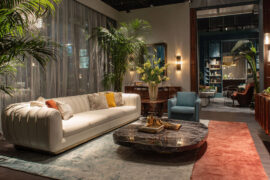
Most rooms fail not because of the furniture, the paint color, or the layout. They fail because of the lighting.
Contemporary lighting fixtures do more than illuminate a space. They define zones, set the emotional tone of a room, and function as design objects in their own right.
But selecting the right fixture, finish, scale, and color temperature for a space is genuinely tricky. There are real rules, and getting them wrong is expensive.
This guide covers everything from fixture types and material palettes to layered lighting plans, ceiling height thresholds, kitchen placement rules, and smart dimmer compatibility, so you can make informed decisions at every stage of a lighting project.
What Are Contemporary Lighting Fixtures?
Contemporary lighting fixtures are decorative light fixtures that reflect current design trends rather than a fixed historical period. Unlike modern interior design, which refers to a specific early-to-mid 20th century aesthetic, “contemporary” shifts with time. What reads as contemporary today may not in five years.
The category is defined by clean silhouettes, mixed material combinations, functional form, and minimal surface ornamentation.
A fixture earns the “contemporary” classification through 4 key design codes:
- Proportion: scaled deliberately, not decoratively oversized
- Finish: matte black, brushed brass, aged bronze, or smoked glass over polished chrome
- Silhouette: geometric or organic, never ornate
- Material logic: mixed media combinations (metal with linen, concrete with steel) rather than single-material construction
The global decorative lighting market was valued at USD 41.6 billion in 2024, projected to reach USD 49.4 billion by 2030 (Grand View Research, 2024). That growth is driven largely by residential demand for fixtures that serve as both light sources and design objects.
This is where contemporary design sits differently from traditional interior design or transitional styles. It does not rely on symmetry, carved wood detailing, or period-specific references. The fixture carries meaning through restraint, not embellishment.
Flos, Apparatus Studio, and Roll and Hill are 3 brands consistently cited as benchmarks for contemporary fixture design. Their work crosses residential, hospitality, and commercial specification categories, which is a useful signal of how broad the contemporary market actually is.
What Fixture Types Fall Under Contemporary Lighting?

Contemporary lighting covers 6 primary fixture types. Each serves a different functional role and occupies a distinct position in the lighting layer plan.
| Fixture Type | Primary Role | Typical Placement Zone |
|---|---|---|
| Pendant lights | Focal point / task | Kitchen islands, dining tables, entries |
| Chandeliers | Ambient / statement | Living rooms, dining rooms, foyers |
| Flush mounts | Ambient fill | Low-ceiling rooms, hallways, bedrooms |
| Wall sconces | Ambient / accent | Flanking beds, mirrors, artwork |
| Floor lamps | Task / ambient | Reading corners, living room zones |
| Recessed / track | Ambient fill / accent | Ceilings, kitchen task areas |
Pendant Lights and Chandeliers

Wall sconces dominated the decorative lighting category with 34.2% revenue share in 2024 (Grand View Research), but pendant lights and chandeliers remain the two fixture types most associated with contemporary residential specification.
Pendants function as focal points. They define zones in open-plan spaces and anchor dining tables and kitchen islands without requiring ceiling height to justify them.
Contemporary chandeliers read differently from traditional versions. The sculptural chandelier from Apparatus Studio or a geometric cluster from Lindsey Adelman operates as a standalone art object. The light output is secondary to the visual presence.
Flush Mounts and Semi-Flush Mounts

Flush mount fixtures are seeing renewed design attention across the industry. Houzz noted in their 2024 interior lighting trends report that designers are replacing recessed cans with small, well-designed flush mounts in residential projects.
Semi-flush mounts split the difference between a pendant and a flush mount. They work in rooms where ceiling height sits between 8 and 9.5 feet, where a hanging fixture would create clearance problems but a flat flush mount reads as too minimal.
Wall Sconces and Floor Lamps

Sconces serve 2 functions in contemporary interiors: ambient fill at wall level and accent lighting for artwork or architectural features.
Floor lamps in contemporary spaces tend toward arc designs or column-style uplighters. They add vertical interest in rooms where ceiling fixtures alone produce flat, one-dimensional light output.
Recessed and Track Lighting

Recessed lighting handles ambient fill without competing visually with decorative fixtures. The U.S. Department of Energy estimates more than 600 million recessed downlights are installed in U.S. homes and commercial buildings.
Track lighting suits contemporary spaces where flexibility matters. Adjustable heads allow accent lighting to shift as art collections rotate or room configurations change. This is especially relevant in residential kitchens with task-heavy counter zones.
What Materials Define Contemporary Lighting Fixtures?
Material selection is where a fixture becomes unambiguously contemporary or simply generic. The wrong finish on an otherwise well-proportioned fixture will flatten the design intent entirely.
Primary Finish Palette
Matte black remains the most specified contemporary finish across price tiers. It reads as clean and graphic without the coldness of polished chrome.
Brushed brass has replaced polished gold as the warm-toned metal of choice. The matte surface prevents it from reading as traditional or ornate.
Other finishes in current specification include:
- Aged bronze (warmer, works in organic-material interiors)
- Gunmetal / dark nickel (cooler, suits contemporary industrial schemes)
- Unlacquered brass (develops patina over time, aligns with wabi-sabi design sensibilities)
Shade and Diffuser Materials
Shade materials directly affect light quality. This is a detail most buyers underestimate.
| Material | Light Output | Design Association |
|---|---|---|
| Smoked glass | Diffused, warm | Sculptural, gallery-style |
| Linen drum | Soft, dispersed | Organic contemporary, transitional |
| Opal glass | Even, no glare | Minimal, Scandinavian-influenced |
| Perforated metal | Patterned, directional | Industrial contemporary |
| Open cage / no shade | Direct, high contrast | Sculptural, utilitarian |
Mixed Material Combinations
Contemporary fixtures almost always combine 2 or more materials. Single-material construction signals a different era.
Common pairings: metal frame with smoked glass globe, concrete base with brass hardware, wood with matte black steel.
The material combination also signals the broader interior style. A concrete-and-brass pendant works in modern organic interiors. A perforated steel cage fixture belongs in an industrial scheme. The fixture choice should follow the room’s material language, not contradict it.
What Are the Most Recognized Contemporary Lighting Brands?
Brand matters more in contemporary lighting than in most other furniture categories because fixture design is harder to evaluate on spec alone. The light quality, material integrity, and scale accuracy only fully register in person or installed.
Luxury and Designer Tier
Flos (Italy) is the reference brand for high-end contemporary specification. Designers like Michael Anastassiades and Jasper Morrison have produced fixtures for the brand that have become design benchmarks.
Apparatus Studio (New York) focuses on sculptural fixtures where the object itself is the statement. Their work appears in high-end residential and hospitality interiors globally.
Lindsey Adelman builds custom and semi-custom fixtures with branching, asymmetrical structures that sit outside standard categories. They are widely referenced on design platforms like Houzz for what Houzz described as fixtures that “double as art” in residential interiors.
Mid-Range Specification Tier
Visual Comfort covers a wide range of contemporary, transitional, and traditional styles. It is a go-to for residential specifications where the budget does not support luxury-tier fixtures but quality finish and proportion matter.
Arteriors bridges mid-range and upper-end pricing. Houzz called out their flush and semi-flush assortment specifically in their 2024 lighting trend review, noting that the brand’s output illustrates how chic these previously overlooked fixture categories have become.
Accessible Tier
Brands like Rejuvenation and West Elm cover contemporary fixture design at accessible price points. IKEA’s lighting range has also improved significantly in contemporary design quality, making layered lighting plans achievable on tighter budgets.
The residential lighting fixtures market was valued at USD 14.66 billion in 2023 and is projected to grow at 6.4% CAGR through 2030 (Grand View Research, 2024). The breadth of that market means every price tier has design-credible options, which was not true ten years ago.
How Does Scale Affect Contemporary Lighting Selection?
Scale is the single most common point of failure in residential lighting. A fixture can be perfect in every other respect and still destroy a room if it is sized incorrectly relative to the space.
Chandelier and Pendant Sizing Rules
The standard chandelier sizing formula: add the room dimensions in feet (length + width), and that sum in inches becomes the recommended fixture diameter.
A 12 x 14-foot dining room calls for a chandelier approximately 26 inches in diameter. Most homeowners install fixtures 30-40% smaller than this and the room reads as underfurnished and dim.
For pendant lights over kitchen islands:
- One pendant per 2 linear feet of island
- Pendant diameter should not exceed one-third of the island width
- Hanging height: 30-36 inches above the countertop surface
Ceiling Height Thresholds
| Ceiling Height | Recommended Fixture Types | Clearance Rule |
|---|---|---|
| 8–9 ft (standard) | Flush mounts, semi-flush, short pendants | 7 ft minimum from floor in walkthrough zones |
| 10–12 ft (mid) | Pendants, chandeliers, linear fixtures | 6.5 ft min over furniture surfaces |
| 13 ft+ (high) | Statement chandeliers, multi-tier fixtures | Scale up fixture to avoid “floating” appearance |
High-ceiling rooms have their own scaling challenge. A fixture that would work beautifully at 10 feet reads as undersized at 14 feet. Visual weight matters here as much as physical dimension. Rooms with high ceilings often need multi-tier fixtures or oversized statement pieces to hold the vertical space.
Visual Weight vs. Physical Size
A smoked glass globe and a wire-frame fixture can share identical diameters but read completely differently in a space. Dense, opaque materials read heavier and anchor a room more firmly. Open, transparent structures disappear more, which suits lighter material palettes but can undersell the fixture in visually busy rooms.
This distinction matters when specifying fixtures for space planning in open-plan layouts. A visually light fixture over a dining zone may not define the zone clearly enough when the adjacent living area has heavy furniture.
How Is Layered Lighting Applied in Contemporary Interiors?

Layered lighting is the practice of combining ambient, task, and accent sources to build a complete, flexible lighting plan. A room lit by a single overhead source reads as flat, harsh, and poorly resolved regardless of how well the furniture is arranged.
Smart lighting systems were adopted by 55% of new home buyers in 2023 (Interior Design Statistics, Gitnux 2024), and the 2024 Lamps Plus Trends Report, based on input from two dozen professional designers, identified layered lighting as the top lighting priority for residential interiors that year.
Ambient Layer: Recessed, Flush Mounts, and Chandeliers
Ambient lighting provides the room’s base illumination. It fills the space evenly without creating harsh shadows or contrast.
Recessed can spacing for ambient fill: one recessed light per 4-6 square feet of ceiling area is the standard calculation. Spaced too far apart, the ambient layer becomes uneven and pools of darkness appear at room edges.
Flush mounts and chandeliers serve ambient purposes in rooms where recessed lighting is not installed. In contemporary interiors, they double as visual anchors, so their design quality carries more weight than in schemes where recessed lighting handles the ambient work entirely.
Task Layer: Under-Cabinet, Pendants, and Sconces
Task lighting targets specific work surfaces. It requires higher lumen output and more directional control than ambient sources.
3 task lighting applications that appear in almost every contemporary residential project:
- Under-cabinet LED strips in kitchens (placed 2-3 inches from cabinet front edge to avoid visible strip hardware)
- Pendants over kitchen islands at 30-36 inches above counter height
- Bedside sconces positioned so the light center falls at shoulder height when seated in bed
LED technology now dominates task lighting entirely. 90% of U.S. households reported using LED bulbs in 2024, up from just 4% in 2015 (U.S. Energy Information Administration, 2024 RECS). That shift made dimmer-compatible LED task fixtures the standard specification rather than the premium option.
Accent Layer: Picture Lights, Directional Spots, and Cove Lighting

Accent lighting exists to direct attention. It creates contrast, highlights texture, and adds depth that neither ambient nor task layers can produce.
In contemporary interior design, the accent layer is often what separates a professionally designed scheme from a competent DIY installation. Homeowners tend to install ambient and task sources correctly but skip accent lighting entirely, which leaves the room without visual hierarchy.
Cove lighting (LED strip concealed in a ceiling or wall recess) is the most specified accent source in current contemporary residential projects. It produces indirect light that reads as architectural rather than decorative, which aligns well with the clean-line aesthetic of contemporary interiors.
What Color Temperatures Work in Contemporary Spaces?
Color temperature measured in Kelvin determines whether a space reads as warm, neutral, or cool. Getting this wrong is one of the most common and most correctable lighting mistakes in residential design.
Residential LEDs commonly achieve 110-130 lumens per watt, with top-performing products exceeding 120 lm/W (U.S. Department of Energy, 2023). But lumen efficiency means nothing if the color temperature is wrong for the space.
Kelvin Scale Basics for Residential Spaces
2700K-3000K: warm white. The closest equivalent to incandescent light. Works in living rooms, bedrooms, and dining rooms where warmth and comfort are the priority.
3000K-3500K: warm neutral. The crossover zone. Works in kitchens where task clarity matters but warmth is still preferable over clinical brightness.
4000K+: cool white. Suitable for home offices, bathrooms where makeup application requires accurate color rendering, and commercial applications. Rarely specified in contemporary residential living spaces.
Room-by-Room Recommendations
Contemporary spaces with neutral palettes (white, greige, warm gray) tend to absorb warm light well. Cool palettes (blue-grays, charcoal, true whites) can handle slightly higher Kelvin ratings without reading as clinical.
| Room | Recommended Kelvin | Notes |
|---|---|---|
| Living room | 2700K–3000K | All layers: ambient, accent, floor lamps |
| Bedroom | 2700K | Lower end for relaxation priority |
| Kitchen | 3000K–3500K | Higher for task zones, lower for ambient |
| Bathroom | 3000K–4000K | Vanity lighting needs color accuracy |
| Home office | 3500K–4000K | Supports alertness and screen visibility |
CRI and Color Rendering
CRI (Color Rendering Index) measures how accurately a light source renders colors compared to natural daylight. The scale runs from 0-100.
CRI 90+ is the standard specification for contemporary residential interiors. Below CRI 80, paint colors, upholstery fabrics, and artwork will not read accurately under artificial light. This becomes especially noticeable in kitchens and bathrooms where color accuracy directly affects daily use decisions.
Most contemporary fixture specifications from brands like Visual Comfort and Flos ship with CRI 90+ LED sources as standard. Budget-tier fixtures often fall to CRI 80 or below, which is one of the clearest quality differentiators across price tiers.
Understanding how light functions in interior design overall, including its relationship to color, texture, and spatial perception, gives a clearer picture of why color temperature decisions carry as much weight as fixture selection itself.
How Does Ceiling Height Determine Fixture Choices?
Ceiling height sets hard limits on fixture selection before any design preference enters the conversation. The wrong fixture type at the wrong height creates clearance problems, proportion failures, or both.
The global LED dimmers market was valued at USD 2.1 billion in 2023 and is projected to reach USD 4.3 billion by 2033 (Data Horizzon Research), reflecting how closely fixture selection and lighting control have become linked in residential specification.
Standard Ceilings: 8-9 Feet
Fixture priority: flush mounts, semi-flush mounts, short pendants with minimal drop.
7 feet of clearance from floor to fixture base is the minimum in any walkthrough zone. That leaves roughly 12-24 inches of usable drop at 8 feet, which rules out most chandeliers entirely.
Houzz’s 2024 lighting trend data noted designers replacing recessed cans with small, well-proportioned flush mounts in standard-ceiling rooms, treating the fixture as a design element rather than a utility item.
Mid-Height Ceilings: 10-12 Feet
This is where pendant lights and modest chandeliers become viable. The additional height gives enough visual breathing room for a hanging fixture to read as intentional rather than cramped.
Pendant drop calculation: hanging height target = ceiling height minus 7 feet for clearance, minus the fixture’s own body length.
A 10-foot ceiling with a 12-inch pendant body leaves approximately 24 inches of usable drop before the fixture hangs at eye level for a standing adult.
High Ceilings: 13 Feet and Above
High-ceiling rooms have a different problem: fixtures that look fine in a showroom float awkwardly when installed under 14 feet of open space. The fixture needs to pull downward visually to anchor the room.
3 approaches that work at this height:
- Multi-tier chandeliers with vertical extension
- Oversized statement pendants (18 inches or larger in diameter)
- Clustered pendant groupings at varied drop lengths to fill vertical space
Hammerton Studio’s 2026 luxury lighting report confirmed that as high-ceiling interiors become more common in new construction, the demand for fixtures specifically scaled to fill vertical space has grown substantially among residential designers.
What Lighting Placement Rules Apply to Contemporary Kitchens?
The kitchen has more fixture types per square foot than any other room in the house. Getting the placement right requires treating ambient, task, and accent sources as separate problems, not a single decision.
Pendant lights remain among the most specified kitchen island lighting choices in 2024 and 2025, with designers at Z&Co Design Group noting a shift away from oversized pendants toward more proportional, organic-material options (Z&Co Design Group, 2025).
Island Pendant Placement
Hanging height: 30-36 inches above the countertop surface.
Pendant spacing: one fixture per 2 linear feet of island, centered on island width. A 6-foot island takes 3 pendants. A 4-foot island takes 2.
Some designers at The Scout Guide (2025) are now specifying 3 or 4 fixtures over longer islands rather than the traditional 2-pendant rule, noting the denser arrangement adds visual interest without increasing light output problems.
Under-Cabinet Task Lighting
LED strip placement directly affects whether under-cabinet lighting reads as a clean architectural detail or an exposed utility run.
| Placement Variable | Correct Spec | Common Error |
|---|---|---|
| Distance from cabinet front | 2–3 inches back | Flush with front edge (strip visible) |
| Color temperature | 3000K–3500K | 4000K+ (reads clinical against warm finishes) |
| Driver location | Hidden inside cabinet | Exposed under cabinet (visible hardware) |
Recessed Ambient Fill
One recessed light per 4-6 square feet of kitchen area is the standard ambient fill calculation. Anything wider than 6 feet between cans creates visible dark zones at counter edges and room corners.
Recessed lights still matter in contemporary kitchens, but Homes and Gardens kitchen lighting coverage from 2025 noted that designers now treat recessed cans as the structural base layer, with pendant lights and sconces carrying the design work. Recessed alone reads as dated in current residential projects.
The pendant lighting placement in a kitchen also ties into the broader accent lighting strategy. A well-lit range hood flanked by sconces, paired with picture lighting over open shelving, builds a kitchen that reads as designed rather than simply lit.
How Are Contemporary Fixtures Selected for Open-Plan Spaces?
Open-plan layouts are the hardest lighting environments to resolve well. Without walls defining zones, fixtures have to do the spatial work that architecture normally handles.
Voice-activated lighting controls were integrated in 63% of smart homes in 2023 (Interior Design Statistics, Gitnux 2024), and open-plan spaces are driving much of that adoption because multi-zone dimming is where smart control delivers its clearest benefit.
Zone Definition Through Fixture Variation
Each functional zone in an open plan needs a different fixture type. Using the same fixture throughout flattens the space visually and makes it impossible for occupants to read where one zone ends and another begins.
Dining zone: pendant or chandelier centered over the table, scaled to table width.
Living zone: floor lamps plus recessed ambient fill. Avoid a single ceiling fixture trying to cover the entire seating area.
Transition points: wall sconces or cove lighting define the boundary between zones without introducing ceiling clutter.
Finish Consistency as a Unifying Strategy
Mixed fixture types across an open plan read as cohesive when the finish is consistent. Matte black pendants over the dining table, matte black sconces at the zone boundary, and matte black floor lamp hardware in the living area tie the scheme together despite the variation in fixture form.
Mixing more than 2 finishes across an open plan typically produces a collected, eclectic effect rather than a coherent contemporary one. That works in eclectic interiors, but not in minimalist or clean-line contemporary schemes.
Dimmer Zoning for Open Plans
Separate dimmer circuits per functional zone give an open-plan space its most useful quality: the ability to light one area for dinner while the adjacent living zone sits in low ambient light.
Lutron Caseta Wireless is the most specified residential dimmer system for this application. It handles trailing-edge LED dimming without the flickering and buzzing that cheaper leading-edge dimmers produce with modern LED fixtures.
Trailing-edge dimmers are the correct specification for LED fixtures. Leading-edge (incandescent-era) dimmers are the most common cause of LED dimming failures in residential retrofits.
What Are the Current Directions in Contemporary Lighting Design?
The contemporary lighting category is moving in 4 distinct directions right now, and they are not all pointing the same way. Some contradict each other, which is actually what keeps the category interesting.
Sculptural Fixtures as Art Objects
Fixtures are replacing art as the primary statement object in many contemporary interiors. Homes and Gardens identified sculptural lighting as a major prediction for 2025, with designers describing organic shapes, flowing forms, and asymmetrical silhouettes replacing the strict geometric structures that defined contemporary design in the previous decade.
Hammerton Studio’s 2026 luxury lighting trends report described this shift as a move from hyper-minimalism toward “emotional minimalism”, combining restraint with handcrafted texture and artisan-quality materials.
Apparatus Studio and Lindsey Adelman sit at the most developed end of this direction, producing fixtures where the light output is secondary to the object’s presence as a three-dimensional form.
Integrated LED Architecture
At the opposite end of the spectrum, minimalist lighting design is replacing decorative fixtures entirely in some applications. Cove lighting, LED linear strips concealed in ceiling coffers, and architectural slot fixtures produce light with no visible fixture hardware.
This direction favors the architecture over the object. The room itself becomes the light source.
It works when the architecture is strong enough to carry the visual weight alone. In rooms without distinctive architectural detail, invisible lighting produces flat, characterless spaces that need decorative fixtures to compensate.
Organic and Asymmetrical Forms
Kichler’s 2026 trends report confirmed that rigid geometry is giving way to curves, arches, and organic lines across fixture silhouettes. Fluted glass, blown glass with visible air bubbles, and hand-shaped metal all signal a move toward fixtures that carry evidence of making.
This connects directly to the broader biophilic design direction in residential interiors, where natural materials and organic forms are replacing the machine-precision aesthetic that dominated contemporary design through the 2010s.
Sustainability in Fixture Specification
By 2035, the U.S. Department of Energy projects energy savings from LED lighting could reach 569 TWh annually, equivalent to the output of more than 92 large power plants. That projection is already shaping purchasing behavior at the specification level.
Sustainable material use: recycled glass, responsibly sourced natural fibers, take-back programs for fixture end-of-life.
Energy labeling: ENERGY STAR certification and Title 24 compliance are now standard specification requirements in California and increasingly in other states. Brands like Flos have responded with LED retrofit programs that allow classic fixture bodies to be updated with current lamp technology without replacing the fixture entirely.
How Do Dimmers and Smart Controls Integrate with Contemporary Fixtures?

The smart lighting market was valued at USD 27.33 billion in 2024 and is forecast to grow at 22.9% CAGR through 2033 (Straits Research, 2024). That growth is being driven in part by residential demand for dimming and scene control systems that work reliably with LED fixtures.
LED Dimmer Compatibility
Not all LED fixtures dim cleanly on all dimmers. This is the most common technical failure point in residential lighting installations.
| Dimmer Type | LED Compatibility | Common Issue |
|---|---|---|
| Trailing-edge (ELV) | Correct for most LED | Requires compatible driver |
| Leading-edge (MLV) | Incandescent-era standard | Flickering, buzzing with LED |
| 0-10V | Commercial-grade LED | Not compatible with standard residential LED |
| DALI protocol | High-end residential / commercial | Requires DALI-compatible drivers |
Lutron tests LED bulbs and fixtures for compatibility with its dimmer range and maintains a publicly available LED Finder Tool. Using Lutron’s compatibility database before specifying fixtures avoids the majority of dimming performance problems in residential installations.
Smart Dimmer Systems for Residential Use
Lutron Caseta Wireless is the standard residential smart dimmer reference for contemporary interiors. It uses a proprietary Clear Connect RF protocol rather than Wi-Fi, which produces more reliable communication in dense device environments.
The Matter protocol, released in 2022 and gaining adoption through 2024-2025, is changing the compatibility picture. It allows fixtures and controls from different brands to communicate through a unified standard, which Mordor Intelligence’s 2025 smart lighting report identified as removing the proprietary barriers that previously created vendor lock-in.
Color-Tunable and Circadian Lighting
CCT-select (Correlated Color Temperature select) technology allows a single fixture to shift between color temperatures, typically from 2700K through 6500K. Kichler’s 2026 trends report described circadian lighting as something clients now expect rather than treat as an optional upgrade.
Philips Hue launched its first generative AI lighting assistant in January 2025, allowing users to create customized scene programming through voice or text input (Signify, January 2025). This represents the practical application of what circadian lighting systems have been promising at the specification level for several years.
Understanding what ambient lighting means in practice, how task lighting integrates with smart controls, and how interior design principles shape fixture selection gives the full picture of how contemporary lighting fixtures function as both design objects and technical systems within a space.
FAQ on Contemporary Lighting Fixtures
What makes a lighting fixture contemporary?
Contemporary fixtures follow current design trends rather than a fixed historical period. They share 4 characteristics: clean silhouettes, mixed materials, minimal ornamentation, and finishes like matte black or brushed brass. The category shifts over time.
What is the difference between modern and contemporary lighting?
Modern lighting refers to a specific early-to-mid 20th century aesthetic rooted in the Bauhaus movement. Contemporary lighting reflects what is current right now. The two terms are often confused but describe different design periods entirely.
What finish is most popular for contemporary light fixtures?
Matte black is the most widely specified contemporary finish across all price tiers. Brushed brass ranks second. Both avoid the high-polish look that reads as traditional. Mixed-finish combinations, pairing warm and cool metals, are increasingly common in current residential projects.
How do I size a chandelier for my dining room?
Add the room’s length and width in feet. That sum in inches gives the recommended chandelier diameter. A 12×14-foot dining room calls for a fixture roughly 26 inches wide. Most homeowners install fixtures 30-40% too small.
What color temperature works best in contemporary interiors?
K-3000K for living rooms and bedrooms. 3000K-3500K for kitchens. CRI 90+ is the standard for accurate color rendering across all rooms. Cool white (4000K+) suits home offices but rarely works in contemporary residential living spaces.
What is layered lighting and why does it matter?
Layered lighting combines ambient, task lighting, and accent sources in one room. A single overhead fixture produces flat, harsh light regardless of fixture quality. Layering creates depth, visual hierarchy, and flexibility for different uses throughout the day.
How high should pendant lights hang over a kitchen island?
30-36 inches above the countertop surface is the standard hanging height. Space pendants at one fixture per 2 linear feet of island. Pendant diameter should not exceed one-third of the island width to maintain visual proportion.
Are LED fixtures compatible with all dimmers?
No. LEDs require trailing-edge dimmers, not the leading-edge dimmers designed for incandescent bulbs. Using the wrong dimmer type causes flickering and buzzing. Lutron’s LED Finder Tool lists verified compatible bulb and dimmer combinations for residential installations.
What are the best contemporary lighting brands?
Flos and Apparatus Studio lead the luxury tier. Visual Comfort and Arteriors cover mid-range residential specification. For accessible budgets, Rejuvenation and West Elm offer credible contemporary fixture design. Brand choice depends primarily on budget, lead time, and specification requirements.
How do I light an open-plan space with contemporary fixtures?
Use different fixture types per zone: pendants over dining, recessed fill over living areas, sconces at transition points. Keep the finish consistent across all zones to unify the scheme. Separate dimmer circuits per zone give independent control over each area.
Conclusion
This conclusion is for an article presenting contemporary lighting fixtures as a system, not a collection of individual purchases.
Fixture type, material finish, color temperature, CRI rating, and dimmer compatibility all interact. Getting one wrong affects everything else.
Scale your chandelier to the room. Layer ambient, task, and accent lighting separately. Match Kelvin ratings to how each space is actually used.
Brands like Flos, Visual Comfort, and Arteriors set the standard at different budget tiers. Lutron handles the control side reliably.
Sculptural pendants, organic forms, integrated LED cove lighting, and circadian-tunable fixtures are where residential lighting design is heading. The principles behind selecting them stay the same.

- Paint Colors That Go with Gray Floors - August 20, 2026
- What Color Bedding Goes with Dark Wood Furniture - August 18, 2026
- What Color Walls Go with Oak Floors - August 16, 2026