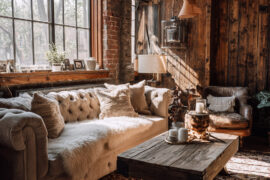
The right light fixture does not just illuminate a room. It tells you something about the people who live there.
Rustic lighting fixtures pull from reclaimed wood, hand-forged wrought iron, aged brass, and warm Edison filament bulbs to create spaces that feel lived-in and intentional. Not polished. Not staged.
But choosing the wrong fixture, the wrong finish, or the wrong bulb quietly works against everything else in the room.
This guide covers what defines rustic fixtures, which materials and types exist, how they fit different design styles, what brands and price points to know, and how to install, maintain, and bulb them correctly.
What Are Rustic Lighting Fixtures?

Rustic lighting fixtures are light fittings built from raw, natural, or aged materials, designed to bring an unpolished, handcrafted character to a space. The defining quality is material honesty: nothing is faked, polished smooth, or disguised.
A fixture qualifies as rustic through its construction and finish, not its price or origin. Reclaimed wood, hand-forged wrought iron, aged brass, oil-rubbed bronze, rope, jute, and exposed Edison filament bulbs are the materials that define the category.
The global decorative lighting market reached USD 41.6 billion in 2024, with wall sconces holding the largest product share at 34.2% (Grand View Research, 2024). Rustic fixtures drive a significant portion of that sconce and chandelier demand.
Rustic is not a synonym for farmhouse, vintage, or shabby chic. Those styles borrow rustic materials, but rustic fixtures can appear equally at home in rustic industrial interiors, cabin spaces, and transitional rooms.
How Rustic Fixtures Differ from Industrial and Farmhouse Styles
The core distinction comes down to finish and intent.
| Style | Primary Materials | 2026 Finish Character | Trending 2026 Fixture |
|---|---|---|---|
| Rustic (Modern Lodge) | Alabaster, White Oak, Forged Iron | Hand-hammered, “Living” Bronze, Oiled | Organic branched chandelier with stone shades |
| Industrial (Refined) | Blackened Steel, Ribbed Glass, Leather | Patinated Brass, Graphite, Smoked | Linear pendant with leather-wrapped detailing |
| Farmhouse (Modern Heritage) | Weathered Ash, Copper, Linen | Matte Sand, Champagne Gold, Clay | Sculptural ceramic pendant or woven reed lantern |
Rustic fixtures show age on purpose. Industrial fixtures show raw process. Farmhouse fixtures clean everything up.
Core Design Characteristics
These 4 traits appear in nearly every fixture correctly classified as rustic:
- Distressed or hand-applied finish: oil-rubbed bronze, weathered gray wood stain, or natural iron patina
- Visible construction: exposed hardware, visible wood grain, open cage designs
- Warm light sources: Edison filament bulbs at 2200K-2700K color temperature
- Natural material combination: wood paired with metal, or fiber paired with aged metal
Search interest for modern farmhouse and rustic aesthetics surged 7% year-over-year through 2024, with over 2.3 million social media posts tagged with the aesthetic (Stonewood, 2024). Rustic lighting sits at the center of that demand.
What Materials Are Used in Rustic Lighting Fixtures?
Material choice is what makes or breaks a rustic fixture. The wrong material, even in the right shape, reads as costume rather than character. These are the 5 material categories that define the category.
Reclaimed Wood
Barn wood, driftwood, and knotty pine are the 3 most commonly used reclaimed wood types in rustic pendants and chandeliers.
Each wood type reads differently in a room. Barn wood carries gray, silver, and brown tones with visible nail holes and grain stress. Driftwood brings lighter, bleached tones suited to coastal-rustic hybrids. Pine shows warm amber grain and accepts stain easily.
Reclaimed wood adds more than texture. It carries a measurable sustainability signal. According to the U.S. Environmental Protection Agency, wood reuse avoids both the carbon cost of new lumber production and the methane emissions associated with wood decomposition in landfills. Brands like Uttermost have built full product lines around reclaimed and reclaimed-look wood pendants for this reason.
One practical note: rustic wooden beams and fixture components sourced from the same barn wood stock create visual continuity across a room’s ceiling plane, which is something worth planning before purchasing either separately.
Wrought Iron and Cast Iron

Wrought iron is the backbone material of rustic chandeliers and wall sconces. It is shaped by hand or forge-pressing while hot, which leaves subtle surface irregularities that give each piece a slightly different character.
Key differences between wrought and cast iron for fixtures:
- Wrought iron: lighter, more workable, used for arms, frames, and rings
- Cast iron: heavier, denser, used for bases and structural canopy plates
- Both accept oil-rubbed and hand-rubbed bronze finishes well
Kichler Lighting’s rustic wrought iron chandelier lines consistently rank as top sellers at Home Depot, driven by the combination of authentic hand-applied finish and mid-range price point.
Aged Brass and Oil-Rubbed Bronze
Aged brass develops a natural patina over time, shifting from bright gold toward a muted, olive-toned brown. Oil-rubbed bronze is a factory-applied finish that mimics that same aged look from day one.
Maintenance rule: never use brass polish on a fixture marketed as “aged” or “antique” brass. Polish removes the patina that defines the finish. A dry cloth is all either surface needs.
Oil-rubbed bronze finishes dominate mid-range rustic fixtures from Progress Lighting and Feiss. Genuine aged brass appears more often in upper-tier pieces from Elk Lighting.
Natural Fiber and Rope

Jute, rattan, and rope appear in rustic pendant shades and as decorative wrapping on cord drops. Rattan is the most structurally stable of the 3 and handles both indoor and covered-outdoor applications. Jute is the softest-looking but degrades fastest near moisture.
Rope-wrapped pendants are particularly common in cabin and lodge-style settings, where the fiber material reinforces the natural material palette without competing with wood ceiling elements.
Edison and Filament Bulbs
Edison filament bulbs are not an optional accent in rustic fixtures. They are a core material component. The visible coiled filament at 2200K-2700K color temperature produces a warm amber glow that makes wrought iron and aged wood read correctly.
Output reality: a standard A19 Edison LED bulb produces 200-400 lumens. That is ambient light, not task light. Rustic fixtures are not functional task lighting sources unless paired with a higher-lumen secondary source in the same room. OSRAM’s 2023 launch of LED filament bulbs designed to mimic incandescent glow brought the efficiency of modern LED to the aesthetic of the traditional filament, which is now the standard used across most rustic fixture lines.
What Types of Rustic Lighting Fixtures Exist?
The pendant and chandelier segment of the residential lighting market is projected to grow at the fastest rate, reaching a CAGR of 7.1% through 2030 (Grand View Research, 2024). Rustic designs drive a strong share of that demand across 4 primary fixture types.
Rustic Chandeliers

3 dominant chandelier forms define the rustic category: antler, wagon wheel, and wrought iron candle-style.
Antler chandeliers use real or faux shed antlers arranged radially from a central hub. Real antler pieces from brands like Meyda Tiffany start around $800 and scale well above $2,000 for large dining room formats. Faux resin antler versions from Kichler bring the same visual at $200-$400.
Wagon wheel chandeliers mount a horizontal ring of candle-style bulb sockets to a wooden or iron wheel form. They work well in rooms with exposed beam ceilings because the horizontal span echoes the ceiling structure.
Wrought iron candle-style chandeliers are the most versatile of the 3. They fit traditional, transitional, and rustic-industrial interiors without the specificity of an antler or wagon wheel form.
Rustic Pendant Lights

Pendant lights are where rustic lighting and pendant lighting design overlap most directly. The 3 most common rustic pendant forms are single-bulb barn pendants, mason jar pendants, and cluster Edison pendants.
Barn pendant: one exposed bulb inside a shade with a deep dome and sloped brim, typically in black iron or galvanized finish. Original style from RLM-type industrial agriculture lighting.
Mason jar pendant: glass jar housing a single Edison bulb, either solo or in a multi-drop cluster. Extremely common in farmhouse-rustic kitchen island applications.
Cluster Edison pendant: 3 to 6 bare bulbs suspended at varying cord lengths from a single canopy. The exposed bulb and visible cord are the entire design. Works best over dining tables or kitchen islands where the lower lumen output is acceptable.
Rustic Wall Sconces

Wall sconces commanded 34.2% of the global decorative lighting market in 2024, the largest share of any fixture category (Grand View Research, 2024).
Rustic sconces divide into 2 primary forms. Torch-style sconces point upward and cast light toward the ceiling, creating indirect ambient light without downward glare. Barn-style wall lights direct light downward with a half-dome shade, making them functional for stairways, entryways, and covered porches.
Lantern-style sconces sit between the two, enclosing the bulb in a four-sided iron cage that diffuses light in all directions. These are the most common rustic exterior sconce form and are available in UL wet-rated versions for full outdoor exposure.
Rustic Flush Mount Fixtures
Rustic flush mount and semi-flush mount fixtures solve one of the more frustrating ceiling constraints: rooms with standard 8-foot ceilings where a pendant or chandelier would hang too low.
Flush mount ceiling lights in rustic finishes typically combine a wrought iron or distressed wood housing with an Edison-style bulb behind a seeded glass diffuser. The seeded glass texture scatters light softly and reads as handmade without adding bulk.
Semi-flush mounts drop 4-8 inches from the ceiling, which allows for more elaborate metalwork or a visible Edison bulb while staying clear of head height. Feiss and Progress Lighting offer the widest range of rustic semi-flush options in the $80-$250 price band.
Which Rooms Use Rustic Lighting Fixtures?
Placement determines whether a rustic fixture reads as intentional or incidental. The North America residential lighting fixtures market held 43.9% of global market share in 2023, with ceiling and pendant fixtures dominating renovation and new build projects (Grand View Research, 2023).
Living Room and Dining Room Placement

Living room: scale is the most common mistake. A chandelier or semi-flush mount diameter should equal the room’s length plus width in feet, converted to inches. A 12×14-foot room calls for a fixture between 24 and 26 inches across.
Dining room: 3 specific measurements govern chandelier placement over a table.
- Bottom of fixture hangs 30-34 inches above the table surface
- Fixture width is no more than half the table width
- Minimum 7 feet of clearance from floor to fixture bottom in pass-through areas
A wagon wheel wrought iron chandelier over a reclaimed wood dining table is one of the most common rustic dining room combinations. The horizontal span of the wheel echoes the table’s linear form and grounds the vertical space.
Kitchen Island and Cabinet Lighting
Rustic pendant lights over a kitchen island are one of the most searched lighting applications in North America. Barn pendants and mason jar pendants dominate here.
Spacing rule for island pendants:
- 2 pendants: center each 1/3 from each end of the island
- 3 pendants: space evenly with 24-30 inches between centers
- Pendant bottom hangs 30-36 inches above countertop
Pairing rustic pendants with a rustic kitchen design built around open shelving and wood countertops creates a consistent material language throughout the space. Mixing a rustic pendant with chrome or stainless hardware below it is one of the fastest ways to break that coherence.
Bedroom and Bathroom Placement

In bedrooms, rustic fixtures work best as wall sconces flanking the headboard rather than as overhead fixtures. Overhead rustic chandeliers in bedrooms create glare when lying down and rarely provide enough lumens for reading.
Bedside sconce height: 60-65 inches from floor to center of fixture. This aligns with eye level when sitting up in bed.
Bathroom rustic vanity lights follow a single rule: UL damp-rated minimum for all bathroom applications, UL wet-rated for any fixture directly above a shower or tub. Wrought iron and aged brass finishes both handle damp-rated environments without surface degradation if sealed at the factory.
For rustic bedroom decor that leans toward a cabin or lodge aesthetic, a single small wrought iron chandelier centered over the bed at 7 feet of floor clearance reads better than sconces alone.
Outdoor and Covered Porch Lighting

Outdoor rustic lighting requires one non-negotiable specification: UL wet-rated for exposed locations, UL damp-rated for covered porches. Most rustic lantern-style sconces are available in both ratings at the same price point.
Post lights with black iron cage lanterns are the most common rustic exterior approach for driveways and entryways. String lights with exposed Edison bulbs add a secondary layer in outdoor dining areas, particularly when combined with a pergola structure that provides mounting points at consistent intervals.
How Do Rustic Lighting Fixtures Fit Different Interior Design Styles?
Rustic fixtures are more style-compatible than most people expect. The material palette of wrought iron, aged wood, and warm brass works across 5 design contexts, though the specific fixture form shifts for each.
Rustic and Farmhouse Design

The overlap between farmhouse interior design and rustic fixtures is real but not total. Both use natural materials and warm finishes. The key difference is that farmhouse interiors tend toward cleaner surfaces, white shiplap, and lighter wood tones. Rustic fixtures bring darker iron, heavier grain, and more visible aging.
What works together:
- Black iron barn pendants over a farmhouse sink
- Galvanized metal flush mounts with seeded glass in shiplap-clad rooms
- Edison bulb pendants in white-and-wood farmhouse kitchens
What creates tension: very dark wrought iron chandeliers against all-white farmhouse walls read as too heavy. Stick to matte black or galvanized finishes when the surrounding palette is predominantly white.
Cabin, Lodge, and Rustic Industrial
These are the 2 contexts where rustic fixtures are most fully at home, not just compatible.
In rustic cabin interiors, antler chandeliers and wrought iron candle-style fixtures match the exposed log or timber frame of the structure. The fixture materials echo the building materials. That alignment is what makes rustic lighting read as designed rather than selected.
Rustic industrial interiors combine black iron pipe fixtures, exposed Edison bulbs, and concrete or brick surfaces. The rustic element is the Edison bulb and the warm patina on metal. The industrial element is the pipe fittings and raw conduit. Edison bulbs do most of the bridging work between the two aesthetics.
Transitional and Contemporary Contexts
Rustic fixtures work in transitional rooms when used as a single accent piece rather than a system. One wrought iron pendant over a kitchen island in an otherwise contemporary space creates contrast without conflict.
The rule: use rustic fixtures as the statement, not the backdrop. In a transitional interior design context, pair one rustic chandelier with contemporary furniture and let the fixture carry the warmth of the room.
What does not pair well with rustic fixtures:
- High-gloss lacquered cabinetry
- Chrome or polished nickel hardware on surrounding surfaces
- Ultra-minimalist white or gray interiors with no warm tones
- Scandinavian interior design spaces that rely on light wood and white surfaces
What Are the Leading Rustic Lighting Fixture Brands?
The U.S. residential lighting fixtures market was valued at USD 2.64 billion in 2022 and is projected to reach USD 4.04 billion by 2030 at a 5.4% CAGR (Grand View Research). Rustic and decorative fixture categories drive the premium end of that growth.
Kichler Lighting
Kichler is the most widely available mid-range rustic lighting brand in North America. Their fixtures stock at Home Depot, Lowe’s, and independent lighting showrooms across the country.
Price range: $80-$600 for most rustic pendant, sconce, and chandelier lines.
Their Barrington and Hattenburg collections are the clearest examples of their rustic approach: wrought iron arms with hand-applied finishes, seeded glass shades, and Edison-compatible candelabra sockets. Reliable. Not custom. A good starting point for most budgets.
Uttermost
Uttermost focuses on reclaimed wood and forged iron combinations at the upper-mid price tier. Their fixtures are sold primarily through independent lighting retailers and home furnishing boutiques, not big-box stores.
Lamps Plus and Wayfair carry Uttermost’s full line online. In-store, the brand relies on specialty dealers who can display the pieces at proper scale.
The Uttermost Nickoli and Farmington collections show their approach best: real reclaimed-look wood combined with metal canopies in weathered finishes, at $300-$700 per fixture.
Elk Lighting and Progress Lighting
Elk Lighting occupies the artisan end of the mid-range. Fixtures are positioned as semi-custom, with hand-applied finishes and casting details that look noticeably more refined than mass-market options. Price range: $250-$900.
Progress Lighting is the accessible entry point. Their Briarwood and Westfall collections are stocked widely at Lowe’s and run $60-$200. The finishes are production-grade rather than hand-applied, but they hold up well and the proportions are accurate for most room sizes.
Etsy and Custom Makers
The custom rustic pendant market on Etsy is significant. Searches for “reclaimed wood pendant light” and “handmade barn chandelier” consistently return thousands of active listings from small-batch makers in the U.S., Canada, and Europe.
3 practical considerations for buying custom rustic fixtures on Etsy:
- Lead times typically run 3-6 weeks
- Most custom pieces are not UL-listed, which can affect homeowners insurance coverage
- Photos routinely distort scale; always confirm exact dimensions before purchasing
What Is the Price Range for Rustic Lighting Fixtures?
The pendant and chandelier segment holds the fastest projected growth rate in residential lighting at 7.1% CAGR through 2030 (Grand View Research, 2024). Consumer willingness to spend on decorative fixtures has pushed average transaction values higher across all price tiers.
Budget Tier: Under $100
Most fixtures under $100 are production-cast iron or stamped steel with a sprayed-on finish. They read as rustic from across the room. Up close, the lack of hand-applied texture is visible.
What you get for under $100:
- Barn pendant lights with basic black finish: $30-$70 at Home Depot or Amazon
- Basic flush mount in oil-rubbed bronze with seeded glass: $50-$90
- Simple wall sconce with cage shade: $40-$80
Progress Lighting and Globe Electric both offer reliable budget-tier rustic options. The finishes are consistent even if not hand-applied.
Mid-Range: $100-$400
This is where most purchasing decisions land for single-room fixture selection. Kichler, Feiss, and Progress Lighting’s premium lines occupy this band.
At $100-$250, finishes improve noticeably. Wrought iron shows actual forge texture rather than cast smoothness. Seeded glass becomes thicker and more irregular.
At $250-$400, multi-light pendants and smaller chandeliers become available with genuine hand-applied patina. Uttermost’s entry-level reclaimed wood pendants start here.
Upper-Mid and High-End: $400+
| Tier | 2026 Price Range | Representative Brands | What Differentiates |
|---|---|---|---|
| Upper-Mid | $450 – $1,200 | Uttermost, Hinkley, Elk Home | Hand-applied multi-step finishes; genuine wood accents; heavy-gauge metalwork. |
| High-End Production | $1,200 – $3,500 | Hubbardton Forge, Visual Comfort, Meyda | Hand-forged iron; sustainable artisan casting; real alabaster or ethically sourced antler. |
| Artisan / Custom | $2,000+ | Local Forge Shops, Bespoke Makers | Made-to-order dimensions; site-specific material sourcing; lifetime structural warranties. |
Hubbardton Forge in Vermont hand-forges every piece from raw iron. Their rustic and organic collections are some of the most technically precise fixtures in the category, and the price reflects it. Their smallest sconces start around $400; large chandeliers run $1,500-$3,500.
Price variables that most buyers underestimate: fixture size, number of sockets, and whether the canopy is standard or sloped-ceiling rated. A sloped ceiling canopy adaptor adds $20-$60 to most fixtures and is non-optional in rooms with pitched ceilings.
How Are Rustic Lighting Fixtures Installed?
Standard ceiling boxes are required by NEC 314.27(a) to support at least 50 pounds, but most rustic chandeliers and multi-arm wrought iron fixtures exceed that threshold. Know the weight of your fixture before touching the ceiling box.
Fixtures over 50 lbs need either a fan-rated brace or a box independently anchored to structural framing. Fan-rated boxes are commonly rated for 70-100 lbs and span between joists without requiring access from above (Engineer Fix, 2025).
Weight and Ceiling Box Requirements
3 box types and what they support:
- Standard box anchored to joist: up to 50 lbs, fine for most pendant and sconce rustic fixtures
- Fan-rated brace box: 70-100 lbs, required for large wrought iron chandeliers
- Heavy-duty structural brace: 150-200 lbs, used for antler chandeliers and custom forge pieces
One thing people underestimate: reclaimed wood chandeliers often weigh more than wrought iron ones at the same visual scale. Dense barn wood combined with iron hardware can push a medium-sized piece past 60 lbs without looking especially heavy.
Canopy Types and Sloped Ceilings
Standard round canopies mount flush against flat ceilings. Rooms with vaulted or cathedral ceilings need a sloped ceiling canopy adaptor, sold separately for $20-$60 at most lighting retailers.
Missing this detail is one of the most common rustic chandelier installation errors. The fixture arrives, the ceiling is angled, and the standard canopy sits at a visible tilt. Kichler and Progress Lighting both offer sloped adaptors matched to their specific canopy diameters.
Ceiling beam mounting for rustic fixtures in timber-frame or exposed beam rooms requires through-bolt methods rather than standard drywall anchors. A surface-mounted track or recessed system above the beam is a cleaner alternative when structural drilling is not an option.
Dimmer Compatibility and Wiring
Most traditional incandescent and CFL dimmers do not work correctly with LED filament bulbs. They cause flickering, buzzing, or incomplete dimming range (CRLight product documentation, 2023).
LED filament bulbs in rustic fixtures require leading-edge or trailing-edge dimmers rated for LED loads. Lutron’s Diva DVCL-153P and Leviton’s Decora Smart line are 2 commonly recommended options that work reliably with Feit Electric and Philips Vintage filament bulbs.
Wiring note: if adding a rustic pendant light to a kitchen island that previously had no ceiling fixture, a new circuit is likely needed. That is a licensed electrician job in most U.S. jurisdictions. DIY wiring from an existing circuit is only viable when a box already exists at the correct location.
How Do You Maintain and Clean Rustic Lighting Fixtures?
Rustic fixtures last decades with minimal attention. They deteriorate fast with the wrong cleaning products. The material determines the method.
Wrought Iron Maintenance
Rust is the primary threat to wrought iron fixtures. Water molecules penetrate microscopic surface gaps in the metal, and the process accelerates in humid rooms like bathrooms or covered outdoor spaces (Tampa Steel and Supply, 2023).
Prevention steps for indoor wrought iron fixtures:
- Dust with a dry microfiber cloth every 4-6 weeks
- Apply a thin coat of beeswax or linseed oil annually to seal the surface
- Address any rust spots immediately with a wire brush and rust converter before they spread
For outdoor-rated rustic lantern sconces, inspect the finish every 6 months. Oil-based protective coatings form the most reliable moisture barrier for exterior iron fixtures (This Old House, 2025).
Aged Brass and Oil-Rubbed Bronze
Oil-rubbed bronze is an unlacquered living finish. It changes deliberately over time, revealing copper highlights in high-contact areas as the dark chocolate surface wears (Suffolk Latch Company, 2023).
Do not use brass polish on aged or oil-rubbed bronze. Polish removes the intentional patina. The correct approach: wipe with a soft lint-free cloth and cold water, dry immediately. Periodic waxing from installation onward keeps the finish stable longer (HowStuffWorks, 2023).
Wood Elements and Fiber Shades
Reclaimed wood components in pendant lights and chandeliers need dusting only. Oil-based cleaners darken the grain permanently and obscure the weathered gray and silver tones that define the material’s character.
Jute and rope fixture components: use compressed air to clear dust from woven surfaces. Avoid water entirely. UV exposure degrades natural fiber shades in outdoor or sunlit settings within 1-2 seasons, so consider replacement shades rather than attempting to restore them.
Rattan shades are more resilient than jute. A damp cloth works on rattan without damage, provided the shade dries fully before the fixture is used again. Trapped moisture inside a closed rattan shade against a warm bulb is a fire risk, which is one more reason to switch enclosed rustic pendant shades to LED filament bulbs over incandescent.
What Bulbs Work Best with Rustic Lighting Fixtures?
Residential users strongly prefer color temperatures in the 2700K-3000K range, according to U.S. Energy Information Administration 2024 data. Rustic fixtures sit at the warmest end of that range, with most Edison-style LED filament bulbs landing between 2200K and 2700K.
Edison and Filament LED Bulbs
LED filament bulbs use 4-8 watts to replicate the output of a 40W incandescent. Typical lumen output: 200-500 lumens per bulb at 2200K-2700K (product data, Feit Electric ST19/VG/LED).
That output is ambient light. Not task light. A 6-socket rustic chandelier with 400-lumen Edison bulbs in each socket produces around 2,400 lumens total, which is adequate for a dining room or living room but not a kitchen work surface.
LED filament bulbs last 15,000-20,000 hours versus 750-2,000 hours for traditional incandescent versions (Quora, electrical engineering consensus). The upfront cost premium pays back quickly at typical use rates.
Globe and Candelabra Base Bulbs
G25 and G40 globe bulbs fit open-cage and bare-socket rustic pendants. The spherical form fills the cage visually without a shade, which is exactly what exposed-bulb pendant designs call for.
Candelabra base (E12) bulbs are the standard for rustic chandeliers with multiple arms. Most rustic chandeliers from Kichler, Uttermost, and Elk Lighting use E12 sockets. Wattage limits printed on the canopy label are a hard ceiling, not a suggestion: exceeding them creates a heat buildup risk inside the enclosed canopy housing.
Color Temperature Impact on Finishes
| Color Temp | Effect on Wood Tones | Effect on Metals | 2026 Best Application |
|---|---|---|---|
| 2200K (Candlelight) | Deep amber; emphasizes grain texture and knots | Deepens Bronze; creates a golden-brown cast | Accent lighting, fireplace nooks, bedrooms |
| 2700K (Warm White) | Natural; brings out the true warmth of Oak and Pine | Aged Brass and Iron read accurately | General ambient lighting (The Rustic Standard) |
| 3000K (Soft White) | Washes out warm grain; makes wood look “flat” | Can make Brass look slightly greenish/cold | Task lighting (Kitchen prep, laundry rooms) |
| 4000K+ (Daylight) | Distorts natural wood into a gray/blue cast | Harsh; emphasizes scratches and imperfections | Garage, workshops; avoid in living spaces |
Color temperature above 3000K works against rustic finishes. The cooler the light, the more it strips the warmth from oiled wood grain and makes hand-applied patina look flat. Stick to 2200K-2700K across all sockets in a rustic room.
What Are the Most Common Mistakes When Choosing Rustic Lighting Fixtures?
Scale miscalculation is the most frequent error. A tiny chandelier over a large dining table reads as an afterthought. An oversized pendant in a small entryway feels suffocating. Both are fixable at the planning stage and nearly impossible to fix after installation (The Light House Gallery, 2025).
Scale and Sizing Errors
The standard sizing formula: add room length and width in feet, convert to inches for chandelier diameter. A 12×14-foot room calls for a fixture roughly 26 inches across (Denco Lighting, 2024).
Height calculation: add 3 inches of fixture height per foot of ceiling height. A 10-foot ceiling calls for a chandelier approximately 30 inches tall. Most rustic wagon wheel and antler chandeliers fall in that range naturally.
Online photos consistently distort scale. A barn pendant that looks like a 14-inch diameter in a product photo may be 8 inches in reality. Always confirm exact dimensions in the product spec sheet, not the listing photo.
Finish Mixing and Material Conflicts
Mixing 3 or more hardware finishes in one room creates visual noise that no fixture can resolve. The most common conflict: oil-rubbed bronze rustic fixtures paired with polished chrome plumbing fixtures, brushed nickel cabinet pulls, and matte black light switches.
Workable combinations:
- Oil-rubbed bronze + matte black: both are dark, low-sheen finishes that read as a coordinated pair
- Aged brass + warm wood: the brass patina and wood grain share the same warm undertone
- Galvanized + black iron: both are industrial-adjacent finishes that sit comfortably together
Avoid: mixing polished chrome or polished nickel with any rustic finish. The contrast is too stark and makes the rustic piece look like it was installed by accident.
UL Rating Errors for Damp and Wet Locations
This one has safety consequences, not just visual ones. UL dry-rated fixtures are not approved for bathroom or outdoor use. Moisture exposure degrades wiring insulation inside the canopy over time.
UL rating by location:
- UL dry: enclosed indoor spaces only
- UL damp: covered porches, bathrooms, enclosed outdoor areas
- UL wet: direct rain exposure, open outdoor fixtures
Most rustic lantern-style sconces sold at Home Depot and Lowe’s are available in damp and wet ratings at the same price as dry versions. There is no cost reason to install an incorrectly rated fixture.
Over-Relying on Edison Bulbs for Task Lighting
Edison filament bulbs at 200-400 lumens per bulb are atmosphere fixtures. They are the wrong choice as the sole light source in a kitchen, bathroom vanity, or home office. A task lighting layer, separate from the rustic ambient fixture, is needed in any room with functional work surfaces.
A practical solution used in rustic kitchens: pair a cluster Edison pendant over the island with recessed lighting in the ceiling grid for task illumination. The pendant delivers the rustic character. The recessed fixtures deliver the working lumens. Neither compromises the other when light in interior design is planned as a layered system rather than a single source.
Feit Electric’s ST19 Edison LED line and Philips Vintage series both dim smoothly on leading-edge LED dimmers, which makes them reliable choices when the rustic pendant circuit will be dimmer-controlled. Budget filament bulbs often flicker at lower dim settings, which undermines the entire atmospheric effect the fixture was chosen to create.
FAQ on Rustic Lighting Fixtures
What makes a lighting fixture rustic?
A fixture is rustic when it uses raw, aged, or natural materials: reclaimed wood, hand-forged wrought iron, aged brass, or oil-rubbed bronze. Distressed finishes, visible construction, and warm Edison filament bulbs at 2200K-2700K complete the look.
What is the difference between rustic and farmhouse lighting?
Rustic fixtures use darker iron, heavier grain, and visible aging. Farmhouse lighting leans toward cleaner surfaces, lighter wood tones, and painted metal. Both share natural materials, but rustic is rawer and less polished than the farmhouse style.
What bulbs work best in rustic light fixtures?
Edison LED filament bulbs at 2200K-2700K are the standard choice. They produce 200-500 lumens of warm ambient light. Brands like Feit Electric and Philips Vintage dim smoothly on LED-compatible dimmers without flickering.
Can rustic lighting fixtures be used outdoors?
Yes, but only with the correct UL rating. Covered porches need UL damp-rated fixtures. Direct rain exposure requires UL wet-rated. Most rustic lantern-style wall sconces are available in both ratings at no added cost.
How do I choose the right size rustic chandelier?
Add your room’s length and width in feet, then convert to inches for the fixture diameter. A 12×14-foot room needs a chandelier roughly 26 inches wide. Hang it 30-34 inches above a dining table surface.
What interior design styles work with rustic light fixtures?
Rustic fixtures suit cabin and lodge interiors best. They also work in farmhouse, rustic industrial, and transitional spaces. They conflict with ultra-minimalist, high-gloss, or Scandinavian interiors that rely on light tones and clean lines.
What are the most common rustic lighting fixture materials?
The 5 core materials are reclaimed wood, wrought iron, aged brass, oil-rubbed bronze, and natural fiber like jute or rope. Each material contributes a distinct texture and finish that defines the rustic character of the piece.
How do I maintain a wrought iron rustic fixture?
Dust monthly with a dry microfiber cloth. Apply a thin coat of beeswax or linseed oil once a year to prevent rust. Never use water-based cleaners on bare iron. Address any rust spots immediately with a wire brush and rust converter.
What is the average price of a rustic lighting fixture?
Budget barn pendants start around $30-$70. Mid-range fixtures from Kichler or Uttermost run $100-$400. Hand-forged pieces from Hubbardton Forge or custom Etsy makers range from $400 to over $2,000 for large chandeliers.
Do rustic fixtures work in modern or contemporary rooms?
Yes, as an accent. One wrought iron pendant or chandelier in an otherwise contemporary room creates contrast without conflict. Use the rustic fixture as the statement piece, and keep surrounding surfaces and hardware in coordinating warm-neutral finishes.
Conclusion
This conclusion is for an article presenting rustic lighting fixtures as a category defined by material honesty, not trend cycles.
Wrought iron chandeliers, barn pendants, and reclaimed wood pendant lights hold their character across decades when chosen and maintained correctly.
Scale, finish compatibility, UL ratings, and bulb selection are the details that separate a fixture that works from one that just hangs there.
Whether you are furnishing a log cabin, a rustic interior, or adding warmth to a transitional space, the material palette of aged brass, oil-rubbed bronze, and filament bulbs at 2200K-2700K gives any room a grounded, intentional feel that polished finishes rarely achieve.

- Paint Colors That Go with Oak Floors - August 22, 2026
- Paint Colors That Go with Gray Floors - August 20, 2026
- What Color Bedding Goes with Dark Wood Furniture - August 18, 2026