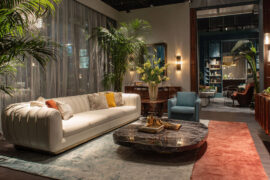
Most farmhouse interiors look dated within three years. Contemporary farmhouse interior design fixes that.
It keeps the warmth, the natural wood tones, and the clean lines people love about the style. It drops the shiplap-on-every-wall formula that made modern farmhouse feel like a trend rather than a home.
This guide covers everything: how the style actually differs from rustic and modern farmhouse, which color palettes and materials define it, and how to apply it room by room without making the 6 mistakes that most homeowners get wrong.
By the end, you will know exactly how to build a cohesive, livable space that holds up well beyond next season.
What Is Contemporary Farmhouse Interior Design?
Contemporary farmhouse interior design is a style that combines clean architectural lines, functional furniture, and natural materials to create warm, livable spaces without the heavy ornamentation of traditional or rustic farmhouse aesthetics.
The style sits between two poles. On one side, rustic interior design leans into rough-hewn wood, distressed finishes, and a rawer, older-world feel. On the other, contemporary interior design strips things down to geometry and restraint. Contemporary farmhouse lands somewhere useful in the middle.
It keeps the warmth. It drops the clutter.
Lina Galvao of interior design studio Curated Nest put it well: the style has evolved to become “fresher, more colorful, and more modern” while still carrying the core qualities that made farmhouse so appealing in the first place. That evolution is exactly what separates the contemporary version from its predecessors.
How Contemporary Farmhouse Differs from Modern Farmhouse
Modern farmhouse is the version Joanna Gaines of Magnolia popularized on Fixer Upper. It relies heavily on shiplap, stark white paint, black metal accents, and a fairly predictable formula. The look is well-defined, almost codified.
Contemporary farmhouse is less rigid. It moves away from stark whites toward warmer off-whites and earthy neutrals. It uses shiplap, board-and-batten, and exposed beams with more restraint, treating them as details rather than dominant features.
The clearest difference: modern farmhouse follows a recognizable template. Contemporary farmhouse uses that template as a starting point, then edits it.
How Contemporary Farmhouse Differs from Rustic Farmhouse

Rustic farmhouse celebrates imperfection. Heavily distressed wood, antique hardware, weathered surfaces, and a deliberate aged-in quality define the look. The goal is a space that feels like it has history, even if it was built last year.
Contemporary farmhouse uses natural materials without emphasizing their imperfections. White oak floors are lightly brushed, not heavily distressed. Wood furniture shows grain and texture but not damage. The result is organic without being rough.
| Style | Wood Treatment | Color Base | Overall Feel |
|---|---|---|---|
| Contemporary Farmhouse | Lightly brushed, natural grain | Warm off-whites, earthy neutrals | Clean, relaxed, understated |
| Modern Farmhouse | Mixed, often light-stained or painted | Stark white dominant | Crisp, graphic, formula-driven |
| Rustic Farmhouse | Heavily distressed, reclaimed | Deep browns, aged tones | Rough, aged, nostalgic |
Understanding where farmhouse interior design sits within the broader spectrum of interior design styles helps clarify which elements belong in a contemporary version and which ones actively conflict with it.
What Are the Core Design Elements of Contemporary Farmhouse Style?
Contemporary farmhouse style is built on 5 foundational elements: natural wood, controlled wall texture, black metal accents, natural fiber textiles, and intentional negative space. Remove any one of these and the style starts reading as something else.
According to Fixr’s 2024 Paint and Color Trends Report, 46% of design experts identified earthy tones as the most popular color palette, with warm neutrals close behind at 41%. Both palettes align directly with how contemporary farmhouse is structured at its base.
Wall Treatments

Shiplap and board-and-batten are the two wall treatments most associated with this style. Used correctly, they add texture and architectural interest. Used excessively, they make a space feel like a set.
The rule most designers apply: one wall, or a single detail application like a fireplace surround or wainscoting panel. Not every wall. Not every room.
- Shiplap works best as a single accent wall or fireplace feature
- Board-and-batten reads as more refined, works well in entryways and dining rooms
- Beadboard is a subtler alternative that reads as quieter and more traditional
Exposed ceiling beams fall into the same category. Real structural beams look grounded. Decorative faux beams can look convincing when properly scaled, but the proportions have to be right. Undersized beams in a large room are worse than no beams at all.
Hardware and Metal Accents
Matte black is the dominant metal finish in contemporary farmhouse. It appears on door hardware, cabinet pulls, light fixtures, window frames, and plumbing fixtures. The finish reads as graphic without being cold.
Unlacquered brass is gaining ground as a secondary option, particularly in kitchens and bathrooms. It ages in place, developing a patina that fits the organic material story of the style.
Polished chrome and brushed nickel both conflict with the aesthetic. They read as transitional or contemporary in a different register, colder and more corporate. Avoid them in a contemporary farmhouse space.
Textiles and Soft Furnishings

Natural fiber is non-negotiable. Linen, cotton, jute, wool, and leather in undyed or muted tones carry the material language of the style into soft furnishings.
Performance linen is worth knowing about. It looks identical to traditional linen but handles daily use far better. McGee and Co. and Serena and Lily have built significant product lines around this material for exactly this reason.
- Linen upholstery: sofas, armchairs, ottomans in oatmeal, warm white, or soft greige
- Jute and sisal rugs: base layer under softer woven rugs, adds texture underfoot
- Cotton throws: layered over sofas and chairs, never styled too precisely
The layered rug technique, placing a soft woven rug over a jute base, is a signature move in contemporary farmhouse living rooms. It adds warmth and depth without competing colors.
What Color Palettes Work in Contemporary Farmhouse Interiors?
The contemporary farmhouse palette is built on warm whites and off-whites as the dominant base, supported by earthy neutrals in the mid-tones and matte black as the sole hard accent. That structure is deliberate. It creates a low-contrast environment that reads as calm, airy, and cohesive.
Fixr’s 2024 report found that 48% of design experts identify warm white as the most popular interior paint color. This directly reflects how contemporary farmhouse spaces are being finished right now.
Base Colors and Paint Choices
2 paint colors appear on virtually every contemporary farmhouse project: Benjamin Moore White Dove OC-17 and Sherwin-Williams Alabaster SW 7008.
Both are warm whites with yellow undertones, not blue. That warmth is the point. Cool whites like Chantilly Lace or Pure White read as too crisp and clean for this aesthetic.
Sherwin-Williams Snowbound SW 7004 is a softer, slightly grayed alternative that has been showing up frequently in 2023 and 2024 projects, particularly in homes that want a more muted base.
Secondary and Accent Tones
The earthy neutral tier sits below the base whites. These tones appear on cabinetry, textiles, and secondary walls.
- Warm greige (Sherwin-Williams Agreeable Gray SW 7029)
- Soft sage green for cabinetry, particularly in kitchens
- Warm taupe for upholstered pieces and drapery
- Deep olive and muted dusty blue as limited accent colors
Matte black functions as the visual anchor. It appears in hardware, fixtures, and frames, never as a wall color in this style.
Colors That Conflict with the Style
Getting the palette wrong is the most common mistake in contemporary farmhouse interiors. Some colors actively work against the aesthetic.
| Color | Why It Conflicts |
|---|---|
| Cool grays (blue undertone) | Reads as cold and corporate, loses the warmth the style depends on |
| Stark bright whites | Too crisp, pushes the space toward sterile rather than warm |
| Saturated bold colors | Breaks the low-contrast palette structure |
| Greens with yellow-green base | Reads as dated, conflicts with the earthy sage direction |
Understanding how color works in interior design and the role of color theory helps explain why these conflicts happen at a technical level, not just a visual one.
What Furniture Defines the Contemporary Farmhouse Look?
Contemporary farmhouse furniture has 3 consistent characteristics: straight or gently curved silhouettes, natural wood tones in the light-to-medium range, and upholstery in performance fabrics with muted natural tones. Ornate profiles, dark stains, and high-gloss finishes all conflict with the style.
Over half of renovating homeowners (51%) spent $25,000 or more on renovations in 2023, according to Houzz. Furniture investment follows that same upward pattern, with more homeowners treating furnishings as long-term purchases rather than trend purchases.
Seating and Sofas
The anchor piece in any contemporary farmhouse living room is a clean-lined sofa in linen or performance cotton. Track arms or slightly curved English roll arms both work. Deep tufting, nailhead trim, and heavily carved legs do not.
Depth matters. Farmhouse living rooms lean into comfort, so sofas with a deeper seat, around 38 to 40 inches, fit better than shallow contemporary profiles.
- Article Furniture and Arhaus both produce well-proportioned sofas that fit this aesthetic at accessible price points
- McGee and Co. and Serena and Lily offer higher-end options with better fabric quality
Dining and Kitchen Furniture
The dining table is almost always wood. Light oak, whitewashed pine, or a mix of wood and painted base are the 3 most common configurations. Trestle bases and simple turned legs both work. Pedestal bases in painted wood are another option.
Mixing chair styles at the dining table is standard practice in contemporary farmhouse. Upholstered side chairs paired with a bench on one side, or mismatched wood chairs in the same finish family, both fit the relaxed, curated quality the style aims for.
Storage Furniture
Storage pieces in contemporary farmhouse lean toward painted wood in white or soft sage, or natural wood with simple hardware. The key is proportion and restraint.
Sideboards and buffets in light oak or painted shaker-style profiles are the most common. Built-in storage, where possible, always reads better than freestanding pieces in a smaller room.
Amber Lewis of Amber Interiors is one of the designers who has most consistently demonstrated how to mix vintage and new storage furniture without the space looking collected or eclectic. The wood tones stay within the same warm family. The hardware stays consistent.
How Does Lighting Shape the Contemporary Farmhouse Interior?

Lighting in contemporary farmhouse interiors does 2 jobs at once: it functions as the primary source of practical light and as a key decorative element. The fixture choices are visible and intentional. They carry the matte black and natural material language of the rest of the space.
According to Houzz’s 2023 study, installing new light fixtures ranked among the most common minor renovations, completed by 35% of homeowners. Lighting updates are low-cost relative to their visual impact on the overall feel of a room.
Pendant Lights and Statement Fixtures
Pendant lights over kitchen islands are the most defining lighting element in a contemporary farmhouse kitchen. The most common profiles are geometric black metal, simple cage pendants, or woven rattan shades in a neutral tone.
Visual Comfort and Co. and Schoolhouse Electric both produce fixtures that fit this aesthetic well. Schoolhouse Electric is particularly reliable for simple, well-proportioned pendants that avoid the mass-market “farmhouse” look.
- Scale matters: one large pendant reads more refined than two or three smaller ones
- Hang height: 30 to 36 inches above the counter surface is standard
- Avoid Edison bulb-forward designs, they read as industrial rather than farmhouse
Ambient and Natural Light Strategy
Natural light is a structural priority in contemporary farmhouse design, not an afterthought. Large windows, minimal window treatments, and light-reflective warm white walls work together to maximize daylight.
Window treatments in this style are intentionally simple. Sheer linen panels, simple Roman shades in a natural linen, or clean white cotton curtains are the 3 most common choices. Heavy drapes, valances, and layered curtain systems all conflict with the clean-lined character of contemporary farmhouse.
For ambient lighting, recessed downlights are standard, but the warm tone (2700K to 3000K) is what differentiates a farmhouse space from a generic lit room. Cold white light is incompatible with the warm palette.
Floor and Table Lamps
Floor and table lamps in this style almost always use ceramic or turned wood bases in muted glaze tones, paired with linen shades in natural or white. The silhouette is simple. Nothing sculptural or high-contrast.
Wall sconces flanking a bed or fireplace are preferable to table lamps in tight spaces. They free up surface area and give a more architectural, finished look to the room.
What Flooring Options Fit Contemporary Farmhouse Design?
Wide-plank hardwood in a light-to-medium tone is the standard flooring choice for contemporary farmhouse interiors. White oak in a natural or lightly brushed finish is the most consistently used option across projects at every budget level.
The NAR’s Remodeling Impact Report found that hardwood floor refinishing delivers a 147% return on investment, and new wood flooring returns 118%. In a contemporary farmhouse renovation, flooring is both an aesthetic and financial priority.
Hardwood and Engineered Wood
White oak dominates. Its grain is tighter than red oak, its tone is warmer than maple, and it takes natural and lightly brushed finishes extremely well. Plank widths between 5 and 7 inches are the current standard. Narrower planks read as traditional. Wider than 7 inches starts to read as reclaimed.
Engineered hardwood is a legitimate alternative in contemporary farmhouse, not a compromise. In rooms with moisture variation or radiant heat, engineered white oak performs better than solid while looking identical.
| Flooring Type | Best Application | Plank Width | Finish |
|---|---|---|---|
| Solid white oak hardwood | Main living areas, bedrooms | 5–7 inches | Natural or lightly brushed |
| Engineered white oak | Kitchens, basements, radiant heat | 5–7 inches | Same as solid, identical look |
| Large-format matte tile | Kitchens, bathrooms, mudrooms | 12×24 or 24×24 | Matte only, never polished |
| Polished concrete | Open-plan living areas, modern builds | N/A | Matte or satin seal |
Tile for Kitchens and Bathrooms
Large-format matte tile is the standard for kitchens and bathrooms in contemporary farmhouse. The matte finish is non-negotiable. Polished tile reads as transitional or contemporary in a different direction entirely.
Subway tile in a handmade or zellige profile works well as a backsplash or shower wall material. The slight variation in handmade tiles adds texture without introducing pattern. It fits the organic material story of the style.
What to Avoid
Dark-stained hardwood conflicts directly with the warm, airy quality of contemporary farmhouse. High-gloss finishes on any flooring material do the same. Heavily distressed reclaimed boards push the space toward rustic farmhouse and away from the contemporary register.
Luxury vinyl plank in a convincing wood look is a common budget alternative. The quality gap has narrowed significantly, but the texture and acoustic difference is still noticeable underfoot in a way that matters in a space where material quality is central to the aesthetic.
How Do You Apply Contemporary Farmhouse Design to the Kitchen?

The kitchen is where contemporary farmhouse design is most clearly expressed and most often executed incorrectly. The style has a specific set of material relationships: white or soft-colored shaker cabinetry, matte black or unlacquered brass hardware, natural stone or quartz countertops, and a handmade tile backsplash. Each choice has to support the others.
Houzz’s 2024 study found that kitchen renovations remain the top remodeling project at 29% of all renovations, with a median spend of $24,000 in 2023. In contemporary farmhouse homes, the kitchen typically absorbs the largest portion of the renovation budget.
Cabinet and Hardware Choices
Shaker-style cabinet doors are the dominant choice. The frame-and-panel profile adds just enough visual texture without being ornate. Flat-front doors work in kitchens that lean more contemporary. Raised-panel profiles push too far toward traditional.
Color choices for contemporary farmhouse cabinets:
- White or warm off-white for upper cabinets and perimeter runs
- Soft sage, warm greige, or navy as a contrast color on the kitchen island
- Natural wood uppers are gaining traction as a warmer alternative to all-painted cabinetry
Hardware is always matte black or unlacquered brass. Blue cabinets with gold hardware or green cabinets with black hardware are popular combinations that fit directly within the contemporary farmhouse kitchen palette.
Countertops and Backsplash
White quartz is the most practical choice for contemporary farmhouse countertops. It reads as clean and natural without the maintenance demands of honed marble. Honed marble is the premium option for homeowners willing to accept the upkeep.
Butcher block on the kitchen island is a signature farmhouse move. It works as a contrast to painted or stone perimeter counters, adds warmth, and fits the natural material story perfectly. Sealing it properly is the only real requirement.
For the backsplash, handmade subway tile in white or a soft cream is the most consistent contemporary farmhouse choice. Farmhouse kitchen backsplash options also include zellige tile, which adds more texture and variation, and simple brick-pattern layouts in a matte white ceramic.
Open kitchen shelving is present in most contemporary farmhouse kitchens. The key is editing. 2 to 3 shelves with well-chosen ceramic vessels, cookbooks, and practical items look curated. More than that looks cluttered. Studio McGee has built much of its visual identity around getting this balance right.
How Do You Apply Contemporary Farmhouse Design to the Living Room?

The living room is where the contemporary farmhouse aesthetic either comes together or falls apart. The room depends on 4 things working in unison: a well-proportioned sofa, a layered rug setup, a clear focal point, and edited accessories. Get any one of these wrong and the space reads as generic rather than intentional.
A 2024 survey by Real Homes found that interior designers are seeing clients “gravitate more and more to natural materials in their living spaces, tons of texture and warmth with an overall sense of calm and neutral palette.” That description maps directly onto what contemporary farmhouse living rooms are built around.
Anchor Pieces and Furniture Layout
The sofa defines the room. In contemporary farmhouse living rooms, that means a clean-lined piece in performance linen or cotton canvas, oatmeal or warm white in tone, with a depth of at least 38 inches for genuine comfort.
Furniture arrangement follows the fireplace, not the television. The fireplace is the focal point in interior design terms, and the furniture should face it. A simple white plaster surround or shiplap fireplace mantel anchors the space without competing with the furniture. For fireplace styling, the farmhouse shiplap fireplace and mantel decor ideas both offer specific direction.
Rug Layering and Textural Depth
The layered rug technique is standard in this style. A jute or sisal base rug goes down first. A softer woven rug in warm white, oatmeal, or a subtle pattern sits on top.
Sizing guide for living room rugs:
- Base jute rug: large enough for all furniture legs to sit on, typically 9×12 feet minimum
- Top rug: slightly smaller, 6×9 feet, centered under the coffee table
- Both rugs should be matte and natural in fiber, never synthetic
Loloi Rugs produces some of the most consistently used options for the top layer. Their Magnolia Home collection (a Joanna Gaines collaboration) covers most of the pattern and tone range this style calls for.
Decorating and Accessory Editing
Fewer, larger objects over many small ones. That is the rule for contemporary farmhouse living room decor, and it is the one most consistently broken.
What stays: 1 to 2 ceramic vessels on the coffee table, a stack of oversized art books, a woven basket for throw storage, and 1 large framed print or painting on the main wall.
What goes: collections of small decorative objects, anything that reads as a “farmhouse sign,” matching sets of decorative items, and anything that required a search for “farmhouse decor” to find.
Greenery earns a place in contemporary farmhouse living rooms when it is genuinely alive. A large fiddle-leaf fig or olive tree in a simple terracotta or matte ceramic pot reads as organic and grounded. Fake plants do not. The difference is obvious and it matters in a style that prioritizes material authenticity.
How Do You Apply Contemporary Farmhouse Design to the Primary Bedroom?

The primary bedroom in a contemporary farmhouse home is built around 3 priorities: tactile comfort, low visual noise, and clean proportions. Bedding, the bed frame, and window treatments carry most of the design weight here.
Fixr’s 2025 data shows that 76% of design experts recommend neutral colors for bedrooms when selling a home. In a contemporary farmhouse bedroom, that neutral foundation is not just a selling strategy. It is how the room functions as a genuine retreat.
Bed Frame and Bedding Selection
3 bed frame profiles fit contemporary farmhouse: an upholstered linen headboard in a warm neutral, a simple wood frame in light oak or whitewashed pine, and a clean-lined iron bed with a matte black or aged bronze finish.
Avoid: ornate carved wood frames, upholstered headboards in velvet or patterned fabric, and platform beds with sharp contemporary profiles. They push into different design registers.
Bedding layering approach:
- White or oatmeal linen duvet cover as the base
- 1 or 2 cotton or linen euro shams behind standard pillows
- A folded waffle-weave or cotton throw across the foot of the bed
- 2 to 3 throw pillows maximum in muted tones, mixed textures
Pottery Barn’s Belgian Linen and Serena and Lily’s bedding lines are the two most consistently recommended options by designers working in this style. Both offer the correct texture and color range without the overly styled look of more trend-driven bedding brands.
Lighting and Window Treatments
Wall sconces flanking the bed instead of table lamps. This is one of the cleaner moves in a contemporary farmhouse bedroom. It frees up nightstand surface space, gives the room a more finished architectural feel, and keeps the scale tighter in smaller rooms.
Schoolhouse Electric and Visual Comfort and Co. both produce simple ceramic or linen-shade sconces that fit this application well. The key is keeping the scale modest: not a statement fixture, just a functional, well-proportioned light.
For window treatments in a contemporary bedroom, linen drapes in a natural or white tone are the standard. Blackout Roman shades in a linen weave handle the light-control requirement without adding visual weight. Both are better options than curtains on heavy hardware or layered drapery systems, which push toward a different style entirely.
Nightstands and Secondary Furniture
Nightstands in contemporary farmhouse bedrooms are functional and uncluttered. Simple wood or painted white options with a single drawer and open lower shelf are the most practical and the most common.
Key rule: the nightstand surface holds a lamp (or the sconce eliminates this), a small ceramic object or plant, and one or two books. Nothing more.
A bench at the foot of the bed in natural linen or woven rattan adds to the layered material story without adding visual clutter. McGee and Co. and Arhaus both offer well-proportioned options for this application.
What Bathroom Features Define Contemporary Farmhouse Style?

Contemporary farmhouse bathrooms are built around 5 defining features: a freestanding soaking tub, shaker or open-shelf vanity, matte tile, matte fixtures, and simple framed mirrors. The combination produces a space that reads as spa-like without the cold minimalism of a contemporary bathroom.
The Houzz 2024 Bathroom Trends Study found that farmhouse style has held steady at 5% of all bathroom renovation styles since 2019. It has not spiked or declined. That kind of consistency is rare in residential design and indicates a durable preference, not a trend cycle.
Tubs and Vanities
Freestanding soaking tubs are the primary luxury statement in a contemporary farmhouse bathroom. According to the NKBA 2024 Bath Trend Report, freestanding and soaking units are the most popular tub types, with oval shapes leading. Simple oval profiles in white or matte stone are the contemporary farmhouse standard. Clawfoot tubs push too far into the vintage register.
Vanity choices break down by bathroom size:
- Single vanity: open-shelf base in natural wood, shaker-style door in white or soft sage
- Double vanity: painted shaker-style, two undermount sinks, consistent hardware throughout
- Floating vanity: works in more contemporary farmhouse bathrooms, requires clean proportions
Tile, Fixtures, and Mirrors
Tile in contemporary farmhouse bathrooms is always matte. White and off-white dominate, confirming the Houzz 2024 finding that white (50%) and off-white (20%) are the top countertop color preferences in bathroom renovations.
| Application | Tile Type | Profile |
|---|---|---|
| Shower walls | Handmade subway or zellige | 3×6 or 4×8, matte white |
| Shower floor | Small hex or penny round | Matte white or warm gray |
| Main floor | Large-format matte tile | 12×24 or 24×24 |
| Accent wall | Board-and-batten or shiplap | Painted warm white |
Fixtures are matte black or brushed nickel. Not polished chrome. Not unlacquered brass in bathrooms with a cooler tile palette. The fixture finish has to read as warm or at least neutral, never chrome-bright.
Mirrors are simple: a flat rectangular frame in black metal or natural wood, or a frameless round mirror for a softer profile. Ornate framing, beveled edges, and oversized decorative mirrors all push out of the contemporary farmhouse register.
How Do Decorative Accessories Complete a Contemporary Farmhouse Interior?
Accessories are the last layer, and in contemporary farmhouse design they follow one consistent rule: quality over quantity. The global home decor market reached $696.4 billion in 2023, according to Global Market Insights, with a growing consumer shift away from fast, mass-produced decor toward fewer, more durable pieces. That shift aligns directly with how contemporary farmhouse interiors are accessorized.
Ceramics, Vessels, and Objects
Matte-glazed ceramics and stoneware are the signature accessory in this style. The forms are simple: vases, pitchers, bowls, and cachepots in off-white, warm gray, sage, or terracotta. The glaze is never high-gloss.
Artisan and studio ceramics work better than mass-market options. The slight variation in handmade pieces adds the organic quality the style depends on. Heath Ceramics and local studio pottery are the two most commonly referenced sources by designers working in this aesthetic.
Textiles, Baskets, and Functional Decor
Woven baskets serve dual purpose in contemporary farmhouse rooms. They hold throws, magazines, and firewood. They also add texture and organic form at floor level, where rooms can otherwise feel flat.
Natural seagrass, water hyacinth, and rattan are the 3 materials that fit the style. Baskets with painted or dyed finishes, handles in contrasting colors, and anything with a graphic print conflict with the understated material language of the style.
Throw pillow combinations on sofas and chairs stay in the same tone family. No high-contrast patterns, no graphic prints. For specific guidance, throw pillow combinations that work in neutral and earthy palettes cover the contemporary farmhouse range well.
Wall Art and the Edit Principle
Wall art in contemporary farmhouse interiors leans toward simple framed botanical prints, soft landscape photography, or abstract work in muted tones. Black frames or thin natural wood frames. Never chunky ornate frames and never a gallery wall of mismatched styles.
The edit principle is the most important concept in accessorizing this style. Contemporary farmhouse requires active removal, not just addition. A room styled with 12 objects that could be reduced to 6 is not a contemporary farmhouse room. It is a crowded room with farmhouse elements in it.
Studio McGee has made a business model out of demonstrating this principle. Their room styling consistently uses oversized objects, generous negative space, and a limited object count to produce spaces that read as effortlessly composed rather than deliberately staged.
What Are the Most Common Mistakes in Contemporary Farmhouse Design?
Most contemporary farmhouse interiors that fall short share the same 6 problems. None of them are hard to fix in the planning stage. Nearly all of them are expensive to correct after the fact.
A 1stDibs survey of 624 interior designers found that sliding barn doors were flagged by only 3% or less of designers as a forward-looking design choice for 2024, a sharp decline from their peak. That trajectory illustrates exactly how quickly over-applied farmhouse elements age and the cost of treating the style as a checklist.
Over-Applying Signature Elements
Shiplap on every wall. Barn doors on every opening. Exposed beams on every ceiling. Each of these elements works as a detail. None of them work as a theme applied to an entire house.
The correct application: one shiplap accent wall or fireplace surround. One barn door where it genuinely saves space. Exposed beams in the main living area only, not every room.
When a signature element appears everywhere, it stops reading as a design choice and starts reading as a limitation. The contemporary farmhouse version of these elements is always restrained.
Conflicting Wood Tones Without a Unifying Anchor
Mixing wood tones is acceptable in contemporary farmhouse design. Mixing them without a unifying logic is not.
The rule: stay within a warm tone family. Light oak floors, medium oak furniture, and whitewashed pine shelving all share warm undertones and work together. Light oak floors paired with cool-toned walnut furniture and gray-washed gray cabinets do not.
3 wood tones maximum in any given room. More than that requires a professional level of material editing to hold together visually.
Buying Labeled “Farmhouse” Decor
Mass-market “farmhouse decor” from large home goods chains rarely fits contemporary farmhouse interiors. The scale is wrong, the materials are cheap, and the forms are generic.
Nothing in contemporary farmhouse design is achieved by searching “farmhouse decor” and buying what comes up first. The look requires specific material choices, proper proportions, and a consistent editing process. It cannot be purchased as a category.
Ignoring Scale and Proportion
Undersized furniture in a large room. Oversized accessories on a small surface. Both break the relaxed, proportional quality that contemporary farmhouse spaces depend on.
The principles of scale and proportion in interior design apply with particular clarity in this style because the palette is so restrained. When color is limited, form and scale carry the entire visual weight. A sofa that is 3 inches too short for its wall, or a coffee table that is 6 inches too narrow for the rug beneath it, is immediately visible.
Treating the Style as a Checklist
Contemporary farmhouse is a design language, not a list of elements to tick off. A space with shiplap, a barn door, a farmhouse sink, jute rugs, and shaker cabinets is not automatically a contemporary farmhouse interior. It is a collection of farmhouse-adjacent items that may or may not work together as a cohesive space.
The principle of unity in interior design is what separates a cohesive contemporary farmhouse space from a collection of trend-driven pieces. Every material, finish, and object in the room should read as part of a consistent story. If it does not, it does not belong there, regardless of how well it fits the “farmhouse” category label.
Skipping the Design Principles Entirely
Contemporary farmhouse interiors that look effortless are built on deliberate applications of balance, rhythm, and emphasis. The warm, airy quality of a well-executed space does not happen by accident. It results from considered decisions about where the eye travels, where it rests, and what it reads as the dominant element in a room.
Understanding the foundational principles of interior design matters here more than in more maximalist styles, precisely because there is less going on visually. Every decision is more visible. Every error is harder to obscure.
FAQ on Contemporary Farmhouse Interior Design
What is contemporary farmhouse interior design?
Contemporary farmhouse interior design combines clean architectural lines and natural materials with a warm, livable aesthetic.
It keeps the comfort of traditional farmhouse style but removes heavy ornamentation, stark white walls, and the rigid formula that defines modern farmhouse. The result is a quieter, more refined version of the style.
What is the difference between modern farmhouse and contemporary farmhouse?
Modern farmhouse follows a recognizable template: shiplap, stark whites, black metal accents, popularized by Joanna Gaines of Magnolia.
Contemporary farmhouse is less prescriptive. It uses warmer off-whites, earthy neutrals, and applies signature elements like board-and-batten and exposed beams with more restraint. The look evolves. Modern farmhouse largely does not.
What colors work best in a contemporary farmhouse interior?
Warm whites and soft off-whites form the base. Benjamin Moore White Dove OC-17 and Sherwin-Williams Alabaster SW 7008 are the two most commonly used options.
Secondary tones include warm greige, soft sage green, and earthy taupe. Matte black functions as the sole hard accent. Cool grays and stark whites actively conflict with the style.
What flooring is best for contemporary farmhouse design?
Wide-plank white oak hardwood in a natural or lightly brushed finish is the standard choice, typically between 5 and 7 inches wide.
Engineered white oak is a practical alternative in kitchens and rooms with radiant heat. Large-format matte tile works well in bathrooms and mudrooms. High-gloss finishes and heavily distressed reclaimed boards both conflict with the style.
What furniture fits contemporary farmhouse interiors?
Furniture with straight or gently curved silhouettes in natural wood tones or performance linen upholstery fits best.
Light oak, whitewashed pine, and weathered walnut are the right wood tones. Avoid ornate profiles, dark stains, and high-gloss finishes. Brands like McGee and Co., Arhaus, and Serena and Lily consistently produce pieces that fit this aesthetic well.
How do you style open shelving in a contemporary farmhouse kitchen?
Keep it edited. Two to three shelves maximum, styled with matte ceramic vessels, a small number of cookbooks, and practical items used daily.
More than that reads as cluttered rather than curated. Studio McGee has built much of its visual identity around demonstrating this balance. The goal is a lived-in quality, not a staged one.
What lighting works in a contemporary farmhouse home?
Matte black or aged brass pendant lights over kitchen islands, simple ceramic or linen-shade sconces flanking beds, and warm-toned bulbs at 2700K to 3000K throughout.
Brands like Schoolhouse Electric and Visual Comfort and Co. produce fixtures that fit without reading as mass-market farmhouse. Avoid Edison bulb-forward designs, which push the space toward industrial rather than farmhouse.
What are the most common mistakes in contemporary farmhouse design?
Over-applying shiplap and barn doors, mixing too many conflicting wood tones, and buying mass-market items labeled “farmhouse decor” are the 3 most frequent errors.
Ignoring scale and proportion is equally damaging. In a restrained palette, every undersized sofa or mismatched surface is immediately visible. The style requires active editing, not just addition of farmhouse-adjacent items.
How is contemporary farmhouse different from rustic interior design?
Rustic interior design celebrates heavily distressed wood, aged finishes, and raw imperfection. Contemporary farmhouse uses natural materials without emphasizing wear or damage.
White oak floors are lightly brushed, not distressed. Wood furniture shows grain and texture but not age. The result is organic without being rough. Rustic farmhouse looks backward; contemporary farmhouse looks current.
Can contemporary farmhouse work in a small space?
Yes. The style’s reliance on warm whites, natural light, and restrained accessorizing actually benefits smaller rooms by keeping them visually open.
The key is respecting scale and proportion more carefully than in a larger space. One properly sized sofa, a single jute rug, and a limited object count work better than filling the room with smaller farmhouse-labeled pieces across every surface.
Conclusion
This conclusion is for an article presenting contemporary farmhouse interior design as a style built on restraint, not rules.
Wide-plank white oak floors, warm neutral palettes, shaker cabinetry, and natural fiber textiles all work together when the edit is tight and the proportions are right.
The difference between a cohesive space and a collection of trend pieces comes down to material consistency, proper scale, and knowing when to stop adding.
Whether you are rethinking a primary bedroom, a kitchen layout, or a full open-concept floor plan, the same principles apply: fewer objects, better quality, and a clear material story across every room.
Get those right, and the style takes care of itself.

- Paint Colors That Go with Gray Floors - August 20, 2026
- What Color Bedding Goes with Dark Wood Furniture - August 18, 2026
- What Color Walls Go with Oak Floors - August 16, 2026