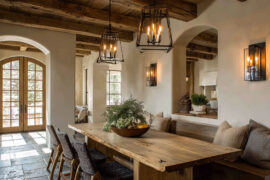
That weathered board from a demolished barn holds more character than anything you’ll find at a lumber yard.
DIY reclaimed wood projects turn salvaged lumber into furniture, wall features, and home decor that new-growth timber simply cannot replicate. Every nail hole, saw mark, and aged grain pattern tells a story.
This guide covers everything from sourcing and prepping barn wood to building dining tables, accent walls, and outdoor raised beds. You’ll learn which species hold up outdoors, which finishes preserve natural patina, and which joinery methods suit upcycled wood furniture built to last.
No filler. Just what you actually need to build with reclaimed timber at home.
What Is Reclaimed Wood?

Reclaimed wood is salvaged lumber recovered from demolished or decommissioned structures, including barns, factories, warehouses, industrial buildings, gym floors, and bowling alleys. It is not the same as fresh-cut rough lumber, and it is not the same as standard pallet wood unless the pallet carries an HT (heat-treated) stamp.
The distinction matters for safety and workability. Pallet wood marked “MB” (methyl bromide) has been chemically treated and poses real health risks when cut or sanded indoors.
Common species found in reclaimed sources include Douglas fir, heart pine, white oak, and American chestnut. These are mostly old-growth specimens, meaning they grew slowly over decades before being harvested, giving them tighter grain rings and denser cell structure than new-growth timber you buy at a lumber yard today.
The global reclaimed lumber market reached USD 62.2 billion in 2024 and is projected to hit USD 88 billion by 2033 (IMARC Group, 2024). That growth reflects a real shift in how designers, builders, and DIY builders think about material sourcing.
Reclaimed wood fits into rustic interior design naturally, but it also shows up regularly in industrial interior design, farmhouse interiors, and even cleaner contemporary builds where one textured surface anchors the whole room.
How Reclaimed Wood Differs from New Lumber
| Feature | Reclaimed Wood (Heritage Timber) | New-Growth Lumber (Plantation) | 2026 Design Impact |
|---|---|---|---|
| Grain Density | Tight, narrow growth rings; significantly harder surface. | Wider rings; softer surface prone to denting. | Reclaimed is superior for high-traffic flooring and heavy tabletops. |
| Moisture Stability | Extremely stable; has already “settled” over decades. | Higher moisture content; requires 2-4 weeks of site acclimation. | Reclaimed wood is less likely to warp or “check” in climate-controlled homes. |
| Surface Character | Authentic nail holes, circle-saw marks, and deep patina. | Uniform and clean; requires manual distressing to look “rustic.” | Reclaimed wood provides “Instant History” that cannot be perfectly faked. |
| Safety Concerns | Risk of hidden metal fasteners or old lead-based finishes. | Safe; typically chemical-free if not pressure-treated. | Reclaimed wood MUST be scanned with a metal detector before milling. |
What Sources Produce the Best Reclaimed Wood
Not all sources are equal. Factory flooring and gym floors are dense and wear-resistant because they endured decades of foot traffic. Barn siding is softer and more weathered, better for decorative wall work than structural furniture.
Wine barrels produce tight-grained oak with a distinct coloring. Bowling alleys yield maple that is almost impossible to dent. Each source gives a different result in the shop, and knowing what you have before you start saves a lot of frustration.
What Makes Reclaimed Wood Suitable for DIY Projects?
Reclaimed wood suits DIY work for 3 specific reasons: dimensional stability, surface character, and cost. Understanding each one helps you avoid the most common mistakes before the first board hits the saw.
Why Dimensional Stability Matters
Wood that has already dried over decades has reached equilibrium with its environment. It expands and contracts less than fresh-cut lumber, which means your finished project is far less likely to warp, cup, or crack after installation.
Wagner Meters note that all wood must reach its equilibrium moisture content (EMC) in its final environment to deliver stable performance for life. For reclaimed wood already decades old, this process is largely done.
Interior use target: 6-8% moisture content. Exterior use target: 9-14%. Always verify with a moisture meter before milling or gluing up boards.
Where Reclaimed Wood Performs Less Well
Load-bearing structural applications are tricky. Without a graded stamp, you cannot confirm the structural rating of reclaimed lumber. Use it for furniture, wall features, shelving, and decorative builds, not for primary load-bearing framing unless a structural engineer has assessed it.
Reclaimed wood also demands more prep time than new lumber. Every board needs metal detection, cleaning, and often planing before it behaves predictably at the table saw or jointer. Factor that in when estimating project time.
Cost Comparison with New Lumber
Reclaimed wood flooring typically runs $9-$15 per square foot, depending on species and source (Maximize Market Research, 2024). That is higher than basic new pine, but often below the cost of premium hardwoods. And salvaged pieces from Habitat for Humanity ReStores or Facebook Marketplace frequently cost nothing beyond pickup and preparation time.
How to Source and Prepare Reclaimed Wood Before Building

Sourcing is where most first-timers lose momentum. The prep work before cutting determines everything about how the project goes.
47% of US DIY enthusiasts say they prioritize environmentally friendly building materials like reclaimed wood when buying supplies (Appinio, 2024). Demand is strong. That means good material gets claimed fast at salvage yards.
Where to Find Reclaimed Wood
Best sources in order of consistency:
- Architectural salvage yards (inspected, often sorted by species)
- Habitat for Humanity ReStores (deconstruction donations, variable quality)
- Facebook Marketplace and Craigslist (barn demolitions, old floor pulls)
- Deconstruction contractors (first access before disposal)
- Urban tree services (fresh-felled urban logs for live edge slabs)
Urban tree services are underused. A storm-felled oak in a neighbor’s yard can become genuinely reclaimed wood for almost nothing. Most services will drop logs for free if you haul them yourself.
How to Test Reclaimed Wood for Moisture and Pest Damage
Moisture meter first. Target below 12% for interior use before any milling or finishing. Boards above 19% will check, split, and warp after installation indoors. The General Tools MMD4E is a reliable entry-level option for home shop use.
For pest damage, press firmly on the surface. Soft or spongy areas indicate rot. Check end grain for small round holes, which signal wood-boring beetles. A strong musty or ammonia smell means mold or animal contamination.
How to Mill Reclaimed Wood for a Flat, Consistent Surface
Metal detection before the planer. This is non-negotiable. A single embedded nail destroys planer blades at $60-$150 per blade set. Pass a rare earth magnet slowly across every face and edge, then follow with a dedicated metal-detecting wand before running anything through a thickness planer.
Milling process for consistent boards:
- Joint one face flat on the jointer (or hand-plane it)
- Run the flat face down through the planer in 1/32″ increments
- Joint one edge square to the flat face
- Rip the opposing edge parallel on the table saw
Take 2-3 light passes per session rather than one heavy cut. Reclaimed wood has dense, hard grain that burns easily and can cause tear-out if you push the feed rate.
Wire brushing with Murphy Oil Soap solution before milling removes embedded grit that dulls blades. For heavily weathered exterior barn siding, a low-pressure rinse and 48 hours of drying is better before any machine work.
What Are the Best Reclaimed Wood Projects for Beginners?

5 projects work reliably for first-timers because they require minimal joinery, tolerate dimensional variation in reclaimed boards, and produce high-impact results with basic tools.
CivicScience data from 2024 shows 43% of American renovators now tackle projects entirely on their own, up 5 percentage points from 2023. That shift makes choosing the right first project more important than ever.
Floating Shelves
Skill level: Beginner. Typical cost: $15-$40 in hardware.
Single boards mounted on hidden brackets or through-bolted to studs. No joinery required. Variation in plank thickness actually adds character here. Sand to 120 grit, apply Rubio Monocoat or pure tung oil, and the weathered grain does all the visual work.
Serving Boards and Trays
Short offcuts shine here. The 3 requirements for food-contact surfaces: no lead paint, no chemical treatment history, and a food-safe finish (pure tung oil or food-grade mineral oil only, never polyurethane).
Grain orientation matters for cutting boards. Edge grain runs longer before showing wear than face grain. Rout a shallow finger groove around the perimeter of a tray with a router and a round-over bit. That detail alone makes a simple plank look considered.
Picture Frames and Coat Racks
These two share the same basic structure: short offcuts, 45-degree miter cuts or butt joints, and surface hardware.
- Picture frames: rabbet the back face on a router table to accept glass and backing
- Coat racks: mount standard pipe flanges or cast iron hooks directly into the plank face
Both projects consume boards too small for furniture, eliminating waste. The raw surface of reclaimed wood pairs well with black iron pipe hardware for a look that fits rustic industrial style without any additional finishing.
Planter Boxes
Use galvanized screws and waterproof PVA glue only. Standard wood glue fails outdoors in one season. Line the interior with a plastic liner to protect the wood from direct soil contact, which accelerates rot even in naturally durable species.
Stick to white oak, cedar barn wood, or any naturally rot-resistant reclaimed species for outdoor planters. Reclaimed pine looks great but degrades quickly in direct soil and moisture contact.
What Reclaimed Wood Furniture Projects Can You Build at Home?

Furniture is where reclaimed wood projects get serious, both in effort and reward. The furniture segment dominates the reclaimed lumber market with a 32.6-40.7% share of global use in 2024 (IMARC Group, Maximize Market Research). That dominance reflects what buyers actually want from the material.
How to Build a Reclaimed Wood Dining Table

Trestle base or hairpin legs. Trestle suits heavier, thicker tops from dense factory flooring. Hairpin legs work better with thinner barn siding boards glued into a panel top.
Tabletop glue-up process:
- Mill boards to consistent thickness (within 1/16″ of each other)
- Arrange boards for color and grain variation before committing
- Use a biscuit joiner or dowels for alignment during glue-up
- Clamp with cauls (straight boards clamped perpendicular across the top) to prevent bowing
Minwax Dark Walnut stain on reclaimed heart pine gives a deep, uniform color while letting the grain character come through. Raw linseed oil does something different. It darkens unevenly, which looks worse on uniform surfaces but excellent on boards with strong natural variation.
How to Build a Reclaimed Wood Coffee Table with Epoxy Fill

Epoxy fill for cracks and voids is one of the most practical skills in reclaimed wood work. Cracks that would ruin a new lumber project become design features when filled with clear or tinted resin.
System Three and TotalBoat are both reliable for table applications. Key process steps:
- Seal all surfaces with a thin epoxy coat first to prevent bubbles during the fill pour
- Build a melamine mold to contain the pour
- Pour in stages no deeper than the product’s recommended depth per pour
- Sand from 80 grit up to 220 before applying a topcoat finish
Live edge slabs with natural edge intact suit coffee tables better than dining tables. The organic shape works at coffee table scale. At dining table width, an irregular live edge becomes impractical for seating. Steel frame bases in flat bar or angle iron suit the industrial look of most reclaimed coffee table builds.
Headboards, Benches, and Bookshelves

Headboard: Horizontal shiplap pattern, wall-mounted directly to studs. Use a French cleat system for a clean back profile with no visible hardware.
Bench: Through-tenon joinery for exposed legs, or simplified with pocket screws and hidden brackets for a cleaner look. A Kreg K4 or K5 pocket hole jig handles 95% of bench joinery needs.
Bookshelf: Dado joints cut on the table saw give shelf supports far more strength than screws alone. Back panel options are plywood (cleaner) or open back (shows more reclaimed character if the wall behind is interesting).
What Reclaimed Wood Wall Projects Work for Interior Spaces?
Wall treatments are the fastest way to change a room with reclaimed wood. No joinery. No complex structural work. The visual impact per hour of labor is higher here than almost any other project type.
Over 3.2 million posts related to reclaimed wood design were recorded globally in 2023 (Market Reports World, 2024). Accent walls and barn doors drive most of that social content.
How to Install a Reclaimed Wood Accent Wall

Horizontal shiplap and vertical board-and-batten are the 2 most common approaches. Horizontal reads wider and lower. Vertical reads taller.
Installation requires: stud finder, construction adhesive (Liquid Nails Heavy Duty), 18-gauge finish nailer, and a level. For walls with significant variation in board thickness, use adhesive as the primary fastener and nails for positioning only.
The accent wall works best when it anchors a specific zone, the wall behind a bed, the wall a sofa faces, or the wall framing a fireplace. Wrapping all 4 walls with reclaimed wood closes a room down. One wall opens it up.
In rustic industrial spaces, exposed boards paired with Edison bulb fixtures mounted directly to the wood surface read as a coherent design decision rather than a collection of unrelated materials.
How to Build a Sliding Barn Door from Reclaimed Wood

Hardware first. Select your sliding hardware kit before cutting a single board. Winsoon and SMARTSTANDARD are both reliable mid-range options. The hardware determines door weight limits, which determines board thickness, which determines how wide you can go.
Board width calculation: Door width must equal opening width plus 2 inches of overlap on each side. So a 36-inch opening needs a 40-inch-wide door minimum. Standard barn door hardware handles doors up to 200-250 lbs depending on the bracket system.
Herringbone and horizontal plank are the 2 most common reclaimed wood patterns for barn doors. Herringbone requires more precise miter cutting. Horizontal plank is more forgiving of the dimensional variation typical in salvaged boards.
Sliding barn doors are a natural fit in barn door design for any space where swing clearance is tight. The rustic shelving flanking a barn door can come from the same material batch for a cohesive look across the wall.
Mirror Frames and Media Consoles
Mirror frame: Cut a rabbet joint around the interior perimeter to recess the mirror glass. Verify the hanging hardware weight rating before mounting. A solid reclaimed oak frame with mirror glass can exceed 40 lbs easily.
Floating media console: Wall-mount bracket systems (Ekby or custom steel angle brackets) support the shelf load. Recessed wire management channels routed into the back face of the board keep cables hidden and the surface clean.
What Reclaimed Wood Projects Work for Outdoor Use?

Species selection determines everything outdoors. The wrong wood species in a ground-contact or direct-moisture application fails in 2-3 seasons regardless of how well it was built.
In 2023, reclaimed wood was used in over 45% of upscale remodeling projects, with white oak and pine as the most frequently installed species (Market Reports World, 2024). Outdoors, that species split matters in a completely different way than it does indoors.
Which Reclaimed Wood Species Hold Up Outdoors
| Species | Outdoor Durability | 2026 Best Outdoor Use | The “Rustic” Aging Profile |
|---|---|---|---|
| White Oak | Excellent (Tyloses-filled pores) | Garden benches, raised beds, decking. | Silver-grays gracefully; very low splintering over time. |
| Reclaimed Teak | Excellent (High oil content) | Premium patio furniture, exposed framing. | Maintain “Golden Honey” with oil or let it “Driftwood Gray.” |
| Cedar Barn Wood | Good (Rot-resistant oils) | Siding, pergola accents, decorative fencing. | Highly textural; deepens into a beautiful charcoal gray. |
| Antique Heart Pine | Fair (Resin-heavy) | Covered verandas, porch ceilings. | Rich “Amber” tones; will darken significantly in shade. |
| Reclaimed Pine | Poor (Ground-contact sensitive) | Covered wall cladding, temporary event decor. | Soft surface; develops a “rugged” distressed look quickly. |
Raised Garden Beds and Outdoor Benches
Raised beds require naturally rot-resistant species only. Never use painted or chemically treated reclaimed wood near food crops. Railroad ties and utility poles contain creosote or chromated copper arsenate (CCA). Both leach into soil.
For outdoor benches and Adirondack chairs, stainless screws and waterproof epoxy glue (West System or Gorilla Epoxy) hold joints through freeze-thaw cycles that kill standard PVA glue in one winter.
Outdoor Finishing Options
Film finishes peel on weathered surfaces. Penetrating oils soak into the grain and move with the wood as it expands and contracts. 3 reliable outdoor finishes for reclaimed wood:
- Defy Extreme Wood Stain: penetrating, water-repellent, 4-year reapplication cycle
- Cabot Australian Timber Oil: deep penetrating, works well on dense hardwoods
- Raw/unfinished: intentional weathering to gray. Zero maintenance, changes color over 6-12 months
The leave-to-gray approach suits pergola accents and garden structures where a weathered look is the actual goal. TerraMai, which supplies reclaimed wood for commercial hospitality and hotel renovation projects, uses penetrating oils almost exclusively for exterior applications because of their durability advantage over film-forming finishes.
Reclaimed wood in outdoor spaces connects directly to biophilic design principles, bringing natural materials and texture into spaces that transition between indoors and out. For pergola or covered patio builds, reclaimed timber beams add structural presence that rustic wooden beams in new construction rarely replicate.
What Tools Are Needed for Reclaimed Wood DIY Projects?

According to 2024 surveys of professional woodworkers, beginners who start with a focused set of 12-15 tools before expanding their collection develop skills faster and avoid decision paralysis (Wood Guide, 2025).
Reclaimed wood demands a slightly different tool kit than standard lumber work. Metal detection is a non-negotiable addition that most general woodworking guides skip entirely.
Non-Negotiable Tools
Every reclaimed wood project requires these 5 tools before the first cut:
- Metal detector or rare earth magnet wand: Lumber Wizard is the dedicated woodworking option. A strong rare earth magnet works for surface nails but misses embedded fasteners
- Circular saw or miter saw: For crosscuts and rough dimensioning before finer milling
- Orbital sander: 60, 80, and 120 grit progression covers most reclaimed wood surface prep. The DeWalt DWE6423K 5-inch is a reliable mid-range choice
- Drill and impact driver: An 18V or 20V cordless combo handles 95% of fastening needs
- Moisture meter: General Tools MMD4E for entry level; Wagner Orion 940 for more accuracy across dense hardwoods
Strongly Recommended Additions
Thickness planer: The DeWalt DW735 13-inch handles most home shop needs at around $600. The WEN 6550 is a cheaper option at roughly $350 but has slower feed speed.
A benchtop planer costs $350-600 but cuts project prep time dramatically. Without one, flattening reclaimed boards relies entirely on hand planes and a router sled, which works but adds 2-3 hours per tabletop.
Pocket hole jig: The Kreg K4 or K5 handles furniture joinery for 90% of beginner and intermediate builds. Four mortise-and-tenon aprons take 2-4 hours for beginners. Four pocket-screwed aprons take 20 minutes (Woodworking for Amateurs, 2024). The time difference is real.
What You Can Skip at Beginner Level
Jointer, drum sander, and wide belt sander are genuinely optional at the start. A hand plane compensates for jointer work on reclaimed stock. An orbital sander handles what a drum sander does, just slower.
Safety gear specific to reclaimed wood: P100-rated respirator (not a standard dust mask), eye protection, and hearing protection. 80% of woodworking accidents involve eye or ear injuries (Woodworks Library, 2026). Reclaimed wood that may carry lead paint requires a P100 minimum, not an N95.
What Finishes Work Best on Reclaimed Wood?

There is no single best finish for reclaimed wood. The right choice depends on 3 factors: the project type, the surface condition, and whether it contacts food.
Rubio Monocoat is available in over 80 countries and has zero VOCs in its Oil Plus 2C formula. Polyurethane, by comparison, contains high VOC levels that require special ventilation during application (Rubio Monocoat, 2024). For indoor reclaimed wood furniture with any foot traffic or daily use, that gap matters.
Natural and Oil-Based Finishes
Rubio Monocoat Oil Plus 2C applies in one coat, bonds at the molecular level, and preserves wood texture without a plastic-film appearance. It covers 105-175 square feet per 350ml unit and spot-repairs without full sanding.
Pure tung oil works well but takes longer to cure and darkens light woods significantly. On dense reclaimed heart pine or dark hardwood, that darkening is fine. On light barn siding or weathered cedar, it competes with the natural gray patina.
For reclaimed wood floors specifically: Rubio Monocoat and Osmo Polyx are both widely used over new polyurethane because they soak in rather than film-build, which suits the textured, irregular surface of aged wood.
Stains, Chalk Paint, and Film Finishes
Minwax Dark Walnut stain on dense reclaimed species. Varathane Kona on boards where a more even coverage is needed. Pre-conditioner is rarely necessary on tight-grained reclaimed hardwood.
Annie Sloan Chalk Paint bonds to rough reclaimed surfaces without sanding. That matters when dealing with heavily weathered barn siding where surface prep takes time. Rust-Oleum Chalked is the hardware store equivalent at roughly half the price.
Polyurethane is the wrong finish for most reclaimed wood furniture. It builds a thick film that obscures the texture and patina that makes the material worth using. Good for tabletops that take hard daily use. Terrible for wall panels, frames, or any decorative application.
Food-Safe Finishes for Serving Boards
| Finish Type | Food Safety Rating | 2026 Durability Profile | Maintenance Need |
|---|---|---|---|
| Food-Grade Mineral Oil | Highest (USP Grade) | Low (Does not cure/harden) | Monthly reapplication; washes away with soap. |
| Pure Tung Oil | Yes (Once fully cured) | Medium-High (Hardens into a film) | Annual touch-up; takes 15–30 days to cure. |
| Beeswax/Carnauba Blend | Yes | Medium (Water repellent) | Every 3–4 months; provides a beautiful satin sheen. |
| Fractionated Coconut Oil | Yes | Low (Plant-based alternative) | Monthly; does not go rancid like regular kitchen oils. |
Never use varnish, standard polyurethane, or linseed oil blends on cutting boards or serving trays. Mineral oil remains the safest and cheapest food-safe option, though it needs monthly reapplication on boards used daily.
How Do You Join Reclaimed Wood Pieces Securely?
Joinery choice affects build time more than almost any other decision. Mortise-and-tenon resists tension, compression, and shear simultaneously. Pocket screws do not. Knowing when each applies saves failed builds.
Pocket Screws for Speed
A Kreg-tested independent lab found pocket hole joints failed at 707 lbs under shear load. Mortise-and-tenon joints failed at 453 lbs under the same shear test (Fine Woodworking forum, Kreg data). The caveat: pocket holes concentrate stress at screw points, while mortise-and-tenon distributes it across a large glue surface. Under sustained tension or racking forces (like a chair), the mortise-and-tenon advantage returns.
Use pocket screws for: shelving, face frames, light furniture, and any build where the joint is under primarily shear load and not repeated racking stress.
Mortise-and-Tenon for Longevity
Bay and Bent, a Pennsylvania timber reclamation company, notes that many mortise-and-tenon joints recovered from 19th-century barn frames are still fully intact after more than 100 years of structural use.
Best applications: table leg-to-apron connections, bench legs, chair frames, any furniture that faces daily racking and pulling forces. Requires a mortising chisel, router, or dedicated mortising machine.
Mortise-and-tenon aprons take 2-4 hours for beginners. That time investment is worth it for dining chairs or workbenches. Not worth it for a simple wall shelf.
Biscuits, Dowels, and Epoxy
Biscuit joints: alignment tools during tabletop glue-ups, not primary strength joints. Useful for keeping boards flush when clamping reclaimed planks of varying thickness.
Dowelmax dowel jig: recommended over generic dowel jigs for reclaimed work because irregular faces make alignment difficult. The Dowelmax self-registers on the board face for consistent hole placement.
West System or Gorilla Epoxy: fills dimensional gaps in irregular reclaimed joints where wood-to-wood contact is imperfect. Good for non-structural decorative joins. The gap-filling property is the main reason to reach for epoxy over standard PVA glue in reclaimed wood work.
What Are Common Mistakes in Reclaimed Wood DIY Projects?
Most failed reclaimed wood projects trace back to 5 specific errors committed before or during prep, not during the actual build.
One professional shop reported a single lag bolt hidden under barn siding destroyed their industrial planer’s bottom head, resulting in a $2,500 repair (Woodweb, professional forum). That kind of loss from skipping metal detection is not rare.
Skipping Metal Detection Before Milling
The most expensive beginner mistake. A single embedded nail or bolt through a thickness planer destroys the blade set at $60-150 per replacement. It can also damage the planer bed, which is a $300-2,500 repair depending on the machine.
Magnetic wands find surface metal. A dedicated Lumber Wizard-style metal detector finds embedded fasteners beneath the surface that magnets miss entirely. Use both, in that order, before any board contacts a planer or jointer.
Using High-Moisture Wood Indoors
Boards above 19% moisture content will check, split, and warp after indoor installation. Wood movement is real. A tabletop glued from high-moisture reclaimed boards can cup by 1/4 inch or more after a single season indoors.
The fix is simple: test every board with a moisture meter before milling, and store boards flat in the indoor environment for 2-4 weeks to acclimatize before any glue-up or installation.
Assuming All Reclaimed Wood Is Safe
Lead paint was banned from residential use in 1978 (CDC). Any reclaimed wood from pre-1978 structures may carry lead-based surface coatings. Cutting, sanding, or planing lead-painted boards generates airborne particles that are hazardous to children under 6 especially.
3 materials to always avoid in reclaimed projects:
- Railroad ties (creosote-treated, carcinogenic vapors when cut)
- Utility poles (chromated copper arsenate or pentachlorophenol treatment)
- Pallet wood marked “MB” (methyl bromide fumigation)
Over-Finishing and Cross-Grain Sanding
Cross-grain scratches are exaggerated on aged wood. Always sand with the grain, progressing from 60 to 80 to 120 grit. Skipping grits or reversing direction leaves visible scratch lines that stain highlights rather than hides.
Over-finishing is a different problem. Heavy polyurethane coats seal off the texture and patina that makes reclaimed wood worth using in the first place. 2 coats of a penetrating oil finish almost always looks better on aged lumber than 3 coats of film-building varnish.
Ignoring Grain Direction in Board Selection
This one catches experienced woodworkers too. Reclaimed boards pulled from different structural positions in a building can have wildly different grain orientation and density, even when they appear to be the same species.
Arrange all boards dry on a flat surface before any glue-up. Check for cup, bow, and grain direction mismatch. Alternating annual ring orientation (bark side up, bark side down) across a tabletop glue-up reduces cupping across the whole panel. Most beginners skip this step entirely and wonder why the table rocks after the first month.
Reclaimed wood projects fit naturally into wooden interior design at every level, from a single floating shelf to a full dining table. The material connects well with upcycled furniture thinking more broadly, and experienced builders often combine handcrafted rustic furniture techniques with reclaimed sourcing to produce pieces that sit outside any single style category. The surface character of aged timber also pairs naturally with pipe shelving hardware and reclaimed wood ideas for walls, creating spaces where the material is consistent across multiple elements rather than isolated in a single feature.
FAQ on DIY Reclaimed Wood Projects
Is reclaimed wood safe to use indoors?
Generally yes, with prep. Test any painted boards from pre-1978 structures for lead paint before cutting or sanding. Avoid railroad ties, utility poles, and MB-stamped pallets. Clean, HT-stamped, or unpainted salvaged lumber from barns and factories is safe for most interior builds.
What is the best wood species for reclaimed projects?
Heart pine, Douglas fir, and white oak are the most workable. Heart pine is dense and takes stain well. White oak handles outdoor exposure. Douglas fir suits structural furniture builds. Each species behaves differently, so identify your boards before milling.
How do I know if reclaimed wood has too much moisture?
Use a moisture meter before any milling or glue-up. Target below 12% for interior use. Boards above 19% will warp, cup, or split after installation. The General Tools MMD4E is a reliable entry-level option for home shop testing.
Do I need a thickness planer for reclaimed wood?
Not strictly, but it saves significant time. Without one, flattening salvaged lumber relies on hand planes and a router sled. A benchtop planer like the DeWalt DW735 cuts prep time per tabletop by 2-3 hours. Always run metal detection before any board contacts the planer.
Where can I find reclaimed wood for DIY projects?
Architectural salvage yards, Habitat for Humanity ReStores, Facebook Marketplace, and local deconstruction contractors are the most reliable sources. Urban tree services often supply free storm-felled logs. Barn demolitions and old floor pulls frequently yield heart pine and Douglas fir.
What finish works best on reclaimed wood furniture?
Rubio Monocoat Oil Plus 2C or pure tung oil for most furniture. Both preserve natural wood patina without a plastic film appearance. Polyurethane obscures the aged grain texture. For food-contact surfaces like serving boards, use food-grade mineral oil or fully cured pure tung oil only.
Can reclaimed wood be used for outdoor projects?
Yes, but species selection matters. White oak, reclaimed teak, and cedar barn wood handle outdoor exposure well. Avoid general reclaimed pine in ground contact. Use stainless screws, waterproof epoxy glue, and a penetrating oil finish like Defy Extreme Wood Stain for weather resistance.
What joinery method is best for reclaimed wood furniture?
Mortise-and-tenon for chairs, benches, and dining tables that face daily racking stress. Pocket screws via a Kreg K4 jig for shelving, face frames, and lighter builds. Biscuit joints help align boards during tabletop glue-ups when boards have varying thickness.
How do I remove nails from reclaimed wood safely?
Use a cat’s paw nail puller and pliers for exposed fasteners. Always follow with a metal detector wand pass before milling. Embedded bolts and broken nail shafts invisible to the eye will destroy planer blades at $60-150 per blade set replacement.
What are the easiest DIY reclaimed wood projects for beginners?
Floating shelves, picture frames, coat racks, and serving boards require minimal joinery and tolerate dimensional variation in salvaged lumber. Planter boxes are a good next step. All four projects use short offcuts, basic tools, and produce high visual impact with relatively low prep time.
Conclusion
This conclusion is for an article presenting DIY reclaimed wood projects as a practical, rewarding approach to building furniture and home decor with salvaged lumber.
From sourcing heart pine at architectural salvage yards to finishing a live edge coffee table with Rubio Monocoat, every step compounds into a skill set that makes the next build faster and better.
The material rewards patience. Moisture testing, metal detection, and proper milling are not optional extras. They are what separates a warped tabletop from a piece that lasts decades.
Weathered wood grain, aged patina, and nail holes are not defects. They are the reason reclaimed timber beats new-growth lumber on character every time.
Pick a project. Start small. The barn wood shelf you build this weekend is practice for the dining table you’ll build next year.

- Paint Colors That Go with Gray Floors - August 20, 2026
- What Color Bedding Goes with Dark Wood Furniture - August 18, 2026
- What Color Walls Go with Oak Floors - August 16, 2026