

The grey kitchen cabinets with subway tile backsplash pairing works when the tile white matches the cabinet undertone. Crisp white suits cool greys, soft white suits warm greiges, and grout color sets how loudly the tile grid reads.
Grey is a minority cabinet color. Houzz’s 2026 U.S. Kitchen Trends Study found it on 5% of renovated kitchen cabinets, while white leads backsplash colors at 31%.
Cabinet shade, tile white, grout and countertop all read against each other, so one mismatched undertone shows across the whole wall.
Which grey cabinet shades work best with subway tile?
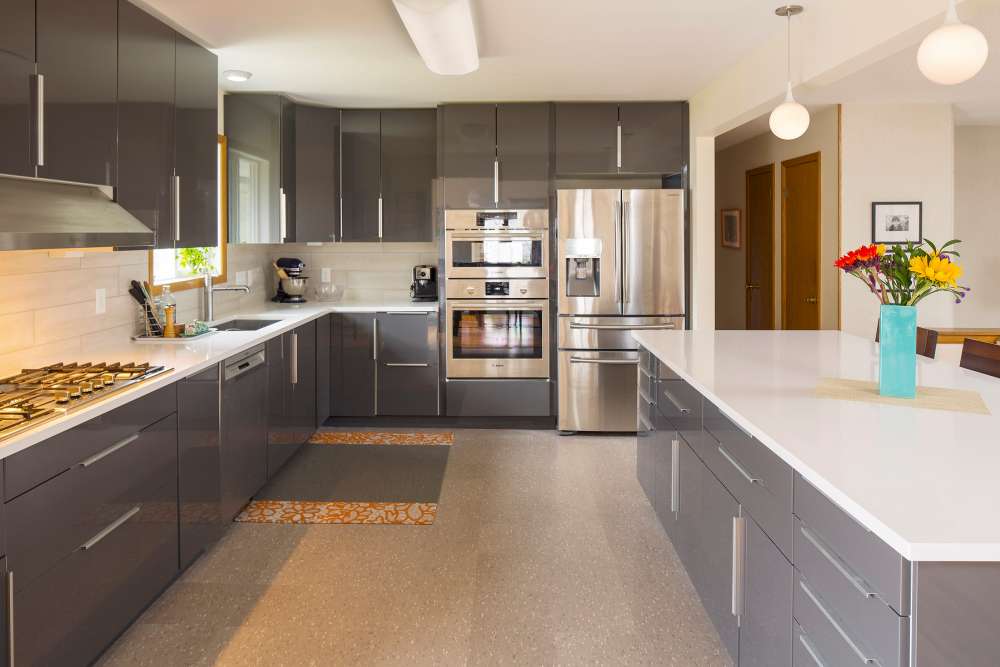
Start with the cabinet undertone, then pick the tile white. Cool greys such as Sherwin-Williams Gray Screen want a crisp, bright white, warm greiges such as Repose Gray and Revere Pewter want a softer one, and charcoals such as Peppercorn need light tile to keep the wall from going heavy.
| Shade family | Example paint | Undertone | Best tile | Watch for |
|---|---|---|---|---|
| Cool light grey | Sherwin-Williams Gray Screen (SW 7071) | Blue-leaning | Bright white, light grey | Reads icy in north light |
| Warm greige | Sherwin-Williams Repose Gray (SW 7015) | Beige with violet or green | Soft white, warm white | Turns lavender in cool light |
| Deeper greige | Benjamin Moore Revere Pewter (HC-172) | Beige with green | Warm white, cream | Looks darker in dim kitchens |
| Charcoal | Sherwin-Williams Peppercorn (SW 7674) | Near neutral | Bright white, light grey | Absorbs light, needs a bright room |
Light reflectance value (LRV) is the number to check before ordering paint. Peppercorn sits at 9.681 in Sherwin-Williams’ own color data (2026), which is why it needs a bright room and light tile.
Revere Pewter lands near 55 on the same scale, according to Benjamin Moore figures reported by Kylie M Interiors (2026). That makes it look darker than the chip suggests when a kitchen has small windows. A longer list of colors that pair with Revere Pewter helps while the wall paint is still open.
Repose Gray (LRV 58) is the coolest of the common warm greiges. In north-facing rooms its violet undertone can show against a cool white tile, as Suite Minded’s 2026 review notes.
If the walls are still unpainted, the colors that go with Repose Gray narrow the choice fast.
Door style matters less than shade. Shaker doors dominate the published grey-and-subway kitchens in Houzz’s 2025 galleries, and their flat panels echo the tile grid.
Test the pair, not the chip. Hold a loose tile against a painted door sample and look at both in morning and evening light.
What color subway tile goes with grey cabinets?

White. Mineral Tiles (2026) calls it the most reliable backsplash tile for grey cabinets, and every other color is a deliberate contrast decision.
Daltile’s Restore line shows the range available: Bright White, Dove Gray, Ash Gray and Charcoal Gray, plus Cool Mint and Tide Blue, per Home Depot listings.
- White: Pros, keeps the kitchen open and works with any hardware or countertop. Cons, shows grout stains and can look stark against a cool grey.
- Light or mid grey: Pros, tone-on-tone calm, forgiving of undertone. Cons, can flatten the wall if the cabinets are the same value.
- Black or charcoal: Pros, strong contrast. Home Decor Christy (2023) shows a black 4×16 tile against light grey cabinets and soft quartz. Cons, exposes grout and edge flaws, and closes in a small kitchen.
- Navy or blue: Pros, a natural partner for grey, per Mineral Tiles. Cons, a green-blue glaze fights a warm greige.
- Green: Pros, adds color without touching the cabinets. Cons, undertone has to match the grey or the pair looks accidental.
- Marble-look or beige: Pros, grey veining picks up stainless steel appliances and suits traditional kitchens. Cons, busier, and mixed veining hides the tile grid.
Wall color is a separate decision, and the colors that go with gray cabinets cover it.
Ceramic, porcelain and glass subway tile

Ceramic: the default. Glazed, easy to cut, and the cheapest of the three.
Porcelain: denser and tougher. Pebble Tile Shop (2026) notes it handles either grout type without trouble.
Glass reflects the most light, so it suits a grey kitchen with little daylight. It scratches under sanded grout, which means unsanded only.
Finish changes the look as much as color. Glossy bounces light across a dark cabinet, matte reads quieter, and a beveled edge adds a shadow line at every joint.
Which subway tile size and layout suits grey cabinets?
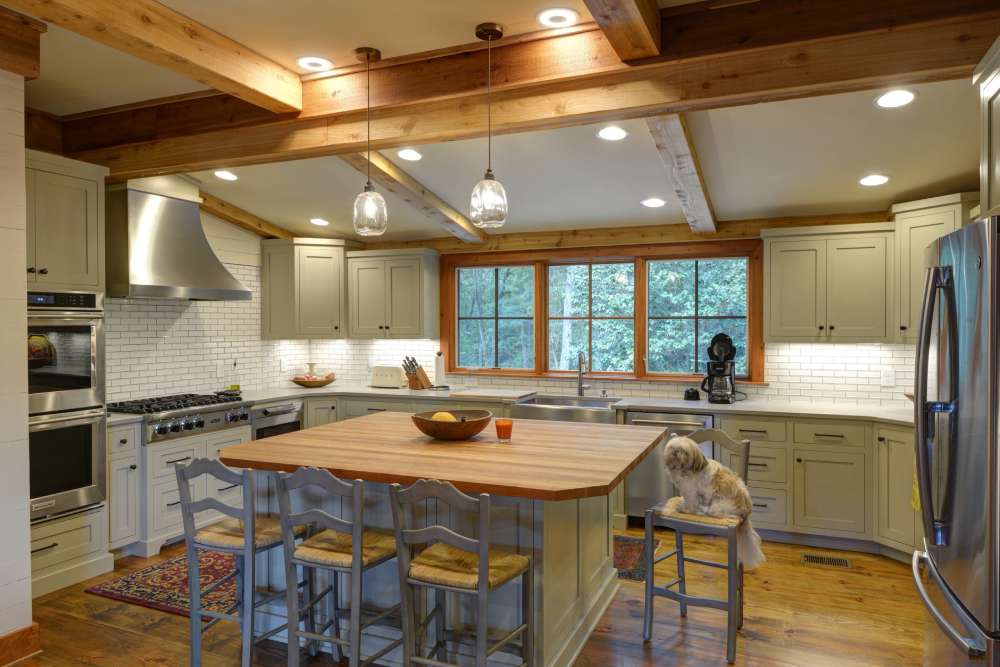
A 3×6 tile in running bond is the safe default. Move to 3×12 or 4×12 for fewer grout lines, and choose herringbone only when the budget and the installer’s skill allow it.
Size and format
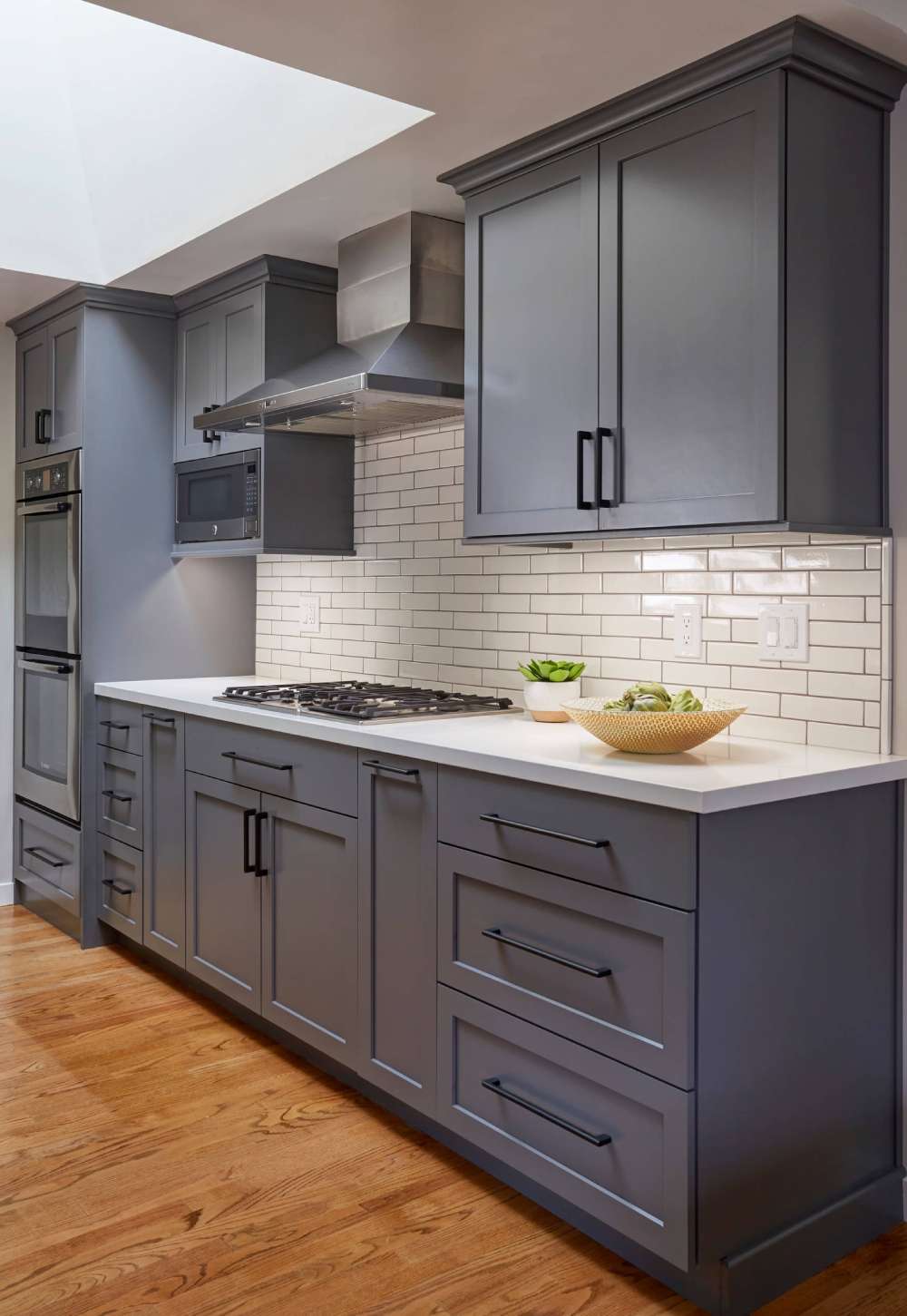
The 3×6 format dates to 1904, when architects George C. Heins and Christopher Grant LaFarge specified it for New York’s first subway stations (Apartment Therapy, 2023).
Daltile (2025) now treats any wall tile with a 1 to 2 ratio as subway tile, including 2×4, 4×8 and 6×12, and lists 3×6, 4×12 and 4×16 among its popular sizes.
- 3×6: traditional, most grout lines, busiest wall
- 3×12 and 4×12: fewer joints, a cleaner modern look against flat-front grey doors
- 4×16: long horizontal runs, common in the black-tile kitchens Home Decor Christy (2023) shows
- 2×8: narrow, mostly used for herringbone
Fewer joints also mean less grout to scrub, which matters most behind the range.
Layout pattern
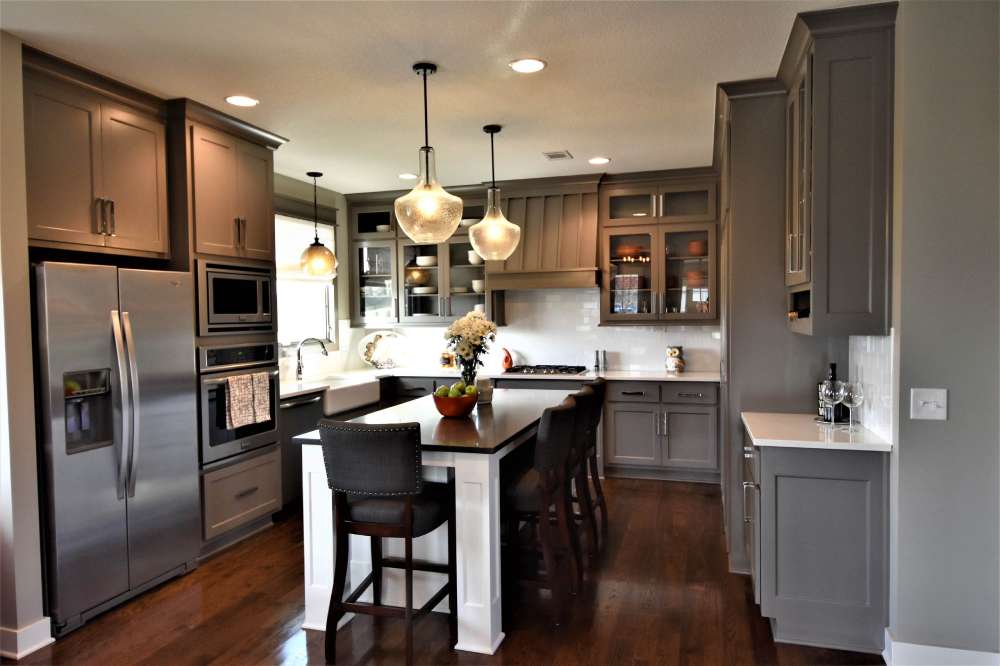
| Layout | Look | Install difficulty | Labor note |
|---|---|---|---|
| Running bond | Classic offset brick | Easy | Standard rate |
| Stacked | Straight grid, modern | Moderate | Needs a flat, square wall |
| Herringbone | Dramatic 45-degree zigzag | Hard | Costs more per square foot |
| Vertical stack | Draws the eye up | Moderate | Standard rate, more cuts at the ceiling |
HomeAdvisor’s cost guide puts the herringbone labor surcharge at $2 to $4 more per square foot, because the pattern takes more time and skill.
Herringbone and diagonal cuts also waste more tile than a straight run, so check the quantity with a tile calculator before you order.
Stacked bond has no offset to hide a wall that is slightly out of square. Every misaligned joint shows.
Choosing a grout color for subway tile on grey cabinets
White grout gives a soft grid, light grey gives a quiet one, and charcoal gives a sharp one that punishes uneven tile. Pick by how much of the pattern you want to see.
White, light grey and charcoal grout

White grout. Pros, blends with white tile and reads clean. Cons, discolors fastest near the range. Kylie M Interiors (2026) also warns against thick white lines when the tile is not white.
Light grey grout. Pros, defines the tile without a hard edge, and hides dirt better than white. Cons, a warm grey grout can clash with a cool grey cabinet.
Charcoal grout. Pros, makes the pattern the feature. Cons, it exposes every crooked tile.
Designers split on this. Joanna Gaines favors dark grey grout on white subway tile because it highlights the tile (HGTV, as reported by AOL Lifestyle). Others match grout to tile for a calmer wall, per House Digest on AOL.
Both camps agree on the risk: very dark grout shows every imperfection in the layout (AOL Lifestyle; Home Decor Christy, 2023).
Grout type and stain behavior
Unsanded grout is the standard for most subway tile backsplashes because the joints run narrow. Pebble Tile Shop (2026) puts the dividing line at 1/8 inch: unsanded below it, sanded at 1/8 inch and wider.
- Cement-based: cheaper, porous, needs sealing
- Epoxy: stain resistant and low maintenance, costs more, and the working time is shorter
DG Floors (2026) names Laticrete SpectraLOCK Pro, Mapei Kerapoxy CQ and Custom EBX as common epoxy products.
Behind the range, epoxy is the better call, because grease is cement grout’s worst enemy. On a dry stretch of wall far from the cooktop, sealed cement grout is enough.
Matching countertops and hardware to the cabinet and tile combination
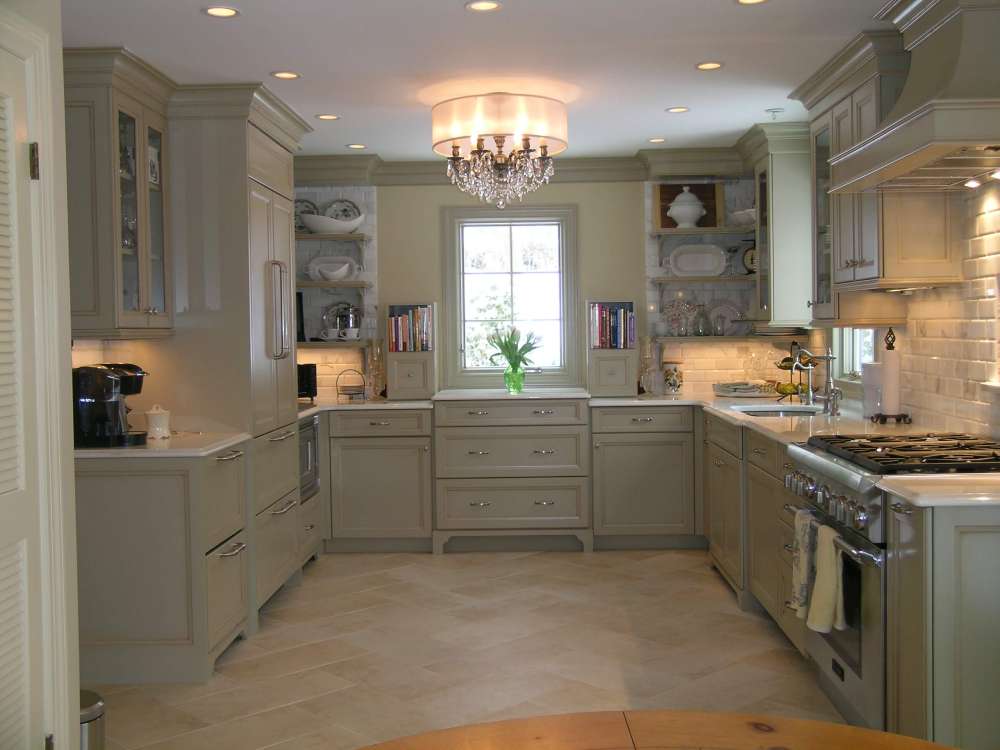
Match the undertone first. Cool grey cabinets take white or cool-veined quartz and nickel pulls, warm greige takes cream quartz, wood and brass, and the white subway tile sits between them as the neutral bridge.
Countertops

- Quartz: Zeeland Lumber’s 2026 pairing chart sends cool grey to white or cool-veined quartz and warm grey to cream or greige quartz. It flags the opposite undertone as the mistake to avoid.
- Butcher block and wood: warms a cool grey kitchen. Livingetc (2025) quotes two designers making that case, one for a traditional look and one for a farmhouse look.
- Marble: Otto Tiles, quoted in the same Livingetc piece, points to bold stones such as Rosso Levanto, Verde Guatemala and Calacatta Viola as a focal point against grey cabinets. That focal point competes with a patterned tile, so keep the wall plain white.
Quartz is the safest pick behind a tile grid. The full shade-by-shade matches are in this breakdown of grey cabinets paired with quartz countertops.
Hardware finishes
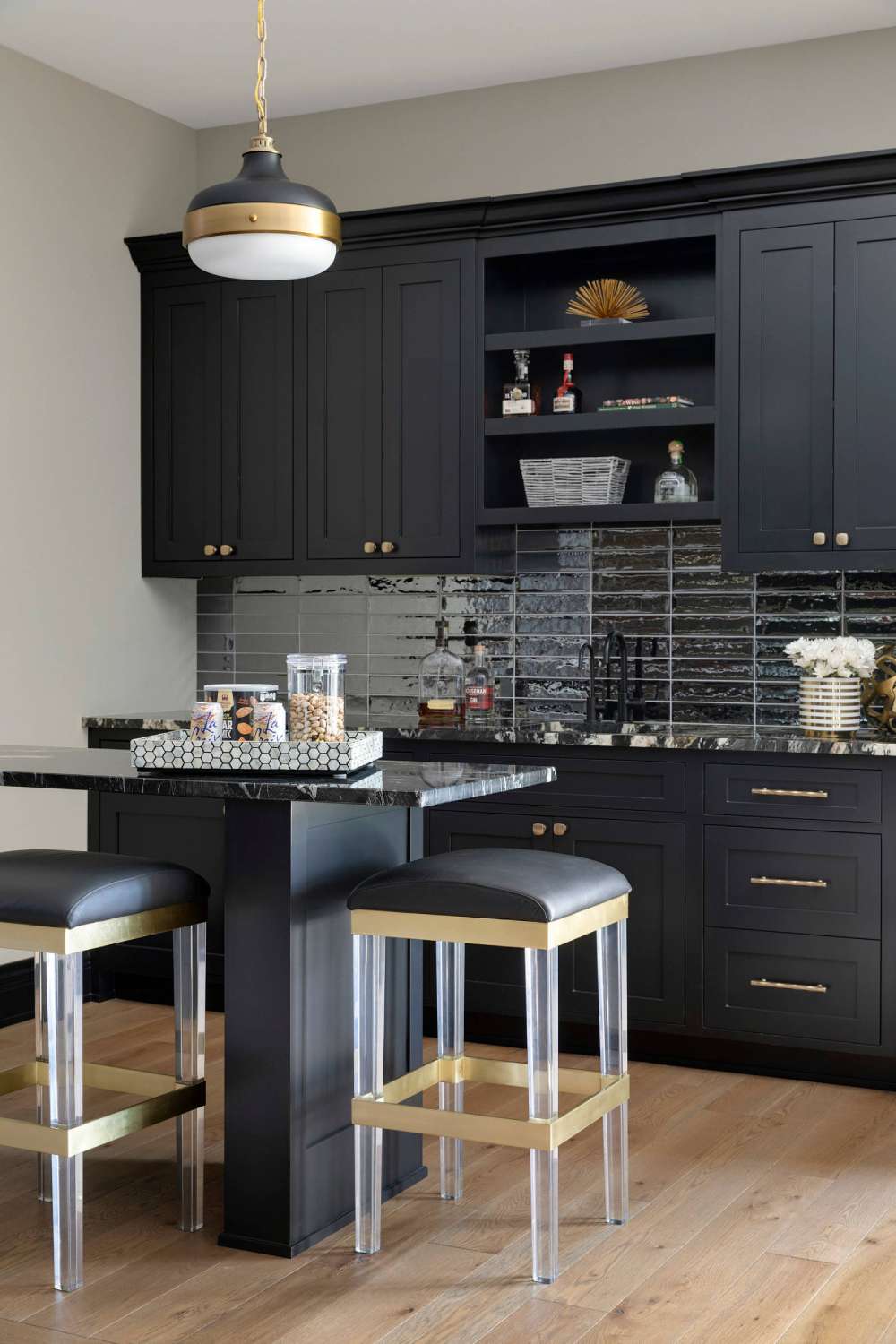
| Finish | Best with | Watch for |
|---|---|---|
| Brushed nickel | Cool grey, stainless appliances | Reads quiet on very light doors |
| Matte black | Light and medium grey | Vanishes on very dark, flat-front doors |
| Brushed brass | Cool grey that needs warmth | Clashes with a nickel faucet |
Comforsyco (2026) rates brushed nickel the low-risk finish that coordinates easily. DoorCorner (2026) pairs satin nickel (the same finish under another name) with cool grey, and sends antique brass to warm grey and greige.
Knobs.co (2026) adds a rule worth following: if the faucet is brushed nickel, the pulls should be brushed nickel or matte black, not warm brass.
Black pulls give the sharpest contrast on light and medium grey, and the full breakdown of grey cabinets with black hardware covers door styles and finishes.
Appliances, floors and lighting
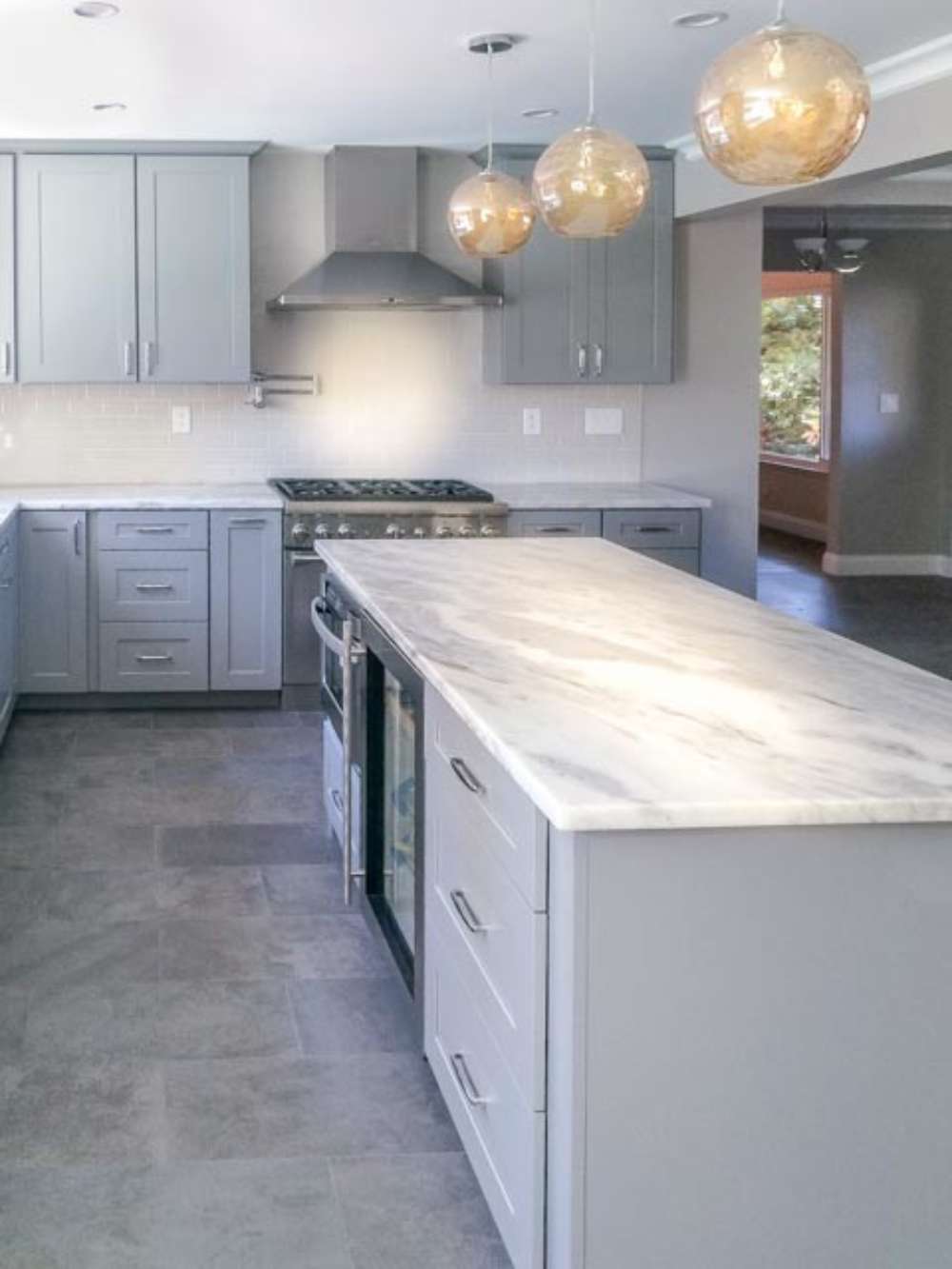
- Stainless steel appliances blend with cool grey (Kitchen Cabinet Depot, 2025)
- Light oak or stone floors ground the cool tone, per Nestic Homes (2025)
- Warm bulbs under the cabinets soften grey, and they light the tile glaze directly
How much does a subway tile backsplash cost?
Published guides put installed subway tile between $7 and $40 per square foot, and the ceiling moves more than the floor. The tile is the cheap part, since in most guides labor outweighs the material.
- HomeGuide (2026): $7 to $35 per square foot installed
- Nova Tile and Stone (2025): $7 to $25 per square foot, labor and materials
- BuildX (2026): $10 to $40 per square foot
- Savu LLC (2026, Southern NH and Northern MA): $12 to $25 per square foot installed
The guides disagree because they price different jobs. Tile quality, pattern complexity and region all move the number, and some guides fold glass and stone into the subway category.
| Option | What drives cost | Practical note |
|---|---|---|
| Plain ceramic | Lowest tile price | Best value in a straight run |
| Glass | Higher tile and labor price | Savu LLC prices glass labor above basic ceramic |
| DIY | Tools instead of labor | Wet saw, notched trowel, spacers, grout float |
| Hired installer | Labor and minimum charges | Pays for a flat, aligned result |
Removal of an old backsplash is quoted separately in the HomeGuide and Savu pages, so a low quote can leave it out.
If the backsplash is one line in a bigger remodel, a calculator for the whole renovation budget keeps the numbers in one place.
Spend on grout and layout, not on pricier tile. Plain ceramic in a straight run looks as good against grey cabinets as anything dearer.
How to install a subway tile backsplash
Eight steps cover the job: check the wall, mark layout lines, spread thinset, set tiles from the center, cut around outlets, wait for the mortar to cure, grout, and caulk the counter joint.
Installation steps
- Clean the wall and check it for flatness.
- Find the center, draw a plumb line, and dry-lay a bottom row to see where cuts land.
- Spread thinset with a notched trowel over a small section.
- Set tiles from the center outward, with spacers at every joint and above the countertop.
- Cut tiles for outlets, switches and edges with a wet saw.
- Wait for the mortar to cure before grouting.
- Grout, let haze form, then wipe the tile faces with a damp sponge.
- Caulk the joint between tile and countertop with silicone.
Pebble Tile Shop (2026) calls for a 24-hour cure before grouting. Other guides push standard thinset to 48 hours, so the mortar’s data sheet has the final word.
Wall flatness decides how the finished tile reads. For tiles with all sides under 15 inches, TileLetter (2026), citing the TCNA Handbook and ANSI A108, puts the limit at 1/4 inch of variation over 10 feet.
Some secondary summaries quote a tighter tolerance, so confirm against the current handbook before you skim-coat or skip it.
Outlets are the fiddly part. Cut the tile to sit inside the opening and let the cover plate hide the edge, or read this guide to hiding the outlets in a kitchen backsplash before you start.
Use silicone, not grout, where the tile meets the countertop. The two materials move at different rates, and The DIY Playbook (2025) documents grout crumbling there within a short time, so pick the right caulk for the backsplash joint in a matching color.
What goes wrong
- Lippage: uneven thinset or a wavy wall leaves neighboring edges at different heights. Livingetc (2025) cites tile leveling clips as the fix.
- Grout haze: leftover grout dries to a film. Use a cleaner made for the tile type and nothing abrasive.
- Early grouting: grout over uncured mortar can crack or lift, per Madison Tile Installers (2023).
- Missing trim: without edge pieces the backsplash ends look unfinished.
A first-timer can handle a straight run on a flat wall with a wet saw, spacers, a notched trowel and a grout float. A wall that is out of flat, or one with many outlets, is worth a pro.
When grey cabinets and subway tile do not work
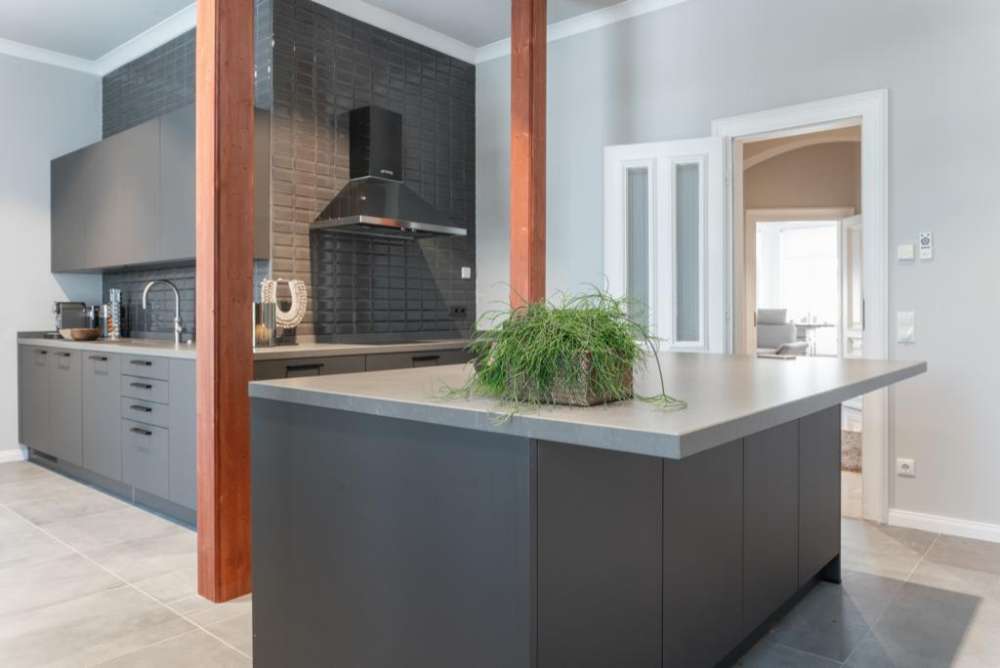
The pairing fails in dim kitchens with cool grey cabinets and stark white tile, in rooms where grey is the only material, and under glossy cabinet finishes that show every smudge.
- Low light: Fiona Ginnett of HOLTE says many kitchen greys are cool or blue-based and read clinical under artificial light or on dark days (Livingetc, 2026). Rhiannon Phenis, head of design at Sola Kitchens, calls a cold grey sterile in north-facing rooms and steers clients to greys with taupe or beige undertones (Livingetc, 2025).
- No warm material: grey kitchens risk going flat, and Livingetc (2026) recommends mixing materials to break it up. Wood, brass or a warm counter does that job.
- Gloss finish: one homeowner in Livingetc (2025) chose gloss grey doors to bounce light into a dark corner. The finish stressed the grey and showed fingerprints.
Bright white tile is the obvious choice, and in a dim kitchen it is the wrong one. HUSK’s north-facing kitchen guide advises whites with cream, stone or beige hints and warns off blue-based whites and cool greys.
Decision rule: if the kitchen faces north or has one small window, choose a warm greige cabinet and a warm white tile. Strong south light is where a cool grey with bright white works, per Kitchen Cabinet Depot (2025).
Sources disagree on Repose Gray in north light. Suite Minded (2026) says its violet undertone can take over and push it toward lavender-grey, while Facade Colorizer (2026) says the violet-brown base holds warmth on a north wall.
Settle it with a sample on the actual wall, checked at night and in the morning.
Grey Kitchen Cabinets with Subway Tile Backsplash FAQ
Is it gray or grey?
Both spellings are correct. “Gray” is standard in American English and “grey” in British English, and paint names such as Sherwin-Williams Gray Screen use the American form.
Pick one spelling and keep it consistent when you search for paint or tile.
Is grey cabinets with white subway tile outdated?
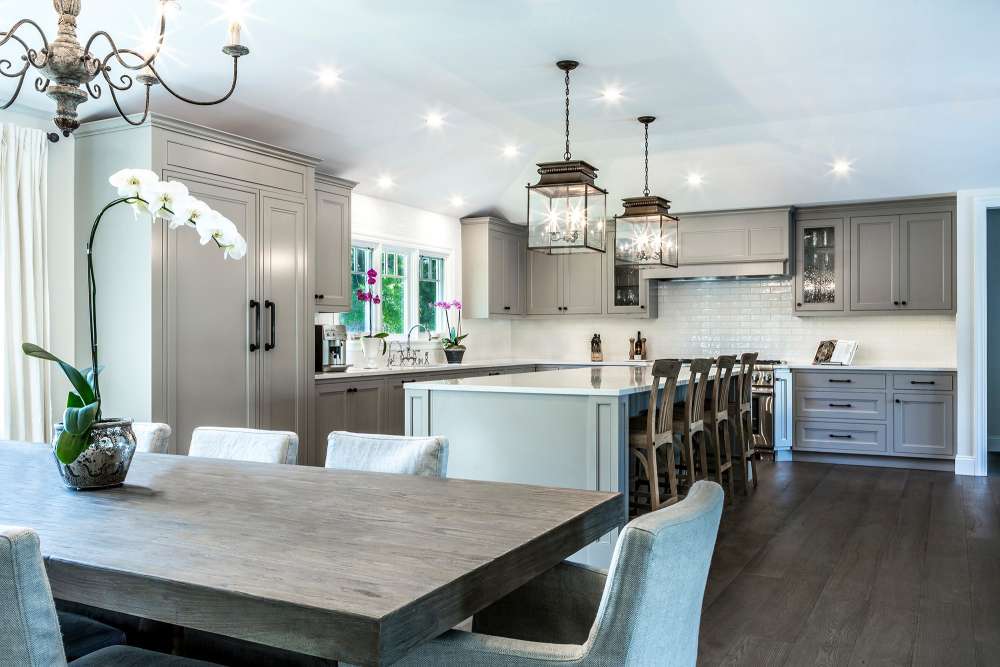
Partly. Captivating Cabinets (2026) names cool grey as the fastest-dating part of the look, while warm greige and plain white subway tile hold up.
Wood, brass or a warm counter keeps the room from reading flat.
Which wall paint color goes with grey cabinets and a subway tile backsplash?

A warm off-white suits most grey cabinets. In low light, Artcheer (2026) suggests Sherwin-Williams Alabaster (SW 7008) to keep the room inviting.
More options are in this guide to the best colors for kitchen walls.
Should the backsplash go to the ceiling or stop under the upper cabinets?
Either works, depending on what hangs on the wall. Run the tile to the ceiling behind open shelves or a range hood, and stop at the cabinet bottoms where upper cabinets sit.
A narrow strip above the counter reads unfinished.
Can you tile over an existing backsplash?
Yes, if the old tile is sound, flat and well bonded. Clean off grease first, and expect extra thickness at outlets.
Loose or uneven tile comes off before you start, because the new layer copies every bump underneath.
How much subway tile should you order?
Measure the wall area and add 10 to 15% for cuts and breakage, per Pebble Tile Shop (2026).
Order everything at once so dye lots match, and keep a spare box for future repairs.
How do you clean and seal grout?
Seal cement-based grout after it cures and reseal every 1 to 2 years (Lapifix, 2025). Epoxy grout needs no sealer.
Clean with a pH-neutral cleaner, because acidic products eat away cement grout over time, per Tampa Kitchen and Bath (2026).
Is peel-and-stick subway tile a workable substitute?
Yes for rentals and walls away from heat, no behind the range. Stickwoll (2026) points out that “heat resistant” does not mean fireproof, and lists melting and discoloring near the stove as a common failure.
It also lacks the depth and durability of real ceramic.
Which Pairing to Sample Before You Buy
Sample the grey kitchen cabinets with subway tile backsplash combination that matches the room’s light before buying in bulk: warm greige and soft white for dim rooms, cool grey and bright white for strong sun.
Fix the most expensive choice first, since every later choice can adapt to it:
- Cabinet paint sample
- Loose tile held against it
- Grout sample on that tile
The warm option gives up the crisp contrast of cool grey and bright white. In return it reads better on dark days and under artificial light.
As of October 2026, this order holds unless the kitchen’s light changes. A new window, different bulbs or a darker floor each call for a fresh round of samples.
A room color scheme generator can preview wall and trim colors against the chosen cabinet shade before the first sample arrives.

- Exploring the Rich History of Interior Design - September 30, 2026
- IKEA Shoe Storage Ideas for Compact Areas - September 23, 2026
- What is Interior Design? A Beginner’s Guide - September 19, 2026


