Summarize this article with:

Brass hardware, thick rope, and navy blue accents can turn any room into something that feels connected to the sea. Nautical home decor borrows from sailing culture, naval architecture, and the look of harbor towns along the coasts of New England and the Mediterranean.

But there’s a fine line between a well-styled maritime room and a seafood restaurant lobby. Getting it right takes some restraint.

This guide covers the materials, color palettes, furniture, lighting, and room-by-room ideas that actually work. You’ll also find specific retailers at every price point, from Target to Restoration Hardware, plus tips on mixing nautical pieces with other styles so the whole thing holds together without feeling like a costume.

What Is Nautical Home Decor?


Image source: Eileen Kathryn Boyd Interiors

Nautical home decor is a style built on maritime tradition. It pulls from sailing culture, naval architecture, and the look of harbor towns along the coasts of New England, Nantucket, and the Mediterranean.

The core of it is specific. Navy blue and white anchor the palette, with red accents showing up in textiles and small details. Brass hardware, thick rope, weathered wood, and canvas fabrics do the heavy lifting.

People confuse this with coastal interior design all the time. But there’s a real difference.

Coastal leans softer. Sandy tones, sea glass greens, linen everything. It’s about evoking a beach mood. Nautical is more structured. Think ship wheels, signal flags, compass roses, and porthole mirrors. It references actual boats and the sea life around them, not just the feeling of a sandy shoreline.

There’s also overlap with tropical home decor, which goes full warm-weather with palm prints and rattan. Nautical stays cooler, crisper, more New England than Caribbean.

Grand View Research valued the global home decor market at $960.14 billion in 2024, growing at 9.4% CAGR through 2030. Themed styles like nautical continue to drive demand, especially in the textile and decorative accessories categories.

And here’s the thing most people miss. You don’t need to live on the water. A landlocked apartment in Chicago can pull off a maritime theme just as well as a Cape Cod cottage. The style references a visual language, not a zip code.

Key Materials and Textures in Nautical Decor

Materials are what separate a room that reads “nautical” from one that just reads “blue.” Get the textures right and the whole thing clicks. Get them wrong and you’ve got a costume, not a room.

The National Association of Home Builders reports that sustainable materials like reclaimed wood appear in over 35% of new residential builds in the U.S. That number matters here because so much of nautical decor relies on weathered, reclaimed, and natural materials that fit the trend.

Rope and Knot Details

Thick-gauge manila rope is the signature. It shows up wrapped around table bases, framing mirrors, and used as curtain tiebacks.

Jute rugs are probably the easiest entry point for anyone starting out. They’re affordable, they look right in a nautical room, and they add texture in interior design terms without trying too hard.

Sailor knot boards (the kind with labeled knots mounted on wood) work as wall art. Decorative rope bowls sit well on coffee tables. And rope-wrapped pendant lights are everywhere right now, from Pottery Barn to Etsy shops.

Brass and Metal Fixtures


Image source: TMS Architects

Brass reads nautical. Chrome doesn’t.

That’s the simplest rule to remember. Porthole mirrors with brass frames, ship cleats used as coat hooks, and aged brass drawer pulls all contribute to the maritime look. Restoration Hardware and Ethan Allen both carry solid brass hardware lines that fit this style.

Brushed nickel is a decent middle ground if polished brass feels too shiny. But avoid anything that looks industrial or modern-minimal. The industrial interior design look uses similar metals but in a completely different context, more loft and less lighthouse.

Material Nautical Use Where to Source
Manila rope Mirror frames, light fixtures, tiebacks Etsy, Pottery Barn
Brass hardware Drawer pulls, cleats, porthole mirrors Restoration Hardware, Ethan Allen
Reclaimed wood Shelving, wall paneling, furniture Flea markets, Wayfair
Canvas/sailcloth Throw pillows, upholstery Serena & Lily, Target
Sea glass Tabletop displays, vase filler HomeGoods, antique shops

Weathered Wood and Driftwood


Image source: Wendi Young Design

Whitewashed pine paneling on a wall does more for a nautical room than ten anchor-print pillows. Reclaimed wood shelving, driftwood wall art, and teak furniture all belong.

The global reclaimed lumber market was valued at $62.2 billion in 2024, according to IMARC Group. Furniture accounts for 32.6% of that market. The look people want, that aged, weathered, slightly imperfect quality, is exactly what nautical rooms need.

If you’re going with rustic home decor elements like barn wood or salvaged timber, they blend well here. A reclaimed wood console table with brass nautical hardware is one of those combinations that just works every time.

Nautical Decor by Room

The mistake most people make is treating every room the same. A bathroom can handle heavier themed pieces. A living room needs more restraint. Knowing which room gets what keeps the whole house from looking like a seafood restaurant.

Living Room and Common Areas


Image source: WARREN SHEETS DESIGN, INC.

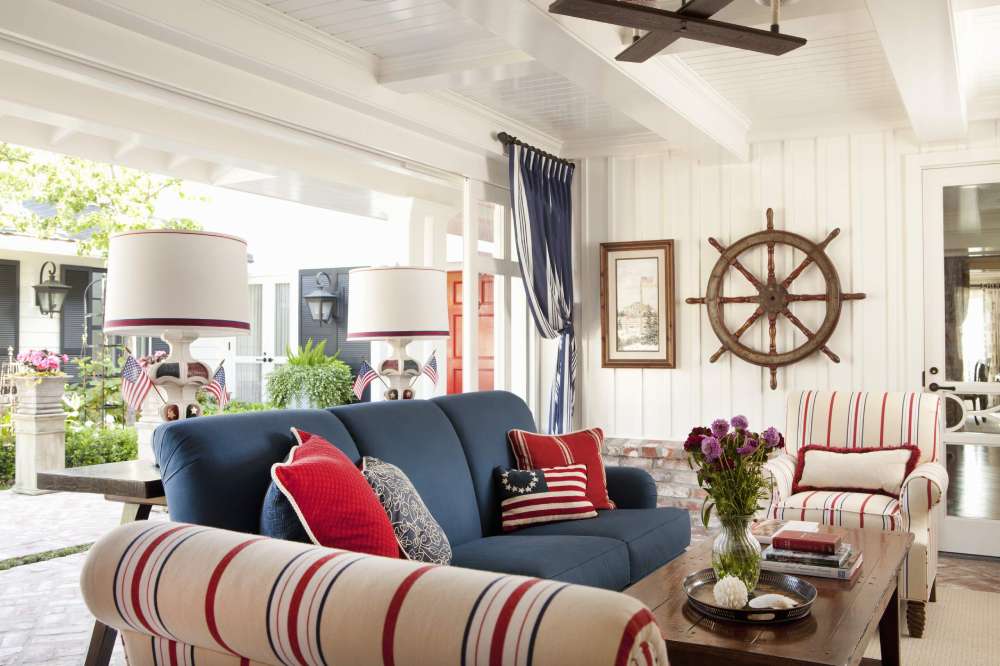
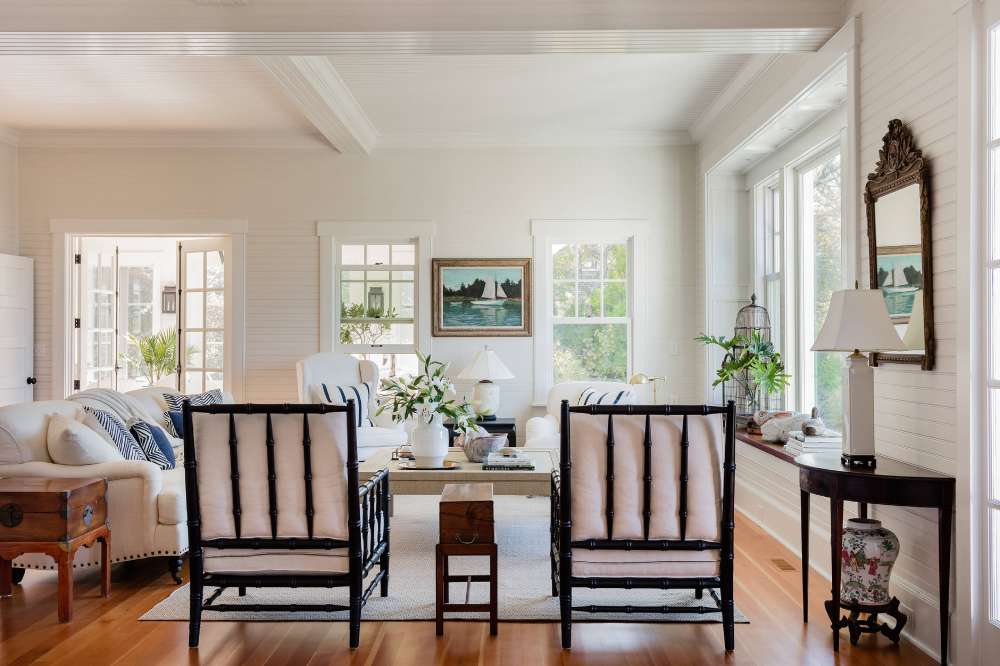
Start with a navy and white striped rug under the sofa. Add anchor-motif throw pillow combinations in navy, white, and maybe a pop of red.

Ship wheel wall art or a large framed vintage maritime chart makes a strong focal point in interior design. One piece. Not three.

Model sailboats on bookshelves, hurricane lanterns on side tables, and a driftwood coffee table round out the room. For coastal living room decor, this setup walks the line between themed and tasteful.

Bathroom


Image source: Julie Ranee Photography

Best room for going bold with the theme. Bathrooms are small, expected to have some personality, and easy to change out.

A rope-framed mirror over the vanity is the classic move. Navy towels with white piping, lighthouse soap dispensers, porthole-style medicine cabinets. These all work without feeling like a tourist gift shop because the scale is contained.

Opendoor’s 2024 data shows U.S. consumers spend an average of $5,635 on home renovation projects, with 27% prioritizing kitchen and bath remodels. A nautical-themed bathroom refresh, new hardware, towels, a mirror, costs a fraction of that and makes a real impact.

Bedroom


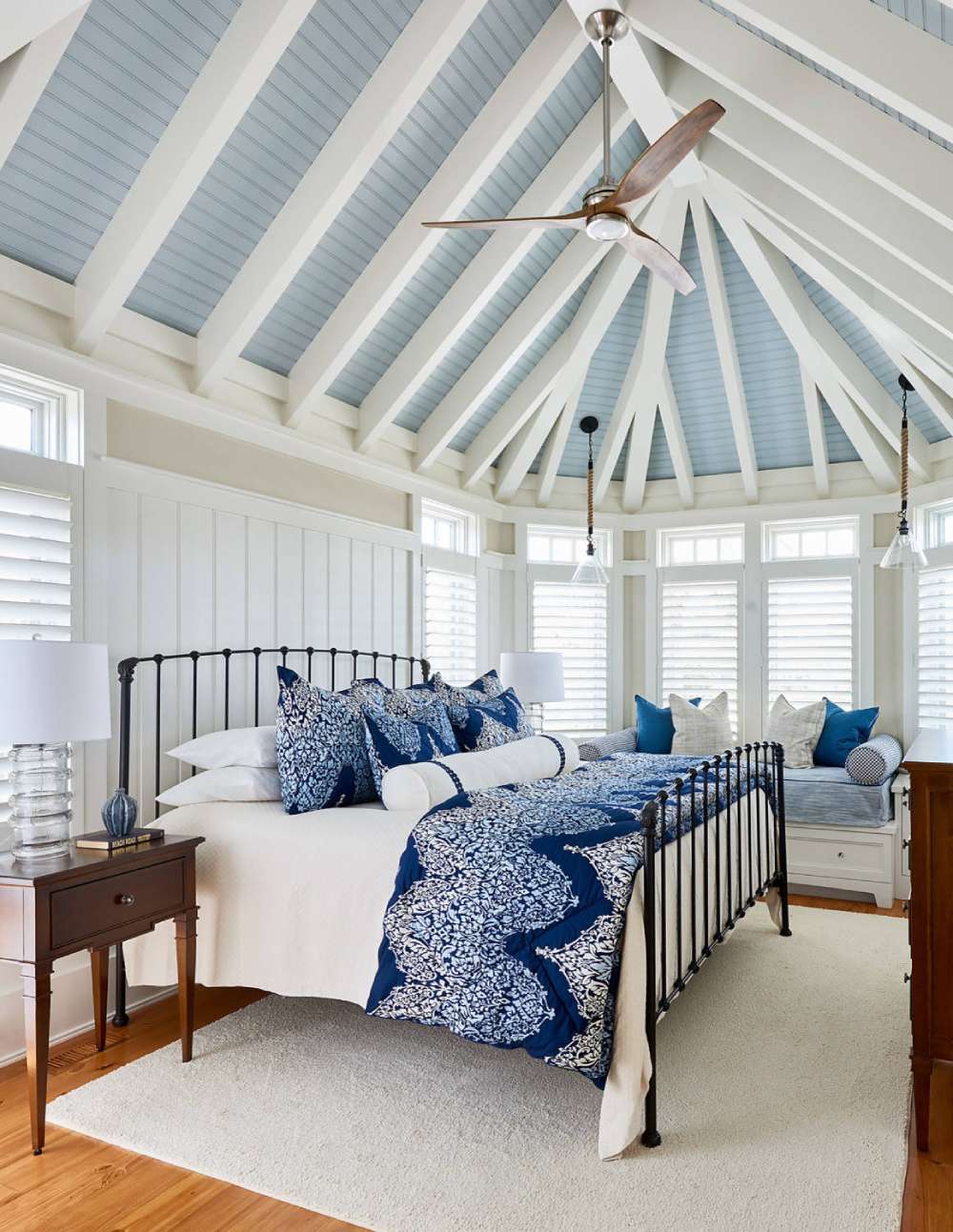
Image source: Webb Builders LLC

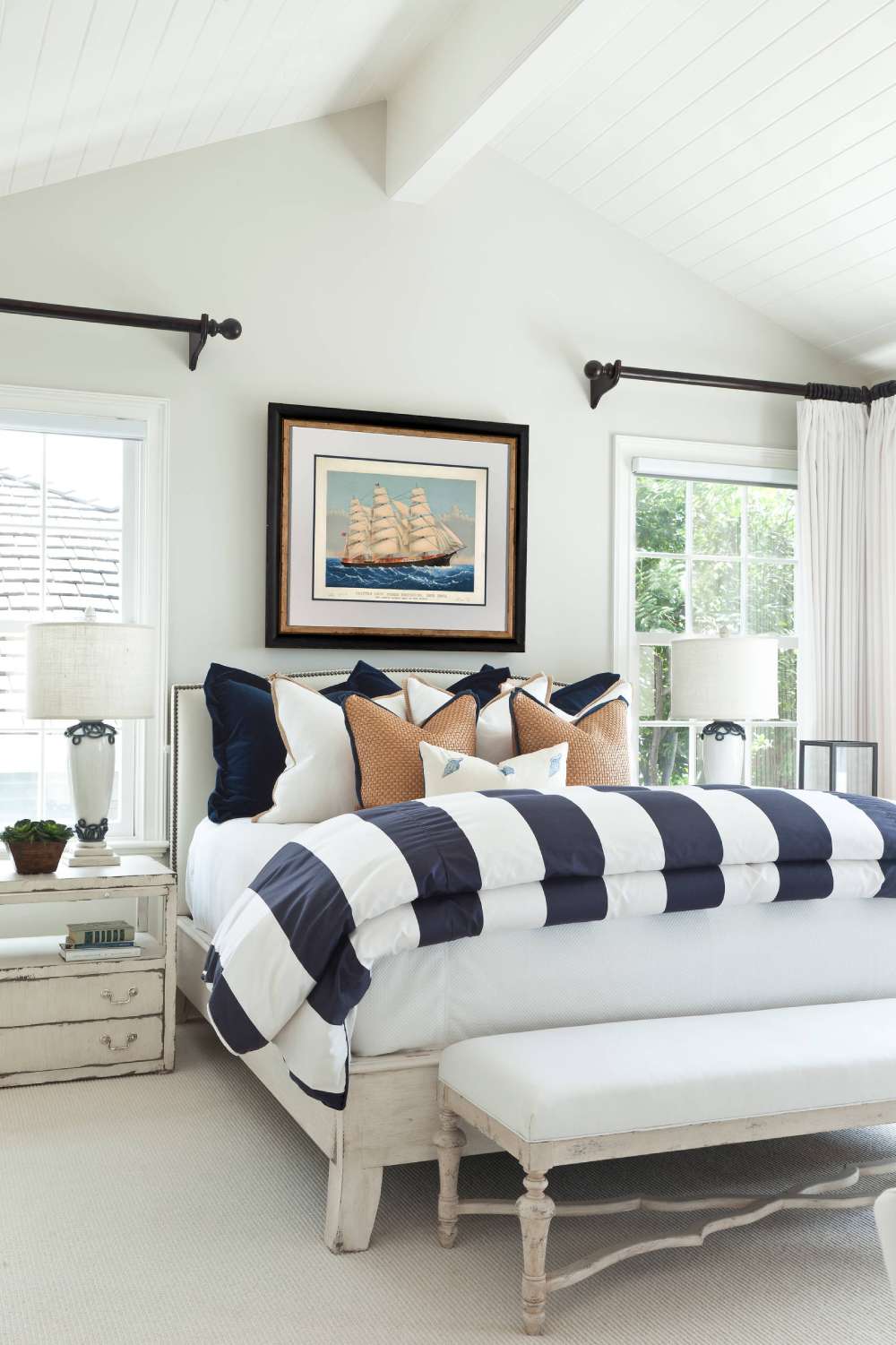
Keep it calmer in here. Navy bedding with white piping is the foundation.

Crossed oars above the headboard or a single framed nautical chart on the side wall adds interest without competing with sleep. Nightstands made from old steamer trunks show up at antique shops in coastal towns and on Etsy regularly.

For more ideas on this room, coastal bedroom decor covers the broader aesthetic. The nautical version just leans harder on the navy palette and maritime objects.

Kitchen and Dining Spaces


Image source: Kala Interior Design

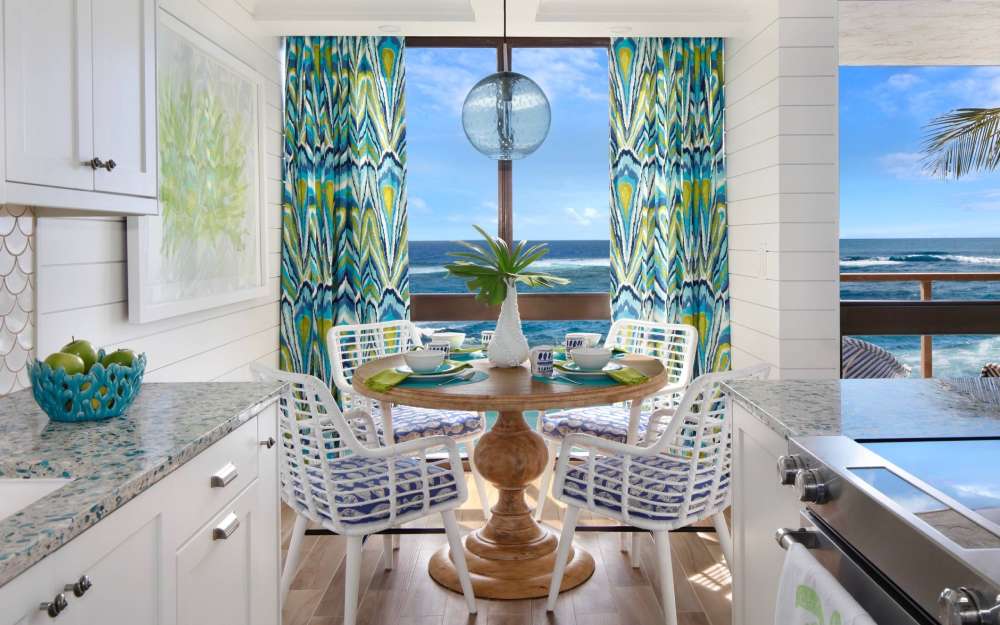
Blue-and-white dishware is the easy win. It’s useful, it looks the part, and you don’t need to commit to anything permanent.

Rope napkin rings, brass pendant lighting over the island, and butcher-block counters with nautical bar stools complete the room. If you’ve got white cabinets already, you’re halfway there.

Check out coastal kitchen decor for a broader range of seaside kitchen ideas, though the nautical version tends to be more blue-heavy and less sandy beige.

Wall Art and Decorative Accents

Wall art is where nautical rooms either come together or fall apart. Too many pieces and it looks cluttered. Too few and the room has no identity.

The wall art market is estimated to grow from $64 billion in 2024 to $101.3 billion by 2032, according to Market Research Future. Nautical prints and maritime-themed art make up a growing niche within that.

Maps, Charts, and Framed Prints


Image source: Lisa Tharp Design

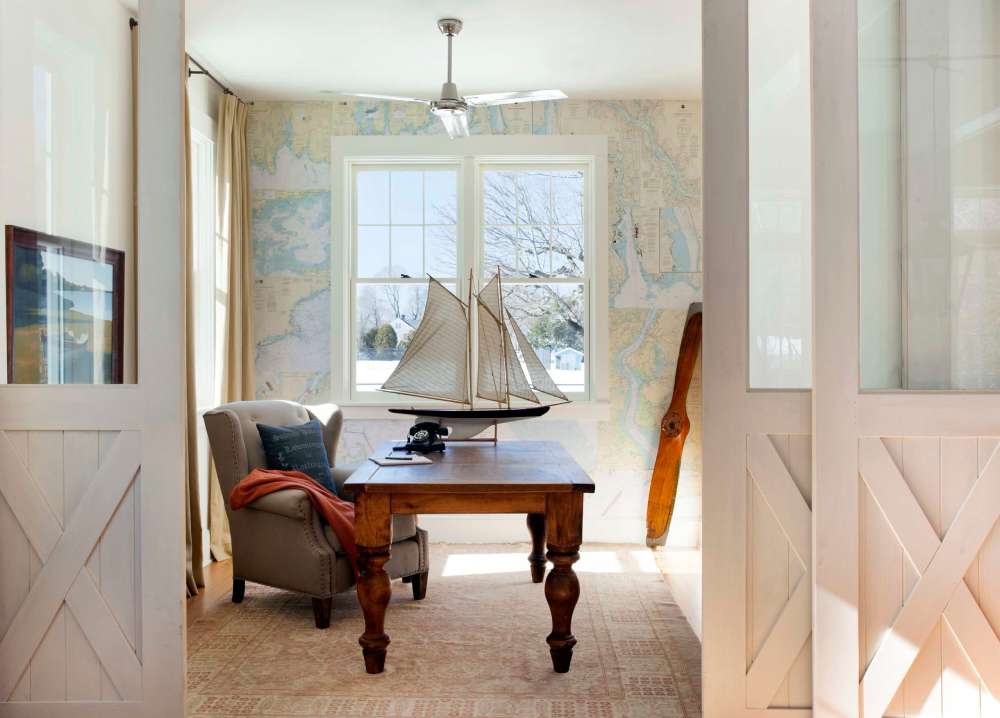
Vintage nautical maps are the safest pick. They look sophisticated, they’re easy to find at antique stores, and they work in a dining room just as well as a hallway.

Framed signal flag prints add color that goes with navy blue naturally. Each flag has a letter, so some people spell out family names or initials.

Knot boards, the kind where different sailor knots are tied and mounted on a frame, split the difference between art and craft. They’re one of those pieces that people actually stop and look at.

Three-Dimensional Wall Pieces


Image source: PAUL WEBER Architecture

Mounted oars: Crossed or parallel above a mantel or sofa. Best in weathered wood.

Ship wheels: Wood or brass. One per room maximum. Seriously.

Anchor wall hangings: Metal works better than wood for these. They read as decor rather than costume pieces when they’re in iron or brushed steel.

Shadow boxes: Fill them with seashells, compass roses, and small lengths of rope. These work especially well in an accent wall arrangement alongside framed prints.

Nautical Lighting Options

Lighting can either pull a nautical room together or push it straight into theme restaurant territory. The trick is choosing fixtures that look like they belong in a well-designed home that happens to be near the water, not on a pirate ship ride at an amusement park.

The global decorative lighting market hit $41.60 billion in 2024, per Grand View Research. Nautical-style fixtures, especially cage pendants and lantern sconces, represent a small but consistently popular segment.

Fixture Types That Work


Image source: Phantom Screens Ontario

Cage-style pendant lights are the workhorse. Restoration Hardware, Pottery Barn, and Serena & Lily all carry versions in brass and brushed nickel. They look right over a kitchen island or in an entryway.

Bulkhead sconces (those round, cage-covered wall lights you see on actual boats) bring authenticity without being over the top. Pair them in a hallway or flanking a bathroom mirror.

For a broader rundown on layered lighting, the distinction between ambient lighting and accent lighting matters here. Your overhead cage pendant handles the room’s general light. A ship lantern table lamp on a side table is your accent.

What to Avoid

Anything novelty. If it has a cartoon anchor on it or glows blue, skip it.

Rope-wrapped chandeliers can work, but only if the rope is real and the fixture itself is well-made. Cheap versions look like a craft project. Driftwood fixtures (branches turned into chandeliers or sconces) are in a gray area. They can look stunning when done right. Most of the mass-market versions don’t.

Stick with brass and brushed nickel finishes over chrome. Chrome reads too modern for this style, closer to contemporary interior design than maritime.

Nautical Furniture and Larger Pieces

Accessories set the theme. Furniture grounds it. Without the right anchor pieces (actual furniture, not the decorative kind), all those rope mirrors and signal flag prints are floating in a room that doesn’t commit.

A 2024 Opendoor report found that 66% of homeowners are going for cost-effective decor changes like rearranging furniture and adding fresh paint. You don’t need to replace everything. A few key furniture picks carry the entire room.

Seating and Upholstery


Image source: Zimmerman Interiors

Slipcovered sofas in white or navy linen are the standard for nautical living rooms. Ralph Lauren Home and Serena & Lily both do this well at the higher end. Target’s Threshold line has budget versions that hold up surprisingly well.

For covered porches and sunrooms, Adirondack chairs in white or navy are hard to beat. They’ve been linked to coastal New England and Cape Cod style for over a century, and the association is so strong that a pair of them does more work than most wall art.

Storage and Case Goods


Image source: Bolton Furniture, Inc.

Campaign-style dressers with brass corner hardware have a long history tied to naval officers and their sea chests. Restoration Hardware and Ethan Allen both carry campaign furniture lines.

Steamer trunks used as coffee tables or bench seating are one of the best secondhand finds for this style. Vintage trunks from flea markets and antique shops in coastal towns (Martha’s Vineyard, Nantucket, the Hamptons) carry more character than anything you’ll find new.

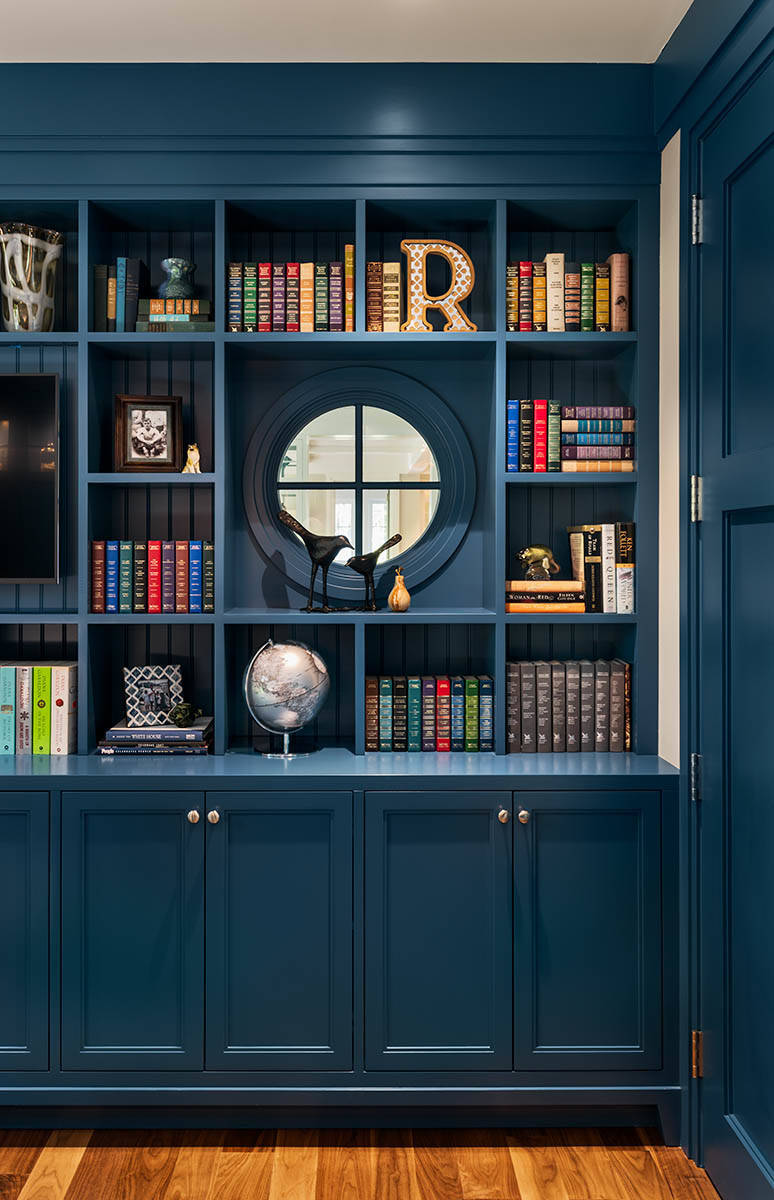
Bookshelves styled with maritime objects, glass floats, compasses, and hardcovers about sailing or naval history are another way to add personality without dedicated “nautical furniture.” The key is treating these shelves like curated displays, not storage dumps.

Console tables with X-base legs or rope-wrapped details work well in entryways. Pair one with a porthole mirror above it and you’ve basically built a greeting card for the rest of the house’s style.

Color Schemes That Work for Nautical Interiors

Most people default to navy and white. And look, that works. But it’s also the most predictable version of this style, and it gets old fast if you don’t push it a little.

Valspar named a saturated cobalt-meets-navy shade called Encore as their 2025 Color of the Year, declaring that “blue is making a comeback.” Benjamin Moore’s Hale Navy and Sherwin-Williams Naval (SW 6244) remain the go-to picks for anyone committing to the classic nautical palette.

Palette Primary Colors Best Rooms Mood
Classic nautical Navy, white, red accents Living room, bathroom Crisp, traditional
Coastal navy Navy, sandy beige, weathered gray Bedroom, entryway Relaxed, grounded
Modern maritime Dark teal, brass tones, charcoal Study, dining room Moody, sophisticated
Minimal nautical All-white, natural wood, rope Kitchen, sunroom Clean, airy

Classic Navy, White, and Red


Image source: Southern Studio Interior Design

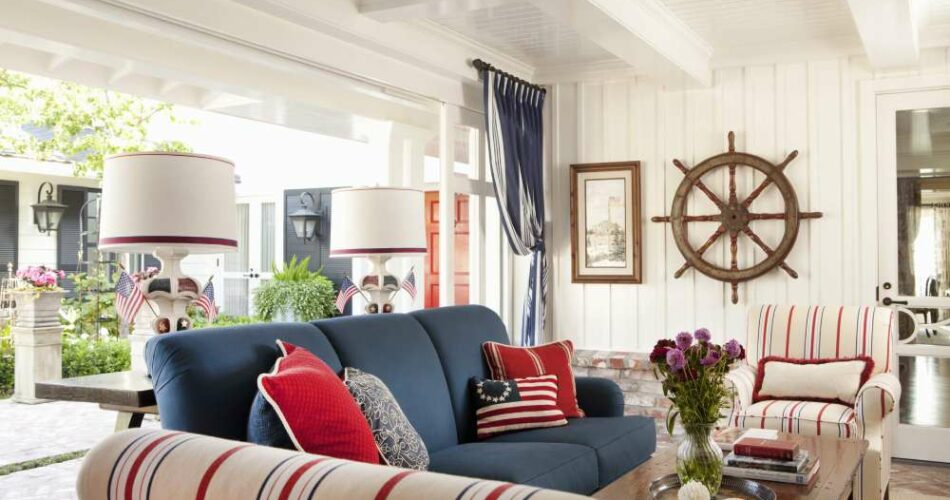
This is the palette that most people picture. Navy walls or upholstery, white trim and bedding, with red showing up in throw pillows or a striped rug.

The combination works because it borrows directly from maritime signal flags and naval tradition. If you want to understand how color theory in interior design applies here, it’s a basic triadic setup. Three colors, evenly spaced, each doing a specific job.

Dark Teal and Brass for a Moodier Take

This is the version for people who want nautical without the “beach house” feel.

Deep teal walls, brass light fixtures, and charcoal accents create something closer to a captain’s study than a seaside cottage. It works especially well in smaller rooms, dens, and home offices where colors that go with teal can really come alive against dark wood furniture.

Havenly’s design team confirmed that earth-toned and deep-water hues are trending hard for 2025, noting that midnight blue and deep teals function as “rich alternatives to neutrals.”

All-White With Natural Accents

Walls: Crisp white or soft cream.

Furniture: Light pine or whitewashed oak.

Accents: Rope, jute, and canvas in their natural tones.

This stripped-back approach leans closer to minimalist interior design, but the rope textures and driftwood elements keep it from reading generic. It’s the easiest palette for smaller apartments, especially when you’re working with limited natural light.

Where to Buy Nautical Home Decor

The 2 Visions 2024 Home Decor Ecommerce Report found that 82% of consumers are open to buying home decor online. That’s a bigger number than most people expect for a category where touch and feel used to matter so much.

But price still leads the decision. According to the same report, 55.45% of buyers prioritize affordability above everything else when shopping online for home decor.

Budget-Friendly Sources

Target’s Threshold line carries navy striped pillows, rope-framed mirrors, and lighthouse figurines at prices that rarely break $30 per piece.

Amazon has a deep catalog for nautical accessories, though quality is hit-or-miss. HomeGoods is better for in-store finds, especially glass hurricanes, sea glass vases, and blue-and-white ceramic pieces. You’ll have to dig, but the pricing makes it worth the trip.

Mid-Range and Premium Retailers

Pottery Barn: Probably the single best mainstream source for nautical decor. Their rope-wrapped mirrors, brass lanterns, and ship-wheel wall art are consistent sellers.

Wayfair: Huge selection, aggressive pricing, easy returns. Good for large items like nautical-themed furniture and outdoor pieces.

Serena & Lily: Higher price point, cleaner execution. Their coastal line bridges the gap between nautical and modern with less themed decor and more refined material choices.

Kirkland’s, Pier 1 (now online only), and Restoration Hardware round out the mid-to-premium range. Restoration Hardware in particular does campaign-style brass hardware furniture better than almost anyone.

Vintage and Secondhand Finds

Etsy’s 2025 trend report flagged “Maritime Living” as a growing style on the platform, with sales of striped decor items, sea glass accents, and shell accessories all rising by double digits year over year.

Home & Living is Etsy’s top-selling category, accounting for roughly 34% of the platform’s $12.6 billion in 2024 gross merchandise sales.

Beyond Etsy, flea markets in coastal towns (Martha’s Vineyard, Nantucket, the Hamptons) are the best spots for real brass compasses, old maritime charts, and vintage ship models. These pieces carry more character than anything mass-produced, and they’re often cheaper than you’d think.

What to buy new vs. secondhand:

  • Buy new: textiles (pillows, curtains, bedding), rugs, lighting fixtures
  • Buy secondhand: brass hardware, framed maps, model sailboats, steamer trunks, old signal flags

How to Keep Nautical Decor From Looking Like a Theme Park

This is where most people mess up. They find the style, they like it, and then they buy one of everything. Five anchors. Three ship wheels. A lighthouse in every corner. Your mileage may vary, but in my experience, restraint is the whole game with themed decor.

The American Society of Interior Designers (ASID) emphasized in its 2025 Trends Outlook that the year’s top design direction is about “creating environments that inspire joy, foster well-being, and harmonize sustainability,” not heavy-handed theming.

The 60/30/10 Rule

Apply this ratio and you’re 90% of the way there.

60% neutral base. White walls, natural wood floors, plain upholstery. This is your canvas.

30% nautical color. Navy pillows, blue-and-white curtains, a striped rug. This sets the tone without dominating.

10% themed accents. One anchor, one ship wheel, one porthole mirror. This is where the personality lives, and less is genuinely more.

Understanding balance in interior design makes the difference between a room that feels collected and one that feels costumed.

Mixing Nautical With Other Styles

A nautical room works best when it doesn’t exist in a vacuum.

Pull in farmhouse interior design elements like shiplap walls or a reclaimed wood dining table, and the maritime pieces feel grounded rather than gimmicky.

Transitional interior design blends well too. Clean-lined modern furniture alongside vintage brass nautical hardware creates tension that keeps a room interesting.

Gift Shop Magazine noted in 2024 that the coastal decor look is “now being infused with elements that we saw in farmhouse decor, such as rustic wood floors and antique furniture.” That crossover is exactly what keeps this style current.

Real vs. Novelty Items

A real brass compass reads differently than a plastic one from a big-box store. A salvaged ship’s cleat used as a towel hook tells a different story than a decorative one that’s never been near salt water.

Avoid anything with cartoon-style anchors, fish-shaped everything, or decor that looks like it belongs in a children’s playroom. The goal is harmony in interior design. Every piece should look like it could have a real origin story, even if it doesn’t.

Nautical Decor for Outdoor Spaces

Fortune Business Insights valued the global outdoor furniture market at $53.27 billion in 2024, growing at 5.5% CAGR through 2032. Teak, aluminum, and weather-resistant fabrics drive most of that growth, and all three materials fit a nautical outdoor setup perfectly.

An International Casual Furnishings Association survey found that 63% of Americans intended to upgrade their outdoor furniture, with dining sets, sofas, and lounge chairs topping the purchase list. A patio, deck, or covered porch is basically a free room to add nautical style without worrying about overdoing it indoors.

Weather-Resistant Materials

Teak: The gold standard for outdoor nautical furniture. It handles rain, sun, and salt air without rotting. It also ages to a silver-gray patina that looks completely at home in a maritime setting.

Sunbrella fabric: The go-to for outdoor cushions and pillows. Their navy stripe patterns are the easiest shortcut to a nautical patio. Fade-resistant, water-resistant, easy to clean.

Marine-grade rope: Wrap it around porch railings, use it as plant hangers, tie it into decorative knots for a fence. It holds up outdoors in ways craft-store rope never will.

Outdoor Accents and Furniture


Image source: Barclay Butera Interiors

Adirondack chairs in white or navy are probably the most recognized piece of outdoor nautical furniture in the country. Cape Cod style has been tied to this chair since the early 1900s.

POLYWOOD partnered with Reese Witherspoon’s Draper James brand in 2025 to launch the Savannah Collection, an outdoor line made from recycled plastics with a Southern coastal feel. It’s one example of how sustainable interior design thinking is moving outdoors.

Dock-style cleats work as towel hooks near pools. Lantern-style outdoor lighting (hurricane candle holders, bulkhead sconces rated for exterior use) sets the right mood at night. And outdoor pattern in interior design terms, striped rugs from brands like Dash & Albert and Safavieh tie the whole space together.

FAQ on Nautical Home Decor

What is nautical home decor?

It’s a design style rooted in maritime tradition. Think navy blue and white palettes, brass hardware, rope textures, and references to sailing life. It pulls from naval architecture and coastal harbor towns like Nantucket and Cape Cod.

How is nautical decor different from coastal decor?

Nautical references specific maritime objects like ship wheels, anchors, and signal flags. Coastal is broader, leaning into sandy tones, sea glass greens, and a relaxed beach mood without the direct sailing references.

What colors work best for a nautical room?

Navy blue and white is the classic foundation. Red accents add tradition. For a moodier look, try dark teal with brass. Benjamin Moore Hale Navy and Sherwin-Williams Naval are two of the most popular specific shades.

Can you do nautical decor without living near the ocean?

Absolutely. The style references a visual language, not a location. A landlocked apartment works just as well as a waterfront cottage. Focus on materials like weathered wood, brass fixtures, and rope details rather than literal ocean imagery.

What materials define the nautical look?

Thick manila rope, reclaimed or whitewashed wood, brass hardware, linen and canvas fabrics, and sea glass accents. Jute rugs and sailcloth pillows are easy entry points that add the right texture without overdoing the theme.

Where can I buy nautical home decor on a budget?

Target’s Threshold line, Amazon, and HomeGoods all carry affordable nautical pieces. For secondhand finds like brass compasses and vintage maritime charts, check Etsy shops and flea markets in coastal towns.

How do I keep nautical decor from looking too themed?

Follow the 60/30/10 rule. Keep 60% of the room neutral, 30% in nautical colors, and only 10% in themed accents. One anchor or ship wheel per room is plenty. Edit heavily.

What nautical decor works best in a bathroom?

Bathrooms handle bold theme pieces well because the space is small. Rope-framed mirrors, navy towels, porthole-style cabinets, and lighthouse soap dispensers all work here without overwhelming the room.

What lighting fits a nautical style?

Cage-style pendant lights and bulkhead sconces are the go-to fixtures. Stick with brass or brushed nickel finishes. Ship lantern table lamps work as accents. Avoid chrome, which reads too modern for this style.

Can nautical decor work outdoors?

It’s a natural fit. Teak furniture, Sunbrella fabric in navy stripes, and marine-grade rope hold up to weather. Adirondack chairs and dock-style cleats as towel hooks near the pool bring the look outside easily.

Conclusion

Nautical home decor works when you treat it like a design language, not a costume. The right mix of driftwood furniture, brass fixtures, and navy blue accents creates rooms that feel collected and personal rather than themed.

Start with one or two anchor pieces per room. A porthole mirror in the bathroom, a rope-wrapped pendant light over the kitchen island, or a vintage maritime chart in the hallway.

Let the materials do the talking. Reclaimed wood, jute rugs, sailcloth textiles, and aged brass carry more weight than any novelty anchor ever will.

Shop smart. Pottery Barn and Serena & Lily handle the polished end. Etsy and coastal flea markets cover the vintage side. Mix price points freely.

Keep the 60/30/10 ratio in mind, blend in elements from other styles like farmhouse or transitional, and edit ruthlessly. That’s how you get a maritime-inspired space that actually holds up over time.

Andreea Dima
Author

Andreea Dima is a certified interior designer and founder of AweDeco, with over 13 years of professional experience transforming residential and commercial spaces across Romania. Andreea has completed over 100 design projects since 2012. All content on AweDeco is based on her hands-on design practice and professional expertise.

Pin It