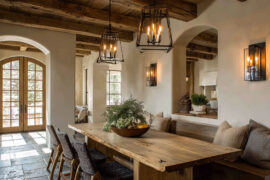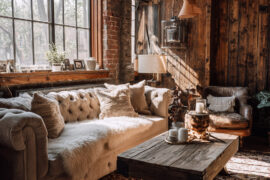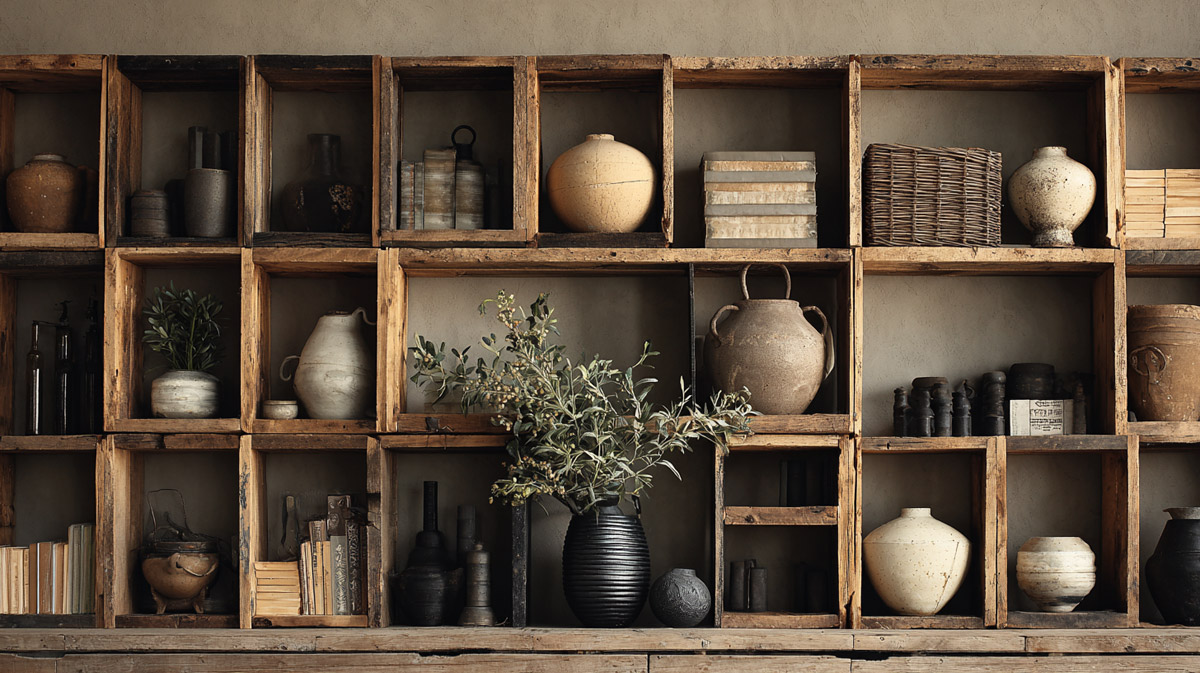
A shelf can hold books. A rustic shelving unit holds character.
Reclaimed wood, raw iron brackets, and aged timber planks do something plain white shelving never will. They bring warmth, texture, and a genuinely lived-in feel to any room they occupy.
But not all rustic shelving is built or chosen equally. Wood species, bracket type, wall anchoring, finish, and placement all affect how a unit actually performs, not just how it looks.
This guide covers everything: what defines rustic shelving, which types suit which spaces, how to build or buy one, and how to keep it looking right for years.
What Are Rustic Shelving Units?
Rustic shelving units are storage and display structures built from natural, raw, or reclaimed wood materials, defined by visible grain patterns, knots, natural imperfections, and aged surface textures.
The core distinction from standard shelving is intentional imperfection. A rustic shelf is not trying to look polished or uniform. The knot holes, rough edges, and weathered patinas are the point, not a flaw.
These units sit at the intersection of function and character. They hold things. But they also carry a visual weight that painted MDF simply cannot replicate.
Rustic shelving connects directly to broader rustic interior design principles, which prioritize organic materials, warm tones, and a lived-in quality over precision finishes. The furniture segment accounted for 40.7% of the global reclaimed lumber market share in 2024, driven by growing consumer preference for sustainable and visually distinctive pieces (Market Data Forecast, 2024).
Key Defining Characteristics
Material identity: Rustic shelving is defined by what it is made from, not just how it looks. The material choice comes first.
- Reclaimed wood: sourced from old barns, factories, warehouses, and shipping pallets, carries natural weathering marks and nail holes
- Barn wood: weathered patina, grey tones, and surface checking from years of exposure
- Pine: affordable, widely available, takes stain and distressing techniques well
- Cedar: naturally moisture-resistant and insect-resistant, well-suited for bathrooms and kitchens
- Oak and ash: harder, denser grain, higher load capacity, longer lifespan under heavy use
Hardware and metal elements typically use oil-rubbed bronze, raw steel, or matte black finishes. Chrome and brushed nickel do not belong here.
Common Structural Forms
Floating rustic shelves mount directly to the wall with concealed brackets, giving a clean profile. Ladder shelves lean against the wall in an A-frame or single-lean configuration. Freestanding barn-style units use industrial pipe frames as the structural base.
Corner rustic shelves occupy otherwise unused wall angles. Built-in rustic shelving integrates into wall recesses or alcoves using custom carpentry, blending into the architecture rather than sitting in front of it.
What Types of Rustic Shelving Units Are Available?
Rustic shelving units come in 5 main structural categories, each with distinct installation requirements, load profiles, and visual outcomes.
Choosing the wrong type for a space is a common mistake. A freestanding barn-style unit in a 9-foot-wide bathroom is a problem. A single floating plank in a garage workshop is equally mismatched. Match the type to the actual use case.
| Shelving Type | 2026 Anchoring Protocol | Best Application | Structural Secret |
|---|---|---|---|
| Floating Rustic Shelf | Heavy-Duty Blind Brackets: Must be lagged into studs. | Kitchens (open shelving), bathrooms, focal gallery walls. | In 2026, “Chunky” is key; 2″+ thickness hides the internal steel supports. |
| Ladder Shelf | Anti-Tip Tether: Discreet strap at the top. | Living rooms, home offices, entryways. | Negative Space: Great for small rooms as they don’t block the floor line visually. |
| Barn-Style Unit | L-Bracket Security: Hidden brackets at the top rear. | Kitchen pantries, garages, mudrooms. | Volume Storage: Best for “active” storage of heavy jars or tools. |
| Corner Rustic Shelf | Dual-Wall Support: Anchors on both perpendicular walls. | Reading nooks, compact bathrooms. | Space Optimizer: Reclaims “dead” corners without using floor space. |
| Built-In Alcove | Structural Blocking: Direct integration into wall framing. | Libraries, fireside alcoves, media walls. | Value Add: In 2026, custom built-ins increase home value by up to 12%. |
Floating Rustic Shelves
Floating shelves give a wall-mounted wood shelf a clean, minimal profile by hiding the support system inside the shelf body or behind the wall. The shelf appears to be growing from the wall surface.
Load capacity depends directly on bracket type and wall anchor method. Stud-mounted floating brackets can support 100+ lbs per shelf, while standard drywall anchors cap out at roughly 20-50 lbs depending on anchor diameter and spacing. The plank itself needs to be at least 1.5 inches thick to avoid visible deflection under regular load.
This is the most popular format for rustic living rooms and kitchens, particularly in open shelving configurations replacing upper cabinets.
Ladder Shelves
A reclaimed wood ladder shelf is a freestanding unit that leans against the wall at an angle, using the wall for stability without anchoring into it. Most designs taper from a wider base to a narrower top.
Because they lean rather than mount, ladder shelves are not designed for heavy static loads. Books, plants, and lightweight decor work well. Heavy ceramic collections or stacked glassware do not.
They are genuinely portable, which has real value in rental properties where wall drilling is limited or prohibited.
Freestanding Barn-Style Units
These are the heaviest and most substantial category. A freestanding barn-style shelving unit uses floor-standing frames, typically constructed from black steel pipe or reclaimed timber legs, with multiple horizontal plank tiers.
Tier spacing is usually 12-18 inches, accommodating everything from books and baskets to kitchen staples and tool storage. Companies like Restoration Hardware built a significant portion of their shelving line around this format, combining raw steel frames with reclaimed pine planks.
Weight capacity on a well-built freestanding pipe unit runs 50-200 lbs per tier, depending on pipe diameter (3/4-inch vs. 1.5-inch) and floor flange anchor points.
Corner Rustic Shelves
Corner shelves are triangular or quarter-circle plank units that mount into wall corners, using both walls for support and leveraging otherwise dead space.
They are particularly useful in bathrooms with small footprints. A 10-inch-deep cedar corner shelf above a toilet can hold toiletries, candles, and folded hand towels without consuming floor space or visual width in the room.
What Materials Are Used in Rustic Shelving Units?
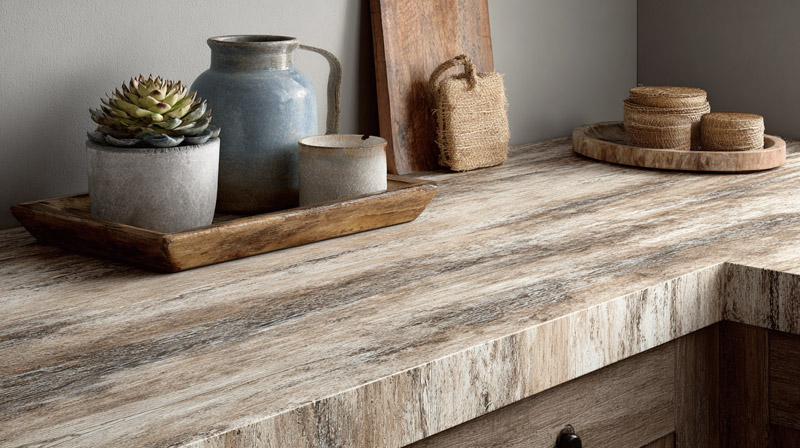
Material selection determines load capacity, finish options, moisture resistance, and long-term durability. It also sets the visual character of the unit more than any other factor.
The global reclaimed lumber market reached USD 55.72 billion in 2023, growing at a projected CAGR of 5.82% through 2033, driven by rising demand for authentic, sustainable materials in residential interiors (The Brainy Insights, 2023).
Wood Species Compared
| Wood Species | 2026 Performance Index | Moisture Response | The “Rustic” Aging Profile |
|---|---|---|---|
| Reclaimed Pine | Standard: Best for dry, climate-controlled rooms. | High Movement: Needs a breathable wax or oil seal. | Develops a “honeyed” warmth; shows every dent as “character.” |
| Cedar (Western Red) | Resilient: Naturally antimicrobial and insect-resistant. | High Resistance: Excellent for spa-like bathrooms. | Grays elegantly; holds a deep, “rugged” grain texture. |
| Oak (White/Red) | Structural: The gold standard for heavy book or dish storage. | Stable: Low warping risk once properly kiln-dried. | Pronounced “Ray Fleck” patterns; stays bright and modern. |
| Mixed Barn Wood | Variable: High aesthetic value; low predictability. | Unpredictable: Requires kiln-drying to “kill” any latent pests. | The “Original Face” features authentic saw marks and oxide stains. |
| Live Edge Slabs | Premium: Each shelf is a singular piece of sculpture. | Species Dependent: Hardwoods (Walnut/Maple) are best. | Highlights the “sapwood” (light outer edge) vs “heartwood” (dark core). |
Reclaimed Wood
Reclaimed barn wood and factory timber are the most sought-after materials for rustic shelving. The weathered patinas, surface checking, nail holes, and saw marks cannot be replicated convincingly by artificially distressed new wood.
Over 1.5 million tons of wood are reclaimed annually in the United States, with more than 65% used in residential construction and renovation (Market Reports World, 2024). For shelving specifically, the furniture segment held a 38% share of reclaimed lumber applications in 2024 (Maximize Market Research, 2024).
Reclaimed wood costs more than new lumber. Kiln drying adds to the price but increases durability by up to 40% and reduces the risk of warping post-installation. Worth the premium for fixed wall-mounted shelves.
Metal Hardware and Pipe Components
Black steel pipe is the standard framing material for industrial-rustic shelf systems. The most common configurations use 3/4-inch or 1.5-inch diameter pipe nipples threaded into floor flanges, which then mount to the wall or floor.
Raw steel develops surface oxidation over time, which most buyers in this category consider a feature rather than a defect. A light application of machine oil or clear lacquer slows oxidation without eliminating the raw aesthetic.
Wrought iron brackets and oil-rubbed bronze hardware suit more traditional rustic builds. These avoid the industrial character of exposed pipe and work better in farmhouse or cottage contexts.
How Are Rustic Shelving Units Built?

Rustic shelving units are built through 3 main methods: DIY pipe-and-wood construction, bracket-and-board assembly, and custom carpentry. Each method produces a different structural result and requires different skill levels.
DIY Pipe-and-Wood Construction
This is the most popular DIY format for rustic industrial shelving. The basic assembly uses wall-mounted floor flanges, threaded pipe nipples as horizontal shelf supports, and reclaimed or stained pine planks resting on top.
Standard build sequence:
- Mark stud locations on the wall
- Mount floor flanges into studs using 3-inch lag screws
- Thread pipe nipples into flanges
- Sand, stain, and seal the wood planks
- Rest planks on pipe supports (or drill through for fixed attachment)
This format produces load capacities of 50-200 lbs per shelf tier, depending on pipe diameter and stud anchor points. Mounting into studs is non-negotiable for anything beyond light decorative use.
Bracket-and-Board Builds
Bracket-and-board is the most accessible entry point into rustic shelving. A reclaimed or stained pine plank sits on wall-mounted brackets, creating the appearance of a floating wood shelf at a fraction of the cost and complexity.
Hidden floating shelf brackets (available from suppliers like IKEA’s EKBY line or the Floating Shelf Co.) insert into a routed channel in the back of the plank, giving a cleaner profile than visible brackets while maintaining structural integrity for loads up to 50 lbs on stud-anchored systems.
Visible bracket options (cast iron corbels, steel pipe flanges, L-brackets) become a design element in their own right. In rustic interiors, exposed hardware is not a compromise. It is part of the aesthetic vocabulary.
Wood Finishing and Distressing Techniques
New wood needs surface treatment to read as genuinely rustic. Artificially aged finishes fall into chemical and mechanical categories.
Mechanical distressing: wire brushing raises the soft grain, leaving a textured surface. Beating with a chain or keys adds random denting. Sanding edges rounds off corners that would otherwise look machine-cut.
Chemical aging: the steel wool and white vinegar method reacts with wood tannins to produce a grey, weathered tone. Oak responds quickly. Pine takes longer and needs a pre-treatment with strong black tea to introduce tannins first.
Sealing matters. Danish oil penetrates and nourishes the wood without leaving a thick film. Polyurethane adds a durable top coat for high-traffic surfaces like kitchen shelves. Beeswax polish works well on decorative bedroom or living room shelves where heavy use is not a factor.
Where Are Rustic Shelving Units Best Used in a Home?
Room placement drives both material choice and structural specification. A rustic bathroom shelf needs different wood, finish, and load capacity than a rustic garage shelving system.
The NKBA’s 2024 Kitchen Trends Report found that 35% of designers expect continued demand for natural, high-texture wood grain on cabinetry and shelving surfaces, confirming that the rustic material palette remains relevant across multiple rooms (NKBA, 2024).
Kitchen Open Shelving
Replacing upper cabinets with reclaimed wood open shelving is one of the most popular applications of rustic shelving in residential design. The visual result is open, warm, and accessible. The practical reality is that every item on those shelves is always on display.
Cedar is the right choice for kitchen shelving because of its natural resistance to moisture and humidity. Untreated pine in a kitchen will absorb steam over time and begin to warp or cup at the edges within 12-18 months. A polyurethane top coat adds protection regardless of species.
That said, open kitchen shelving is not for everyone. It works best for people who like keeping frequently used items accessible and do not mind the organizational discipline that visible storage requires.
Living Room Display Shelves

Floating reclaimed wood shelves in living rooms handle a mix of books, plants, ceramic vessels, framed photographs, and decorative objects. The challenge is keeping that mix from reading as cluttered.
Rule of 3 groupings, 30-40% negative space on each shelf surface, and a repeating color accent across all tiers gives the display visual coherence without making it look staged. Rustic shelving in living rooms works particularly well flanking a fireplace, where the wood texture echoes the warmth and organic character of the stone or brick surround.
For more on how shelves function as focal points within a room composition, the concept of emphasis in interior design explains how visual weight is directed through contrast, scale, and placement.
Bathroom and Bedroom Applications
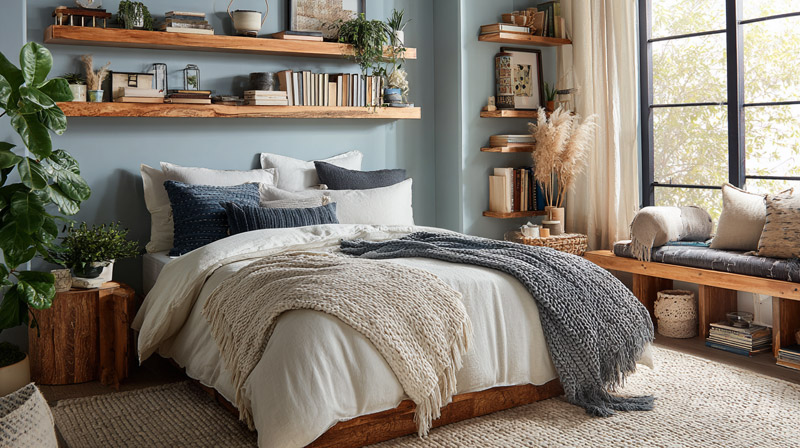
Bathroom: Small cedar or pine floating shelves above a toilet tank or beside a vanity provide practical storage for toiletries, rolled towels, and candles. Keep shelves to 8-10 inches deep in tight bathrooms to avoid projecting into traffic flow. Seal all wood with polyurethane or exterior-grade oil in bathrooms with poor ventilation.
Bedroom: Rustic bedroom shelves tend toward lighter use, supporting books, plants, lamps, and small decor. A single live edge floating shelf above a bed headboard, paired with plug-in wall sconces mounted through the shelf, creates a functional bedside surface without consuming floor space.
Garage and Workshop Shelving
Freestanding barn-style units and heavy-duty pipe-and-plank systems work well in garages and workshops where the visual aesthetic matters less than raw load capacity and durability. Oak and ash planks at 1.5-inch thickness hold tool bins, paint cans, and power tools without noticeable deflection at 36-inch spans.
Wall-anchoring into concrete or masonry produces load capacities roughly 3 times higher than drywall-only anchors, making garage installations structurally stronger than equivalent bedroom setups using the same hardware.
How Do Rustic Shelving Units Compare to Industrial and Farmhouse Shelving?
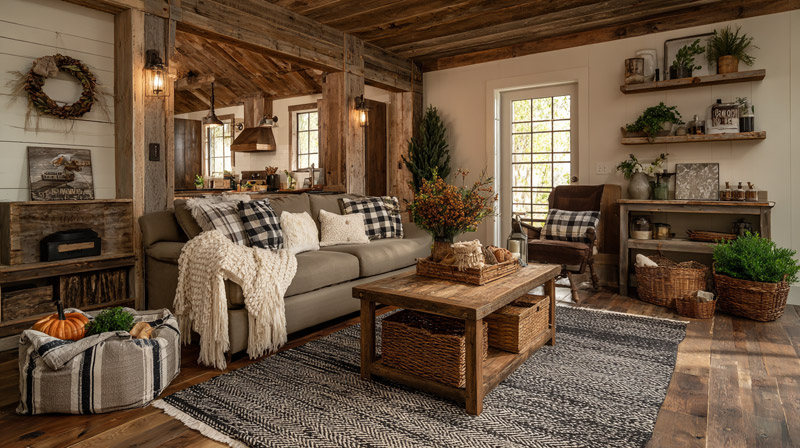
Rustic, industrial, and farmhouse shelving are frequently confused because they share materials and construction methods. The distinctions are real but subtle, and they matter when you are trying to build a coherent room aesthetic.
Understanding the difference is part of a broader working knowledge of interior design styles and how their visual languages diverge even when they appear to overlap on the surface.
Style Comparison: Rustic vs. Industrial vs. Farmhouse
| Design Dimension | Modern Rustic (The Forest) | Modern Industrial (The Factory) | Modern Farmhouse (The Homestead) |
|---|---|---|---|
| Wood Finish | Deep “Tobacco” stains, hand-rubbed linseed oil. | Raw, sandblasted, or “Burnt” (Shou Sugi Ban) textures. | Soft “Cremèle” whites, light oak, or weathered “Sea Salt” grays. |
| Metal Hardware | Oil-Rubbed Bronze: Warm, dark, and living finishes. | Matte Black / Galvanized: High-contrast, bold, and utilitarian. | Antique Brass / Chrome: Polished, bright, and vintage-inspired. |
| Textural Key | Rough-hewn beams, live edges, and heavy “checking.” | Pitted concrete, wired glass, and exposed mechanical joints. | Clean shiplap, linen weaves, and painted beadboard. |
| 2026 Mood | Ancestral & Grounded: A cocoon-like, earthy retreat. | Urban & Architectural: Structural honesty and raw power. | Breezy & Nostalgic: Polished comfort with historical roots. |
The overlap is real. Pipe brackets appear in both pipe shelving installations across rustic and industrial projects. Reclaimed wood appears in all three styles. The differentiator is usually the wood tone and hardware finish, not the structural format.
Where Rustic Ends and Industrial Begins
Rustic shelving puts the wood first. The raw timber with its grain, knots, and age marks is the primary visual element. Metal components exist to support the wood.
In rustic industrial design, the relationship shifts. Metal and wood carry equal visual weight. A raw steel pipe frame paired with a simple stained pine plank reads as industrial-rustic rather than purely rustic because neither material dominates the other.
Farmhouse Shelving Distinctions
Farmhouse shelving tends toward lighter finishes. White-painted brackets, whitewashed planks, and shiplap-backed shelf units are characteristic farmhouse choices.
Where rustic shelving leans into darkness and age, farmhouse interior design moves toward brightness and a nostalgic cleanliness. Both styles use wood. Both prioritize handcrafted character over precision manufacturing. But they serve different palette needs within a room.
What Weight Can Rustic Shelving Units Hold?
Load capacity is determined by 4 variables: wood species and thickness, bracket type and spacing, wall anchor method, and span length. Changing any one of these variables changes the safe load limit significantly.
A fully loaded bookshelf carries 20-40 lbs per running foot, or 60-120 lbs for a 3-foot-wide shelf (WoodBin Sagulator reference data). Span length has a disproportionate effect on deflection. Doubling the span increases sag by a factor of 8, not 2 (woodworking-calculators.com, 2024).
Load Capacity by Bracket and Anchor Type
Standard drywall anchors: 20-50 lbs per shelf. Adequate for decorative items, small plants, and light books. Not suitable for heavy ceramic collections or kitchen staples.
Stud-mounted brackets: 100+ lbs per shelf. The correct choice for any shelf that will hold books, kitchenware, tools, or other dense items. Always identify studs before installation and use 3-inch lag screws minimum.
Concrete and masonry anchors: 3x the load capacity of equivalent drywall anchors. Garage and basement installations with concrete walls can handle much heavier loads than the same bracket system mounted into drywall.
Wood Thickness and Span Limits
Shelf thickness has a cubic relationship with load capacity. Doubling the thickness from 3/4-inch to 1.5-inch does not double the stiffness. It multiplies it by 8 (woodworking-calculators.com, 2024).
- 3/4-inch pine at a 24-inch span: adequate for light decorative use, 15-20 lbs
- 1.5-inch pine at a 36-inch span: suitable for mixed loads, 40 lbs before visible deflection
- 1.5-inch oak at a 36-inch span: handles 50-60 lbs without deflection under standard L/360 limits
- Spans over 30 inches benefit from a center support, which effectively halves the active span
Visible sag typically becomes noticeable at around 1/4 inch of deflection. For appearance-critical applications like a living room feature shelf, the L/480 deflection limit is more appropriate than the standard L/360.
Pipe Shelving Load Specifics
Pipe diameter is the key variable in pipe-and-wood shelving systems. 3/4-inch pipe floor flange systems handle 50-75 lbs per shelf tier at typical residential bracket spacing. 1.5-inch pipe systems double that range.
A static load test at 1.5 times the intended working load is a practical safety check before permanent use. Place weight on the shelf, leave it for 24 hours, and inspect both the brackets and the wall anchor points for any movement or pull-out before loading with permanent items.
How Do You Style Rustic Shelving Units?
Shelf styling is a skill that sits at the intersection of contrast in interior design and practical organization. The goal is a display that looks considered without looking curated.
Etsy’s 2024 trend data recorded a 332% year-over-year increase in searches for “wall decor wood,” confirming that decorative wood shelving displays are a genuine consumer priority rather than a passing trend (Etsy Seller Handbook, 2024).
Grouping and Negative Space
Odd-number groupings work. Three objects at varying heights read as intentional. Two read as symmetrical and stiff. Four reads as crowded.
Leave 30-40% of each shelf surface empty. Negative space is not wasted space. It is what makes the objects you do display visible and worth looking at.
Ming Thompson of San Francisco-based Atelier Cho Thompson puts it directly: layering a diverse mix of old and new objects beats filling a shelf with matching items from a single store every time (Livingetc, 2023).
Texture Mixing on Rustic Shelves
Rustic wood shelving already provides a strong texture in interior design context. What you place on those shelves needs to work with and against that grain.
High-contrast pairings that work:
- Smooth ceramic vessels against rough-sawn plank surfaces
- Woven baskets next to hardback books with flat spines
- Matte clay pots beside glass bottles
Avoid placing only objects with the same surface finish. All matte items on a matte shelf creates visual flatness with no entry points for the eye.
Color Anchoring Across Shelf Tiers
Pick 2-3 repeating accent colors and distribute them across all shelf levels. This creates rhythm in interior design without making the display feel artificially coordinated.
Warm earth tones read best against aged wood: terracotta, olive, rust, and warm cream. These align with the earthy color palette that complements reclaimed wood and barn wood surfaces without competing against the grain pattern.
Avoid: cool-toned metallics (chrome, silver) and stark whites directly against dark reclaimed wood. The contrast is too sharp and reads as mismatched rather than intentional.
Functional and Decorative Balance
At least 50% of displayed items should serve a practical purpose in living areas and kitchens. All-decorative shelves tend to feel untouchable, which works against the lived-in warmth that rustic shelving is supposed to deliver.
Books, small plants, candles, and storage vessels all count as functional. They happen to also be decorative. That overlap is exactly what makes rustic open shelving work in a real home.
Where to Buy Rustic Shelving Units
The sourcing channel determines price range, customization options, lead times, and material authenticity. Buying the right way matters as much as buying the right piece.
Home & Living is the top-selling category on Etsy, generating over $3.2 billion in annual sales and accounting for 35% of all platform purchases, with handmade furniture searches happening every minute (Etsy Fact Sheet, 2024; ThriveMyWay, 2024).
| Source | 2026 Marketplace Value | The “Hidden” Cost | Best Application |
|---|---|---|---|
| Etsy / Studio Makers | High: One-of-a-kind slabs and custom-cut lengths. | Insured freight shipping for heavy timber. | Statement floating shelves in living rooms or kitchens. |
| Wayfair / Retailers | Medium: Consistent look; mass-market appeal. | Often uses “hollow” or veneered wood; lower weight capacity. | Ladder shelves and decorative units for low-traffic areas. |
| Salvage Yards / ReStores | Best Value: Genuine history and material density. | Labor for sanding, cleaning, and removing old nails. | DIY builds where character (nail holes, saw marks) is prized. |
| Lowe’s / Home Depot | Low: Reliable, standard dimensions. | “New” wood requires aging (stains/tea) to look rustic. | Utilitarian shelving and structural pipe kits. |
Buying from Etsy and Handmade Marketplaces
Custom reclaimed wood shelves on Etsy range from $80 to $400+ per shelf, depending on plank size, wood species, and finish.
Lead times run 2-6 weeks for custom builds. Check seller reviews specifically for shipping damage and finish accuracy before ordering. Reclaimed wood is variable by nature, so reviewing photos of completed orders rather than product mockups gives a more accurate expectation.
What to verify before purchasing:
- Whether the wood is genuine reclaimed or artificially distressed new timber
- Whether brackets and hardware are included or sold separately
- Actual shelf thickness (1.5 inches vs. 3/4 inch makes a significant structural difference)
Mass Retail Options
Wayfair and Amazon carry manufactured rustic ladder shelves and freestanding barn-style units at accessible price points.
The trade-off is material quality. Most units in the $50-$200 range use engineered wood with a printed rustic finish rather than solid timber. Inspect product specifications for “solid wood” confirmation before purchasing for any application involving moderate loads.
Restoration Hardware has built a significant portion of their shelving line around the freestanding raw steel and reclaimed pine format. Their pieces run $300-$1,200+, but the structural quality and material authenticity are consistent with the price.
DIY Sourcing from Hardware Stores and Salvage Yards
Home Depot and Lowe’s carry pine and cedar planks, black steel pipe fittings, floor flanges, and pipe nipples. A basic 3-shelf DIY pipe-and-plank unit typically costs $60-$150 in materials, versus $200-$500 for a comparable manufactured unit.
Habitat for Humanity ReStores and local architectural salvage yards are the best sources for genuinely weathered reclaimed wood at low cost. Quality varies considerably, so inspect boards for structural integrity before buying. Boards from demolished barns often contain embedded metal fragments that require scanning before cutting or machining.
How Do You Maintain and Clean Rustic Shelving Units?
Rustic shelving units require less maintenance than precision-finished furniture, but they are not maintenance-free. Wood and raw metal both need periodic care to prevent degradation.
The global furniture repair service market reached USD 2.1 billion in 2024, growing at a projected CAGR of 7.1% through 2032, driven largely by rising consumer awareness around extending furniture lifespan rather than replacing it (Verified Market Research, 2024).
Wood Care by Surface Finish
Unsealed or oil-finished wood: Dust weekly with a dry microfiber cloth. Re-oil every 6-12 months using Danish oil or raw linseed oil. Apply with a lint-free cloth, let it soak for 20-30 minutes, then wipe off the excess. Never leave oil standing on the surface.
Polyurethane-sealed wood: Wipe with a slightly damp cloth, dry immediately. Avoid abrasive cleaners. Re-coat the polyurethane layer every 3-5 years in high-use areas like kitchens, or when the surface begins to show dull patches or minor scratching.
Wax-finished wood: Apply a fresh coat of beeswax or paste wax every 12-18 months. Buff to a low sheen with a soft cloth. Wax-finished shelves are not appropriate for kitchens or bathrooms where direct moisture contact is frequent.
Metal Component Maintenance
Raw steel pipe and iron brackets oxidize over time. Most buyers in the rustic category consider surface rust development part of the aesthetic, but active rust that transfers onto walls or shelved items needs addressing.
Preventing oxidation: wipe pipe fittings and brackets monthly with a dry cloth. Apply a light coat of machine oil, linseed oil, or a clear lacquer spray annually to slow the process on raw steel.
Treating existing rust: Light surface rust responds to fine steel wool (0000 grade) followed by an oil wipe. Deep pitting on pipe fittings is difficult to reverse and usually means replacing the affected component rather than restoring it.
Moisture Damage and Wood Movement
Wood expands and contracts with seasonal humidity changes. Reclaimed and barn wood that has already cycled through decades of environmental variation is generally more dimensionally stable than freshly milled timber.
In bathrooms and kitchens, ensure all wood surfaces are sealed before installation. A gap of 2-3mm between shelf planks and wall surfaces accommodates seasonal movement without causing cracking or paint transfer.
Warping in an installed shelf usually indicates the wood was installed too close to a heat source, or was not properly sealed before installation in a humid room. Removing the shelf, adding a second polyurethane coat to all six faces, and reinstalling typically resolves the issue.
Re-Distressing Over Time
High-traffic shelves in kitchens and entryways lose their surface texture and character over 2-3 years of regular use. A wire-brush pass across the grain restores the raised grain pattern.
Follow with a fresh coat of Danish oil or a light application of rustic paint techniques like dry-brushing or whitewash to refresh the aged appearance. This is maintenance that actually improves the visual character of the shelf rather than just preserving it.
FAQ on Rustic Shelving Units
What makes a shelving unit rustic?
Rustic shelving units are defined by natural, raw materials with visible imperfections. Think reclaimed wood, barn wood, exposed knots, and aged grain patterns. Hardware is typically oil-rubbed bronze, raw iron, or matte black steel. The intentional roughness is the point.
What wood is best for rustic shelving?
Pine is affordable and takes distressing well. Reclaimed oak holds heavier loads and has denser grain. Cedar resists moisture naturally, making it ideal for kitchens and bathrooms. Live edge slabs work best as single statement floating shelves.
How much weight can a rustic floating shelf hold?
It depends on the anchor method. Stud-mounted brackets support 100+ lbs per shelf. Standard drywall anchors cap at 20-50 lbs. Wood thickness matters too: 1.5-inch planks handle significantly more load than 3/4-inch boards at the same span.
Are rustic shelving units hard to build yourself?
A basic pipe-and-plank shelf is one of the more accessible DIY builds. You need floor flanges, threaded pipe nipples, lag screws, and a wood plank. Most builds take under two hours and cost $60-$150 in materials from Home Depot or Lowe’s.
What is the difference between rustic and farmhouse shelving?
Rustic shelving leans into dark tones, aged wood, and raw iron hardware. Farmhouse shelving uses lighter finishes, whitewash, and painted brackets. Both use wood, but the color palette and hardware finish separate them clearly in a room context.
Where should rustic shelves be placed in a home?
Living rooms, kitchens, bathrooms, bedrooms, and garages all work. Cedar is the right choice for moisture-heavy spaces. Floating reclaimed wood shelves suit living rooms and bedrooms. Freestanding barn-style units handle the heavier loads of kitchens and workshops.
How do you style objects on rustic shelves?
Group items in odd numbers and leave 30-40% of each shelf empty. Mix textures: smooth ceramics against rough-sawn wood, woven baskets beside flat-spined books. Repeat 2-3 accent colors across all tiers to create visual rhythm without making it look staged.
How do you clean and maintain rustic wood shelves?
Dust weekly with a dry microfiber cloth. Re-oil unsealed wood every 6-12 months using Danish oil or linseed oil. Polyurethane-sealed shelves only need a damp wipe. Avoid wet cleaning raw or unsealed wood, particularly in kitchens and bathrooms.
Where can you buy rustic shelving units?
Etsy carries custom reclaimed wood shelves from $80-$400+. Wayfair and Amazon stock manufactured units at $50-$300. Home Depot and Lowe’s sell raw materials for DIY builds. Habitat for Humanity ReStores are the best low-cost source for genuine reclaimed timber.
How do rustic shelving units fit into different interior design styles?
Rustic shelving works across industrial, bohemian, and coastal interiors, not just rustic rooms. Darker barn wood suits industrial and modern rustic spaces. Lighter, whitewashed plank shelves cross into farmhouse and coastal contexts. The hardware finish is usually what anchors the shelf to a specific style.
Conclusion
This conclusion is for an article presenting rustic shelving units as a practical, material-driven storage solution, not just a decorative trend.
Barn wood, black steel pipe, cedar planks, and wrought iron brackets all serve specific functions. The right combination depends on the room, the load, and the existing palette.
Whether you are buying a freestanding barn-style unit, mounting floating reclaimed wood shelves, or building a pipe-and-plank system from scratch, the decisions around wood species, finish, and wall anchoring determine how well it actually performs.
Style it with intention. Maintain it consistently. Choose materials that fit the space rather than just the aesthetic.
A well-built rustic shelf gets better with age. That is the whole point.

- Paint Colors That Go with Gray Floors - August 20, 2026
- What Color Bedding Goes with Dark Wood Furniture - August 18, 2026
- What Color Walls Go with Oak Floors - August 16, 2026