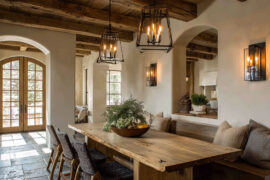
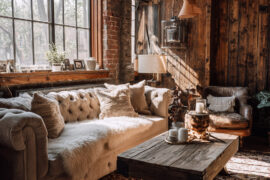
Warm wood, raw stone, and handcrafted textures — few design directions feel as genuinely comfortable as a well-built rustic living room.
The best rustic living room ideas go far beyond stacking reclaimed wood and calling it done. They balance natural materials, warm earth tones, and layered textures in a way that feels intentional rather than themed.
This guide covers everything from defining the style and choosing the right sub-style, to selecting furniture, flooring, lighting, and a color palette that holds the room together.
You will also find practical advice on rustic fireplace design, budget decorating strategies, small-space solutions, and how to mix rustic with modern elements without losing the warmth that makes the style work.
What Is a Rustic Living Room?

A rustic living room is a space built around natural, aged, and handcrafted materials — raw wood, stone, leather, wool, and linen — arranged to feel warm, grounded, and visually honest rather than polished or refined.
The style pulls from cabin and countryside architecture. It has since moved well beyond rural homes and now appears in city apartments, open-plan condos, and suburban builds, often blended with contemporary or industrial elements.
Rustic is not the same as farmhouse interior design. Farmhouse leans cleaner — think painted shiplap, white walls, and tighter finishes. Rustic is rawer. Surfaces stay textured. Edges stay rough. Wood grain stays visible. That distinction matters before you start buying furniture.
The style also sits apart from bohemian interior design, which relies on layered patterns and global textiles. Rustic is more restrained in pattern and more focused on material authenticity.
According to the 2024 Gift Book Consumer Survey, rustic and cottagecore aesthetics are led by Gen Z at 28%, followed closely by millennials at 23% — making it one of the most actively sought design directions among younger homeowners today.
Ruby Home Luxury Real Estate data placed rustic as the second most Instagrammable interior design trend, generating 4.8 million posts. That number reflects sustained cultural appetite, not a passing phase.
The core visual markers of a rustic living room are:
- Exposed wood beams or wide-plank hardwood floors
- Stone or brick on at least one surface (fireplace, accent wall, or surround)
- Warm neutral base colors — cream, wheat, camel, warm greige
- Organic, handcrafted shapes in furniture and decor
- Layered natural textures: jute, wool, linen, cowhide, woven fiber
Understanding these markers matters because texture in interior design carries more weight in rustic rooms than in almost any other style. When the palette is this neutral, texture becomes the primary design tool.
What Are the Main Rustic Living Room Styles?

Rustic is a broad category. Five distinct sub-styles sit under it, each with different material palettes, moods, and appropriate applications. Choosing the wrong one for your space is a common mistake — a mountain lodge approach in a small urban apartment rarely works.
| Sub-Style | Key Materials | Best For |
|---|---|---|
| Modern Rustic | Light oak, linen, matte black metal | Apartments, open-plan homes |
| Industrial Rustic | Reclaimed wood, steel, exposed pipe | Lofts, converted spaces |
| Mountain Lodge | Heavy timber, stone, plaid wool | Large homes, vacation properties |
| Coastal Rustic | Weathered wood, linen, rope, white | Beach homes, light-filled rooms |
| Farmhouse Rustic | Shiplap, vintage accessories, pine | Traditional homes, family spaces |
Modern Rustic
Modern rustic pairs raw materials with clean-lined furniture silhouettes. The result is a room that feels warm and natural without looking cabin-like or cluttered.
Wood stays light — natural oak, ash, or white oak with a wire-brushed or matte finish. Metal accents use matte black rather than wrought iron. Upholstery stays in linen or textured wool, kept simple in form.
This is the most flexible sub-style. It works in 400-square-foot apartments and 2,000-square-foot open plans. West Elm and CB2 both carry furniture lines that hit this exact note.
Industrial Rustic
The defining tension in industrial rustic is steel against reclaimed wood — factory materials softened by organic ones. Neither wins. Both stay visible.
Exposed pipe shelving, concrete-finish surfaces, and Edison bulb lighting are common. So are reclaimed wood coffee tables and media consoles with iron legs.
- Palette: charcoal, warm gray, rust, raw wood
- Avoid: anything too polished or too distressed-looking by design
The reclaimed lumber market was valued at USD 62.2 billion in 2024 (IMARC Group), with the furniture segment holding a 32.6% share — a clear indicator of how mainstream this material has become.
Mountain Lodge
Heavy timber frames. Stacked stone fireplaces. Plaid wool throws. Mountain lodge rustic is the most committed version of the style — and the hardest to pull off in smaller spaces.
This sub-style works best when the architecture already lends itself to it: high ceilings, substantial square footage, large windows with outdoor views. Forcing lodge elements into a standard 12×14 living room usually produces a cramped, dark result.
Pottery Barn and Arhaus both carry heavy-timber furniture and lodge-appropriate lighting. RH (Restoration Hardware) offers upholstered pieces that scale well for this aesthetic.
Coastal Rustic
Coastal rustic lightens the palette significantly. Weathered wood replaces dark barnwood. White, sand, and pale linen replace deep earth tones.
The textures remain organic — rope, jute, rattan, woven seagrass — but the overall effect is airy rather than moody.
This sub-style pairs well with coastal interior design conventions, borrowing its light palette while keeping the handcrafted, textured quality that separates rustic from standard coastal decor.
What Furniture Works Best in a Rustic Living Room?

The global wooden furniture market was valued at USD 461.84 billion in 2024 and is projected to reach USD 719.61 billion by 2032 (Data Bridge Market Research), driven heavily by consumer demand for sustainable and natural materials — exactly what rustic furniture prioritizes.
Over 50% of furniture buyers now prefer FSC-certified or reclaimed wood products (Global Growth Insights, 2024), which aligns directly with the rustic design preference for honest, aged materials.
Seating: Sofas and Chairs
Leather sofas in saddle, cognac, or dark brown tones are the most authentic rustic seating choice. Full-grain leather ages into the aesthetic rather than fighting it.
Upholstered sofas in linen, wool, or burlap-blend fabrics work well in modern rustic and coastal rustic sub-styles. Avoid high-gloss performance fabrics, which break the material language of the room.
- Sectionals work in mountain lodge settings with high ceilings and large square footage
- For rooms under 250 sq ft, a two or three-seat sofa keeps the floor plan breathable
- A leather Chesterfield or roll-arm sofa reads as rustic without feeling overtly themed
Tables and Case Goods
Live edge slabs and reclaimed barnwood are the two primary coffee table approaches. Both require intentional pairing.
Live edge: pairs best with modern rustic — clean-lined sofa, neutral rug, minimal accessories.
Reclaimed barnwood: suits farmhouse rustic and mountain lodge. The grain is rougher, the color darker, and the feel heavier.
For media consoles and bookshelves, open wood shelving reads more authentically rustic than closed-front cabinetry. Rustic shelving in reclaimed pine or white oak, with iron brackets, is one of the simplest ways to introduce the style into a space that already has other furniture in place.
What to Avoid in Rustic Furniture
Chrome legs. High-gloss lacquer finishes. Acrylic or glass-top coffee tables. These materials actively work against the warm, textured quality rustic rooms depend on.
Pre-distressed furniture sold at mass retailers is another trap. Real rustic character comes from actual age or authentic craftsmanship — not factory-applied dents and scratches.
What Flooring and Wall Treatments Define a Rustic Living Room?

Flooring and wall surfaces do more structural work in a rustic living room than furniture does. Get these wrong and no amount of good furniture selection fixes the result.
Flooring Options
Wide-plank hardwood is the standard for rustic floors. Species matter: white oak, pine, and hickory all read as rustic. The finish matters more than the species — hand-scraped, wire-brushed, or distressed textures reinforce the aesthetic.
Avoid narrow-strip hardwood, which reads as more traditional or colonial. Avoid high-gloss polyurethane finishes, which make even rustic wood species look contemporary.
| Flooring Type | Rustic Suitability | Notes |
|---|---|---|
| Wide-plank white oak (wire-brushed) | Excellent | Works across all sub-styles |
| Reclaimed pine planks | Excellent | Best for farmhouse and lodge styles |
| Slate tile | Good | Fireplace surrounds and entry areas |
| Narrow-strip oak (gloss finish) | Poor | Undermines rustic character |
Wall Treatments
Shiplap and board-and-batten are the two most common rustic wall treatments. Both add texture without requiring structural changes. Shiplap reads as farmhouse-leaning. Board-and-batten works across more sub-styles.
Limewash paint is the most versatile wall treatment for rustic rooms that don’t suit paneling. Portola Paints’ Roman Clay ($85/gallon) produces a textured, matte surface that photographs well and adds depth without the maintenance cost of actual plaster.
Exposed brick, either original or using faux brick panels, is a strong option for industrial rustic and mountain lodge rooms. The key is scale — a full exposed brick wall works well in rooms with high ceilings and generous square footage. In a smaller room, a single brick fireplace surround achieves the same effect without visual overwhelm.
For accent walls more broadly, the principles of what makes an effective accent wall apply here: one surface treated, the rest left quieter, with the treated surface always the one the eye naturally lands on when entering the room.
How Do You Choose a Color Palette for a Rustic Living Room?

Warm neutrals form the base of every successful rustic color palette. Cream, wheat, camel, warm greige — these are the wall and upholstery colors that allow wood tones and natural textures to read correctly.
Cool grays and stark whites push the space toward contemporary. They drain the warmth that rustic design depends on. This is a common mistake when people try to modernize a rustic room by “brightening” it with off-whites.
Base Colors
Three paint references that consistently work in rustic living rooms:
- Benjamin Moore Camouflage (HC-91): a warm khaki-green that bridges earthy and neutral
- Sherwin-Williams Antique White (SW 6119): creamy rather than stark, with enough warmth to support wood tones
- Farrow and Ball Dead Salmon (No. 28): a muted terracotta-adjacent tone that reads sophisticated in rustic rooms with stone or leather
Accent Colors
Earth tones work as accent colors: terracotta, moss green, burnt sienna, slate blue. These appear in textiles, throw pillows, rugs, and ceramics rather than painted walls.
Wood tones count as color in a rustic room. A dark walnut coffee table against a cream sofa is a color decision, not just a material one. Matching all wood tones across a room creates visual flatness. Intentional contrast between, say, a lighter ash floor and a darker walnut console reads more naturally.
For deeper reading on how color functions in space, the principles of color in interior design and color theory explain why warm-cool balance matters more than specific color choices in a room like this.
What to Avoid
A 2024 study found that 60% of designers recommend neutral color palettes for resale value (Realtor.com) — and rustic palettes, which stay in warm neutrals, align with this naturally.
Avoid: high-contrast black-and-white schemes, jewel-tone dominant walls, and any color combination that prioritizes drama over warmth. Rustic rooms should feel like they exhale, not perform.
What Textiles and Rugs Suit a Rustic Living Room?

Textiles carry more visual weight in rustic rooms than any other design element after flooring. They are also the easiest thing to get wrong — synthetic materials actively undermine the tactile quality the style depends on.
Rugs
Natural fiber rugs are the default for rustic living rooms. Jute, sisal, and wool are the three main options, each with different durability, texture, and visual weight.
Jute: loose weave, casual texture, lower durability. Best in lower-traffic areas or layered under a smaller accent rug.
Sisal: tighter weave, more durable, slightly coarser. Handles foot traffic better than jute.
Wool: the most versatile. Moroccan, tribal, and flat-weave patterns in warm neutral tones read as rustic across most sub-styles.
The carpets and rugs segment of the global home decor market was valued at USD 50.27 billion in 2024 (Market.us News) — a market driven in part by sustained demand for natural fiber options in residential spaces.
Layering Rugs
Layering a smaller wool or cowhide accent rug over a larger jute base rug is one of the most effective rustic living room techniques. It adds depth, defines the seating zone, and introduces an additional texture without adding visual clutter.
The base rug should cover at least the front legs of all seating furniture. The accent rug sits centered under the coffee table.
Throws, Pillows, and Curtains
- Throws: chunky knit, sherpa, or plaid wool — avoid fleece and microfiber
- Throw pillows: linen, burlap, or woven wool in warm neutrals and earth tones
- Curtains: unlined linen or muslin, floor-length, hung high and wide
Window treatments in rustic rooms should filter light rather than block it. Heavy blackout curtains close off the connection to natural light that makes rustic rooms feel alive.
How Does Lighting Shape a Rustic Living Room?

Lighting in a rustic living room does one primary job: produce warm, amber-toned light that makes natural materials glow. A room with perfect rustic materials but cold LED overhead lighting feels sterile.
The global decorative lighting market was valued at USD 41.60 billion in 2024, growing at 2.9% CAGR through 2030 (SwiftBeacon). The residential segment, particularly living room and dining fixtures, drives a significant portion of that demand.
Overhead Fixtures
Wrought iron and blackened steel chandeliers are the most versatile rustic overhead fixtures. They work in mountain lodge, farmhouse rustic, and industrial rustic sub-styles without modification.
For modern rustic rooms, a simpler pendant cluster in matte black or dark bronze reads cleaner than a heavily ornate iron chandelier.
Antler and driftwood chandeliers are appropriate for lodge and coastal rustic respectively, but they’re highly specific. They commit the room to a visual direction that’s harder to evolve later.
Edison Bulbs and Accent Lighting
Edison bulbs are standard in rustic lighting. The exposed filament and amber tone work across every sub-style. Edison bulbs in warm white (2200K-2700K) produce the light quality rustic rooms need. Daylight bulbs (5000K+) undo the warmth immediately.
Table lamps with ceramic, wood, or textured concrete bases add a second layer of ambient light. Ambient lighting layered with accent lighting — directed at a stone wall, a bookshelf, or a mantel — produces the depth that makes rustic rooms feel genuinely warm rather than just neutrally decorated.
What to Avoid in Rustic Lighting
Recessed LED arrays as the primary light source flatten a rustic room completely.
Recessed lighting can exist in a rustic living room, but only as a supplement, not the dominant source. The moment overhead recessed lighting becomes the main illumination strategy, the room loses its warmth regardless of how good the other materials are.
What Rustic Living Room Fireplace Ideas Work Best?

The fireplace is the single most impactful structural element in a rustic living room. Get the surround right and the rest of the room has a foundation to build from. Get it wrong and no amount of good furniture selection fixes the visual disconnect.
Natural stone surrounds in stacked stone, river rock, or fieldstone deliver the most authentic rustic character. Limestone, slate, and travertine all work — each with a different texture weight and color range.
Stone Surrounds
Stacked stone is the most versatile option across rustic sub-styles. It reads well in mountain lodge, farmhouse rustic, and modern rustic settings without requiring architectural adjustment.
River rock and fieldstone are heavier visually. They suit large rooms with high ceilings. Forcing them into a small space with standard 8-foot ceilings produces a cramped, cave-like effect.
According to Design for Me’s 2024 fireplace trend report, natural stone surrounds — particularly limestone, travertine, and slate — are among the top-requested materials for rustic and traditional fireplace builds.
Reclaimed Wood Beam Mantels
A reclaimed wood beam mantel is the single most cost-effective upgrade for a rustic fireplace. One beam, properly installed, changes the entire character of the surround.
Hand-hewn beams: rougher texture, irregular surface, strongest rustic signal.
Barnwood beams: smoother face, visible grain, suits farmhouse and modern rustic equally.
Live edge slabs as mantels: work in modern rustic settings where the rest of the room stays clean-lined.
The National Association of Home Builders reports that over 30% of custom home builders in the U.S. incorporate reclaimed wood into their projects — and fireplace mantels represent one of the most common applications (NAHB, 2024).
Apartment and Rental Solutions
No chimney. No budget for a full stone build. Still workable.
Electric fireplace inserts with stone veneer or shiplap surrounds produce a convincing rustic fireplace at a fraction of the cost. Touchstone’s Sideline series, used with Roman clay or board-and-batten framing, is a real-world example of how apartment dwellers achieve this look without structural work.
Limewash paint applied to an existing brick surround costs roughly $85-$120 in materials (Portola Paints Roman Clay) and completely transforms a dated fireplace face.
Mantel Styling
Less is more on a rustic mantel. Overcrowding it reads as clutter rather than character.
- 2-3 candles in varying heights (iron or ceramic holders)
- One piece of ironwork or antique clock as an anchor
- Dried botanicals or a simple greenery arrangement
For a deeper look at how the fireplace functions as a room’s primary focal point in interior design, the principles of emphasis and visual hierarchy apply directly here.
How Do You Decorate a Rustic Living Room on a Budget?

More than half of homeowners (52%) would choose to DIY a home renovation over hiring a contractor specifically to save costs, according to Clever Real Estate’s 2024 survey.
Homeowners completing rustic decor updates on a budget are in good company. The 2023 American Housing Survey found homeowners completed over 50 million DIY projects, spending more than $125 billion total (U.S. Census Bureau). The per-project cost is manageable when you know which changes deliver the most visible return.
The Highest-Impact Low-Cost Changes
Limewash paint: roughly $85-$120 per gallon, covers one accent wall or fireplace surround. Portola Paints Roman Clay and Backdrop Lime Wash are widely available.
Hardware swaps: replacing cabinet pulls, door handles, and curtain rods with iron or matte black hardware costs $30-$80 and shifts the material language of a room noticeably.
Jute rug plus chunky knit throw: the two easiest rustic decor additions in any room. Together, usually under $150 from Wayfair or Amazon.
Where to Source Budget Rustic Furniture
Facebook Marketplace and local estate sales are the two most reliable sources for authentic reclaimed wood furniture at low cost. Pieces with real wear and grain character are common. Pre-distressed mass-retail furniture is not.
Etsy connects buyers with independent craftspeople who build live edge tables, reclaimed wood shelving, and handcrafted rustic furniture at prices well below Pottery Barn or Arhaus. Lead times are longer, but the quality of material character is typically higher.
DIY Shiplap
Real shiplap runs $7-$12 per square foot installed. DIY plywood strip shiplap costs roughly $1.50-$2.50 per square foot in materials.
The technique uses 1×4 or 1×6 ripped plywood boards spaced with a nickel between each board. Painted in Sherwin-Williams Antique White or Benjamin Moore White Dove, the result is visually indistinguishable from real shiplap at a fraction of the cost.
DIY rustic home decor projects like this work because rustic style rewards imperfection. Slightly uneven boards and visible grain variation read as authentic character, not mistakes.
Open Shelving as a Budget Move
Replacing closed-front built-ins with open wood shelving is one of the most budget-friendly ways to introduce rustic character. Pipe shelving brackets with reclaimed pine boards cost $80-$150 for a standard 3-shelf wall installation.
Rustic shelving units styled with books, baskets, ceramics, and dried botanicals do triple duty: storage, display, and texture — all without requiring new furniture.
What Are the Best Rustic Living Room Ideas for Small Spaces?

Living rooms are among the top four most renovated rooms in U.S. homes, with 21% of homeowners reporting living room projects in 2024 (Houzz). A significant portion of those are in apartments and smaller homes where space constraints shape every design decision.
The common mistake in small rustic rooms: going too dark and too heavy. Mountain lodge materials — dark walnut, stacked stone floor-to-ceiling, oversized leather sectionals — close a small room in completely.
Material Choices for Small Rustic Rooms
| Element | Small Space Choice | Avoid |
|---|---|---|
| Wood tone | Natural oak, ash, light pine | Dark walnut, ebonized oak |
| Stone | Single fireplace surround | Full floor-to-ceiling wall |
| Sofa | Two or three-seat, low profile | Oversized sectional |
| Rug | Light jute or flat-weave wool | Dark cowhide as base layer |
The One Statement Piece Rule
In a small rustic living room, pick one rustic statement piece and keep everything else quieter. A reclaimed wood TV console anchors the style. A live edge coffee table does the same.
Adding 5-6 rustic elements in a small room creates visual noise, not warmth. The eye needs somewhere to rest.
Best single statement choices for small rooms:
- Reclaimed wood console or media unit
- Stone fireplace surround with a simple wood mantel
- Open wood shelving wall with iron brackets
Vertical Space and Light
Linen curtains hung 4-6 inches above the window frame and extending to the floor increase perceived ceiling height visually. This works in any small room but matters especially in rustic rooms, where floor-length curtains in natural fabric reinforce the material language while making the space feel taller.
Keep walls in warm light neutrals. Avoid dark accent walls in rooms under 200 square feet — they reduce visual depth, not add to it.
For practical guidance on making a small room feel larger through color and layout choices, the principles of space in interior design and how to make small rooms look bigger apply directly to this challenge.
How Do You Mix Rustic and Modern Elements in a Living Room?

Modern rustic interior design is one of the fastest-growing residential style categories, supported by the search interest data for “modern farmhouse” which surged 7% year-over-year through 2024 with over 2.3 million social media posts (Stonewood, 2024).
The style works because the visual tension between raw material and refined form is inherently interesting. A rough live edge table against a low-profile modern sofa holds the eye in a way that neither piece achieves alone.
The Core Contrast Principle
Raw material plus refined form. That is the entire framework.
Rustic elements supply the material character: reclaimed wood, stone, jute, linen, wrought iron. Modern elements supply the silhouette: clean lines, minimal ornamentation, low profiles, simple geometry.
When both are present in the right ratio, the room reads as intentional rather than eclectic. When rustic dominates too heavily, it reads as a theme. When modern dominates, the rustic accents look like mistakes.
Metal Finishes as Bridge Materials
Matte black is the bridge metal finish between rustic and modern. It reads as rustic enough to be consistent with wrought iron but clean enough to be consistent with contemporary hardware.
Brass and gold push the room toward traditional or glam. Chrome pushes it toward contemporary or industrial. Matte black stays neutral between the two aesthetics.
Concrete, steel, and glass also work as transitional materials — they carry industrial associations that sit naturally between rustic warmth and modern precision.
Getting the Ratio Right
A practical starting point: keep rustic to surfaces and accents, modern to furniture silhouettes.
Wide-plank oak floors, limewash walls, and a stone fireplace surround provide the rustic foundation. A low-profile linen sofa, a clean-lined media console, and simple pendant lighting provide the modern structure. The jute rug and reclaimed wood coffee table bridge both.
West Elm applies this balance consistently across its product lines — pairing natural material textures with furniture silhouettes that stay clean and contemporary. It is a useful reference point when building out a modern rustic room from scratch.
For readers interested in how modern rustic interior design differs structurally from purely rustic or purely contemporary rooms, the contrast between how each style handles line, proportion, and material weight is worth understanding.
The principles of contrast in interior design explain why this pairing works at a design level — specifically how visual tension between materials and forms produces interest that either style alone cannot.
What Plants and Natural Elements Work in a Rustic Living Room?

Biophilic design, which incorporates natural elements including plants, organic materials, and natural light, is one of the dominant living room trends across 2024 and 2025, cited by designers and researchers at the National Library of Medicine as supporting improved cognitive function and mental well-being.
Rustic rooms are naturally aligned with biophilic interior design principles — they already use wood, stone, natural fiber, and organic forms. Adding living plants extends that logic rather than departing from it.
Best Plants for Rustic Living Rooms
Fiddle leaf fig: large scale, architectural presence, suits rooms with good natural light.
Olive tree: the most versatile choice for modern rustic and Mediterranean rustic rooms — branching silhouette, silvery-green foliage, visually light.
Trailing pothos: works on open shelving, mantels, and high ledges. Low maintenance. Reinforces organic texture without visual weight.
All three are widely available from plant retailers including The Sill and Bloomscape, with delivery available in most U.S. cities.
Dried Botanicals
Pampas grass, dried eucalyptus bundles, and wheat stalks read as distinctly rustic. They require no maintenance after initial arrangement and hold visual texture for months.
The key is restraint. One large pampas grass arrangement in a simple ceramic or terracotta vessel is enough. Multiple dried botanical arrangements in the same room start competing with each other.
Found Objects and Woven Baskets
Driftwood, antlers, and pinecones work as shelf and mantel accents when used sparingly. The rule applies here too: one or two authentic found objects add character. A shelf lined with ten of them reads as a craft project.
Woven baskets serve a practical and visual role simultaneously — storage plus texture. Hyacinth, seagrass, and rattan all suit rustic rooms.
- Use as blanket storage beside the sofa
- Stack two or three in graduated sizes as a floor accent
- Use as plant pot covers for larger indoor plants
What to Avoid
Plastic or highly polished faux plants and faux flowers actively undermine the material honesty that rustic design depends on.
A rustic room built around authentic wood grain, natural stone, and linen textiles is visually undermined the moment a plastic succulent or synthetic eucalyptus garland appears on the mantel. The contrast between real and fake material reads immediately.
For a broader look at how organic material choices connect to earthy color palettes and natural textures, the relationship between plant choices and the overall warm neutral palette of a rustic room reinforces rather than disrupts the design direction.
FAQ on Rustic Living Room Ideas
What makes a living room look rustic?
Natural, aged materials do most of the work. Reclaimed wood, exposed stone, wrought iron fixtures, and natural fiber rugs like jute or wool establish the foundation. Warm earth tones, linen upholstery, and layered textures complete the look without needing a full renovation.
What colors work best in a rustic living room?
Warm neutrals form the base — cream, wheat, camel, and warm greige. Accent with earth tones like terracotta, moss green, and burnt sienna in textiles and ceramics. Avoid cool grays and stark whites, which strip the warmth rustic rooms depend on.
What type of sofa suits a rustic living room?
Full-grain leather in saddle or cognac tones is the most authentic choice. Upholstered sofas in linen or wool work well in modern rustic and coastal rustic sub-styles. Avoid high-gloss performance fabrics and chrome-legged frames entirely.
What is the difference between rustic and farmhouse style?
Farmhouse leans cleaner — painted shiplap, white walls, tighter finishes. Rustic style is rawer. Surfaces stay textured, wood grain stays visible, and edges remain rough. Farmhouse borrows rustic elements but refines them. Rustic keeps them honest and unpolished.
What flooring is best for a rustic living room?
Wide-plank hardwood is the standard. White oak, pine, and hickory all work well. The finish matters more than the species — hand-scraped or wire-brushed textures reinforce the aesthetic. Avoid narrow-strip flooring and high-gloss polyurethane finishes.
How do you decorate a rustic living room on a budget?
Start with a jute rug and a chunky knit throw — both under $150 combined. Swap existing hardware for iron or matte black pulls. DIY shiplap using plywood strips costs roughly $1.50 per square foot versus $7 or more for real shiplap.
What lighting works in a rustic living room?
Wrought iron or blackened steel chandeliers with Edison bulbs in warm white (2200K-2700K) are the standard. Layer ambient and accent lighting rather than relying on recessed LEDs alone, which flatten the warmth natural materials are meant to produce.
Can rustic style work in a small living room?
Yes, but material choices shift. Use lighter wood tones like natural oak or ash instead of dark walnut. Pick one rustic statement piece rather than layering multiple elements. Keep walls in warm light neutrals and hang linen curtains high and wide.
How do you mix rustic and modern elements in a living room?
Keep rustic to surfaces and accents, modern to furniture silhouettes. A live edge coffee table paired with a low-profile linen sofa is the clearest example. Matte black metal finishes bridge both aesthetics without pushing the room toward industrial or traditional.
What plants suit a rustic living room?
Fiddle leaf figs, olive trees, and trailing pothos all work well. Display them in terracotta or matte ceramic pots. Dried pampas grass and eucalyptus bundles add texture without maintenance. Avoid synthetic plants — they undermine the material honesty rustic design depends on.
Conclusion
Building a space around rustic living room ideas comes down to one consistent principle: let natural materials do the work.
Wide-plank hardwood floors, a stone fireplace surround, linen upholstery, and a jute area rug create more visual character than any amount of decorative accessories ever will.
Choose your sub-style first. Modern rustic, industrial rustic, mountain lodge, and coastal rustic each call for different material weights and color palettes.
Work within your budget. DIY reclaimed wood projects, limewash paint, and hardware swaps deliver a strong return for relatively low cost.
Keep natural elements present — potted plants in terracotta, dried botanicals, woven seagrass baskets — and the room stays alive rather than static.
The warmth you are after is already in the materials. Trust them.

- Paint Colors That Go with Gray Floors - August 20, 2026
- What Color Bedding Goes with Dark Wood Furniture - August 18, 2026
- What Color Walls Go with Oak Floors - August 16, 2026