Home Decor
African Home Decor Ideas for a Wildly Beautiful Interior
The Dallas Museum of Art notes that mud cloth designs from the Bamana peoples of Mali now appear in products worldwide, though the source is not always credited (2022).
A kente cloth from Ghana, a Beni Ourain rug from Morocco, and a Bolga basket woven in Bolgatanga share a continent but not a look. In a home they end up as wall art, rugs, pillows and baskets. Living rooms and bedrooms get most of them, and entryways get the rest.
What ties them together as decor is that each one traces back to a specific region and maker, made with a particular technique.
That gap between origin and label is why provenance counts for more than the pattern.
What Counts as African Home Decor?
A mud cloth pillow from Mali counts. A factory-printed zebra rug doesn’t, however many safari accessories sit around it.
The test is whether the piece comes from a handcrafted tradition tied to a particular African region, maker and technique.
No single African style exists. Nairobi News puts it plainly: decor differs from country to country and region to region, with a few shared traits in color, materials, and texture.
Authentic pieces come from named artisans or cooperatives in Africa, and the listing says which region and technique went into them. African-inspired is a different bucket. Those items are designed somewhere else, borrow patterns or motifs, and are usually machine made.
Then there’s the generic “tribal” merchandise, with no maker or region on the page and no mention of technique.
Sources disagree on how strict to be. A Monitor (Uganda) feature quotes designers who treat the style as forgiving, with carved wood sculptures as the easy starting point.
Style Rave takes the opposite view. An animal-print rug with a matching pillow reads as Western glam, not African style.
I side with the stricter reading, and it holds up better anyway. Lawson Ricketts of Ngala Trading was quoted by Bloomberg Businessweek in 2018 saying African design is not always tribal and beaded, and the company sources pieces such as leather chandeliers and kudu-horn lamps to make the point.
How Do West, East, North, and Southern African Decor Styles Differ?
Craft separates the regions before color does. West Africa is known for strip-woven and mud-dyed cloth. East Africa leans on carving and printed wraps, North Africa on wool rugs and glazed tile, and southern Africa on indigo-printed cotton, painted walls, and grass baskets.
| Region | Countries | Signature pieces | Typical palette |
|---|---|---|---|
| West Africa | Mali, Ghana, Togo | Mud cloth, kente, Bolga baskets, Asante stools | Brown and cream, bold color blocks |
| East Africa | Tanzania, Kenya | Makonde carvings, Tinga Tinga paintings, kanga and kitenge | Dark carved wood, saturated prints |
| North Africa | Morocco | Beni Ourain rugs, zellige tile, leather poufs | Ivory, charcoal, glazed color |
| Southern Africa | South Africa, Zimbabwe, Lesotho | Shweshwe, Ndebele painting, Zulu and Binga baskets | Indigo, bright geometrics |
Morocco sits in North Africa, so its pieces belong in this category. Story Circle’s review of Nasozi Kakembo’s The African Decor Edit lists Moroccan leather poufs among the staples of African decor.
The materials still differ from sub-Saharan craft. Think wool, leather, and glazed tile instead of mud dye, raffia, and carved wood.
Southern Africa adds one detail that matters for wall art. Cultural Survival reports that Ndebele house painting, abstract and geometric, has shifted to small portable panels because of tourist and local markets.
Which African Textiles Work Best in a Home?
Scale and cost drive the split. The rarest cloths belong on a wall, not on a sofa.
Mud cloth and shweshwe handle pillows, throws, and curtains well. Wax print suits table linens and curtains, while kente and Kuba cloth are better kept for wall display.
| Textile | Origin | Fiber and technique | Best home use |
|---|---|---|---|
| Mud cloth | Mali | Strip-woven cotton, fermented mud dye | Pillows, throws, wall hangings |
| Kente | Ghana, Togo | Silk and cotton, double-heddle strip loom | Framed or draped wall display |
| Kuba cloth | DR Congo | Raffia palm, woven and embroidered | Wall panels, framed pieces |
| Shweshwe | South Africa | Indigo-dyed cotton, discharge printed | Curtains, cushion covers, table linens |
| Wax print | West Africa, Netherlands | Cotton, wax-resist printed | Curtains, table runners, cushions |
Mud cloth
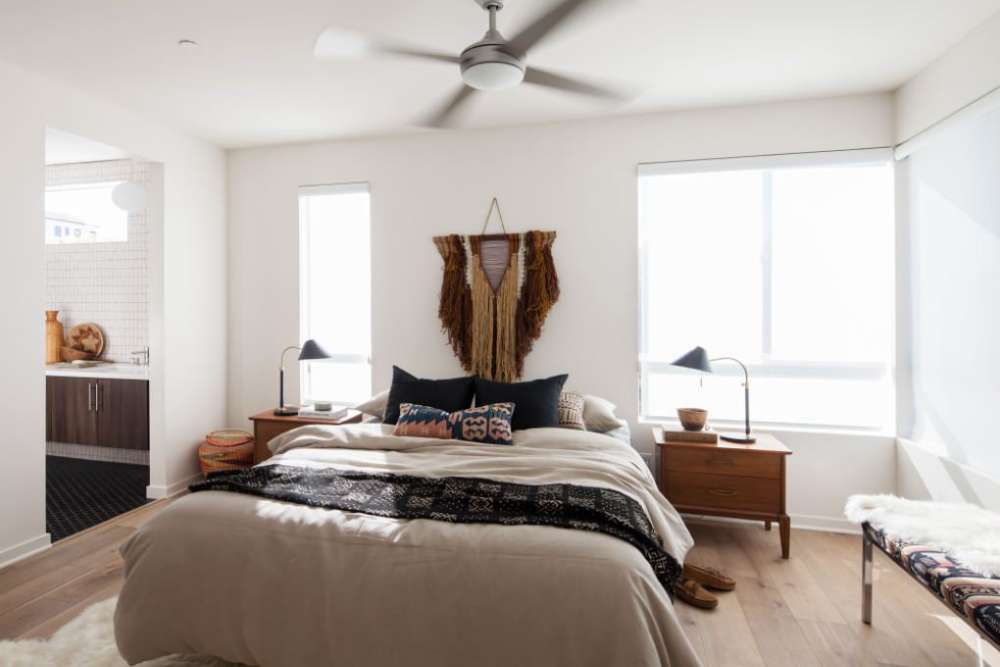
Men weave strips of local cotton, and women paint and dye them (Dallas Museum of Art, 2022).
The cloth is prepared first with a mordant of boiled leaves, which the Museum of Fine Arts, Houston lists as N’galama and N’tjankara. Fermented river mud then goes on the background around the design. Iron oxide in the mud reacts with tannins and turns the cloth black (Bowers Museum).
The label to watch is “bogolan” sold as decor. The Bowers Museum describes the commercialized derivative as popular abroad but carrying “gibberish” patterns, where the original symbols work as a code.
Kente
A full kente cloth in the Metropolitan Museum of Art collection (Ewe, 1930 to 1950) measures 73 x 120 inches and joins 24 strips edge to edge.
That scale is the first limit for home use. The cloth drapes a wall or a bed, and cutting it into pillow covers destroys the strip layout.
The Victoria and Albert Museum separates the two main schools by fiber and motif. Asante weavers favor geometric patterns in silk. Ewe weavers blend cotton and silk and add figures such as animals, people, and letters.
The Met adds that kente is now often made from cheaper materials and worn more widely. Fiber and weaver group decide what a cloth is worth, not the word kente on the tag.
Wax print and Ankara
The best-known African wax print comes from a Dutch company.
Vlisco was founded in Helmond, the Netherlands, in 1846 and first sold hand-printed fabrics along Dutch East India Company trade routes, according to KPMG’s High Growth Markets magazine. Those fabrics adapted Indonesian batik wax-resist methods to European industrial printing.
Vlisco is made in the Netherlands, Uniwax in Ivory Coast, and GTP and Woodin in Ghana (KPMG). A 2012 KPMG figure puts group output at 65.7 million yards.
Wax print is a design tradition produced at scale. Buy it for the pattern, not as proof of handwork.
Kuba cloth and shweshwe
Kuba cloth comes from the Democratic Republic of Congo. Men weave raffia palm fiber, and women add applique and embroidery (McClung Museum, University of Tennessee). The cut-pile version is known in the trade as Kasai velvet.
Each panel is one of a kind, so it works as a framed focal piece.
Shweshwe is indigo cotton, discharge printed on copper rollers at Da Gama Textiles in Zwelitsha, Eastern Cape (South Africa.info). Local production began in 1982 when UK company Tootal invested.
Original shweshwe is 100 percent cotton, while other types are polycotton or nylon (IOL, quoting a Da Gama spokesman). Da Gama produces 5 million metres a year (Brand South Africa, 2013).
Kuba cloth is a collector’s wall piece. Shweshwe is a working fabric for curtains and cushion covers, and the same Da Gama spokesman says the original cotton version holds its color better.
What Materials and Colors Give African Decor Its Look?
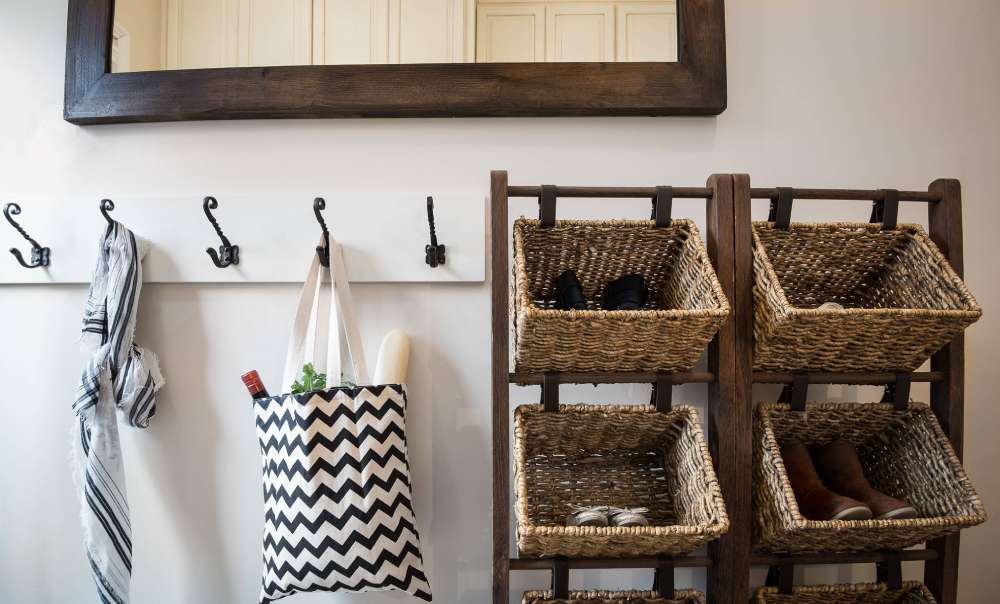
Natural fibers, carved wood, clay, stone, and metal, all worked by hand and finished in earth tones and indigo. Each material points to a source region, which is why the same basket or mask looks different from one country to the next.
Natural Fibers and Wood
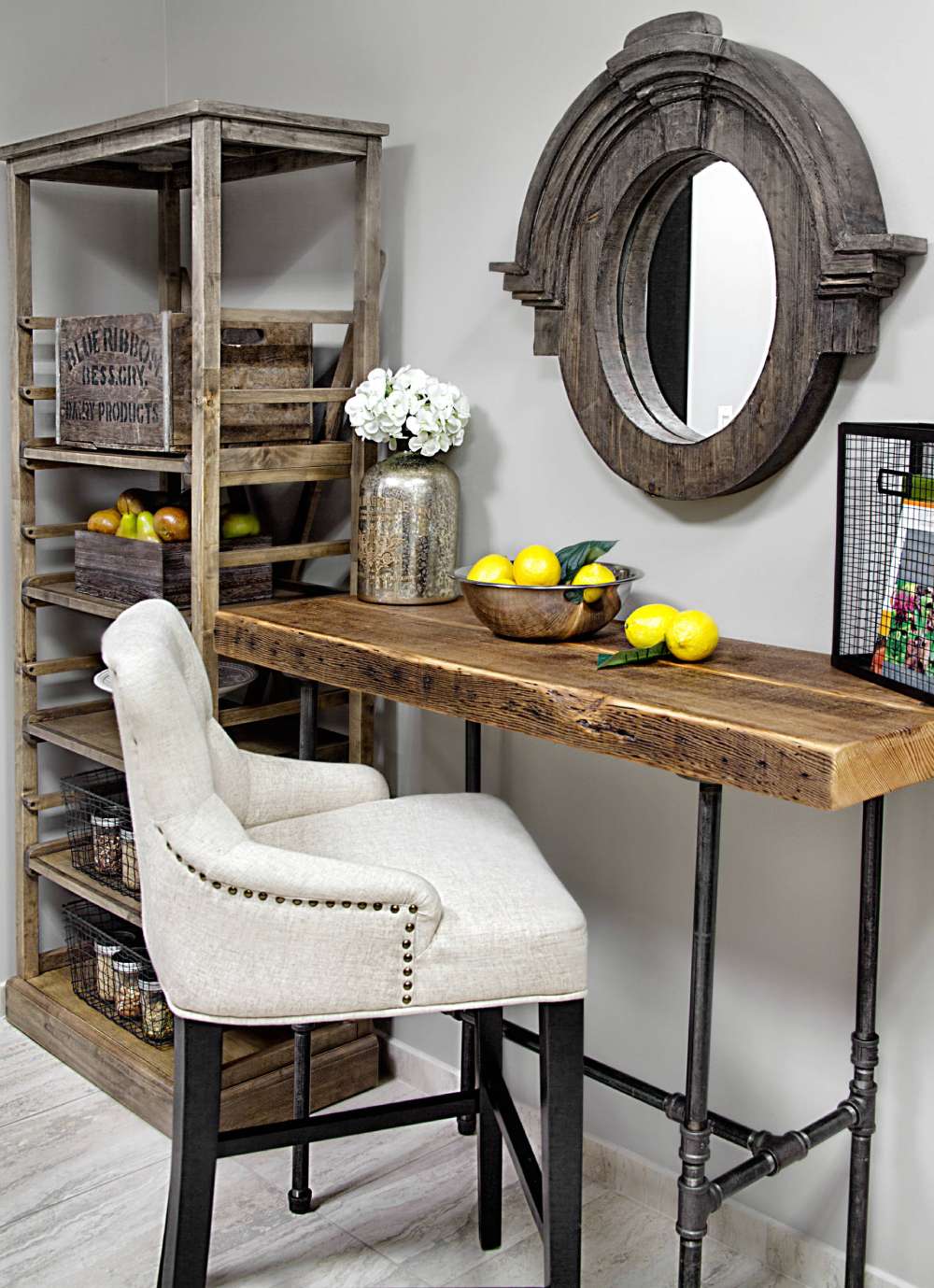
Raffia palm fiber shows up in Kuba cloth in Congo and in the multicolored baskets from Madagascar.
Bolga baskets use elephant grass and are woven in the Bolgatanga district of northern Ghana. One retailer, Grassroots Eco Store, puts a single basket at three days to a week of work, depending on size.
Wood is the other big one. Black Art Depot lists Makonde masks carved in jacaranda wood, and Nairobi News adds Lamu doors, with carving and inlays of bone and seeds. Sisal and coir both appear in Nairobi News’s list of materials that give a home its African character.
Sellers disagree on where the grass grows. Luangisa African Gallery says elephant grass grows mainly in southern Ghana, while Grassroots Eco Store places it on the White Volta flood plains near Bolgatanga.
Both agree on the weaving location. Nairobi News calls texture a critical component of the style, and fibers and carved wood supply most of it.
Clay, Stone, and Metal
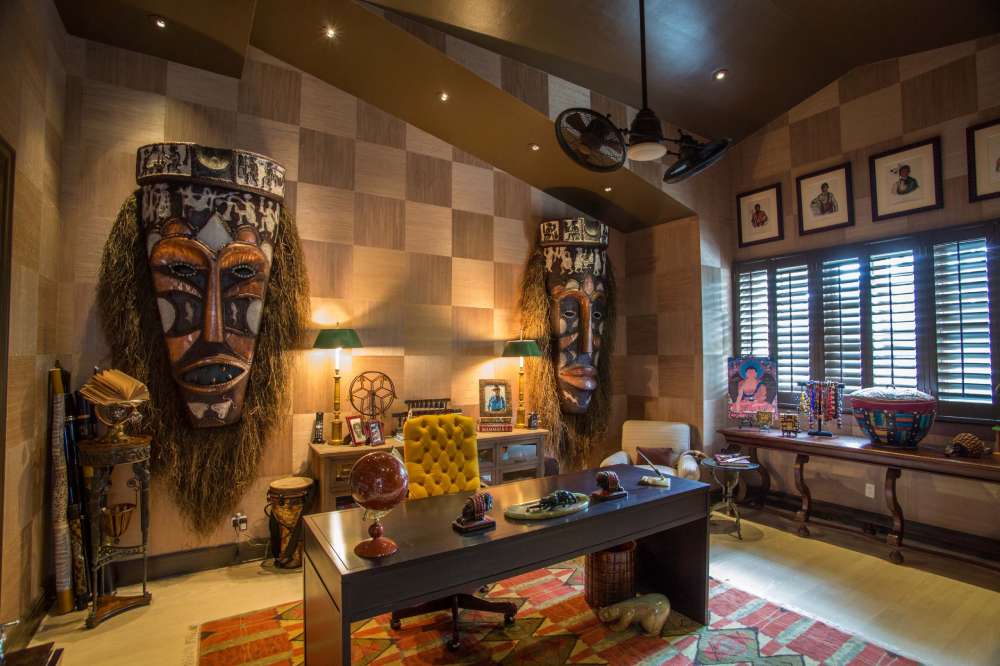
- Soapstone elephant bookends and carved vases, which Black Art Depot lists as Kenyan
- Serpentine stone for Shona sculpture
- Terracotta pottery decorated with traditional motifs
- Brass and bronze, from repousse panels on Ghanaian masks (UNICEF Market) to Burkina bronze sculpture
- Recycled metal animal masks for walls (Mbare)
Mixed-material pieces are common. A beaded wood mask from Ghana, or Bamileke beadwork on wood from Cameroon (54kibo), combines two or three materials in one object.
Earth Tones and Dyes
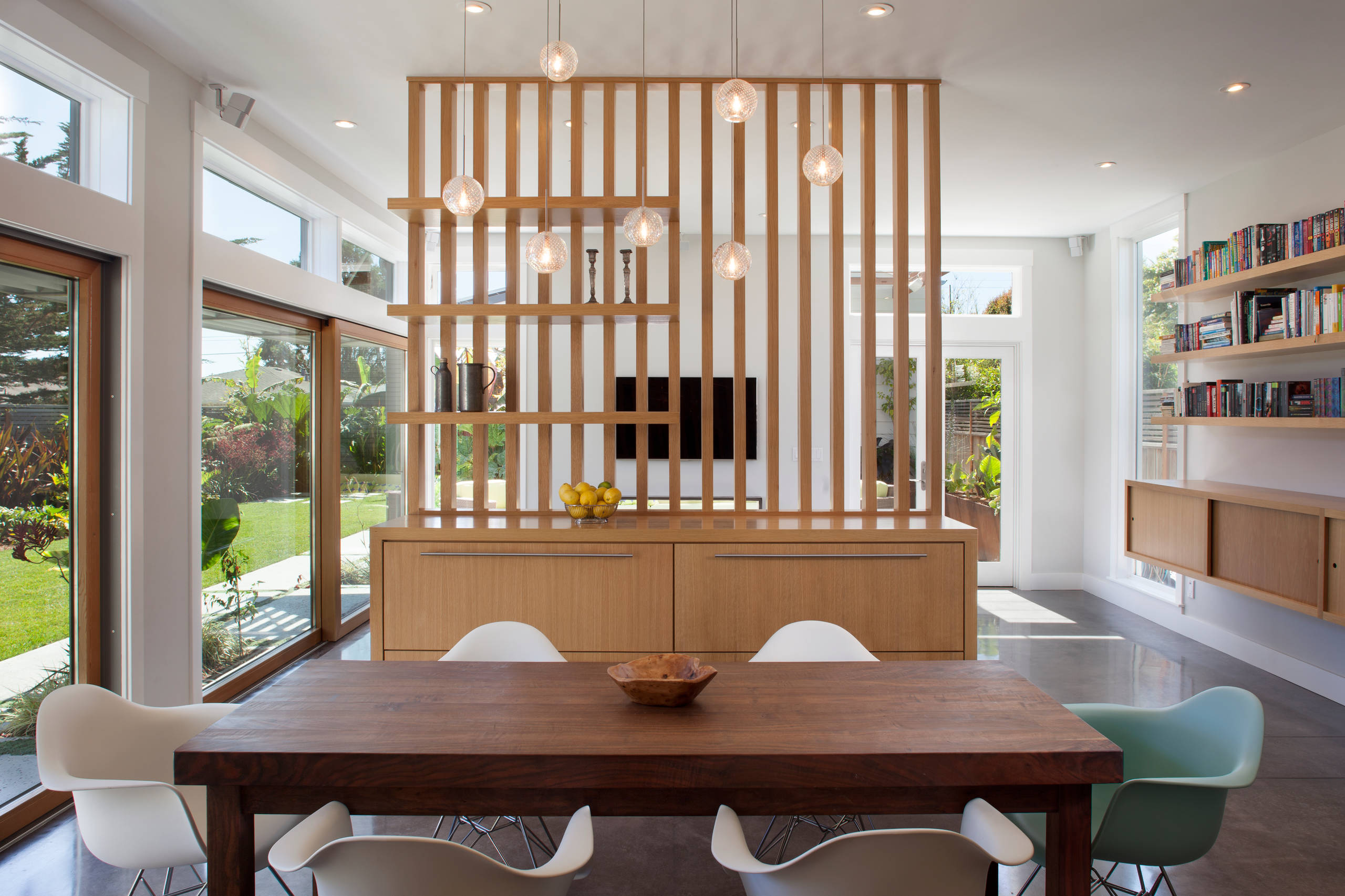
The colors have traceable sources. Brown and black on Malian cloth come from iron-rich river mud reacting with leaf tannins.
Indigo blue is the signature of South African shweshwe, which is indigo-dyed cotton. Beni Ourain rugs go the other way, with undyed wool in ivory and charcoal and brown or black geometric motifs.
The African Touch’s 2025 trend list leads with an earthy color palette: sandy neutrals, rust and burnt orange, green and charcoal. Nairobi News describes the older version of the same idea, with browns and yellows for the savannah and dusky orange for sunsets.
Which African Decor Pieces Suit Which Room?
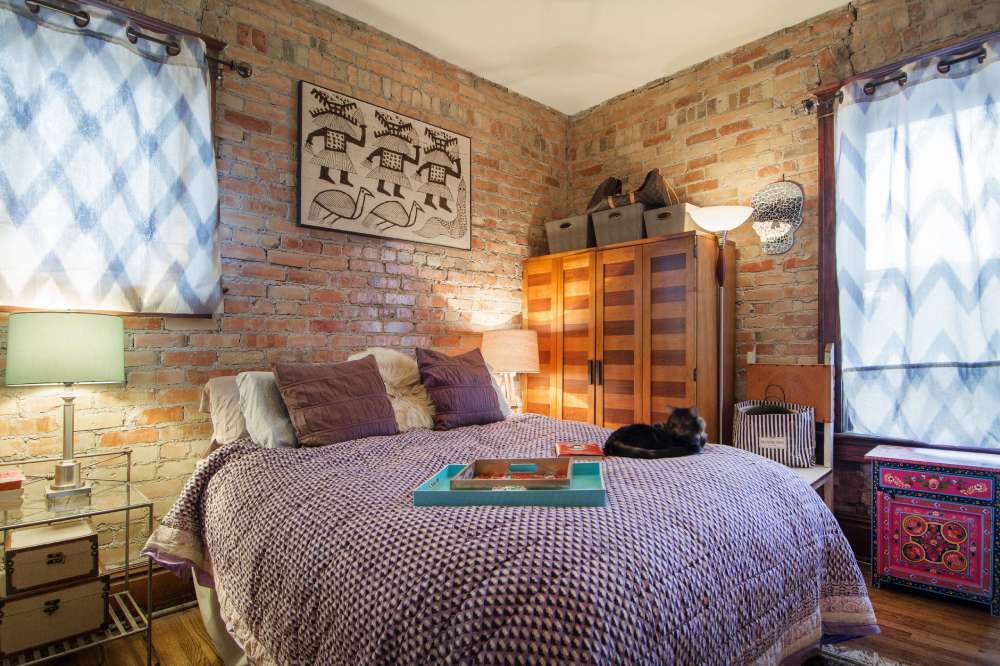
Function is the easiest way to match a piece to a room. Rugs, wall baskets, and masks suit living rooms. Bedrooms take throws and pillows, dining areas take runners and pottery, and entryways do well with poufs, hooks, and lighting.
Living Room
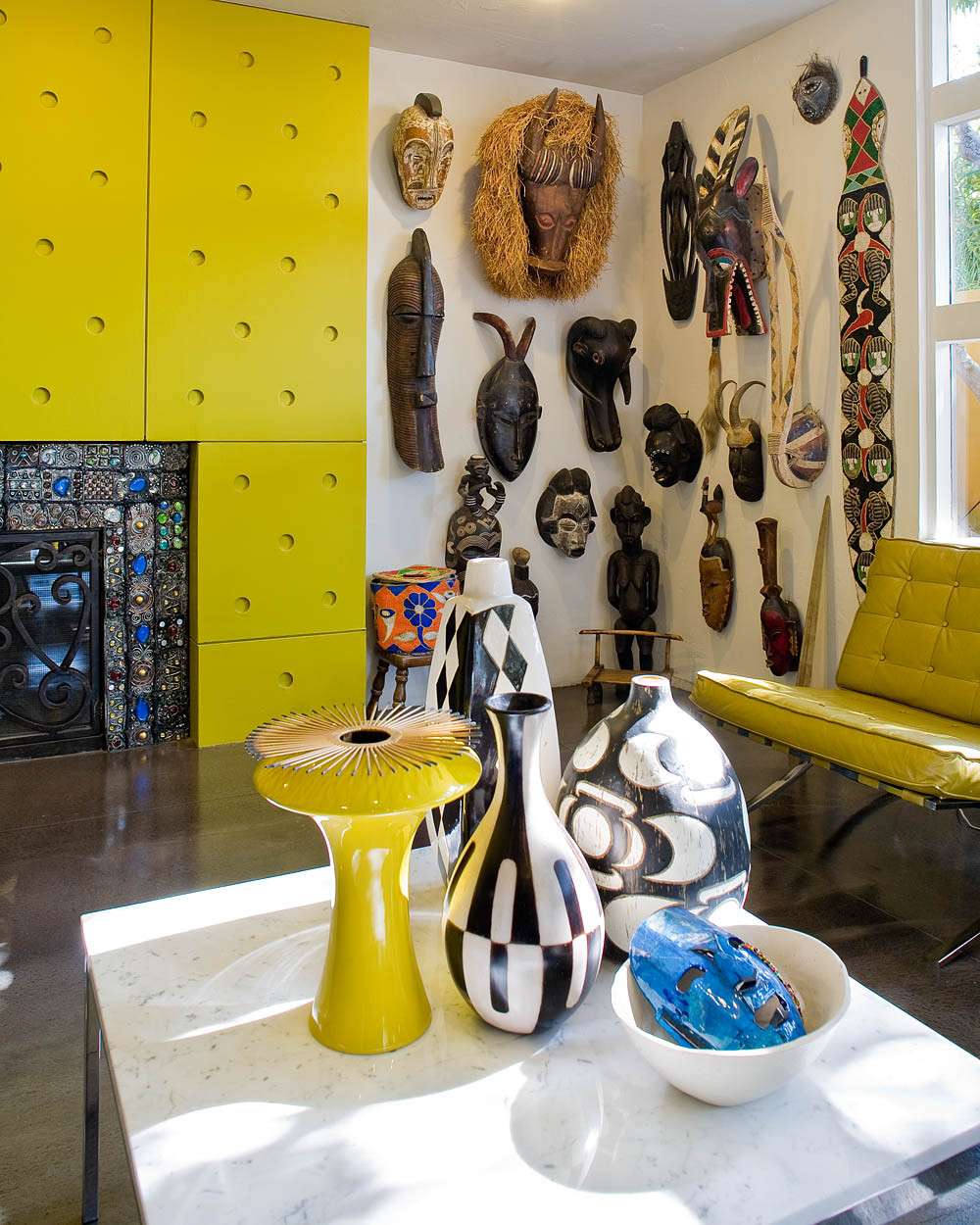
The living room carries the largest pieces, so scale decides the choice.
- A Beni Ourain rug has a pile of about 2 to 3 cm, and rug dealer Djoharian’s size range reaches roughly 300 x 400 cm (about 10 x 13 ft)
- A Bolga basket about 14 in across and 9 in tall holds folded throws beside the sofa (Bloomist’s mixed-weave model)
A rug sizing calculator removes the guesswork before you order one of the larger formats.
Wall baskets and masks work in sets or as a single anchor over the sofa.
Bedroom
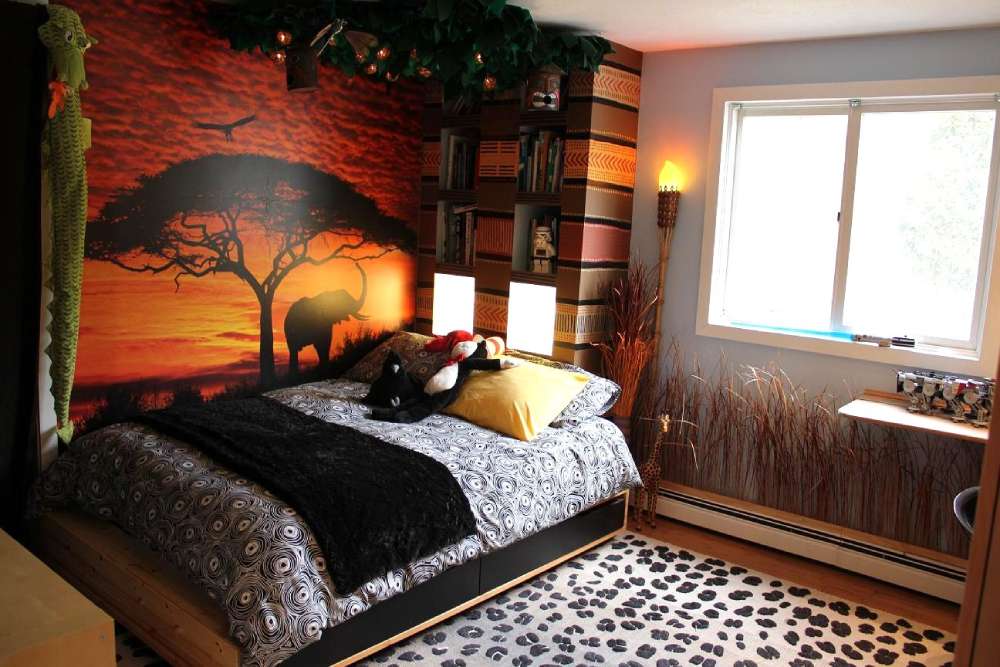
Bedrooms take soft goods first. Mud cloth throws and pillow covers carry the pattern, and Story Circle’s review of The African Decor Edit lists accent pillows from Ethiopia and textile hand towels from Mali as easy additions.
Keep to one patterned cover against solids. The layering logic behind good throw pillow pairings applies here. The pattern stays the focus only if the rest stays quiet.
Small wall baskets work above the headboard. Mbare shows Tonga baskets, woven in Binga, Zimbabwe, in small, medium, and large sizes on a bedroom wall.
Dining and Kitchen
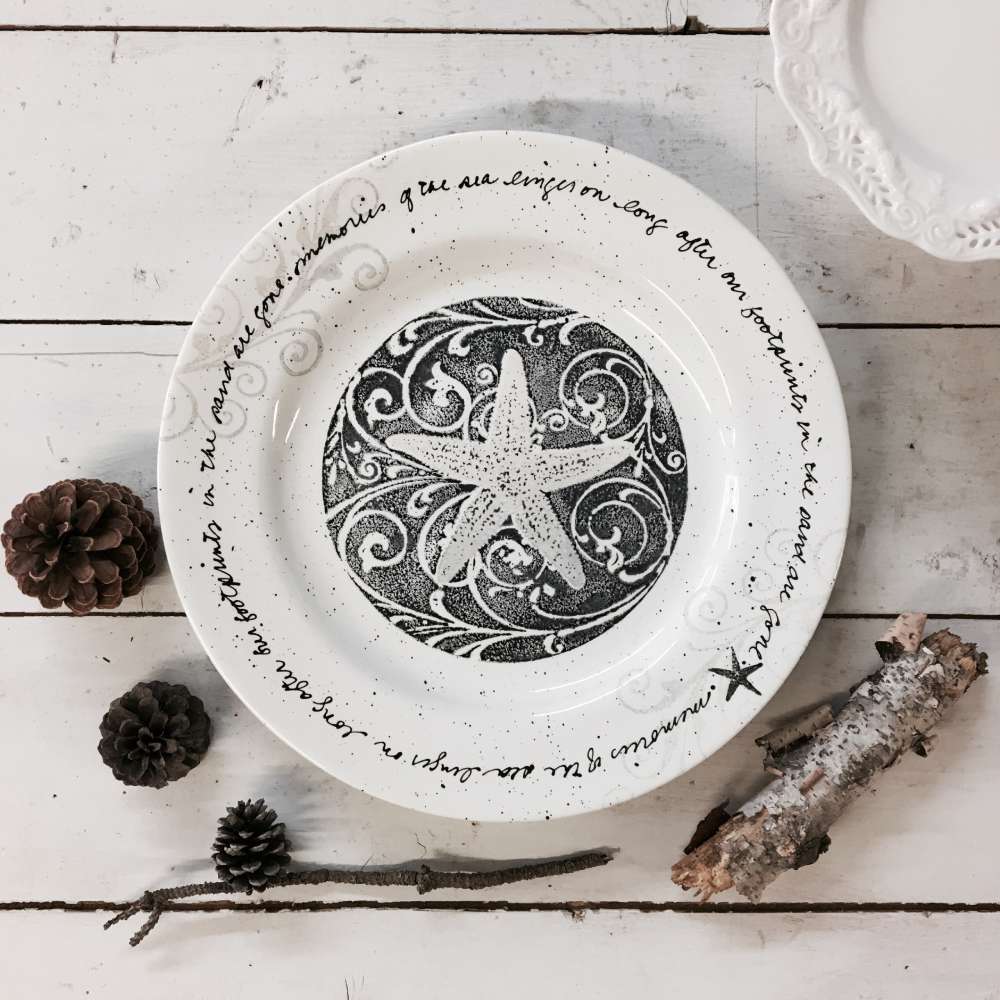
Afrilege and Swahili both sell African print and mud cloth table runners. Raffia and grass baskets double as bread or fruit holders.
Textile pieces cover the table, and baskets and pottery do the serving.
Entryway
Ngala Trading’s leather chandeliers and kudu-horn lamps (Bloomberg Businessweek, 2018) show how lighting carries African craft into a hallway.
A Moroccan leather pouf works as a hassock or a spare seat, per Story Circle’s review of Kakembo’s book.
Mbare sells hand-painted animal coat hooks, which make a small, low-cost start. One piece per room is enough.
How Do You Mix African Decor with Modern, Bohemian, or Minimalist Interiors?
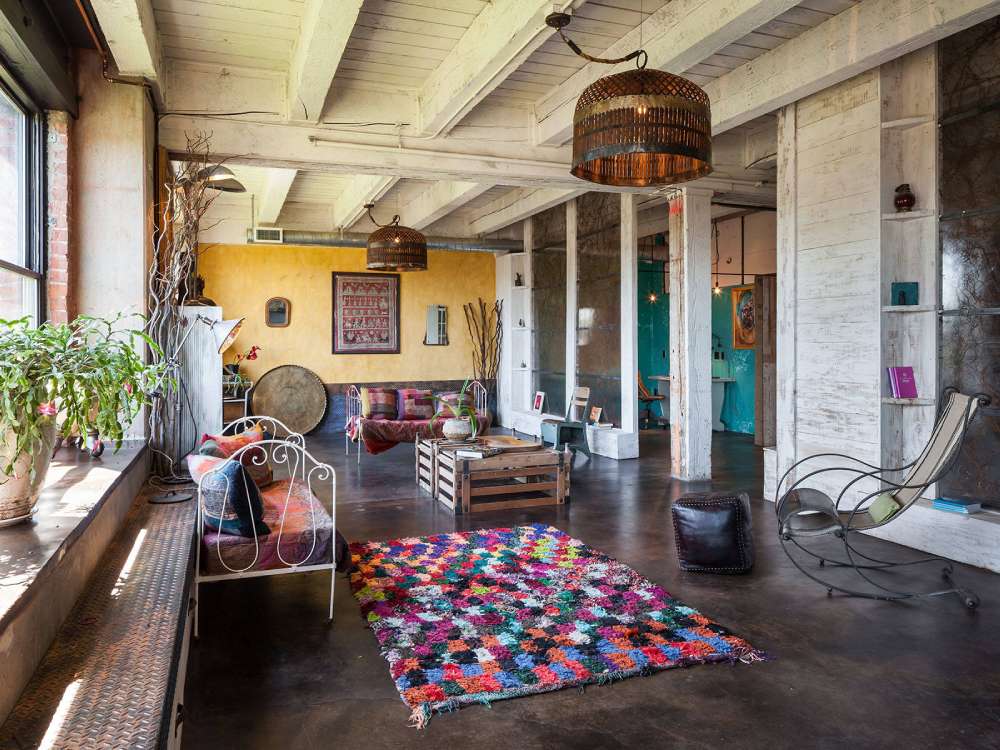
Pick one anchor piece and keep what’s around it plain. Then repeat the anchor’s palette rather than its motif. This works in any base style because the African piece does the talking and the room stays quiet.
The anchor sets the room’s focal point, so choose it first. A Beni Ourain rug, a large wall basket, or a carved stool all qualify.
- Choose one anchor piece with a clear region and technique.
- Keep walls and large furniture plain. Uganda’s Monitor quotes designer Andrew Mbabazi, who calls the result African contemporary: print draperies and cushion covers against plain chairs.
- Put African materials on Western shapes. Nairobi News cites an ottoman covered in cowhide and a storage chest covered in coir.
- Add one or two companions from other categories, such as pottery, baskets, or framed photographs (Reperch).
- Echo the palette. Style Rave notes that the right colors bring the continent’s feel even without artifacts or textiles.
Tinga Tinga Art lists bohemian and eclectic interiors as natural pairings for African art, because each adds layers of cultural history. The same source suggests setting abstract African art against modern furnishings for a contemporary fusion.
A living room built on minimalist Bohemian lines already has the empty wall and shelf space an anchor piece needs.
Sources split on density. Reperch advises collecting several masks and statuettes alongside pottery, photographs, and baskets, while Style Rave favors a semi-minimalist approach.
Match density to the base room. Bare walls and plain furniture carry a collection, but a room already full of furniture carries one anchor and little else. Stack masks, animal prints, and safari motifs together and the room turns into a theme set.
How Can You Tell Handmade African Decor from Mass-Produced Copies?
Look for a named maker or community, a stated region and technique, and small differences from piece to piece. The word “handmade” alone proves nothing. San Rocco Italia, an Italian handcrafted-goods retailer, describes “craftwashing,” where craft language works as marketing rather than as a guarantee.
“Authentic” has two meanings in this market, and sources do not agree on which one counts.
David Norden, an Antwerp dealer in traditional African art (BuyAfricanAntiques, June 2026), uses the strict sense: an object made according to tradition for the society that produced it and used for its intended purpose. He adds that workshops supplying old-looking pieces appeared by the late twentieth century, and that there are no real shortcuts.
Most retailers use the looser sense, meaning handmade by artisans in Africa. For decor, the looser test is the right one. The strict one applies to antique ritual pieces only.
How you check depends on the item. On a rug, flip it over. Revival Rugs says irregular knots on the back mark handwork, and a genuine Beni Ourain shows creamy shades of undyed wool with darker geometric lines.
With a basket, ask which community wove it. The Imperial War Museums shop names the Gurune (Frafra) community of Bolgatanga and states that each basket has a unique finish.
For a mask or carving, ask whether it was carved as decor or used in ritual. Norden separates decorative masks, tourist pieces, and ritual objects, and calls the line hard to see online.
A named maker, cooperative, or community counts in a listing’s favor, and so does a stated region and technique. Slight variation between pieces is a good sign too.
What doesn’t count is the word “handmade” or “tribal” in a title, identical pieces sold as a set, or a page with no maker or place anywhere on it.
A listing with no maker, no place, and a repeating pattern is a copy until proven otherwise.
Which Fair Trade Rules and Sourcing Laws Apply?
Sellers get checked through fair trade verification, anything crossing a border falls under wood and ivory law, and sacred objects come with cultural limits instead of legal ones. Only the second is binding law.
Fair Trade Certification
A third-party audit of a product or supply chain is what certification means, and Fairtrade International, Fair for Life, and Fair Trade USA all offer it. It is used mostly for agricultural and commodity items, so baskets and pillows rarely carry it.
Verification works differently because it reviews the whole business. Fair Trade Federation members commit to nine principles through a self-reported application with references, and World Fair Trade Organization members commit to 10, checked by self-assessment, peer review, and audit.
Verification covers the seller, not each product’s maker. WFTO warns that commercial businesses engage in “fair washing” with unsubstantiated claims, so a fair trade badge is worth checking against the member directory.
Wood and Ivory Regulation
| Material | Rule | Date and body |
|---|---|---|
| Rosewoods and blackwoods (Dalbergia genus; Brazilian rosewood, D. nigra, stays in Appendix I) | CITES Appendix II, permits for cross-border trade | 2 January 2017, CITES |
| Kosso (Pterocarpus erinaceus, African rosewood) | CITES Appendix II, moved up from Appendix III | 2 January 2017, CITES |
| African elephant ivory | Near-total ban on US domestic commercial trade | 6 July 2016, US Fish and Wildlife Service |
Singapore’s National Parks Board factsheet confirms the Dalbergia genus listing took effect on 2 January 2017, and African blackwood (Dalbergia melanoxylon) sits inside it. The Forest Legality Week 2017 summary records the kosso uplisting at the start of that year.
Rules differ by country, and annotations exempt some finished goods. Check your national CITES authority before importing a carved piece in rosewood or blackwood.
The ivory rule covers African elephant ivory only. Other ivories such as walrus, whale, and mammoth fall outside this rule, although some are covered by other laws (US Fish and Wildlife Service, 2016). A seller who cannot name the material of an inlay is a seller to skip.
Sacred and Ritual Objects
Some African objects are not decor.
Victor Bayena Ngitir’s essay on exhibiting restricted objects (University of Heidelberg) describes restricted religious and cultural objects, called sacred, secret, or power objects, as an established category across Sub-Saharan Africa.
Adé Hennis (PushBlack, 2023) writes that keeping masks at home is not necessarily wrong when they are not authentic or not used for ritual. Respect their spiritual value and learn their history, the piece adds.
Nasozi Kakembo’s The African Decor Edit frames ethical shopping and cultural appropriation around African artifacts (Story Circle review). The workable rule is simple. Buy new pieces carved as decor by named artisans, and skip antique ritual masks without documented provenance.
How Much Does African Home Decor Cost, and Where Should You Buy It?
Small handmade pieces cost tens of dollars, and large textiles and rugs cost hundreds. Price follows hours of labor. Baskets of Africa notes that kente weavers set prices by the time a cloth takes.
Prices below are listings as of October 2026.
- Mud cloth pillow covers run from $45 (AARVEN, sold out at last check) to $155 for a lumbar pillow from The Citizenry, made in a fair trade workshop in Segou, Mali
- A small Bolga basket is GBP 22 at the Imperial War Museums shop
- Kente costs about $150 to $240 for a six-yard hand-woven piece (Anka marketplace)
- A Beni Ourain-style rug, 5 x 8 ft, starts from about $400 from Moroccan sellers on eBay
The cheapest kente listing is rarely a cloth. Tribalgh sells a “handwoven kente” stole measuring 4 1/2 inches wide, which is a single strip, not a cloth.
Fair trade retailers are the easy starting point, since members of the Fair Trade Federation or WFTO are searchable by directory. Maker studios that name the workshop come next, as The Citizenry does for its Segou pillows.
Some buyers go direct through marketplaces where sellers list hand-woven work themselves, such as the Bonwire kente listings on Anka.
Mass marketplaces are the weak spot. Amazon’s African-themed decor results lean toward resin statues and metal wall sets with no maker named.
Spend where technique shows, on the rug, the large textile, the carved piece. Save on replaceable items like pillow covers and small baskets.
Kakembo’s easiest start is swapping one mass-produced item for a handcrafted African one (Story Circle review).
How Do You Clean and Care for African Textiles, Baskets, and Wood Pieces?
Spot clean textiles and dust baskets. Wood mostly needs to stay away from swings in humidity. Water, light, and dry heat do most of the damage, though each material reacts a little differently.
Textiles
Botanical Boys gives these instructions for a large mud cloth.
- Hand wash only, in cold water with mild detergent
- Wash separately, because mud cloth can bleed dye in the first few washes
- Spot clean first to cut down on full washes
- Roll the damp cloth in a dry towel and press out the water
AARVEN’s mud cloth cushion covers carry a different instruction: machine wash on the coolest cycle.
Two makers, two instructions. Follow the tag on your piece, test a hidden corner for bleed, and wash dark cloth apart from light.
Baskets and Fibers
Dust baskets and leave the water alone.
The Burke Museum says most baskets need only regular dusting, and that colored baskets often use water-soluble dyes that wash out or fade. The Canadian Conservation Institute goes further: never immerse basketry in water (Care of Basketry, Notes 6/2).
Retailers say the opposite for Bolga baskets. The Imperial War Museums shop tells buyers to dampen a bent basket and reshape it by hand, and Serrv’s note allows a short soak.
The positions fit different objects. Conservators write for old and often dyed baskets, while the retail advice covers new elephant-grass baskets folded for shipping.
Light matters too. UV fades dyes and the natural color of plant fibers, so keep baskets out of long direct sun (Burke Museum).
Swelling and shrinking cause cracking and splitting, and rapid swings do more harm. That makes attics, garages, and basements the wrong place to store them (Carlos Museum, Emory University).
For pests, seal the basket in a bag, push the air out, and freeze it for about two weeks. Then thaw it and repeat at least twice, keeping it bagged throughout (Burke Museum).
Wood and Clay
A carved wood piece cracks when humidity swings, not when it gets dusty.
A 2018 study of 300 Rijksmuseum objects, published in Studies in Conservation, found that humidity fluctuations make wood shrink and swell, which opens glue joints and cracks panels. A Polish fracture-risk study found that repeated cyclical swings raise cracking risk more than a single sudden drop, and that operating heating systems intensify the swings.
- Keep carved wood away from radiators and vents
- Hold humidity steady instead of correcting it in bursts
- Dust clay and stone pieces, which need far less care than wood
African Home Decor FAQ
What is the difference between Afro bohemian decor and African decor?
Afro bohemian is about the mix, with African pieces layered over bohemian textiles and objects from other cultures. African decor on its own is defined by where and how each piece was made. Style Rave notes that African finds sit comfortably beside decor from elsewhere.
Do the patterns on mud cloth and kente carry meaning?
Yes, on both. The Metropolitan Museum of Art notes that kente designs are individually named, and the Victoria and Albert Museum records a proverb attached to one of its cloths. Ewe cloths in the Met collection carry figurative motifs such as fish, elephants, and stools.
The Bowers Museum describes mud cloth’s geometric patterns as a code, and Miami University’s art museum adds that mud cloth was worn by hunters and by women marking life events.
Can African decor work in a small apartment or rental?
Yes, because soft goods need no wall space. A pillow cover, a throw, or a Moroccan pouf adds the look without drilling. Style Rave also describes a semi-minimalist approach, which suits small rooms.
How do you hang woven baskets on a wall?
Use a plate hanger or a sturdy wall hook set behind the weave, and hang sets as a group. A Bolga basket listed by the Imperial War Museums shop weighs only 290 grams, so the hook matters less than the spacing.
How do you buy African decor safely online when you cannot inspect it?
Ask for the maker or community name, close-up photos of the back of the piece, and the return terms before paying. Marrakech-based rug listings on eBay typically allow 30-day returns with the buyer paying return shipping and add import fees for US buyers, while some other sellers, including resellers of rugs not made in Morocco, accept no returns.
Where to Start With African Home Decor
Start with one replaceable piece from a named workshop, such as a mud cloth pillow cover, before buying any rug or large textile.
A $45 cover costs about one-ninth of a $400 Beni Ourain-style rug, yet it shows whether the maker is named and whether the dye survives a cold hand wash.
- Pillow cover or small basket from a named maker
- One anchor textile or rug, once that seller delivers as described
- Carved wood last, because its sourcing carries the most checks
The downside is that the first purchase is the one that gets washed, and the one most likely to be replaced.
This order rests on prices and rules checked in October 2026, and a change in either reorders it.
Once the anchor piece arrives, ideas for designing the living room around it show how to build the rest of the space.

- Kitchen Color Schemes by Cabinet Color: What Pairs Well - October 19, 2026
- Curtain Colors for Every Wall Color: Safe vs Bold Picks - October 18, 2026
- Interior Design Styles: Find Your Primary and Secondary - October 14, 2026