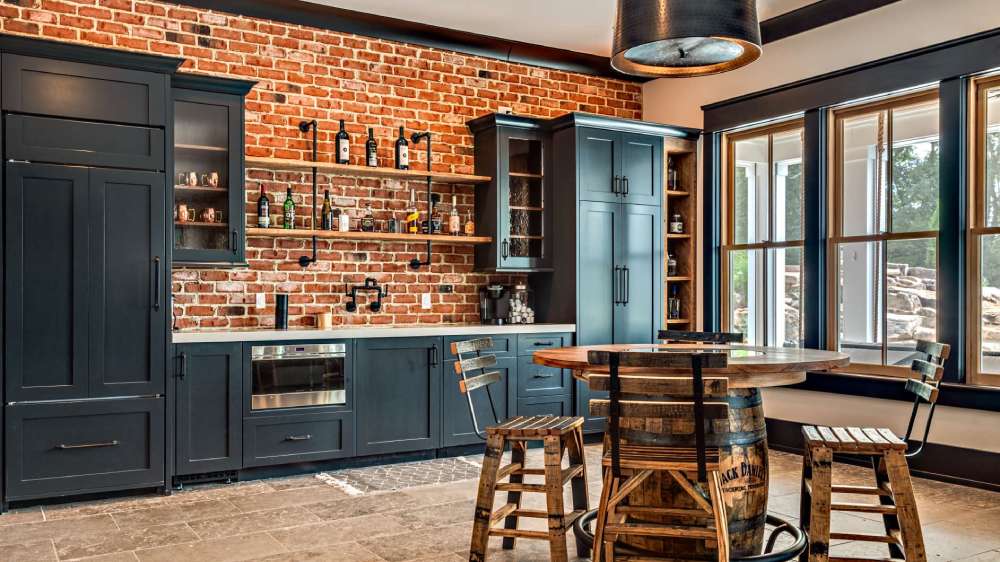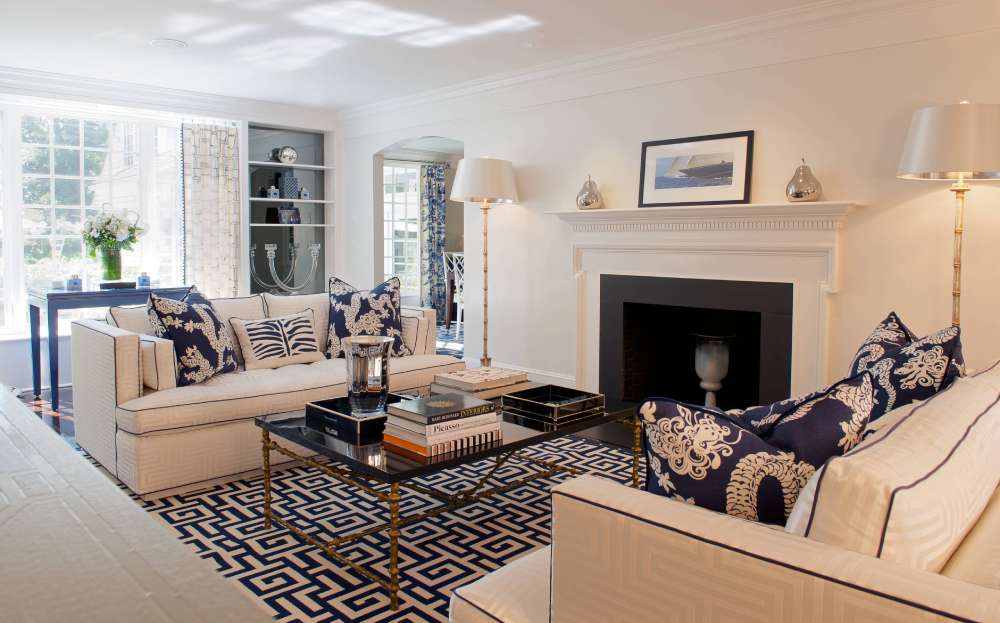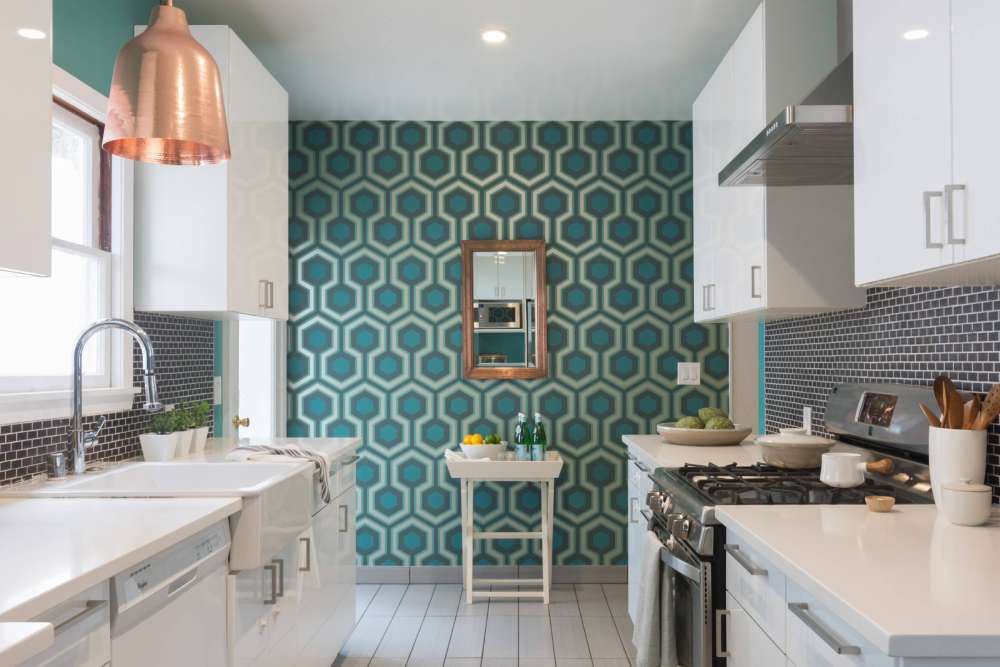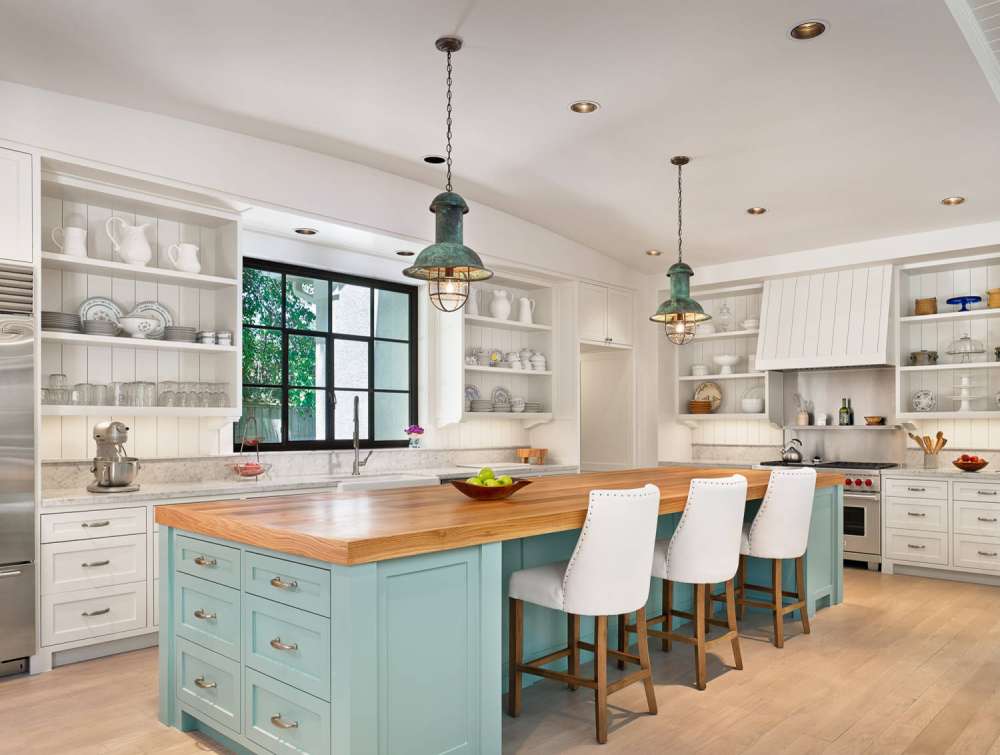
Urban home decor started in converted warehouses and city lofts. Now it defines how millions of apartment dwellers style their spaces, from studio apartments in Brooklyn to high-rises in Chicago.
This style is built on exposed brick, mixed materials, and compact-space thinking. It borrows from the textures and energy of metropolitan living without copying any single design trend.
But getting it right takes more than buying a few matte black fixtures. The wrong material mix or furniture scale can make a room feel like a construction site instead of a home.
This guide covers everything from the core material palette and color choices to room-by-room breakdowns, budget strategies, and where to actually shop for pieces that fit the aesthetic.
What Is Urban Home Decor
Urban home decor is a design approach built around the realities of city living. It pulls from the textures, materials, and spatial constraints found in metropolitan apartments, lofts, and converted buildings. Think raw concrete, exposed brick, metal accents, and open layouts.
It’s not the same thing as industrial interior design, though people mix these up constantly. Industrial style leans harder into factory and warehouse references. Urban decor borrows from the full spectrum of city life, including restaurants, galleries, streetscapes, and residential architecture.
The roots trace back to loft conversions in New York, Chicago, and London during the late 20th century. Artists in the 1960s and 70s started living in converted warehouses because the rent was cheap and the spaces were massive. That raw, unfinished look became the foundation for what we now call urban style.
A 2024 Opendoor report found that U.S. consumers spend an average of $1,598 on home decor annually, with first-time homeowners (many of them apartment renters) spending the most aggressively on making spaces their own.
RentCafe data from 2024 shows that adaptive reuse projects hit a record 25,000 converted apartments across the U.S., with Chicago overtaking Manhattan as the top city for building conversions. These converted industrial spaces are where urban decor feels most at home.
Core Characteristics

Image source: 5th Generation Contracting
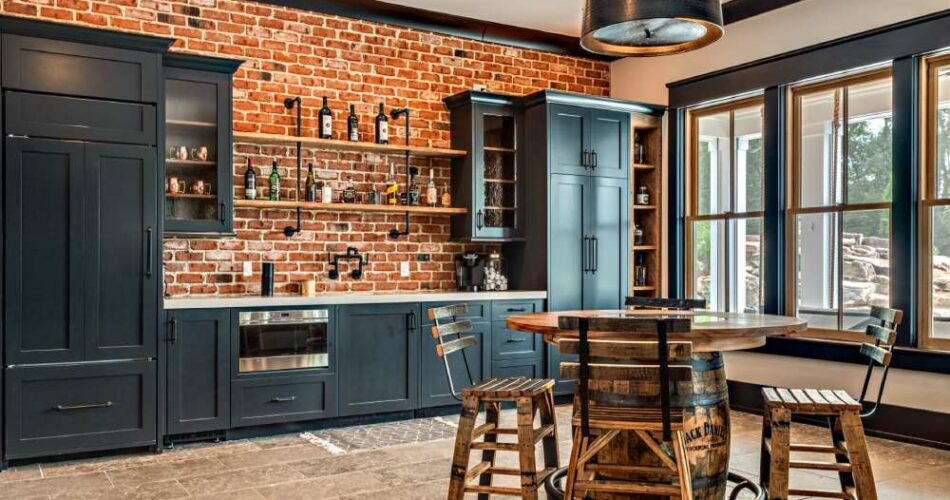
Mixed materials: Concrete, steel, reclaimed wood, and glass used together in the same room.
Architectural details as decor: Exposed beams, ductwork, and brick walls are features, not flaws.
Compact-space awareness: Furniture and layouts designed for real apartment dimensions, not catalog showrooms.
Neutral base with deliberate contrast: Charcoal, warm gray, and matte black as a foundation. Accent colors brought in through textiles and art.
What Makes It Different From Other Styles
| Style | Primary Influence | Material Focus | Feel |
|---|---|---|---|
| Urban | City living broadly | Mixed (concrete, metal, wood, glass) | Refined but raw |
| Industrial | Factories, warehouses | Heavy metal, pipes, machinery | Rugged, utilitarian |
| Modern | Mid-20th century movement | Clean lines, molded plastics | Sleek, structured |
| Contemporary | Current trends | Varies with time | Fluid, trend-responsive |
Understanding where urban style sits among other interior design styles helps avoid the common mistake of treating everything with exposed brick as “industrial.” It’s more nuanced than that.
Materials That Define the Urban Look
The material palette does most of the heavy lifting in urban decor. Get this wrong and the whole thing reads as generic modern or, worse, unfinished construction.
Grand View Research valued the global home decor market at $960 billion in 2024, with the furniture segment holding over 50% of that revenue. A significant chunk of that growth comes from demand for mixed-material furniture driven by urban apartment living.
Hard Surfaces vs. Soft Layers
Exposed brick, poured concrete, and unfinished wood form the base layer. These are the surfaces that give a room its urban identity before you add a single piece of furniture.
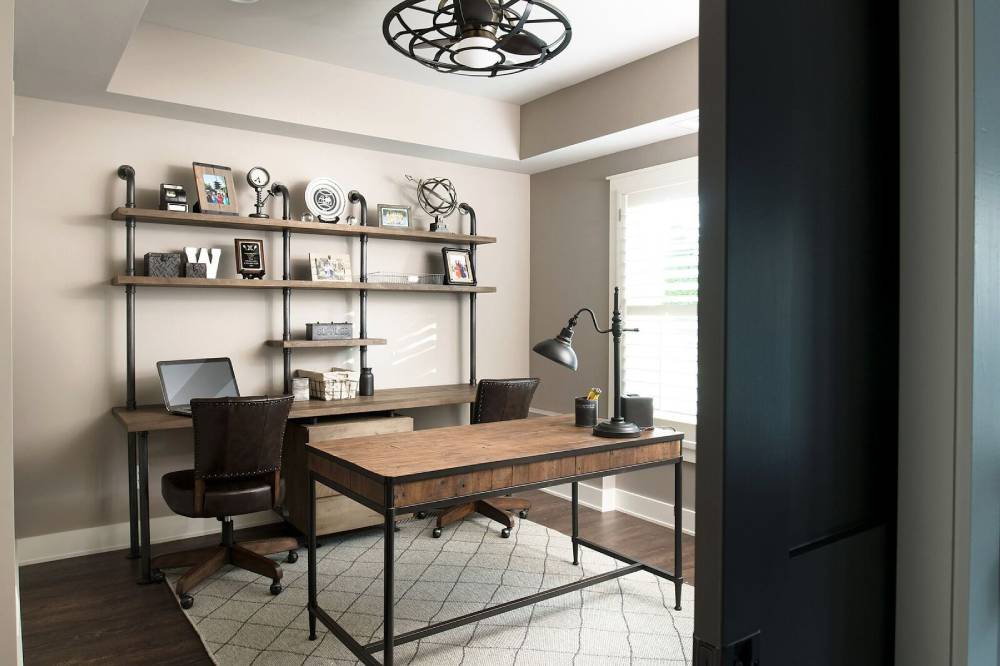
Metal accents come next. Black steel, brushed brass, matte iron. And here’s where urban style parts ways with industrial. In industrial design, the metal is the point. In urban decor, metal plays a supporting role, appearing in light fixtures, shelving brackets, and table legs rather than dominating the entire room.
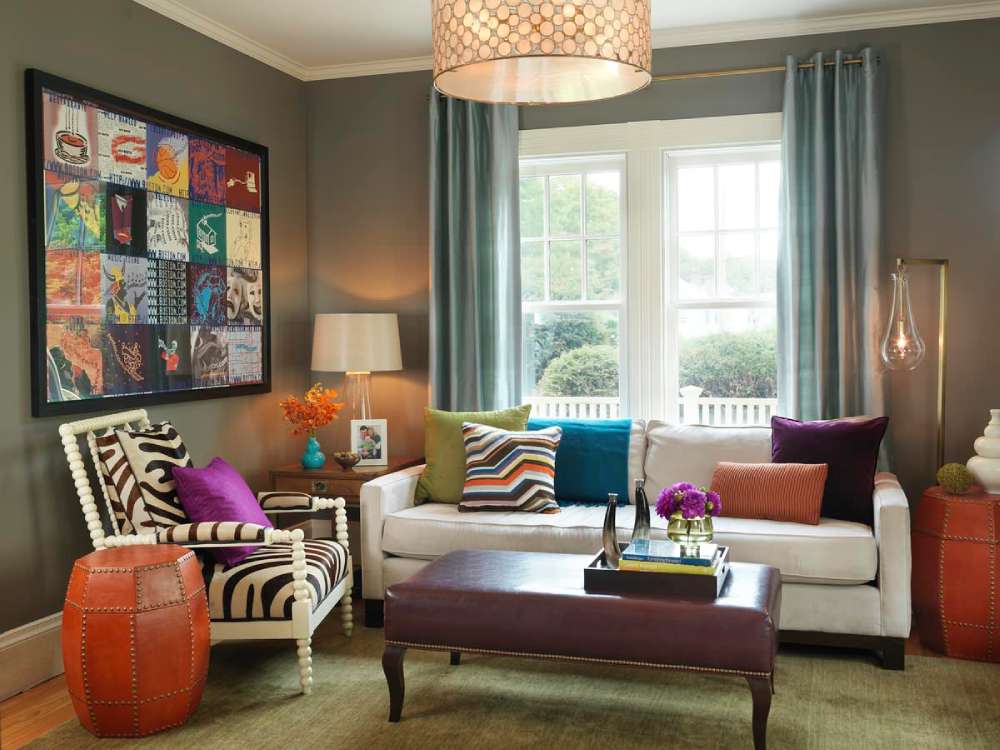
Then you layer soft materials on top. Linen, leather, raw cotton. The Rently 2025 Apartment Design & Decor Trends Report found that 55% of renters use bold rugs to add color without painting, which tracks perfectly with how texture in interior design functions within urban spaces.
Mixing Finishes Without Creating Visual Noise

Image source: Heidi Pribell Interiors
The trick that took me years to actually figure out. You can combine concrete countertops, walnut shelving, and brass hardware in the same kitchen. But the second you add a fourth competing finish, the room starts to feel chaotic.
The three-finish rule works well here. Pick three dominant materials and repeat them throughout the space. Everything else becomes an accent, not a feature.
Glass and acrylic serve a specific purpose in urban design: maintaining visual openness. A glass coffee table in a 400-square-foot studio doesn’t eat visual space the way a solid wood one does. Same idea applies to acrylic chairs, glass pendant lights, and mirrored surfaces.
Velvet keeps showing up in urban spaces lately, which is interesting. It wasn’t a natural fit five years ago. But paired against raw concrete or brick and stone walls, the softness of velvet creates a contrast that actually makes both materials look better.
Urban Home Decor for Small Spaces
Most people searching for urban home decor live in apartments. That’s just the math. The United Nations estimates that 56% of the world’s population now lives in urban areas. And urban means smaller square footage, almost always.
The average new apartment in the U.S. is just 941 square feet, which is 5% smaller than the average a decade ago. So urban decor that ignores spatial constraints isn’t really urban decor at all.
Studio Apartment Layouts That Work

Image source: Echelon Interiors
Rently’s 2025 survey of 500 U.S. renters found that 45% rearrange furniture as their primary method of refreshing a space. Not buying new stuff. Just moving what they already have.
That tells you something. Layout matters more than product in small apartments.
A few principles that actually hold up in tight spaces:
- Float furniture away from walls (even by 6 inches) to create the illusion of depth
- Use a single large rug instead of multiple small ones to unify an open floor plan
- Anchor zones with lighting rather than physical dividers
IKEA’s KALLAX shelving system works as a room divider and storage unit simultaneously. CB2’s wall-mounted desks fold flat when not in use. West Elm’s nesting tables disappear under each other when you need floor space back.
For small apartment decor, the goal isn’t making the space look bigger. It’s making the space work harder.
Choosing Furniture for Rooms Under 200 Square Feet
Scale is everything. An oversized sectional in a 500-square-foot apartment is the single most common mistake I see. It happens weekly.
Understanding scale and proportion in interior design is what separates a room that feels intentional from one that feels stuffed. Measure your doorways before buying anything. Seriously.
Furniture with double duty solves half the problem. Storage ottomans, fold-down desks, sofa beds that don’t look like sofa beds. Article and IKEA both have lines built specifically around compact urban spaces.
Color Palettes for Urban Interiors
Apartment Therapy’s 2025 Designer Survey, polling 154 interior designers across North America, confirmed that deeper, darker shades like chocolate brown, burgundy, and forest green are replacing the all-white palette that dominated the last decade.
That shift matters for urban decor specifically. White walls in a north-facing city apartment with limited natural light don’t look “clean.” They look cold and flat.
The Base Palette

Image source: Tyreus Design Studio
Charcoal. Warm gray. Off-white. Matte black.
These four form the skeleton of most successful urban interiors. They work with exposed brick, concrete, and raw wood without competing for attention.
Benjamin Moore’s “Kendall Charcoal” remains one of the most specified urban paint colors for good reason. It reads warm in artificial light and holds its depth in daylight. Sherwin-Williams’ “Agreeable Gray” handles the warm gray slot well, and Farrow & Ball’s “Strong White” delivers an off-white that doesn’t trend yellow.
Understanding color theory in interior design is what stops these neutral bases from looking dull. The trick is in the undertones.
Accent Colors That Belong in Urban Spaces

Image source: Rachel Reider Interiors
Terracotta. Deep teal. Olive. Mustard.
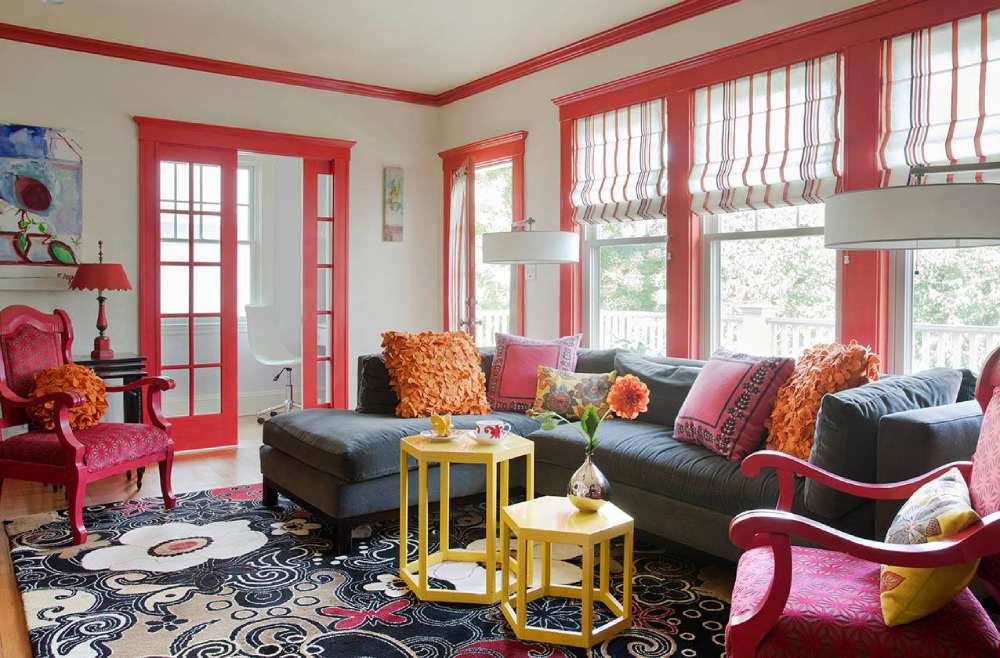
These accent colors succeed in urban interiors because they pull from the same earthy, grounded family as the raw materials around them. Terracotta next to exposed brick creates a tonal conversation. Deep teal against concrete reads sophisticated without trying too hard.
A Rently 2025 finding worth noting: 56% of renters use artwork to bring in color, and 34% use decorative lighting like LED strips and statement lamps. That’s smart, because it means color becomes portable. When you move apartments, the palette moves with you.
Colors that go with charcoal gray naturally include most of these urban accents. When in doubt, start with charcoal walls and layer from there.
How City Lighting Affects Color Choices
North-facing apartments (extremely common in dense urban neighborhoods) get almost no direct sunlight. Cool colors look colder. Whites turn blueish.
This is why warm undertones matter so much in urban paint choices. A gray with a green or blue undertone will look depressing in a north-facing living room by November. A gray with a taupe or amber undertone stays comfortable year-round.
The role of light in interior design gets underestimated in apartment settings where you can’t control window orientation or surrounding buildings. Test paint samples on the actual wall, at night, under your actual light fixtures. Not in the store.
Wall Decor and Art in Urban Spaces
SwiftBeacon reports that American consumers spend an average of $1,155 on home art, with the most expensive single piece averaging $307. When choosing wall art, 62% favor photography and 49% prefer landscapes.
That data aligns perfectly with urban decor. Photography (especially black and white architectural shots) and abstract art are the two categories that feel most natural against raw surfaces.
Gallery Walls vs. Single Statement Pieces

Image source: Wyatt Poindexter of Keller Williams Elite
This is a layout decision, not a taste decision.
Gallery walls work best on large, uninterrupted surfaces. If you have a 12-foot exposed brick wall with no windows, a clustered arrangement of mixed frames creates visual interest without requiring any single piece to carry the room.
Single large-scale pieces work better in compact rooms or above key furniture. A 40×60 canvas above a sofa anchors the seating area and creates a clear focal point in the room.
Society6, Minted, and local print shops are the standard sourcing mix for urban wall art. Etsy fills the gap for one-of-a-kind pieces. And the thrift store framing trick (buying cheap frames, swapping in your own prints) still works better than anything IKEA sells.
Textured Wall Treatments

Image source: Coddington Design
Limewash paint has had a serious moment. It gives walls a chalky, mottled finish that looks like it’s been there for decades. Perfect for urban spaces where you want texture without committing to actual plaster work.
Venetian plaster is the next level up. More labor-intensive, more expensive, but the depth is unmatched. A venetian plaster finish around a fireplace creates the kind of focal point that stops people mid-conversation.
What to avoid: the “Pinterest trap.” Overly curated gallery walls where every frame is the same color, every print follows the same palette, and everything is spaced with mathematical precision. Real urban spaces have personality. They look collected, not decorated.
Knowing how an accent wall functions in a room helps you decide where to apply texture and where to leave surfaces quiet.
Lighting as a Design Element
The global decorative lighting market was valued at $41.6 billion in 2024 and is growing at about 2.9% annually, according to industry research. LED adoption in residential spaces jumped from 4% to 47% between 2015 and 2020, and it’s only climbed since then.
In urban decor, lighting carries more design weight than in almost any other style. The fixtures themselves are decorative objects. The light they cast sets the mood for the entire room.
Pendant Lights and Exposed Bulbs

Image source: Suk Design Group LLP
Pendant lights are the signature urban fixture. A single oversized pendant light above a dining table does what a chandelier does in traditional spaces, but with cleaner lines and less visual clutter.
Exposed Edison-style bulbs became a bit of a cliche around 2018. But used thoughtfully (in clusters, behind smoked glass, or in matte black housings) they still work. The warm filament glow pairs well with concrete and brick.
Schoolhouse Electric, Cedar & Moss, and Mitzi all make pendant fixtures that fit urban aesthetics without looking mass-produced.
Layered Lighting for Apartment Living

Most apartments have one overhead light per room. That’s it. Maybe a boob light if you’re lucky (or unlucky, depending on how you look at it).
Three layers fix this:
- Ambient lighting: The general fill. Overhead fixtures or large floor lamps that light the whole room evenly
- Task lighting: Desk lamps, reading lights, under-cabinet strips in the kitchen
- Accent lighting: LED strips behind shelving, picture lights above art, candles (yes, candles count)
For renters who can’t swap out ceiling fixtures, floor lamps are the workaround. An arched floor lamp behind a sofa provides ambient light and creates a sense of height without touching a single wire.
LED Strip Lighting

Image source: Michelle Gage | Interior Designer
Subtle but it changes the room completely. LED strips under floating shelves, behind headboards, or along the base of a kitchen island create a glow that makes raw surfaces feel intentional rather than unfinished.
Rently’s 2025 data backs this up: 34% of renters now use decorative lighting (LED strips and statement lamps) as a primary way to add warmth and dimension to rental spaces.
The difference between cheap LED strips and good ones is color temperature. Aim for 2700K to 3000K (warm white). Anything above 4000K starts looking like a hospital corridor, which defeats the purpose entirely.
Urban Home Decor on a Budget
Rently’s 2025 survey of 500 U.S. renters found that 38% plan to spend between $101 and $500 on decor this year. Another 29% are willing to go up to $1,000. That’s not a huge budget, but it’s enough to completely shift the feel of a room if you spend it in the right places.
The secondhand furniture market backs this up. Mordor Intelligence values the global second-hand furniture market at $47 billion in 2025, growing at over 5% annually. People are buying used. Not because they have to, but because the stuff is genuinely better than what you’d get new at the same price.
Under $500 Room Refresh

Image source: Marcye Philbrook
Where to spend: One quality lighting piece ($80-150), a statement rug ($100-200), and artwork or a mirror ($50-100). The rest goes to small accessories.
Where to save: Throw pillows from H&M Home or Target’s Threshold line. Candles and small decor from thrift stores. Basic storage from IKEA.
The Rently survey also found that 39% of renters are hitting thrift stores for vintage finds, while 17% are sourcing from Etsy for one-of-a-kind pieces. Facebook Marketplace and Craigslist remain the best places to find raw wood furniture, metal shelving, and leather seating that fits the urban aesthetic without customization.
Free Changes That Actually Make a Difference
Rently’s data shows 45% of renters refresh their space simply by rearranging furniture. No purchases needed.
A few zero-cost moves that genuinely change how a room feels:
- Pull furniture away from walls to create breathing room
- Remove one piece from each surface (less is usually more)
- Swap items between rooms for a fresh perspective
Editing what you already own matters more than adding new things. Most rooms have too much in them, not too little. The urban aesthetic leans toward restraint. A clear surface reads as intentional, not empty.
DIY Techniques Worth Trying
IKEA hacks remain the backbone of budget urban decor. The KALLAX-to-console conversion, BESTA wall units as media centers, and BILLY bookcases as faux built-ins are all proven projects that show up constantly across Apartment Therapy, IKEAhackers.net, and TikTok.
One DIYer on Apartment Therapy built custom media shelving from BESTA and LACK units for roughly $1,000, replacing a $3,200 quote for custom built-ins. That’s the kind of price gap that makes hacking worth the effort.
DIY concrete and plaster techniques work well for countertops and accent walls in urban spaces. Limewash paint runs about $40-60 per gallon and gives walls a textured, lived-in finish that looks far more expensive than it costs.
Urban Decor vs. Industrial Decor

Image source: Modern Industrial Residence
These two styles share DNA. Both grew out of converted city buildings. Both use raw materials as design features. But they split in meaningful ways that affect how a room actually feels to be in.
| Feature | Urban Decor | Industrial Decor |
|---|---|---|
| Primary reference | City living broadly | Factories, warehouses |
| Comfort level | Balanced (form + comfort) | Function over comfort |
| Color range | Warm neutrals + accents | Gray, black, rust |
| Softness | Layered textiles present | Minimal soft materials |
| Furniture style | Mixed, refined edges | Heavy, utilitarian |
The biggest difference shows up in the living room. An industrial home might have a riveted metal coffee table and a leather club chair with visible stitching. An urban living room uses a walnut coffee table with steel hairpin legs and a deep linen sofa with throw pillow combinations in muted tones.
Same neighborhood. Different attitude.
When Blending Works
Mixing works when the industrial elements stay structural and the urban elements handle the surface layer.
Good blend: Exposed ductwork overhead (industrial) paired with a warm rug, layered lighting, and modern home decor accessories on open shelving.
Bad blend: A riveted metal dining table with industrial pipe shelving AND exposed brick AND factory-style pendant lights in the same room. At that point, you’re not blending. You’re just doing industrial chic home decor and calling it urban.
The Houzz 2025 study found that 41% of homeowners purchased large furniture as part of renovation projects in 2024. When buying pieces meant to bridge two styles, it helps to understand how unity in interior design keeps mixed-material rooms from feeling scattered.
Room-by-Room Urban Decor Breakdown
Urban style doesn’t apply evenly across a home. A living room can handle more raw material exposure than a bedroom. A kitchen has moisture and heat constraints that limit material choices. Each room needs a slightly different interpretation of the same core aesthetic.
Living Room Essentials

Image source: Gilles Clement Designs
The living room is where urban decor goes hardest on material mixing. This is the room where concrete, metal, wood, and textile all meet.
A few anchoring pieces that define an urban living room:
- A deep, low-profile sofa in charcoal or dark linen
- A coffee table combining at least two materials (wood + steel, glass + iron)
- One oversized piece of wall art or a curated gallery wall
- A statement floor lamp that doubles as a sculptural element
For living room design ideas in the urban style, the key is keeping seating low and leaving sightlines open. Urban rooms feel bigger when you can see across them without obstruction.
Bedroom Styling Without Losing Warmth

Image source: FAB Architecture
The 2025 Houzz study shows bedrooms are a top priority, and Rently found 44% of renters focus on refreshing their bedroom first.
Raw surfaces need softening here. A concrete or brick wall behind the bed works, but only if you layer enough textile in front of it. Think linen bedding, a chunky knit throw, and throw pillows on the bed in complementary earth tones.
Keep metal minimal. One matte black nightstand or a brushed brass reading lamp. Not both. The bedroom should feel like a retreat, not a showroom. For more targeted inspiration, look at modern bedroom decor approaches that share urban style’s preference for clean lines and warm neutrals.
Kitchen and Bathroom Details

Image source: Jane Kim Architect
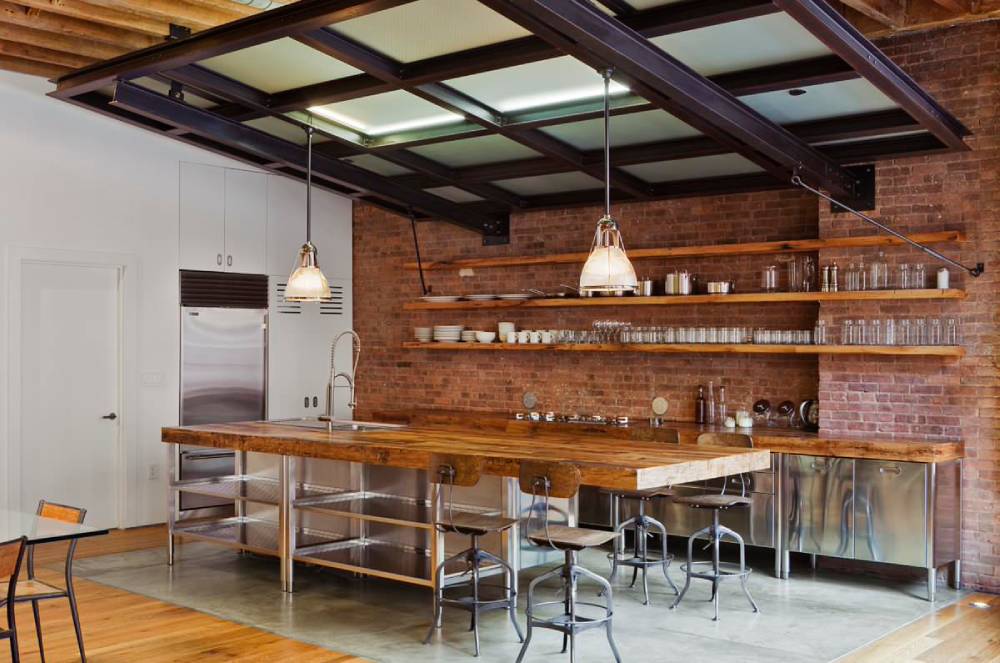
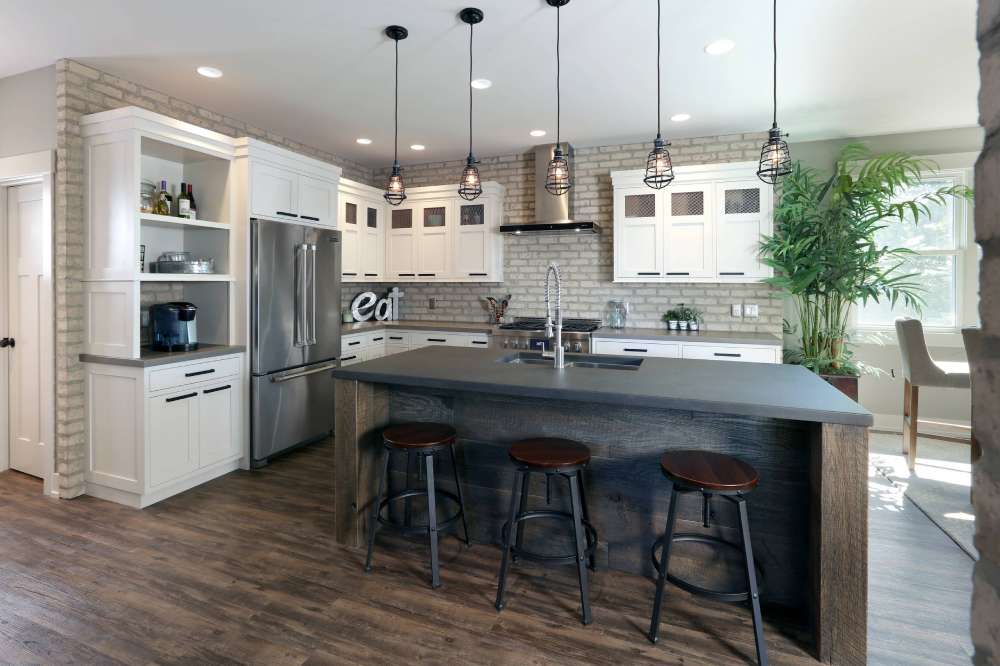
Urban kitchens favor three things: open shelving, matte black hardware, and mixed countertop materials.
Open shelving replaces upper cabinets in many urban kitchen designs. It creates visual openness but requires you to actually keep things organized (or accept that your mismatched mugs are now decor). For broader kitchen decorating ideas, combining open and closed storage usually works better than committing fully to one approach.
Countertops: Butcher block and concrete are the urban standards. Butcher block adds warmth. Concrete adds texture. Some people combine both on different surfaces in the same kitchen, which can look great if you understand balance across the full room.
Bathrooms are tricky because moisture limits material options. Concrete-look porcelain tile, matte black fixtures, and a simple wood-framed mirror handle the urban look without risking water damage. Skip real wood shelving in wet zones. It warps.
Brands and Retailers That Specialize in Urban Home Decor
The Rently 2025 report found that 62% of renters shop Amazon, 59% use Walmart, and 40% go to Target for decor. But those are volume plays. For pieces that actually read as urban, you need more specific sources.
Mid-Range Retailers
| Retailer | Best For | Price Range |
|---|---|---|
| CB2 | Statement furniture, lighting | $$-$$$ |
| West Elm | Mixed-material pieces, sofas | $$-$$$ |
| Article | Modern sofas, compact dining | $$ |
CB2 leans more urban than its parent brand Crate & Barrel. The matte black metal shelving, concrete-finish side tables, and smoked glass pendants are basically an urban decor starter kit.
West Elm’s “Industrial” and “Mid-Century” collections overlap heavily with urban style. Article does sofas and sectionals well at a price point that doesn’t make your eyes water.
Budget Tier
IKEA remains the base layer for most budget urban apartments. The BESTA system, KALLAX shelving, and LACK tables all serve as raw material for customization.
H&M Home handles textiles well. Linen cushion covers, cotton throws, and simple ceramic vases for under $30 each.
Target’s Threshold and Project 62 lines offer affordable apartment decor that reads urban without looking cheap. The matte black metal accent tables and geometric shelving, in particular, punch above their price.
Higher End Options
Restoration Hardware does urban at a premium. The concrete and steel dining tables, linen upholstery, and industrial-scale lighting work well in larger lofts and converted spaces.
Design Within Reach (now owned by Herman Miller) carries mid-century modern home decor that crosses into urban territory. The Eames lounge chair, Nelson bench, and Noguchi table remain relevant in urban apartments because their clean lines and mixed materials fit the aesthetic naturally.
What to Avoid
Mass-produced “urban” decor from generic online retailers often reads as costume rather than authentic style. If every piece in the room has “industrial” in the product name but nothing has actual age or material weight behind it, the result feels like a theme party.
The best urban rooms have at least one or two pieces with real history. A vintage leather chair from an estate sale. A reclaimed wood shelf from a salvage yard. A vintage home decor piece that has a story you didn’t manufacture.
That mix of new and old is what separates spaces that feel lived-in from spaces that feel staged.
FAQ on Urban Home Decor
What is urban home decor?
Urban home decor is a style rooted in city living. It uses mixed materials like concrete, metal, and reclaimed wood, paired with compact furniture and neutral color palettes. Think loft apartments, exposed brick, and deliberate simplicity.
How is urban decor different from industrial decor?
Industrial decor references factories and warehouses exclusively. Urban style pulls from the full city experience, including galleries, restaurants, and residential architecture. Urban rooms balance raw materials with comfort. Industrial leans harder into utilitarian function.
What colors work best in urban interiors?
Start with charcoal, warm gray, off-white, and matte black as your base. Add accents in terracotta, deep teal, olive, or mustard. These colors that go with grey complement exposed brick and raw surfaces naturally.
Can you do urban decor in a small apartment?
Absolutely. Urban style was born in compact city spaces. Use multifunctional furniture, vertical storage, and a single large rug to unify open floor plans. Keeping sightlines clear is more effective than adding more pieces.
What materials define the urban look?
Exposed brick, concrete, and raw wood form the foundation. Metal accents in black steel or brushed brass add structure. Layer soft materials like linen, leather, and cotton on top to keep things livable.
Is urban home decor expensive?
It doesn’t have to be. Thrift stores and Facebook Marketplace are solid sources for raw wood and metal furniture. IKEA hacks, DIY limewash walls, and budget retailers like Target’s Threshold line make urban style accessible under $500.
What type of lighting fits urban spaces?
Pendant lights are the signature fixture. Layer recessed lighting or floor lamps for ambient fill, desk lamps for task areas, and LED strips behind shelving for accent glow. Aim for warm white bulbs around 2700K to 3000K.
What furniture works best for urban decor?
Low-profile sofas in dark linen or leather. Coffee tables mixing two materials, like wood and steel. Pieces from CB2, West Elm, and Article suit the aesthetic well. Avoid oversized furniture that crowds compact rooms.
How do you add warmth to urban interiors?
Textiles do the heavy lifting. Layer rugs over concrete or wood floors. Add linen throws and cushions in earth tones. Warm-toned lighting and a few colors that pair with taupe soften hard surfaces without losing the urban edge.
Where should you shop for urban home decor?
CB2 and West Elm cover mid-range furniture. IKEA and H&M Home handle budget basics. Etsy and Society6 work for wall art. For vintage finds, estate sales and local thrift stores offer pieces with real character.
Conclusion
Urban home decor works because it respects how people actually live in cities. Small rooms. Limited natural light. Rental restrictions. The style accounts for all of it.
The material palette of concrete, raw wood, and metal gives you a foundation that holds up across every room. Layer textiles and warm lighting on top, and the space feels finished without being overdone.
You don’t need a massive budget. Thrift stores, IKEA hacks, and a few well-chosen pieces from retailers like CB2 or West Elm can get an entire apartment there.
Start with one room. Pick your base colors, get the principles of interior design right, and build from there. The best urban spaces look collected over time, not assembled in a weekend.
Skip the themed approach. Focus on real materials, functional layouts, and pieces that have some weight to them. That’s the whole formula.
- What Color Bedding Goes with Gray Walls - May 14, 2026
- What Color Curtains Go With Gray Walls - May 8, 2026
- How Visual Furniture Previews Help You Choose the Right Piece for Your Room - April 13, 2026