Rachel Ashwell opened a small shop in Santa Monica in 1989 selling flea market finds and linen slipcovers. Three decades later, shabby chic home decor is still one of the most recognizable styles in residential design.
The look is built on distressed furniture, soft pastel colors, vintage textiles, and deliberate imperfection. But getting it right takes more than painting everything white and tossing a floral pillow on the sofa.
This guide covers the specific color palettes, furniture pieces, fabrics, and room-by-room applications that define the style. You will also find sourcing options across every budget, common mistakes to avoid, and practical steps to start a shabby chic room for under $500.
What Is Shabby Chic Home Decor?

Image source: Southern Inspirations by Linda Gale
Shabby chic is a decorating style built on distressed furniture, soft pastel colors, vintage textiles, and deliberate imperfection. Rachel Ashwell started it all in 1989 when she opened a small store in Santa Monica, California, selling flea market finds alongside linen slipcovers and whitewashed wood pieces.
The style caught on fast. By the early 1990s, The New York Times had recognized the brand and its signature product (the loose, wrinkled slipcover) in its annual trend roundup. Celebrities like Madonna and Kevin Costner became early customers.
What makes shabby chic different from similar styles? It comes down to specific visual cues and a particular attitude toward wear.
| Style | Key Differences from Shabby Chic | Shared Traits |
|---|---|---|
| French Country | Warmer tones, rustic stone and terracotta, provincial patterns | Florals, antique pieces, linen |
| Farmhouse | More utilitarian, shiplap, barn doors, neutral palette | Distressed wood, vintage hardware |
| Coastal | Nautical accents, blues and whites, driftwood tones | Light palette, relaxed textiles |
| Victorian | Heavier ornamentation, darker woods, formal furniture | Ornate frames, crystal lighting |
The core DNA is always the same: chipped paint, muted florals, ornate but worn picture frames, and aged metal accents. The furniture leans toward curvy, feminine silhouettes over anything boxy or angular.
The defining tension: shabby chic is about curated wear, not actual neglect. A sun-bleached linen curtain panel is on brand. A stained, torn couch cushion is not. Everything should look like it aged gracefully in a Provence cottage, even if you bought it last Tuesday on Etsy.
The secondhand furniture market hit $40.2 billion globally in 2024, according to Market.US, with vintage and unique pieces driving a significant portion of that growth. That tracks with the shabby chic philosophy perfectly, because the whole point is finding pieces with a story.
Where the Name Comes From

Image source: Fairfax & Sammons Architects
Rachel Ashwell didn’t set out to coin a term. She grew up in London with a mother who restored antique dolls and a father who dealt in secondhand rare books. Flea markets were just her normal weekend.
After moving to the United States in the early 1980s and working as a prop stylist for TV commercials, she began selling her flea market finds in that first Santa Monica shop. Customers couldn’t keep them in stock.
The brand grew into six stores, a TV show on E! (1999 to 2003), multiple books, and a licensing deal with Target called Simply Shabby Chic. Looking at the broader history of interior design, few individual founders have branded an entire aesthetic so completely.
Colors That Define the Shabby Chic Palette

Image source: Tobi Fairley Interior Design
The palette is soft, faded, and low-contrast. If a color looks like it has been sitting in direct sunlight for a few decades, it probably works.
Primary shades: chalk white, blush pink, powder blue, sage green, lavender, and cream. These are your walls, your slipcovers, your bedding.
Accent metals: tarnished silver, aged gold. But always matte or patina finishes, never polished or shiny. The patina finish hardware is part of what keeps the style grounded.
Understanding how color works in interior design is actually pretty useful here, because shabby chic has some strict unwritten rules. High-contrast combos break the look instantly. A saturated red throw pillow on a chalk-white sofa? That reads more eclectic than shabby chic.
B-Stock reported that furniture brands sold 85% more units in secondhand channels in 2024 than the year before. A good chunk of those pieces end up getting repainted in shabby chic tones, and for good reason. The look is forgiving and timeless.
Paint Brands and Specific Shades Worth Knowing

Image source: Huestis Tucker Architects, LLC
Annie Sloan Chalk Paint is practically synonymous with the style. Developed in 1990, it requires no sanding or priming and is now available through over 1,200 stockists across 50 countries. Popular shabby chic shades from the line include Old White, Antoinette (a soft pink), and Duck Egg Blue.
Farrow & Ball works well for walls. Pink Ground and Borrowed Light are staples in shabby chic bedrooms.
On a budget? Rust-Oleum Chalked Paint runs about half the cost of Annie Sloan, and side-by-side comparisons show nearly identical results in coverage and finish. Benjamin Moore and Sherwin-Williams also carry pale tones that fit the aesthetic without requiring specialty products.
The global furniture paint market was valued at roughly $10.2 billion in 2024, per The Business Research Company, with chalk paint as one of the fastest-growing segments. DIY culture is a big reason for that, and shabby chic is one of the most popular applications.
Colors to Avoid

Anything saturated, neon, or high-gloss. Black as a dominant color kills the mood. So does anything that looks brand new or factory-perfect.
The whole palette should feel like a watercolor painting that has been left out in the sun. If you are working with colors that go with pink, stick to muted creams, soft grays, and washed-out greens as companions. Skip electric blue, bright orange, or anything that screams “modern.”
Furniture Pieces That Anchor a Shabby Chic Room

Image source: Brownhouse Design, Los Altos, CA
The furniture does the heavy lifting in this style. Without the right pieces, the rest just looks like a pastel room with some flowers in it.
Distressed dressers, claw-foot tables, slipcovered sofas, vintage vanity tables, and painted armoires. These are the anchors. The form of each piece matters: curves over straight lines, ornamental legs over flat bases, and solid wood over veneer whenever possible.
Getting scale and proportion right is tricky with shabby chic. A room full of small, delicate pieces looks fragile and cluttered. You need at least one substantial piece (a large dresser, an armoire, a deep sofa) to ground everything else around it.
Where to Find Authentic Pieces

Estate sales and local antique malls are still the best places for real vintage finds. But the online landscape has changed things dramatically.
Chairish reported 35% year-over-year sales growth in North America in early 2024, with a particular surge in demand for vintage pieces. Their to-the-trade business (selling to designers) grew 14% year-over-year as well, according to the US Chamber of Commerce.
Facebook Marketplace remains the budget option. Habitat for Humanity ReStores are surprisingly good for solid-wood dressers and side tables that just need a coat of chalk paint.
The North American secondhand furniture market hit $13.81 billion in 2024 and is growing at 7.11% annually, according to ResearchAndMarkets. That growth is partly driven by millennial and Gen Z buyers who prefer vintage and distinctive pieces over mass-produced alternatives.
How to Distress Furniture Yourself
Three main methods work for getting that worn, weathered look at home.
- Sandpaper technique: Apply chalk paint, let it dry, then sand edges and high-contact areas with 120-grit sandpaper. Focus on spots where natural wear would actually happen (corners, drawer pulls, legs).
- Wet distressing: While the paint is still slightly damp, wipe areas with a damp cloth. This gives a softer, more gradual fade than sanding.
- Vaseline resist method: Apply petroleum jelly to areas before painting. After the paint dries, wipe those spots clean for a peeling, chipped effect.
Common mistakes: Over-distressing everything so the piece looks damaged rather than aged. Using the wrong base color (going too white when the piece needs a warm cream). Skipping the wax seal, which protects the finish and gives it that characteristic matte sheen.
Textiles and Fabrics in Shabby Chic Spaces

Image source: Visbeen Architects
Textiles are what separate a painted-furniture room from an actual shabby chic space. The fabric layer is where the style gets its warmth and personality.
Primary materials: linen, cotton, muslin, and lace. Synthetic fabrics undermine the look almost immediately. Polyester reads cheap under the best circumstances, and in a style that depends on the visual quality of texture, it is especially noticeable.
Slipcovers are a signature move. Loose, relaxed fit over tailored upholstery. This is one of the core things Rachel Ashwell popularized, and it is still the quickest way to make a generic sofa look shabby chic.
Floral Patterns and How to Use Them

Image source: Color Theory, LLC
Cabbage roses, trailing vines, and toile are the classic patterns in this style. Scale matters more than most people realize.
Large-scale floral prints work on sofas and curtains. Small-scale florals work on throw pillows and table linens. Mixing the two in the same room is fine, but three or more competing floral patterns starts to feel chaotic.
The global decorative pillow market was valued at $3.8 billion in 2024, per Business Research, and is projected to nearly double by 2033. A big chunk of that growth comes from vintage-inspired and cottage-style pillows, which fall squarely in the shabby chic category.
Layering Textiles Without Clutter

Image source: Normandy Remodeling
Layering is the goal. A linen duvet with a crochet throw and embroidered throw pillow combinations is perfect. But there is a fine line between “layered” and “cluttered.”
Stick to three textile layers maximum on any single surface. One base (the duvet, the slipcover), one accent (the throw), and one detail piece (the pillow, the table runner). If you have four or five layers competing, pull something back.
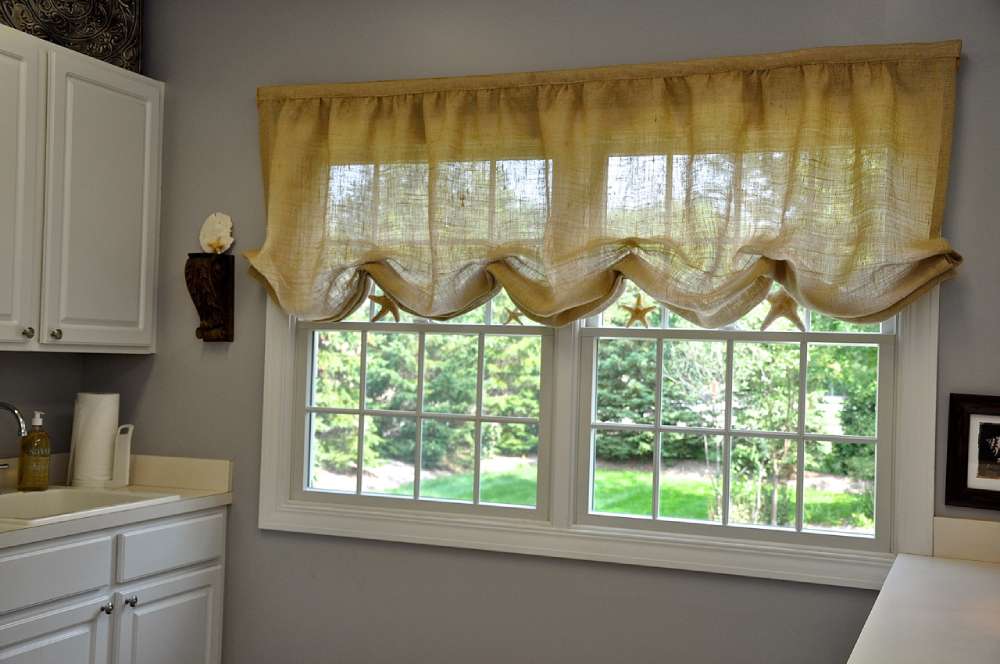
Window treatments in shabby chic rooms lean toward sheer linen panels or lace curtains. Heavy drapes look too formal. And if you are working with light-colored walls, white or off-white curtains keep the room feeling open without competing for attention.
Shabby Chic Decor by Room
The style translates differently depending on the room. Some spaces take to it naturally. Others require more restraint.
Living Room

Image source: Montebella Homes, Inc.
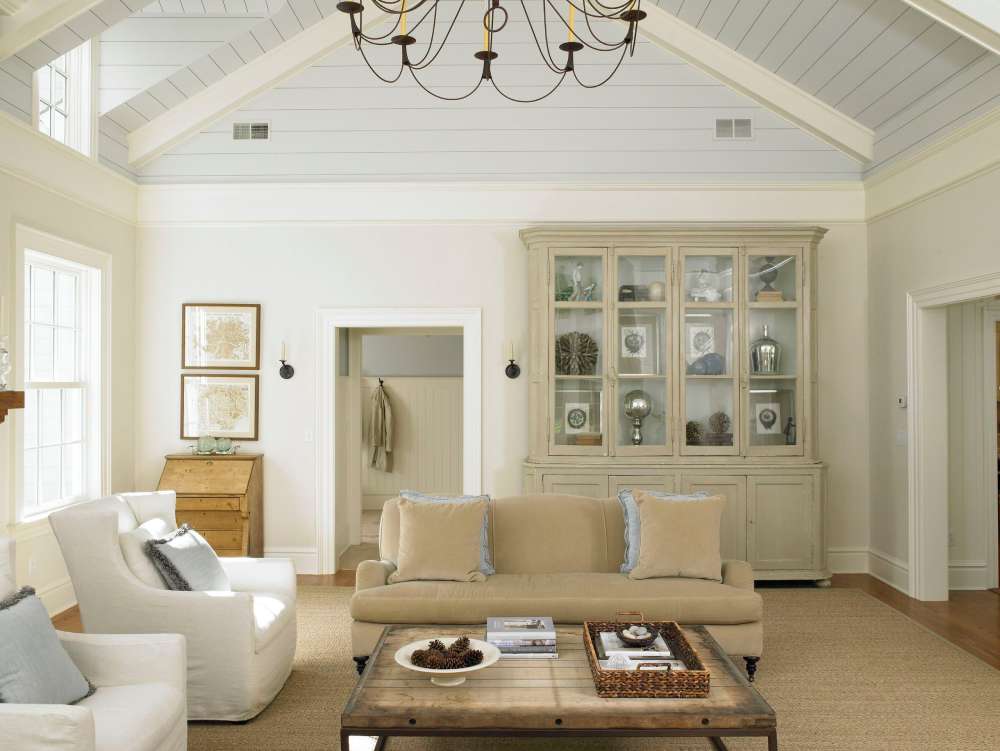
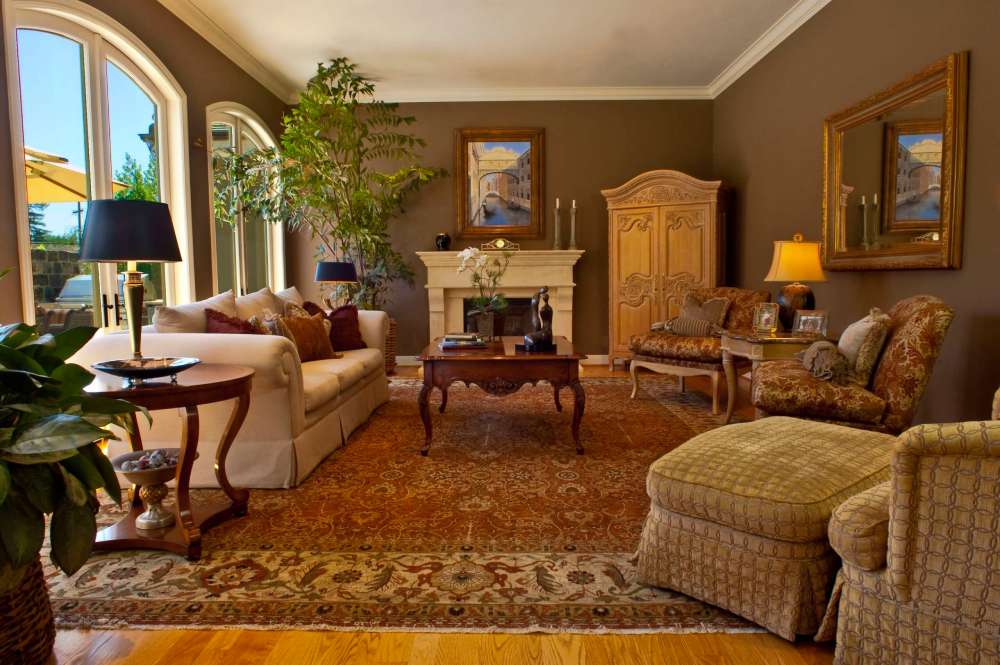
A slipcovered sofa is the centerpiece. White or natural linen, always. Around it, you build with a vintage coffee table, mismatched picture frames on a gallery wall, and a crystal chandelier overhead.
Balance matters here. A room packed with soft textures and no structure feels flimsy. Mix in a sturdy whitewashed bookcase or a solid wood console table to keep things grounded.
For a full breakdown of this specific room type, check our guide to shabby chic living room decor. Also consider how you arrange furniture, because a focal point like a fireplace or large mirror gives the room direction.
Bedroom
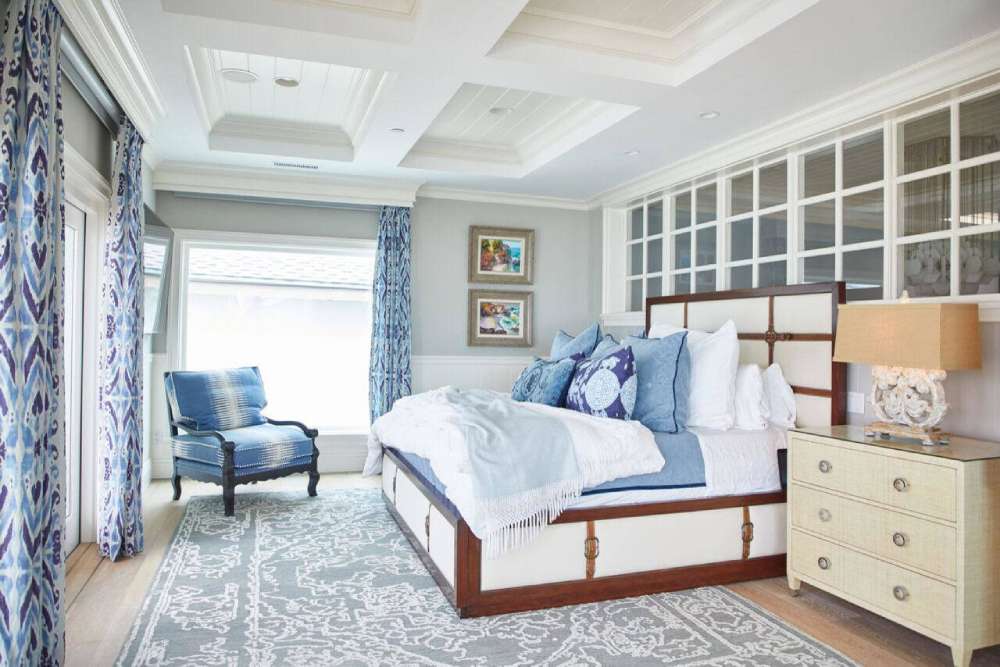
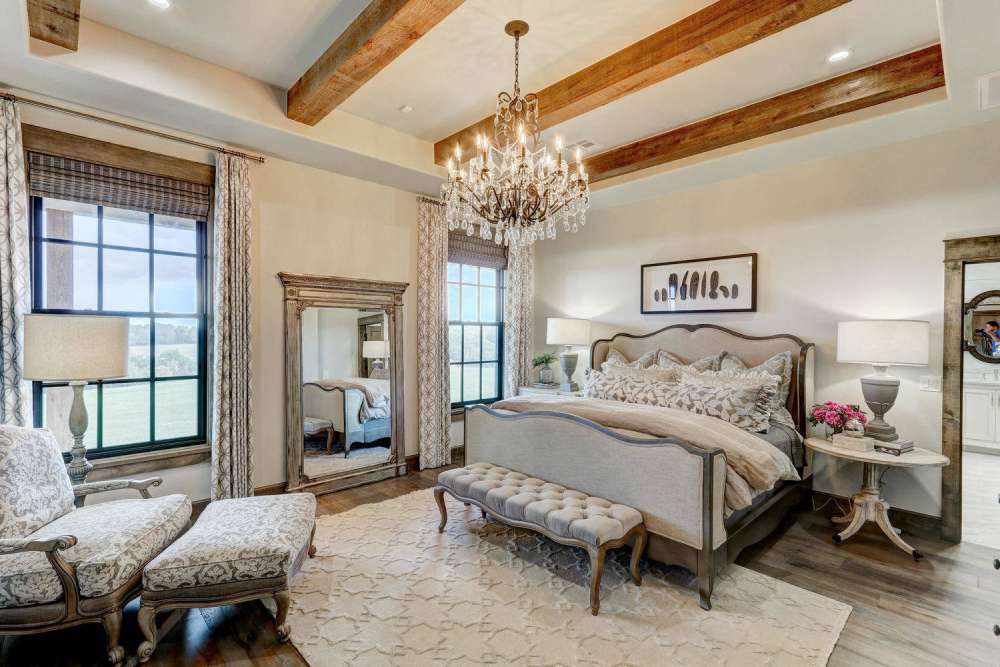
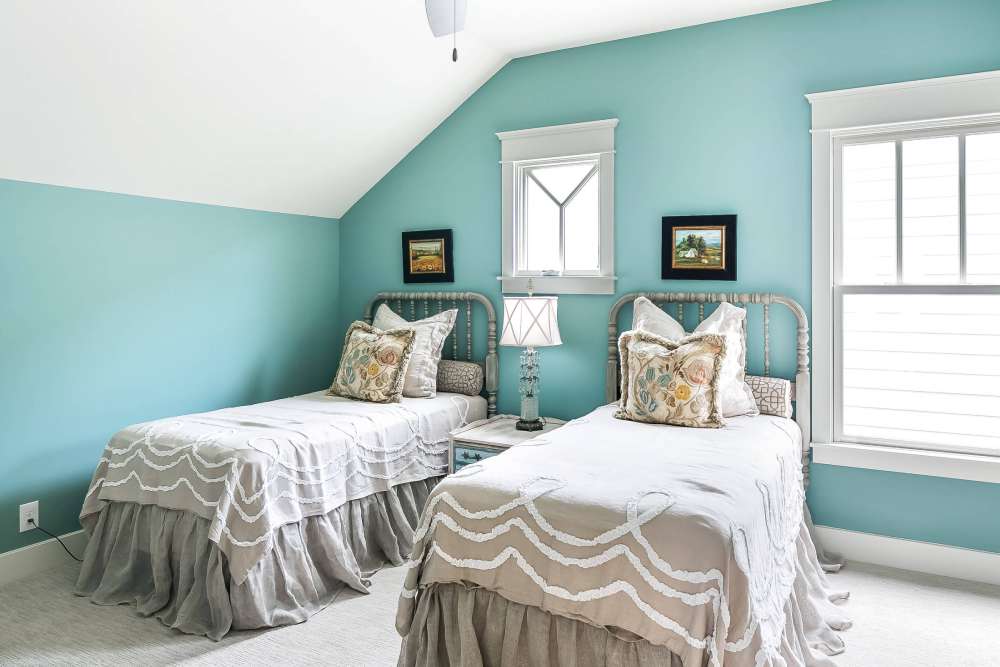
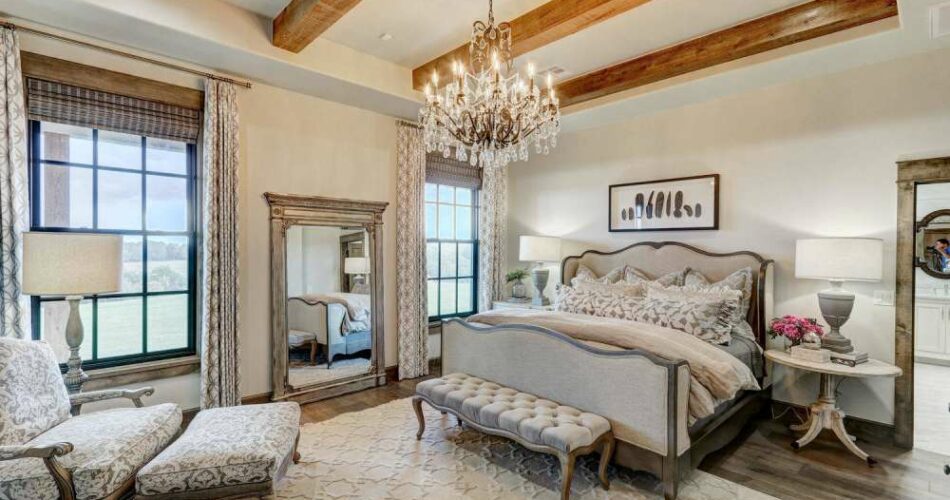
This is where shabby chic really shines. Whitewashed or iron bed frames, ruffled bedding, nightstands made from repurposed side tables. Mirrors with ornate, chipped frames on the wall.
Fresh flowers (peonies, hydrangeas, garden roses) are practically a requirement. They should be a near-permanent fixture, not an occasional accent.
If you are looking for throw pillow ideas for your bed, think embroidered covers in cream or blush, mixed with plain linen squares. Two to four pillows is the sweet spot. Eight is a hotel lobby, and that is not the vibe.
More romantic bedroom decor ideas pair well with this style, since the two aesthetics share a lot of DNA.
Kitchen

Image source: Wade Weissmann Architecture
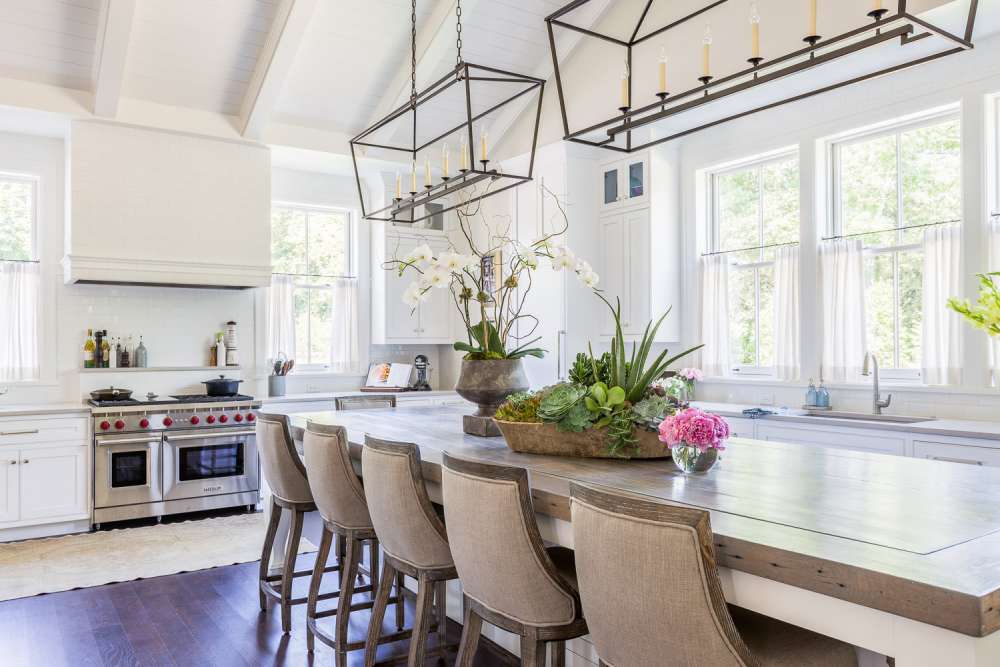
Kitchens are trickier. The shabby chic aesthetic works best as accents within a functional layout rather than a full-room commitment.
Open shelving with mismatched vintage dishes, painted cabinets in soft colors, and a farmhouse sink all read correctly. But the countertops, appliances, and backsplash still need to be practical. Nobody wants a purely decorative kitchen.
For more ideas on this approach, see our shabby chic kitchen decor guide. If your kitchen already has white cabinets, explore kitchen color schemes with white cabinets that lean pastel for an easy entry point.
Bathroom

Image source: Andrea Swan – Swan Architecture
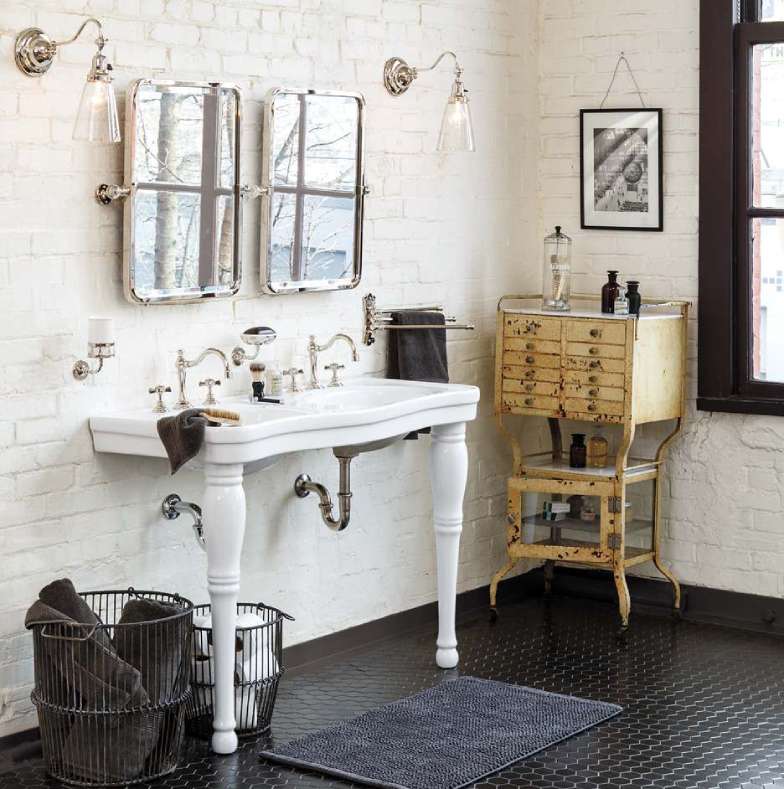
Pedestal sinks, vintage apothecary jars, claw-foot tubs, and lace shower curtains. The bathroom is one of the most photogenic rooms for this style.
But here is the practical limit: humidity. Chalk-painted furniture in a bathroom with poor ventilation will degrade faster than anywhere else in the house. Seal everything with lacquer rather than wax in wet rooms, and accept that some pieces will need touch-ups every year or two.
Using light well in a shabby chic bathroom means avoiding harsh overhead fixtures. A pendant light with a vintage glass shade or accent lighting from wall sconces creates the right mood without making the space feel clinical.
Shabby Chic vs. Modern Shabby Chic
Traditional shabby chic can read heavy. Too many florals, too many ruffles, and the room starts to feel suffocating. Took me a while to figure out where the line is, honestly.
Modern shabby chic pulls back. Fewer patterns, more negative space, cleaner lines, and a willingness to mix in contemporary pieces alongside the vintage ones.
Pinterest’s 2025 trend data shows searches for “vintage maximalism” up 260% year over year, with shabby chic identified as a rising trend among younger users. But the version gaining popularity is the edited one, not the overstuffed one.
What the Updated Version Looks Like
Fewer pieces, better quality. Instead of cramming a room with twelve small vintage accessories, modern shabby chic uses three or four significant ones and lets them breathe.
The color palette stays the same. The furniture stays curved and distressed. But the room has more open wall space, fewer layered textiles, and occasionally a piece of Scandinavian or minimalist furniture mixed in.
Rachel Ashwell herself has moved in this direction. Her upcoming book, Meadow Manor, focuses on a historic English country manor with a more restrained interpretation of the look she created three decades ago.
How to Blend Shabby Chic into Other Styles
You do not have to commit to a fully shabby chic room. One or two pieces can shift the tone of any space.
- A distressed vintage mirror on a modern gallery wall
- A chalk-painted side table next to a clean-lined sofa
- A lace table runner on a contemporary dining table
- An ornate frame around a simple botanical print
The key is using shabby chic pieces as accents, not as the dominant style. Transitional interior design is actually a great framework for this, since it is already about blending traditional and modern elements in one room.
The global home decor market was valued at $960 billion in 2024 and is growing at 9.4% annually, according to Grand View Research. Within that, the demand for personalized and vintage-inspired pieces is one of the fastest-growing segments, which speaks directly to how shabby chic fits into the broader market.
Where to Buy Shabby Chic Home Decor
The sourcing question splits into two camps: do you want authentic vintage, or do you want new pieces that look vintage? Both work. The answer depends on your budget and patience level.
Opendoor’s 2024 survey found that Americans spend an average of $1,599 per year on home decor specifically (separate from renovation). That budget goes further when you mix vintage finds with new reproduction pieces.
High-End Sources
Rachel Ashwell’s Shabby Chic Couture line remains the benchmark, though she paused direct manufacturing operations in late 2025. Her licensed products are still available through retail partners.
Anthropologie carries vintage-inspired furniture and soft furnishings that fit the aesthetic. Pottery Barn’s occasional cottage-style collections lean close to shabby chic without fully committing to the label.
For luxury-level pieces, Chairish is the go-to. Their curated marketplace saw 14% year-over-year growth in trade sales to designers, according to the US Chamber of Commerce.
Mid-Range Options
| Retailer | What They Carry | Price Range |
|---|---|---|
| Target (Simply Shabby Chic) | Bedding, bath, small accessories | $15 – $120 |
| Wayfair | Distressed furniture, bedding sets, decor | $30 – $800 |
| Etsy | Handmade and vintage reproductions, custom slipcovers | $20 – $500+ |
| Walmart | Basic shabby chic furniture and accessories | $15 – $400 |
The Simply Shabby Chic line at Target was originally a Rachel Ashwell collaboration. It remains one of the most accessible entry points into the style, especially for bedding and decorative pillows for your sofa.
Budget and Thrift Sources
The secondhand furniture market reached $40.2 billion globally in 2024 and is expected to double by 2034, per Market.US. A big portion of that inventory is exactly the kind of solid-wood, pre-owned furniture that shabby chic depends on.
- Facebook Marketplace for local pickups (no shipping costs)
- Habitat for Humanity ReStores for solid dressers and side tables
- Estate sales for ornate frames, crystal chandeliers, and vintage mirrors
What to buy new vs. vintage: Get mattresses, slipcovers, and linen textiles new. Get hardware, lighting fixtures, ornate frames, and wooden furniture vintage. The patina on old hardware cannot be faked well, and old-growth wood has a grain quality that reproduction pieces lack.
Common Mistakes in Shabby Chic Decorating
The gap between “shabby chic done well” and “shabby chic gone wrong” is smaller than people think. Most mistakes come from overdoing it.
Over-Distressing Everything
One or two heavily distressed pieces per room is enough. When every surface looks chipped and sanded, the room reads as damaged rather than intentionally aged.
The best shabby chic rooms mix distressed pieces with some that are simply old (but intact). A well-worn vintage side table next to a freshly painted dresser with just a little edge wear creates the right contrast.
Too Many Competing Florals
Pattern mixing has limits. Cabbage roses on the sofa, trailing vines on the curtains, and a different floral on the throw pillows? That is three patterns fighting each other.
Pick one dominant floral. Let the other textiles be solid or subtly textured. If you want a second pattern, make it toile or stripes, not another floral. Understanding rhythm and repetition helps you know when a room has enough going on.
Ignoring Scale and Going All-Pink
A room full of small, delicate pieces feels cluttered and fragile. You need at least one large-scale anchor. A generous armoire, a deep sofa, or a tall mirror.
And the pink problem. Blush and powder pink are core shabby chic colors, but a monotone pink room loses depth fast. Mix in cream, soft gray, sage green, or powder blue. If your walls are blush, your furniture should not also be blush. Consider how colors that pair with light pink can add range without breaking the palette.
Confusing “Shabby” with “Broken”
A chipped paint finish on a solid dresser is shabby chic. A wobbly table with a cracked leg is just broken furniture.
The style is about graceful aging, not neglect. Every piece should still be fully functional, structurally sound, and clean. If it looks like it belongs at a curb, it does not belong in the room.
How to Start a Shabby Chic Room on a Budget

Image source: Tracy Catanzarite
You do not need a full redesign. A few targeted changes can shift the entire tone of a room for under $200.
The 2025 Houzz & Home Study found that median renovation spending dipped to $20,000 in 2024, but about 70% of homeowners in 2024 said projects under $5,000 felt manageable, per the Home Improvement Research Institute. Shabby chic fits perfectly into that budget tier.
Start with Paint
One chalk-painted dresser or bookcase shifts the feeling of a whole room. Annie Sloan Chalk Paint or Rust-Oleum Chalked Paint both work. No sanding, no priming.
A quart of chalk paint runs between $17 and $48 depending on the brand. That is enough for a dresser and a side table, with paint left over. The furniture paint market hit $10.2 billion in 2024 (The Business Research Company), and chalk paint is one of its fastest-growing categories for a reason: the barrier to entry is almost zero.
Add a Slipcover
A white or natural linen slipcover over an existing sofa is the single fastest way to get the look. Loose, relaxed fit. Not tailored.
Budget slipcovers from Target or IKEA range from $50 to $150. Custom linen versions from Etsy run $200 to $500. Either way, it is dramatically cheaper than buying a new sofa, and the transformation is immediate.
Swap the Small Details
Hardware swap: Replace modern drawer pulls with glass or ceramic knobs. A set of six runs about $15 to $30 online. This is a five-minute change that shifts the feel of a dresser completely.
Textile layer: Add one or two linen throw pillows, a crochet blanket, or a lace table runner. These are the details that make a room feel intentional rather than generic.
One vintage statement piece: A mirror with an ornate frame, a crystal chandelier from an estate sale, or a vintage accent table. One real vintage piece does more than ten new accessories styled to look old.
The Budget Breakdown
| Project | Estimated Cost | Impact Level |
|---|---|---|
| Chalk paint one dresser | $20 – $48 | High |
| Slipcover existing sofa | $50 – $200 | Very high |
| Replace drawer hardware (6 knobs) | $15 – $30 | Medium |
| Linen throw pillows (2-3) | $30 – $75 | Medium |
| Vintage mirror or chandelier | $25 – $100 (thrift/estate) | High |
Total estimated cost for a basic shabby chic room refresh: $140 to $453. That is well within the average American’s annual decor spending of $1,599 (Opendoor 2024).
The sustainable home decor market was valued at $4.5 billion in 2024 and is growing at 7.9% annually, per InsightAce Analytic. Repurposing and upcycling furniture, which is the backbone of shabby chic decorating, is a direct part of that trend. You are not just decorating. You are keeping solid furniture out of landfills, and based on data from the United Nations Environment Programme, less than 15% of the furniture and decor sector’s 100 million tons of annual waste gets recycled.
So yes. Shabby chic on a budget is not just possible. It is one of the more responsible ways to decorate a room.
FAQ on Shabby Chic Home Decor
What is shabby chic home decor?
A decorating style built on distressed furniture, soft pastel colors, vintage textiles, and intentional imperfection. Rachel Ashwell popularized it in 1989. The look favors curves, whitewashed wood, floral fabrics, and linen slipcovers over anything sleek or modern.
What colors are used in shabby chic?
Chalk white, blush pink, powder blue, sage green, lavender, and cream. Accents come from tarnished silver and aged gold. Everything should look faded and sun-bleached. Saturated or high-contrast colors break the style.
How is shabby chic different from farmhouse style?
Farmhouse leans utilitarian with shiplap, barn doors, and neutral tones. Shabby chic is more feminine, with ornate frames, crystal chandeliers, floral patterns, and curvy furniture silhouettes. Both use distressed wood, but the overall mood is different.
What furniture works best for shabby chic?
Distressed dressers, claw-foot tables, slipcovered sofas, painted armoires, and vintage vanity tables. Solid wood over veneer. Curvy, ornamental legs over flat, angular frames. Flea markets, estate sales, and Chairish are good sourcing options.
Is shabby chic outdated?
Not at all. Pinterest’s 2025 trend report flagged shabby chic as a rising search among younger users. The modern version uses fewer pieces, more negative space, and less pattern. It has evolved, not disappeared.
Can I do shabby chic on a budget?
Yes. One coat of chalk paint on a thrifted dresser, a linen slipcover on your existing sofa, and a few glass knobs can transform a room for under $200. Vintage finds at estate sales keep costs low.
What fabrics are used in shabby chic?
Linen, cotton, muslin, and lace. Synthetic materials like polyester undermine the look. Slipcovers should fit loosely, not tailored. Floral patterns (cabbage roses, toile) and solid neutrals work best when layered together.
What paint is best for shabby chic furniture?
Annie Sloan Chalk Paint is the classic choice, available through over 1,200 stockists worldwide. Rust-Oleum Chalked Paint costs about half the price with similar results. Both require no sanding or priming before application.
Does shabby chic work in a kitchen?
As accents, yes. Open shelving with mismatched vintage dishes, painted cabinets in soft colors, and ceramic knob hardware all read correctly. But countertops and appliances still need to be practical. Full commitment rarely works in kitchens.
What is the difference between shabby chic and cottage style?
Cottage style is broader and includes rustic, coastal, and country elements. Shabby chic is more specific: distressed paint, pastel florals, ornate details, and a deliberately aged look. Think of shabby chic as one branch of the cottage family.
Conclusion
Shabby chic home decor works because it rewards patience over spending. A chalk-painted armoire from a thrift store has more character than anything you will find in a big-box showroom.
The palette stays soft. The furniture stays curved and weathered. The fabrics stay natural, from muslin to lace to washed cotton.
Whether you commit to a full French country bedroom or just add a few repurposed pieces to a modern space, the approach is the same. Start with one vintage find, one coat of Annie Sloan, and build from there.
The secondhand furniture market is growing fast. Chalk paint costs under $50 a quart. And estate sales are not going anywhere.
You do not need a full renovation. You need a good eye, a little sandpaper, and the willingness to let things look perfectly imperfect.
- What Color Rug Goes with Dark Wood Floors - June 13, 2026
- Exterior Paint Colors for Brick Homes - June 9, 2026
- What Color Bedding Goes with Blue Walls - June 4, 2026