Summarize this article with:
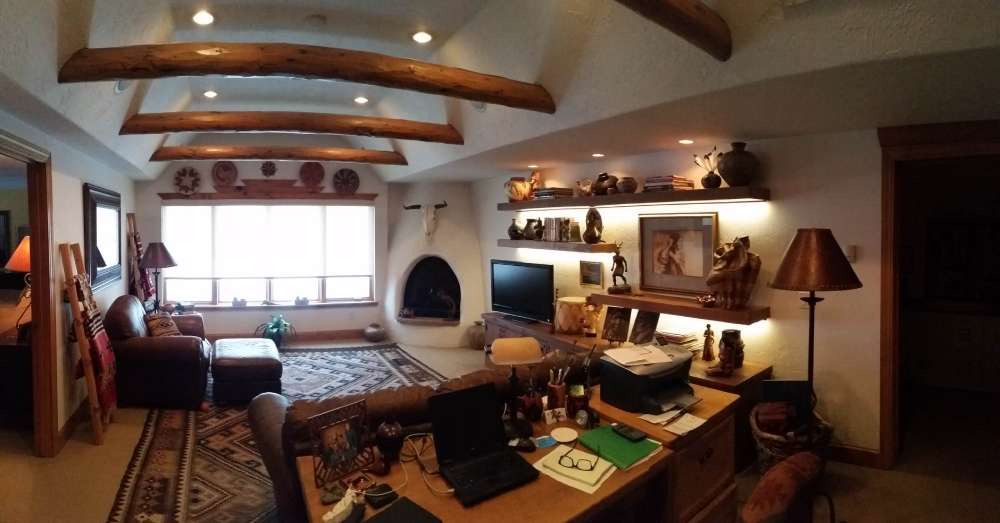
Southwestern home decor is one of the few American design styles that did not borrow from Europe. It grew out of the desert, shaped by Navajo textile traditions, Spanish Colonial architecture, and Mexican folk art over several centuries.
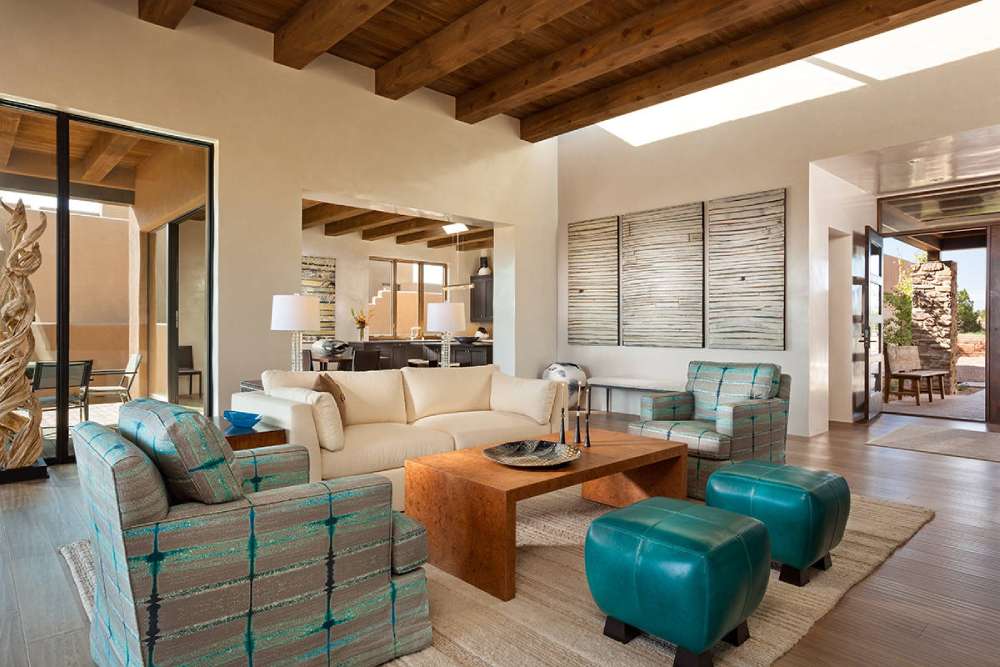
The style has cleaned up a lot since the teal-and-terracotta days of the 1990s. Today’s version blends warm earth tones, handwoven textiles, raw natural materials, and artisan pottery into spaces that feel grounded without feeling dated.
This guide covers the core materials, color palettes, furniture, textiles, and room-by-room approaches that make southwestern interiors work. Plus where to buy authentic pieces and which mistakes to avoid so your space looks collected, not costumed.
What Is Southwestern Home Decor?

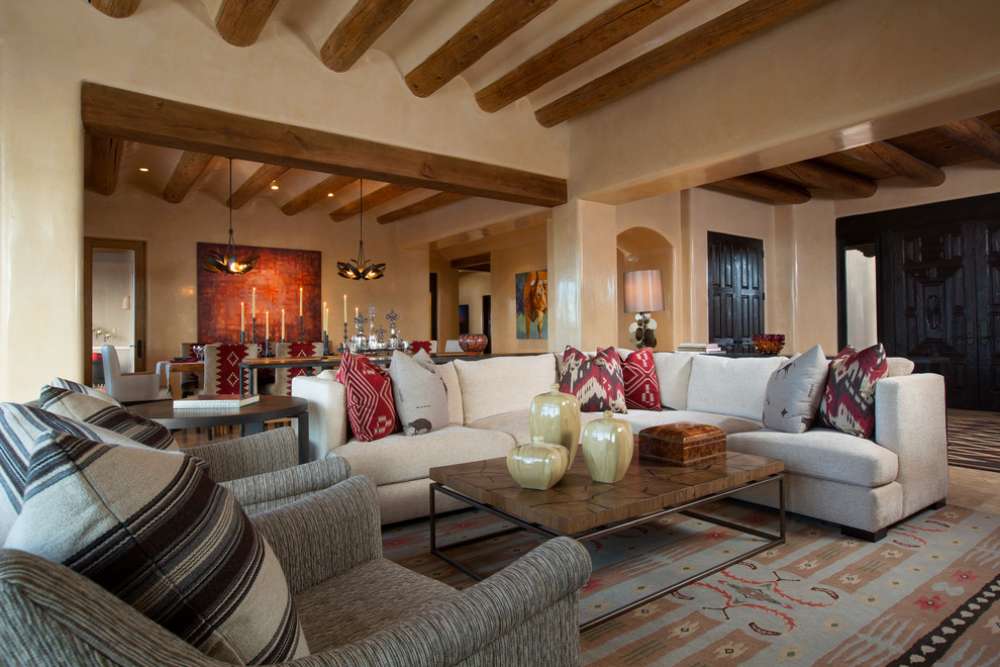
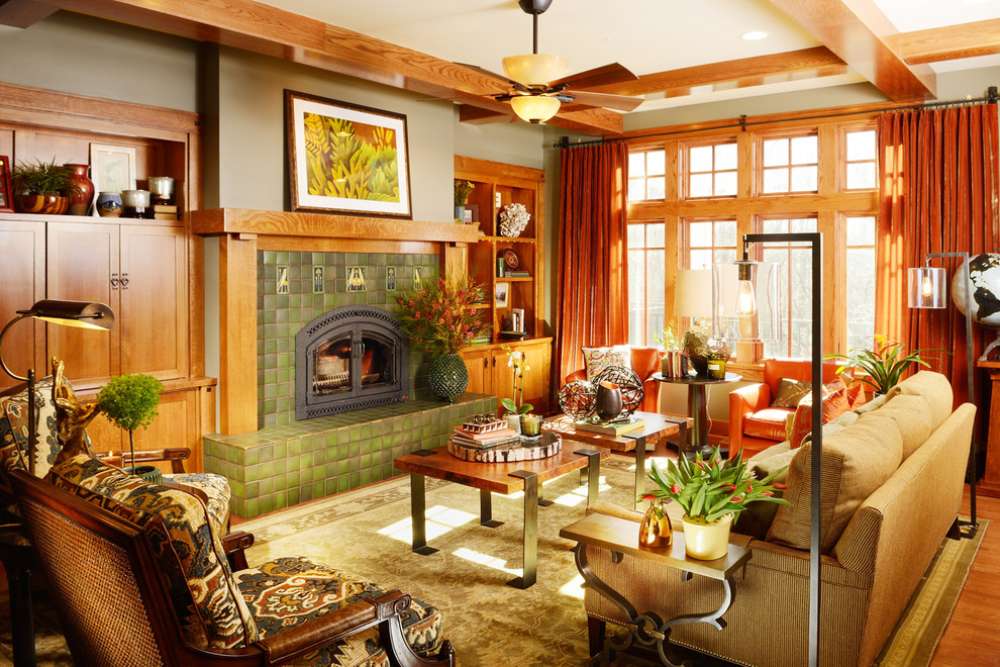
Image source: Annie O’Carroll Interior Design
Southwestern home decor is a design style built on the visual traditions of the American Southwest, pulling from the cultures of Arizona, New Mexico, parts of Texas, and southern Colorado.
It is not the same thing as “western” decor. There are no cowboy boots on the mantel, no saloon doors. And it is not boho, either, even though people mix them up constantly. Southwestern is more grounded, more structured. The patterns are geometric instead of free-flowing. The materials are heavier.
The roots go back centuries. Navajo textile craftsmanship, Spanish Colonial building techniques, and Mexican folk art traditions all shaped what we now call the southwestern look. Adobe construction, wrought iron hardware, and hand-painted Talavera tile all came from those intersections of culture.
What makes it recognizable at a glance is the color palette. Terracotta, turquoise, warm sand, burnt orange, deep red. These are colors pulled directly from desert landscapes, from canyon walls and sunset skies over the Sonoran Desert.
Interior design history shows that southwestern style gained mainstream popularity after World War II, when travelers brought souvenirs from Arizona and New Mexico back to their homes across the country. It took a hit in the 1980s (pastel sunsets and turquoise carpets, if you remember that era), but the modern version has cleaned up nicely.
The range of interior design styles available today is huge, and southwestern sits in a unique spot. It is one of the few styles that is genuinely American in origin. Most homes in the U.S. borrow from English Tudor, Greek Revival, or French Country. Southwestern is rooted here.
According to IMARC Group, the U.S. home decor market reached $185 billion in 2024, growing at 3.5% annually. A chunk of that growth comes from people looking for styles that feel authentic and personal rather than mass-produced.
The premium decor segment is growing even faster. Mordor Intelligence data shows premium and luxury home decor is projected to grow at a 9.24% CAGR, driven largely by demand for craftsmanship and transparent sourcing. That plays directly into southwestern’s strengths, where handmade pottery, hand-woven textiles, and artisan ironwork are the backbone of the style.
Core Materials in Southwestern Design
The whole style falls apart if you get the materials wrong. Southwestern decor leans hard on raw, natural surfaces. It is a tactile style. If everything is smooth and polished, it does not read as southwestern.
Wood, Clay, and Stone

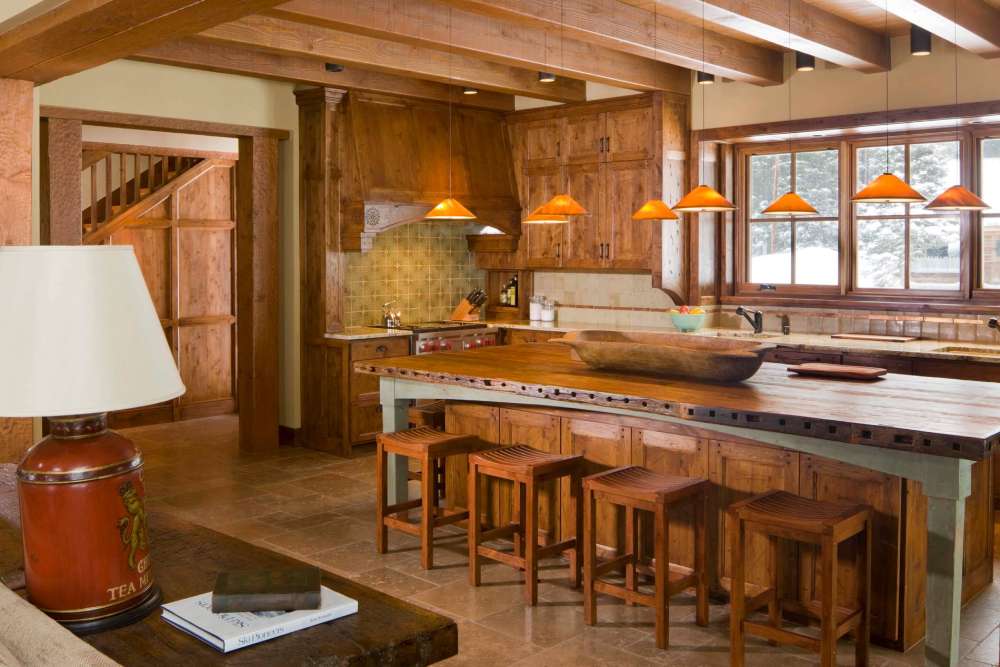
Image source: Shaw Architecture LLC.
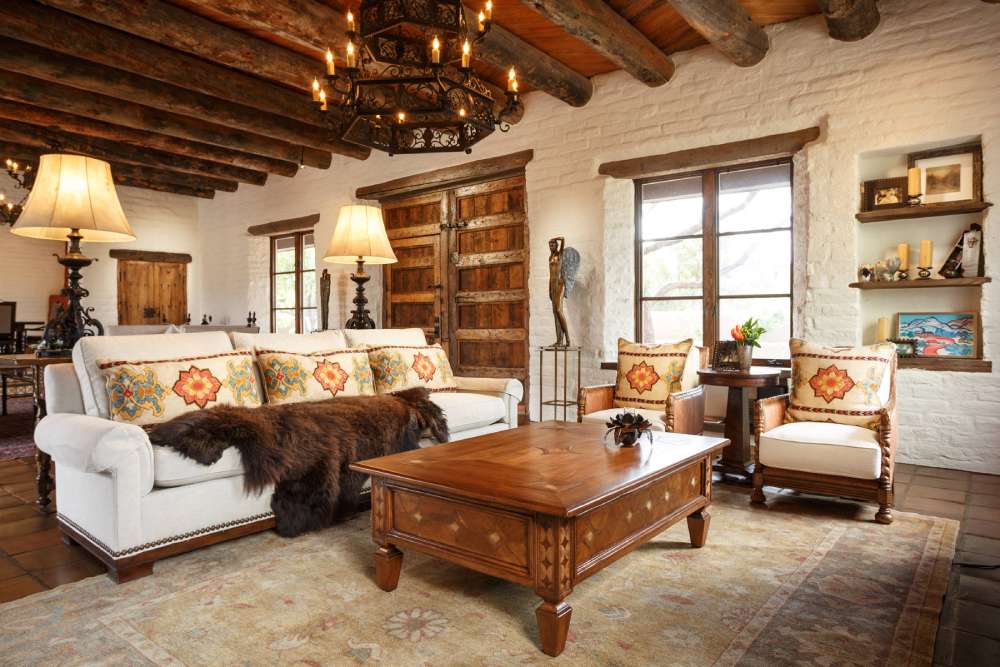
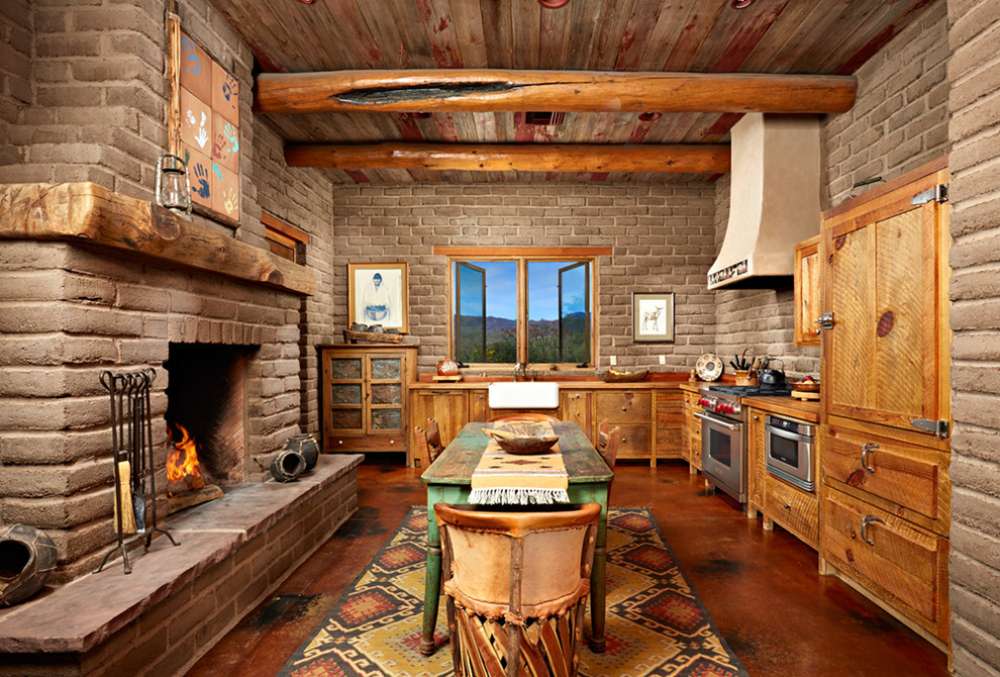
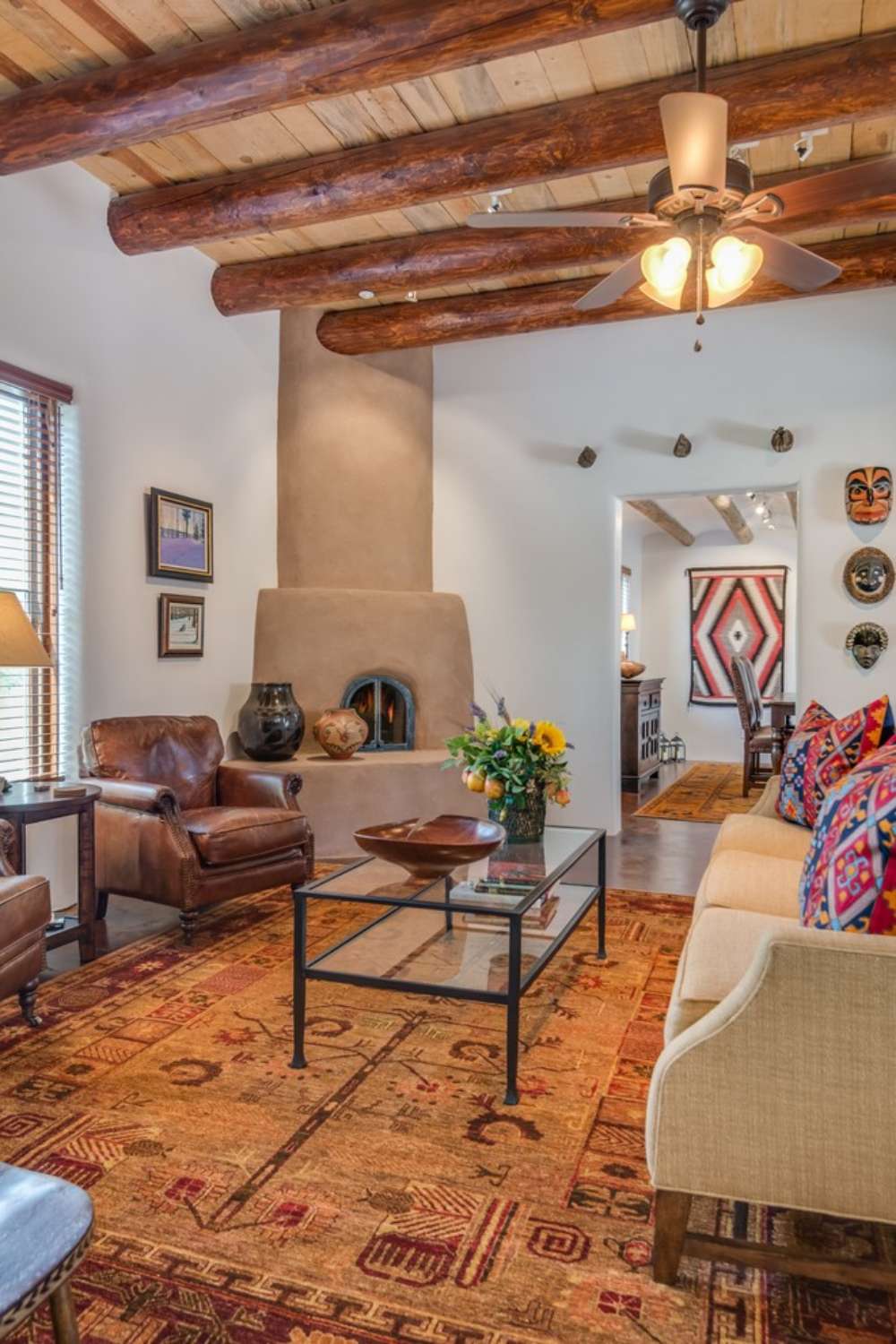
Mesquite and pine are the go-to woods. Pine vigas (exposed ceiling beams) are a signature of adobe-style homes in Santa Fe and Tucson. Mesquite gets used in furniture, especially dining tables and accent pieces.
Clay and terracotta show up everywhere. Floor tiles, decorative pots, wall finishes. Saltillo tile, a specific type of handmade Mexican clay tile, is almost a requirement for kitchens and entryways in southwestern homes.
Stone surfaces, especially sandstone and flagstone, bring the desert landscape indoors. They work well for fireplace surrounds, accent walls, and flooring in high-traffic areas.
Leather and Metal

Image source: Chandler Prewitt Interior Design
Leather is the material most people associate with western-influenced interiors, and it belongs in southwestern spaces too. Saddle-toned, distressed, or tooled leather on seating adds warmth without feeling costume-like.
Wrought iron is the other signature material. Light fixtures, curtain rods, cabinet hardware, towel bars. It connects directly to Spanish Colonial building traditions, when settlers brought ironwork techniques from Spain to the Southwest.
One thing that trips people up is the use of synthetic substitutes. Faux leather and printed-on patterns might look close in a photo, but the whole point of southwestern decor is texture. You can feel the difference between real hand-hammered iron and a stamped factory piece from across the room.
Natural Textiles
Wool, cotton, and jute are the textile foundation. Wool is especially significant because of its connection to Navajo weaving traditions that stretch back to the 1500s, when Churro sheep first arrived with Spanish colonists.
UNESCO’s 2023 Cultural Heritage Index found that 72% of premium decor purchases involved products with documented craftsmanship origins, like handwoven textiles and hand-carved wood. That stat matters here because southwestern decor, done right, is built almost entirely on those kinds of materials.
The global handicrafts market hit $787.85 billion in 2024 according to Expert Market Research, growing at nearly 12% annually. Handwoven rugs and artisan pottery are not niche products anymore. They are part of a massive and expanding market.
Southwestern Color Palettes That Actually Work
Color is where most people either nail the style or make it look like a themed restaurant. The trick is restraint. You need warmth without overwhelming every surface with saturated terracotta.
The Classic Palette

Image source: Nathan Taylor for Obelisk Home
Terracotta, turquoise, cream, and black. This is the combination most people picture when they think southwestern. And it works, but you have to balance it.
Use cream or warm white on the walls. Let terracotta show up in tiles, pottery, or a single accent wall. Turquoise comes in through accessories, not paint. Black anchors everything through wrought iron fixtures and hardware.
Understanding how color functions in interior design is the difference between a room that feels curated and one that looks like a souvenir shop.
The Muted Desert Palette
| Color | Where to Use It | Effect |
|---|---|---|
| Sage green | Walls, textiles | Cool, calming base |
| Dusty rose | Throw pillows, art | Soft warmth |
| Warm gray | Larger furniture | Grounding neutral |
| Sand | Floors, rugs | Desert continuity |
This is the modern take on southwestern. It works well in homes outside the Southwest because it does not scream “desert theme.” The colors that pair with sage green overlap heavily with what you would use in a muted southwestern palette.
The Bold Approach
Deep red, cobalt blue, gold, chocolate brown. This one takes confidence.
It pulls from the more intense end of the Navajo and Zapotec weaving traditions. Rooms using this palette need a lot of white or cream to keep them from feeling dark. The bold colors should live in textiles and art, not on every wall.
If you lean into colors that complement burnt orange, you will find a lot of overlap with this palette. Burnt orange, deep red, and gold all live in the same warm family.
Common Color Mistakes
Going too saturated everywhere. If your walls are terracotta, your sofa is turquoise, and your rug is bright red, the room has no place for the eye to rest. Pick one or two bold elements and let the rest stay neutral.
Mixing in cool grays. Cool-toned grays fight with the warmth that defines southwestern decor. Stick with warm neutrals. Colors that pair with beige will keep you in the right territory.
Ignoring the 1990s trap. There is a specific teal-and-terracotta combo from that decade that still shows up in budget southwestern decor. It looks dated instantly. If your color scheme reminds you of a Marriott lobby in Scottsdale circa 1994, start over.
Textiles and Patterns That Define the Style
Textiles carry more weight in southwestern decor than in almost any other style. A room can be completely neutral in color and still read as southwestern if the right rug is on the floor.
Geometric Patterns and Their Origins

Image source: Signature Carpet One Floor & Home
The geometric patterns associated with southwestern design come primarily from Native American weaving traditions. Navajo-inspired stepped diamonds, zigzag lines, and banded stripes are the most recognizable. Zapotec weavings from Oaxaca, Mexico bring similar geometry with different proportions and colorways.
Chimayo textiles from northern New Mexico have their own distinct look, with tighter patterns and bolder contrast. Serape stripes, originally from Mexican blanket traditions, add horizontal bands of color.
The cultural sensitivity conversation matters here. There is a real difference between buying an authentic Navajo weaving directly from an artisan and buying a mass-produced knockoff that copies sacred patterns. NPR reported in 2024 on Navajo weavers who continue centuries-old traditions using Churro sheep wool, with pieces regularly selling for thousands at auction. Supporting those artisans directly is both the ethical and the higher-quality choice.
Where to Use Bold Patterns
Area rugs: The single most important textile decision in a southwestern room. A handwoven rug anchors everything.
Throw pillows: The easiest way to introduce pattern without commitment. Throw pillow combinations that mix geometric southwestern prints with solid textures work better than matching sets.
Wall hangings: Woven wall pieces add dimension and warmth that framed art cannot match.
The key is not putting bold patterns on every surface. Pick one statement textile per room, then layer in simpler textures around it.
Rugs as the Foundation Piece

Image source: Samuel Design Group
In most southwestern rooms, the rug sets the direction for everything else. You pick the rug first, then build the room’s colors and textures around it.
Kilim, dhurrie, and handwoven wool options all work. For a living room, a rug large enough to sit under the front legs of your sofa makes the biggest impact. Knowing how to place a rug under a sectional sofa correctly is surprisingly important here because southwestern rugs have directional patterns that look wrong if the rug is too small or off-center.
For bedrooms, a wool rug placed under the bed creates warmth both visually and literally. The global home textiles and floor coverings segment is growing at a 9.4% CAGR through 2033, according to Market Data Forecast. Rugs and woven textiles are a major part of that.
Pendleton Woolen Mills remains one of the most accessible brands for southwestern textile patterns. But smaller artisan sources from Santa Fe, Albuquerque, and Tucson produce higher-quality, more authentic options.
Furniture Styles and Silhouettes

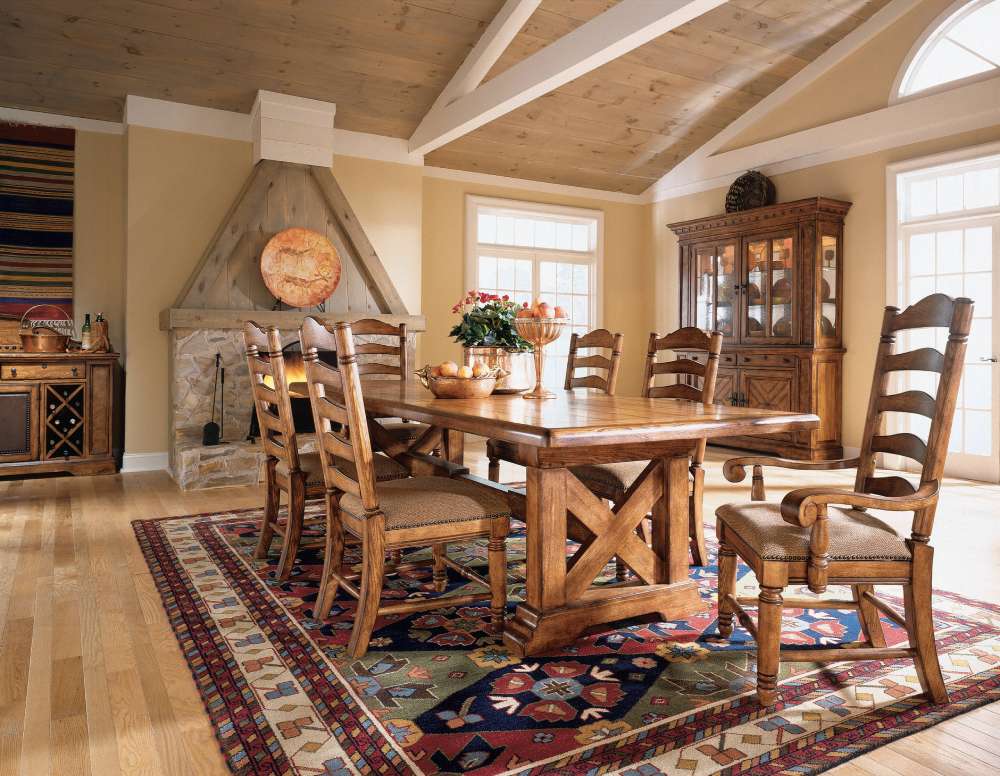
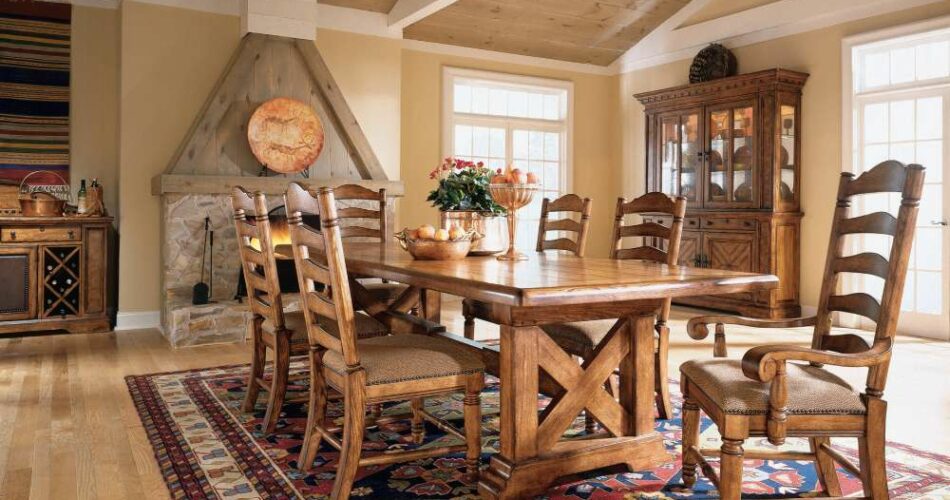
Image source: Maraya Interior Design
Southwestern furniture is heavy. That is the first thing people notice. These are not delicate mid-century pieces or sleek Scandinavian forms. The furniture in a southwestern home looks like it was built to last generations, because, in many cases, it was.
What Southwestern Furniture Looks Like

Image source: Susan Friedman Landscape Architecture
Solid wood with visible grain. Simple, sturdy construction. Hand-carved details oSouthwestern Kitchenn some pieces, but not overdone. The wood tends to be darker, pine or mesquite, sometimes with a slightly rough finish that shows the material’s character.
Leather seating is the other signature element. Distressed leather in saddle tones, sometimes tooled with geometric or floral patterns. A good leather sofa in a warm brown anchors a southwestern living room the way a sectional anchors a contemporary living room.
Talavera-tiled tabletops, Mexican carved wood chairs, and equipale chairs (made from pigskin and cedar strips) are specific to this style. You will not find these in other aesthetics.
Mixing Old and New
Most people are not furnishing an entire adobe house from scratch. The realistic approach is mixing southwestern pieces with modern furniture.
| Southwestern Piece | Modern Pairing | Why It Works |
|---|---|---|
| Mesquite dining table | Simple upholstered chairs | Balances weight with lightness |
| Leather club chair | Clean-lined sofa | Adds character without theme |
| Carved wood console | Modern lamp, minimal art | Lets the craft stand out |
| Equipale accent chair | Contemporary coffee table | Creates a conversation piece |
The goal is contrast, not costume. One or two strong southwestern furniture pieces in a room with clean, modern design elements creates interest without making the space feel like a set piece.
Scale and proportion matter a lot here. Southwestern furniture is often bulkier than people expect. A massive mesquite table in a small dining room will swallow the space. Measure twice.
Where to Find It
Taos Furniture in New Mexico has been producing handmade southwestern pieces for decades. For Mexican rustic imports, shops along the border towns of Nogales and El Paso carry solid inventory. Etsy has become a decent source for smaller artisan makers, especially for accent pieces and hand-carved items.
Vintage hunting is another route. Estate sales in Scottsdale, Sedona, and the greater Phoenix area regularly turn up quality southwestern furniture at a fraction of retail. Took me forever to track down a decent vintage equipale set, but they show up if you are patient.
Opendoor reported in 2024 that U.S. consumers spend an average of $1,598 on home decor annually. For a single statement furniture piece in the southwestern style, you should expect to spend a good portion of that, especially for handmade work.
Wall Decor and Art
What goes on the walls determines whether a southwestern space feels genuine or generic. This is where a lot of people default to safe choices and end up with something flat.
Desert Art and Prints
Georgia O’Keeffe prints are the starting point for many people, and they work. But at this point, they are almost a cliche in southwestern homes. The better move is to look at contemporary desert landscape photographers and painters who bring a fresher perspective.
Desert photography from the Sonoran Desert, Sedona’s red rock formations, or the mesas around Albuquerque adds a sense of place without relying on a hundred-year-old painting. The U.S. wall art market is projected to reach $80.9 billion by 2030, according to Market Research Future, and a growing portion of that is original and limited-edition work from regional artists.
A focal point on the main wall of a living room or bedroom should be a single strong piece, not a cluster of smaller items competing for attention.
Woven and Dimensional Wall Pieces

Image source: Rivers + Steel City Homes
Woven wall hangings are where southwestern wall decor really separates itself from other styles. A handwoven textile on the wall adds texture and warmth that a flat print cannot match.
Ceramic and clay wall pieces are another option. Sun faces, crosses, and other traditional forms show up across New Mexico and Arizona homes. Nicho shadow boxes from the Mexican folk art tradition create small, recessed displays that draw the eye.
Skulls and antlers. Yes, they are part of the tradition. But there is a line between a single, well-placed piece and a wall that looks like a taxidermy showroom. One skull, mounted simply, on a white wall. That reads as art. Five skulls with crossed antlers and dream catchers reads as a theme park.
Gallery Walls with a Southwestern Feel
Gallery walls can work in southwestern spaces if you mix mediums. Combine a framed desert photograph, a small woven textile, and a dimensional clay piece on the same wall.
The rhythm of a southwestern gallery wall should feel relaxed, not rigid. Irregular spacing, warm-toned wood frames, and a mix of sizes keep it from looking like a grid. Pair woven pieces with photography and sculptural objects for depth.
If your space has a stacked stone fireplace, the wall above it is a natural spot for a single oversized piece rather than a gallery arrangement. The stone already provides plenty of visual texture.
Pottery, Ceramics, and Decorative Objects
The smaller objects in a room do most of the heavy lifting in southwestern decor. Pottery, ceramics, iron lanterns, and cactus arrangements are what separate a room that “has some warm colors” from one that actually feels southwestern.
Traditional Pottery Styles
Acoma Pueblo pottery is among the oldest continuously produced pottery traditions in North America. The thin-walled vessels with fine-line geometric patterns are made entirely by hand, without a potter’s wheel.
Santa Clara pottery is known for deeply carved blackware, with designs pressed into the clay before firing. Mata Ortiz pottery, from Chihuahua, Mexico, revived pre-Columbian techniques in the 1970s and has become a collector’s market of its own.
These are not decorative afterthoughts. A single piece of Acoma or Mata Ortiz pottery on a shelf carries more visual weight than a dozen mass-produced accessories combined.
Talavera Ceramics

Image source: FHP Builders LLC
Talavera pottery originated in Puebla, Mexico in the 16th century, when Spanish artisans merged European tin-glazed earthenware techniques with indigenous Mexican clay traditions. The process has not changed since the 1500s. Each piece takes roughly a month to produce, with multiple firings at high temperatures.
Only a handful of certified workshops in Puebla and Tlaxcala can legally use the “Talavera” designation, which is protected by a Mexican designation of origin (similar to how Champagne is protected in France).
Talavera works both as decoration and functional ware. Tiles for a kitchen backsplash, hand-painted plates on open shelving, or a single large planter on a patio. The bold cobalt blue, yellow, and green patterns add instant color that pairs well with turquoise accents elsewhere in the room.
Decorative Accessories
Iron lanterns and punched tin (hojalata): These create warm, patterned light when used with candles or low-wattage bulbs. They connect directly to the Spanish Colonial metalworking tradition.
Cactus and succulent arrangements: Living decor that ties the interior to the desert landscape outside. A grouping of potted succulents in terracotta or Talavera pots on a windowsill is one of the simplest ways to bring the southwestern feel into any room.
The global decorative pillow market alone hit $3.8 billion in 2024, according to Business Research. But southwestern accessorizing is less about pillows and more about dimensional objects. Pottery, ironwork, and living plants give a room depth that flat textiles cannot.
Cultural Sensitivity in Decorative Choices
Kachina dolls and dreamcatchers are part of specific Native American spiritual traditions. Using them purely as decoration is a conversation that comes up repeatedly in design circles, and it should.
The better approach is buying directly from Native artisans when incorporating these items, and understanding what you are putting in your home. A mass-produced “dreamcatcher” from a discount retailer is not the same object, culturally or materially, as one made by a Navajo or Ojibwe artist.
Southwestern Decor Room by Room

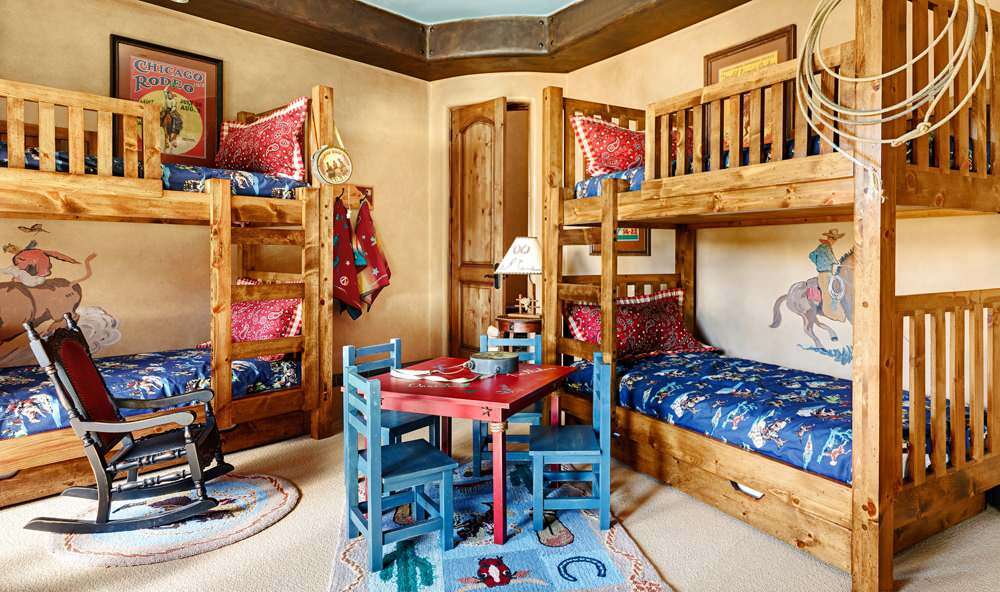
Image source: Southwestern Kids
The style translates differently depending on the room. A southwestern kitchen looks nothing like a southwestern bedroom, and the approach for each one has its own set of rules.
Living Room
This is where the style shows up strongest. The living room gets the statement rug, the leather seating, and the biggest piece of wall art.
| Element | What to Choose | What to Skip | | — | — | — | | Seating | Distressed leather sofa, wood-frame chairs | Matching furniture sets | | Rug | Handwoven wool, geometric pattern | Machine-made copies | | Lighting | Wrought iron fixtures, ambient lighting | Chrome or brushed nickel | | Accessories | Pottery, woven baskets, one skull | Themed collections |
For living room design, the key is layering. Start with the rug, add the biggest furniture, then bring in details last. If you are working with a brown leather couch, throw pillows for dark brown couches in warm earth tones and geometric patterns tie everything together.
Kitchen
Talavera tile backsplash is the single most impactful choice you can make in a southwestern kitchen. If you are curious about the installation process, understanding how to apply grout to backsplash correctly is worth learning before you start.
Open shelving with displayed pottery replaces the closed-cabinet look that dominates most modern kitchen decor. Terracotta floor tile (Saltillo, specifically) adds warmth underfoot.
For color direction, kitchen color schemes that work with wood cabinets overlap well with southwestern palettes. Warm wood tones, cream walls, and colorful tile accents create the right balance.
Bedroom
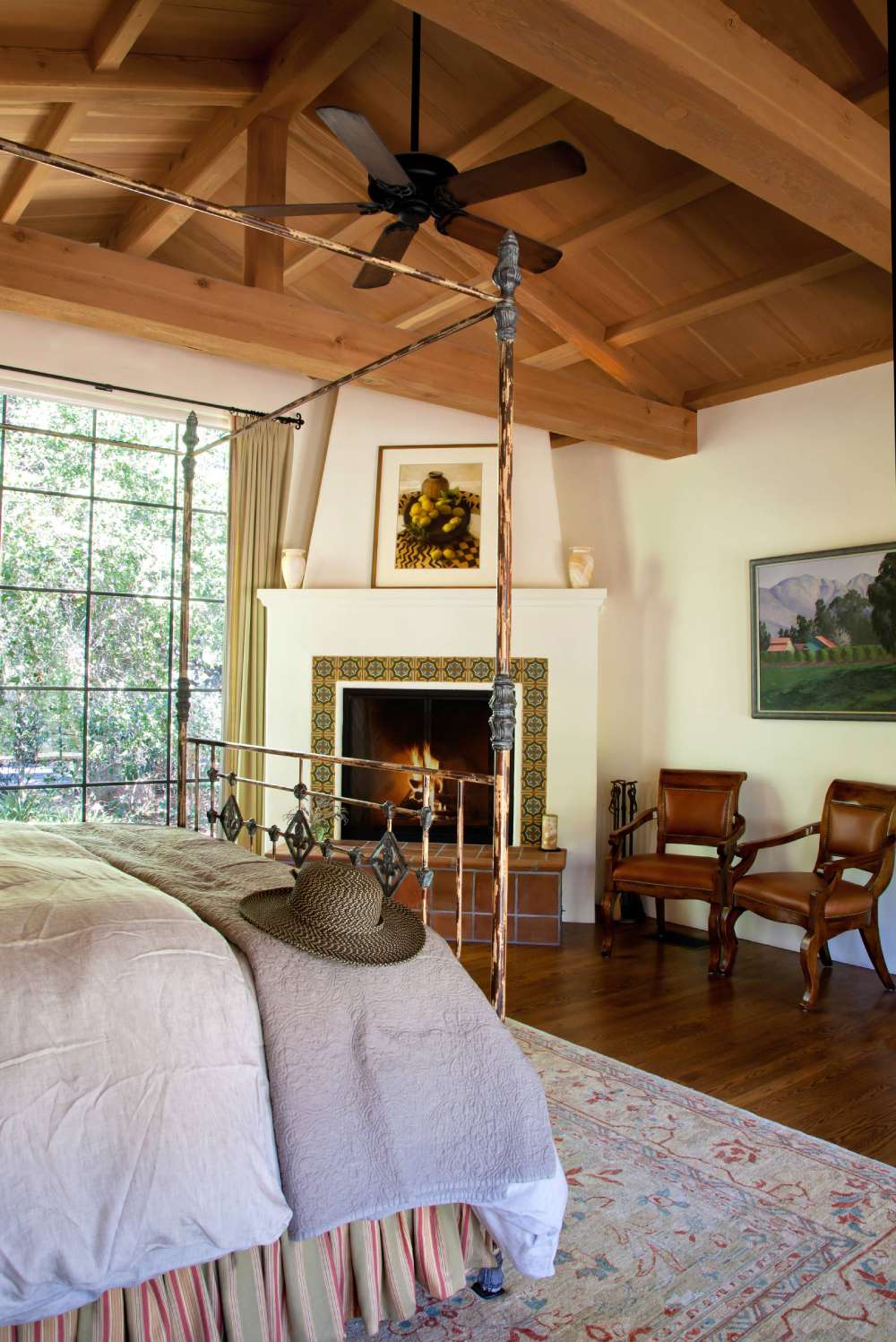
Southwestern bedrooms work best when they are quieter than the living room. Linen and woven textiles in muted earth tones. Warm lighting from ceramic table lamps or iron sconces. Minimal clutter.
A wool rug placed under a queen bed anchors the room without needing to cover the entire floor. For bedroom decorating, one strong textile (a Chimayo blanket draped over the foot of the bed, for instance) often does more than a full room of themed accessories.
Opendoor data shows 27% of homeowners prioritize kitchen remodels, but bedrooms are where southwestern decor has the most staying power. A well-chosen rug and a few clay pieces will look right for a decade.
Bathroom
Hammered copper vessel sinks are a signature southwestern bathroom element. Pair them with iron towel bars and a Saltillo tile floor.
Talavera tile works as well in bathrooms as it does in kitchens. A framed mirror with a hand-carved wood or wrought iron frame replaces the generic builder-grade mirror instantly.
Outdoor Spaces

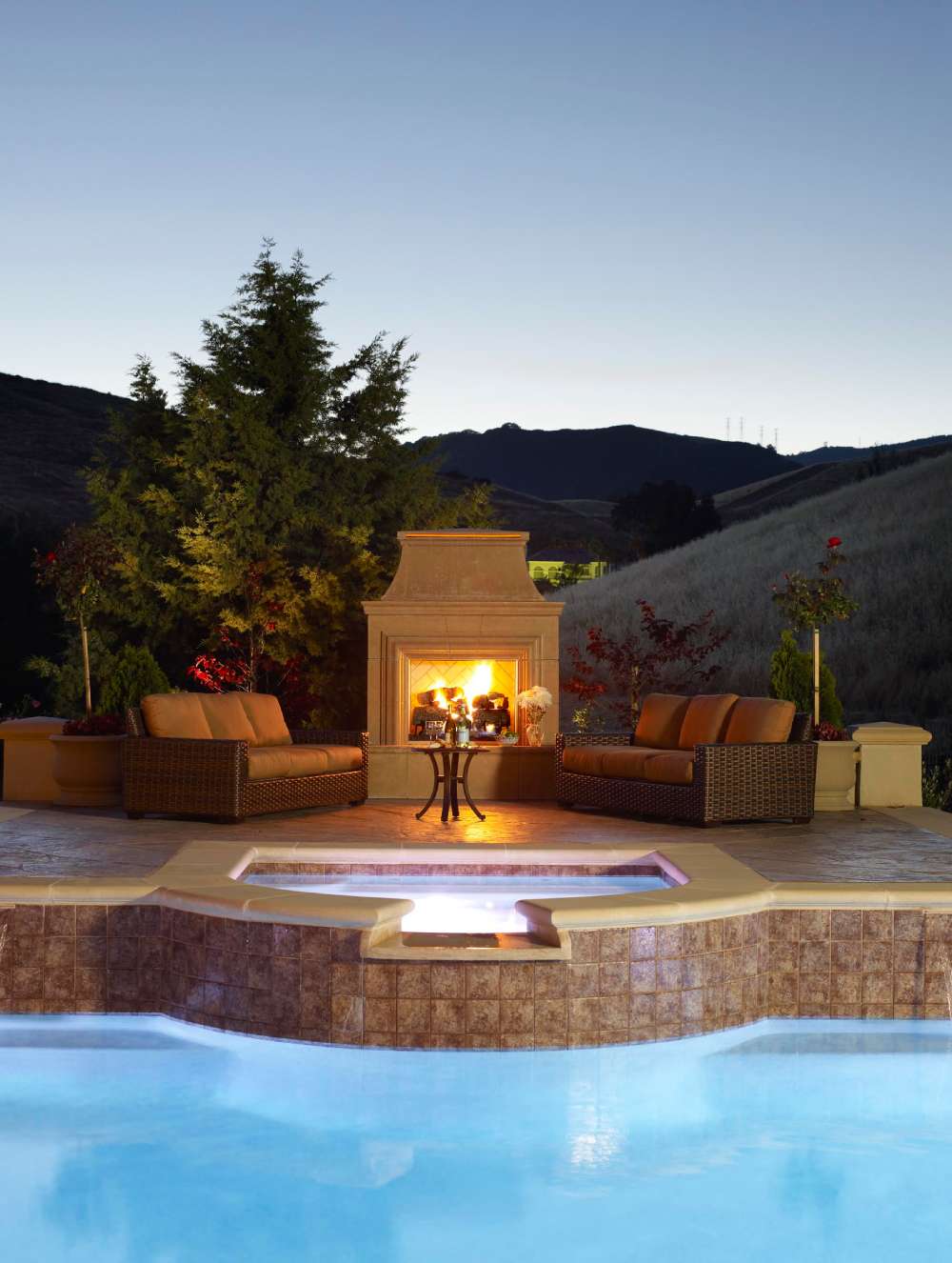
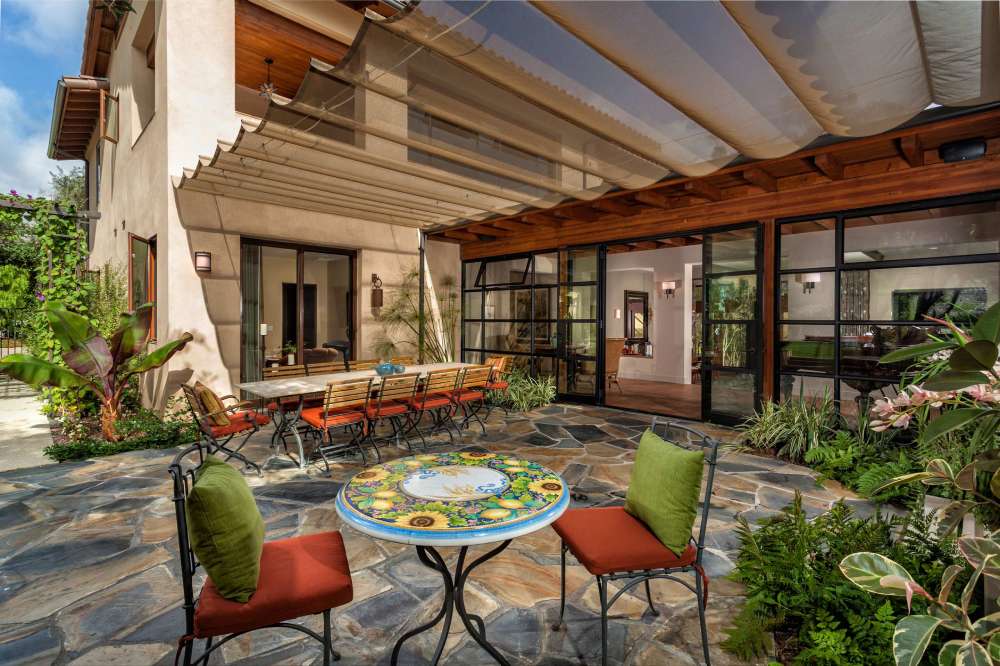
Image source: GRADY-O-GRADY Construction & Development, Inc.
Equipale chairs on a covered patio. A chiminea as the centerpiece. Mexican tile on the floor or as tabletop accents. String lights or iron lanterns for evening warmth.
Outdoor southwestern decor works especially well in dry climates where the materials naturally belong. A covered deck with a fireplace is the ideal setup, but even a small balcony can carry the feel with a few terracotta pots and a woven outdoor rug.
Small Spaces and Apartments
Renters and people in small apartments can still pull this off without heavy furniture or permanent changes.
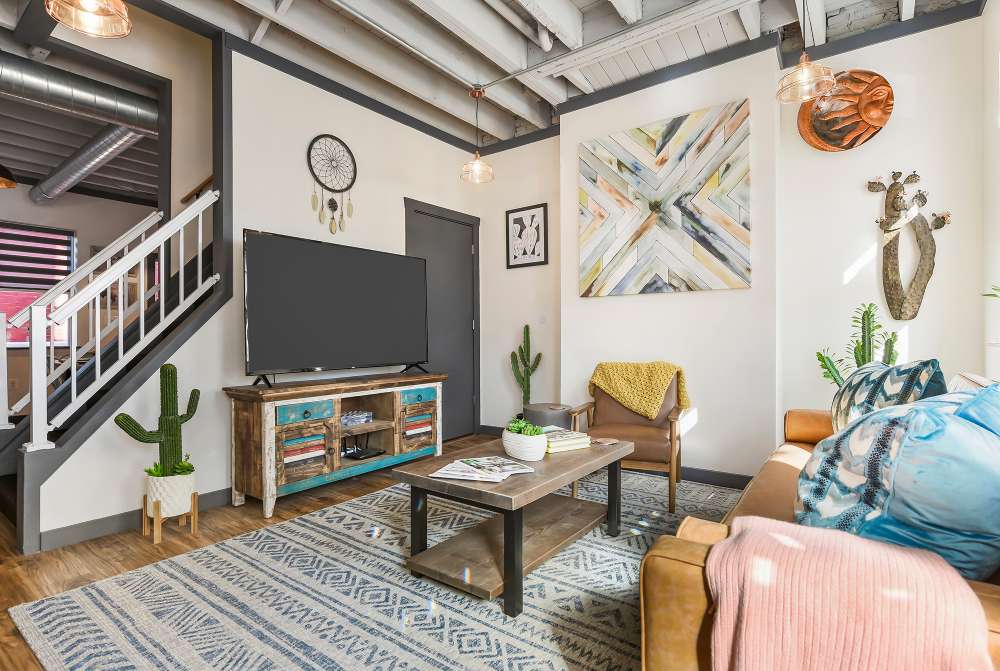
Go textile-forward. A statement rug, a couple of throw pillows, and a woven wall hanging establish the style without putting a single hole in the wall. Peel-and-stick Talavera-style tiles exist for backsplashes if your landlord will not let you do the real thing.
One or two statement pieces carry the whole look. A piece of Mata Ortiz pottery on a shelf. A framed desert photograph. A single Pendleton blanket over the back of a chair. That is enough. According to the 2 Visions 2024 report, 82% of consumers are willing to shop for home decor online, which makes sourcing authentic southwestern pieces from anywhere in the country completely doable.
Where to Buy Southwestern Home Decor
Knowing where to shop makes the difference between authentic southwestern pieces and overpriced knockoffs. The sourcing landscape has changed a lot in the past few years, with online options expanding while traditional sources remain strong.
Online Retailers
Novica: Partners directly with artisans worldwide, including Mexican and Central American ceramicists and textile makers. Good for pottery and woven pieces.
Etsy: The biggest marketplace for independent southwestern artisans. Search for specific items (Zapotec rugs, Mata Ortiz pottery) rather than generic “southwestern decor” to find the better sellers.
World Market: More affordable entry point. Their seasonal collections rotate through southwestern-inspired textiles and accessories. Not artisan-level, but solid for accent pieces.
Wayfair reported $11.85 billion in revenue for 2024 (Mordor Intelligence), and carries some southwestern furniture and accessories, though their selection skews more toward mass-produced options.
Big-Box Options
| Retailer | Southwestern Strengths | Limitations |
|---|---|---|
| Pottery Barn | Seasonal textile collections | Higher price, limited selection |
| Target (Opalhouse) | Affordable accents, pillows, throws | Pattern quality varies |
| World Market | Pottery, baskets, small furniture | Inconsistent stock |
| Wayfair | Rugs, furniture basics | Mass-produced, less authentic |
These work for filling in around statement pieces. Buy your rug and pottery from artisan sources, then use big-box stores for basics like window treatments and simple textiles.
Buying Directly from Artisans
Santa Fe’s Canyon Road and the Portal at the Palace of the Governors are two of the best places in the country to buy Native American art and pottery directly from makers.
Tucson’s Fourth Avenue and the Tucson Gem and Mineral Show (held every February) are major sources. Albuquerque’s Old Town has been a center for southwestern art and decor for decades.
West Elm expanded its artisan partnership program in January 2024 to include weavers and ceramicists in Guatemala and Tunisia, bringing more handmade options into a mainstream retail channel.
Vintage and Secondhand
Estate sales in Scottsdale, Sedona, and the greater Albuquerque area regularly turn up quality southwestern pieces. Look for Navajo rugs, hand-carved furniture, and older Talavera pieces.
What holds value: authentic Navajo weavings (always appreciate over time), Acoma Pueblo pottery, vintage wrought iron lighting, and solid mesquite furniture. What does not: mass-produced “southwestern” items from the 1990s revival, screen-printed textiles, and cheap ceramic knockoffs.
Price Expectations
Handwoven Navajo rug: $500 to $5,000+ depending on size, age, and weaver
Authentic Talavera pottery: $30 to $300 per piece
Artisan leather furniture: $1,500 to $8,000+ for a quality sofa or chair
Mata Ortiz pottery: $100 to $2,000 depending on size and artist
SwiftBeacon data from 2024 shows that 55% of consumers cite price as their top reason for buying decor online, which explains why platforms like Etsy and Novica have become primary channels for southwestern pieces. You can compare artisan prices across sellers without driving between three different cities.
Mistakes That Make Southwestern Decor Look Dated or Costume-Like
Nothing kills a southwestern room faster than overdoing it. The style has a specific tipping point where “warm and textured” becomes “themed restaurant,” and most people do not see it coming until they have already crossed the line.
Over-Theming the Space
The most common mistake. Every surface covered in southwestern motifs. Turquoise on the walls, coyotes on the shelf, a cactus lamp, Navajo-print everything.
A good rule: if someone walks into the room and immediately says “oh, southwestern,” you have probably gone too far. The goal is a room that feels warm and grounded, with southwestern elements as part of its character, not its entire personality.
Think of it like eclectic design. Mix your southwestern pieces with clean modern elements. Let some surfaces breathe. White walls are fine. Actually, white walls are great. They are exactly what adobe homes have always had.
The 1990s Color Trap
Teal and terracotta. This specific combination dominated budget southwestern decor thirty years ago and it still shows up in lower-quality pieces today.
The problem is not the individual colors. Both teal and terracotta work in southwestern spaces. The problem is using them together in that particular saturated, flat way that instantly dates the room. If your palette reminds you of a Marriott lobby in Phoenix circa 1994, pull back.
Modern southwestern leans toward muted variations. Dusty terracotta instead of bright orange. Soft turquoise instead of electric teal. Colors that go with tan are a safer starting point than the bold combos from three decades ago.
Cheap Mass-Produced Items
Screen-printed “Navajo patterns” on polyester blankets. Pressed metal “wrought iron” that weighs nothing. Ceramic pieces stamped out in factories with southwestern decals applied after the fact.
These items undermine the entire style. Southwestern decor is built on craft and material authenticity. A $15 polyester throw with a geometric print is not a substitute for even a $60 handwoven cotton piece.
UNESCO’s 2023 Atlas of Endangered Crafts found that over 120 artisanal disciplines related to interior decor are at risk. Buying authentic handmade pieces is not just about aesthetics. It keeps the traditions alive that created this style in the first place.
Ignoring Scale
Tiny decorative objects clustered on shelves. Miniature pottery pieces lined up on a windowsill. A collection of six small woven baskets when one large one would have more impact.
Emphasis in design depends on letting key pieces stand out. A single large Acoma pot on a console table reads as art. Six small pots on the same surface reads as a gift shop display.
How to Balance Southwestern with Modern
| Add | Remove |
|---|---|
| One handwoven rug | Matching southwestern rug set |
| Clean-lined sofa in neutral | Fully themed leather suite |
| Two to three pottery pieces | Shelf full of small figurines |
| Single desert photograph | Coyote-and-sunset print trio |
| White or warm plaster walls | Terracotta-painted everything |
The best southwestern rooms borrow from the principles of interior design that apply to every style. Balance, restraint, and letting strong pieces have room to exist without competition.
Janet Brooks Design in Scottsdale, a firm that specializes in luxury southwestern interiors, puts it simply: think of southwestern as a concept, not a theme. That mindset keeps the space looking current instead of dated.
FAQ on Southwestern Home Decor
What defines southwestern home decor?
Southwestern home decor draws from Native American, Spanish Colonial, and Mexican design traditions rooted in the American Southwest. It features warm earth tones, geometric patterns, natural materials like clay and leather, and handcrafted accessories such as pottery and woven textiles.
What colors are used in southwestern decor?
The core palette includes terracotta, turquoise, warm sand, burnt orange, and deep red. Modern variations use muted versions like dusty rose, sage green, and warm gray. Wall colors typically stay neutral to let textiles and accessories carry the bolder tones.
Is southwestern style the same as western or rustic decor?
No. Western decor leans into cowboy motifs and ranch life. Rustic decor focuses on raw, unfinished wood and cabin aesthetics. Southwestern pulls specifically from desert cultures, adobe architecture, and the artistic traditions of the Navajo, Zapotec, and Spanish settlers.
What materials are common in southwestern interiors?
Mesquite and pine wood, wrought iron, leather, terracotta, Saltillo tile, sandstone, and handwoven wool. The style relies heavily on natural textures and handcrafted finishes rather than synthetic or factory-produced materials.
How do I add southwestern touches without redecorating entirely?
Start with one handwoven rug and a few throw pillows in geometric patterns. Add a piece of clay pottery or a woven wall hanging. These small changes shift the room’s character without requiring new furniture or paint.
Where can I buy authentic southwestern decor?
Novica and Etsy connect you directly with artisan makers. World Market and Pottery Barn carry seasonal collections. For authentic Navajo rugs and Pueblo pottery, shop directly in Santa Fe, Tucson, or Albuquerque from Native artists.
Can southwestern decor work in apartments?
Absolutely. Focus on textiles and portable accessories. A statement area rug, a Pendleton blanket, and a few pieces of Talavera pottery establish the style without permanent changes. Peel-and-stick tiles work for temporary backsplash accents.
What is Talavera pottery?
Talavera is a tin-glazed earthenware tradition from Puebla, Mexico, dating to the 16th century. Each piece is hand-molded and painted, then fired multiple times. Authentic Talavera is protected by a Mexican designation of origin.
How do I avoid making southwestern decor look dated?
Skip the saturated teal-and-terracotta combos from the 1990s. Mix southwestern pieces with clean, modern furniture. Use white or warm plaster walls. Let one or two statement pieces define the room rather than theming every surface.
What is the difference between traditional and modern southwestern style?
Traditional southwestern uses bold reds, heavy carved wood, and dense layering of patterns. Modern southwestern pulls back to muted earth tones, cleaner furniture lines, and fewer accessories. Both share the same materials and cultural roots.
Conclusion
Southwestern home decor works because it is built on real materials and real cultural history. That gives it staying power that trend-driven styles cannot match.
The pieces that matter most are the ones made by hand. A Navajo rug from a weaver near Gallup. Acoma Pueblo pottery from a family that has been shaping clay for generations. Talavera tiles fired in Puebla the same way they were 500 years ago.
Get the color palette right, invest in a few authentic textiles and ceramics, and keep the rest simple. White walls, warm wood, iron hardware.
Skip the themed approach. Let the craftsmanship speak. A room built on quality handmade pieces from the American Southwest will look better in ten years than it does today.
- Open Floor Plan Ideas With Industrial Decor - March 31, 2026
- Industrial Color Palette Ideas For Home Interiors - March 30, 2026
- Upcycled Furniture Ideas: Creative Ways to Repurpose Old Pieces - March 30, 2026