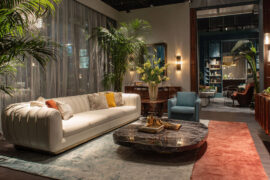
Your office environment shapes how you work, think, and feel every single day.
Contemporary office decor is not about trends or showrooms. It is about building a workspace that functions as well as it looks, through intentional material choices, clean-line furniture, and a design logic that reflects the current state of contemporary interior design.
This guide covers everything from color palettes and furniture selection to lighting, biophilic design, acoustics, and budget planning.
By the end, you will know exactly how to put together a professional workspace that holds together visually and supports focused, productive work.
What Is Contemporary Office Decor?
Contemporary office decor is a design approach centered on what is current, not a fixed historical period. It reflects the design sensibilities of right now: clean-line furniture, intentional material contrast, neutral base palettes with carefully placed accent colors, and spaces built to function as well as they look.
This distinction matters more than most people realize. If you walk into a store and ask for “contemporary” furniture, you’ll get something different from “modern.” Modern is a style with a specific timeline. Contemporary moves.
How Does Contemporary Office Decor Differ From Modern and Minimalist?
Three terms get used interchangeably all the time. They’re not the same.
| Style | Time Period | Core Traits | Office Look |
|---|---|---|---|
| Contemporary | Present day, always shifting | Mixed materials, current trends, layered neutrals | Walnut + matte black + boucle |
| Modern | 1920s–1970s movement | Flat surfaces, teak, organic shapes | Eames chairs, tulip tables |
| Minimalist | Ongoing philosophy | Extreme reduction, monochrome, nothing extra | Single desk, zero clutter |
Contemporary design borrows from minimalism but doesn’t commit to it fully. You’ll see textured cushions, layered lighting, and one statement piece of art. A true minimalist space has none of that.
The line between contemporary and modern interior design is one of the most common sources of confusion in office planning, and getting it wrong leads to mismatched furniture purchases.
What Makes a Workspace Qualify as Contemporary?
4 defining characteristics separate contemporary from adjacent styles:
- Clean lines with no decorative ornamentation (no carved edges, no ornate hardware)
- Material mixing: typically 2-3 materials, such as wood veneer with brushed metal and frosted glass
- Neutral base palette broken by 1 deliberate accent color or material
- Functional furniture that serves a purpose beyond visual appeal
A reclaimed wood desk paired with matte black steel legs and a linen task chair is contemporary. Add carved crown molding and you’ve crossed into transitional territory. The details decide everything.
For a fuller picture of how these principles of interior design apply across all design styles, the foundational concepts of balance, proportion, and contrast are worth understanding before making any purchasing decisions.
What Are the Core Design Principles of Contemporary Office Decor?
Contemporary office design follows a specific set of rules, and they’re not suggestions. Ignore them and the space looks assembled, not designed. There’s a real difference.
The contemporary interior design approach applies just as directly to office spaces as it does to residential rooms. The proportions and material logic stay the same regardless of square footage or use.
How Does Balance Work in a Contemporary Office?

Most contemporary offices use asymmetrical balance rather than symmetry. Two identical chairs flanking a desk reads as traditional. A single lounge chair offset against a floor lamp creates more visual interest without visual chaos.
Balance in interior design in this context means distributing visual weight across a room, not mirroring it.
- A heavy credenza on one wall balances against a large piece of wall art on the opposite side
- A tall bookshelf balances against low, wide seating across the room
- Dark flooring anchors lighter furniture above it
Steelcase’s workplace research consistently finds that spatial balance affects how employees perceive a room’s formality and approachability. Asymmetric arrangements tend to feel more open and less corporate.
Why Do Scale and Proportion Matter More in Office Spaces?
Office furniture is where scale and proportion mistakes happen most often. A large executive desk in a 10×10 room doesn’t just look wrong. It kills circulation, makes the room feel oppressive, and undermines everything else in the space.
The 60-30-10 guideline for office proportion:
- 60% of the room’s visual weight goes to the dominant piece (desk or work surface)
- 30% goes to secondary furniture (storage, seating)
- 10% goes to accent pieces (lamp, art, plant)
Most off-the-shelf executive desks are sized for rooms over 150 square feet. In a home office under 120 square feet, a floating desk or a clean-leg desk under 55 inches wide almost always reads better.
What Role Does Contrast Play in the Contemporary Aesthetic?
Contemporary design relies on contrast, but controlled contrast. Not chaos. The goal is a specific tension between 2 opposing elements that makes both feel more intentional.
The most common pairings in contemporary office decor:
- Matte black hardware against warm wood tones
- Smooth glass desk surface against rough textured upholstery
- Soft off-white walls against a dark accent wall
Applying contrast principles without going overboard means picking one dominant contrast per room, not stacking multiple competing ones. A room with a dark ceiling, a bold rug, and a brightly colored desk has too many contrast points. Pick one and commit.
How Does Line Define a Contemporary Office Space?
Every piece of furniture creates a line in interior design. Horizontal lines suggest calm and stability. Vertical lines suggest authority and height. Diagonal lines feel dynamic and can create tension in a workspace that needs to stay focused.
Contemporary offices default to horizontal and vertical lines, not diagonal ones. That’s why low-profile sofas, long credenzas, and floor-to-ceiling shelving are staples of this style.
Curved lines have crept into contemporary office design since 2022, largely driven by the popularity of rounded-back chairs and arched floor lamps. Used sparingly, one curved element per room prevents a space from feeling rigid.
What Color Palettes Work Best in Contemporary Office Decor?
Color does more in an office than set a visual tone. Research from Lund University found that brain activity was measurably higher in rooms with intentional color schemes compared to all-neutral environments. That doesn’t mean paint every wall cobalt blue. It means the neutral-only approach has real cognitive limits.
The most successful contemporary office color schemes use a neutral foundation with one deliberate layer of color. Color in interior design follows specific psychological principles that apply directly to workspace performance.
What Are the Best Neutral Base Colors for a Contemporary Office?

Neutral doesn’t mean white. The most-used contemporary base colors in office design right now sit in the warm neutral and greige range, not stark white.
Top-performing neutrals for contemporary office walls:
- Sherwin-Williams Agreeable Gray SW 7029: warm greige that reads neutral under most light conditions
- Benjamin Moore Chantilly Lace OC-17: the cleanest white without going cool or clinical
- Sherwin-Williams Alabaster SW 7008: a soft warm white that works well with walnut and brass hardware
- Benjamin Moore Revere Pewter HC-172: a medium greige for offices with strong natural light
Poppin’s workplace research found that neutral palettes reduced visual fatigue but needed a contrasting color layer to prevent the space from feeling uninspiring. That’s the balance to aim for.
Which Accent Colors Work Without Breaking the Contemporary Feel?
One accent color. That’s the rule. And it doesn’t go on all four walls.
Blue-greens, muted sage greens, and warm terracotta sit inside the contemporary office color vocabulary right now. Bright primaries don’t. They pull the space out of the contemporary register and into something more eclectic.
Where to place the accent color: a single wall behind the desk (used as a focal point), a rug, or upholstered seating. Not all three.
Research published by Haiken found that blue tones in particular are linked to improved concentration and reduced stress levels, making them one of the more functional accent choices for task-heavy work environments. A muted slate blue or dusty teal as a desk-backing wall serves double duty: aesthetic and performance.
Accent Color Placement
The one-accent rule breaks down when the accent color appears in multiple locations without a visual logic connecting them. Placement needs intention.
Distribute accent color in a triangular pattern across the room: one wall, one textile (cushion or rug), one small object (lamp shade, planter). The eye moves between the three points and the room reads as cohesive rather than random.
Wall Color vs. Furniture Color Balance
Dark furniture on dark walls creates a high-drama look that sits at the edge of the contemporary aesthetic. It works in executive suites with strong lighting. It fails in small home offices under 100 square feet where contrast is needed to define spatial boundaries.
Light walls, medium-tone furniture is the most reliable contemporary formula. It keeps the space feeling open, makes the furniture feel intentional, and gives lighting the best surface to work with.
What Furniture Defines a Contemporary Office?
The global ergonomic furniture market reached $20.8 billion in 2023 and corporate purchases represented over 60% of that total (Future Market Insights, 2024). The shift is clear: furniture is no longer just a budget line item. It’s a workplace performance decision.
Contemporary office furniture shares 3 non-negotiable traits: clean silhouette, functional purpose, and material honesty. No furniture that pretends to be something it isn’t. No decorative legs on a desk that serves no structural role.
What Desk Styles Belong in a Contemporary Office?

Herman Miller’s Renew sit-stand desk, the Fully Jarvis, and BDI’s standing desk line all share one feature: clean leg profiles and no visible cable bulk in their standard configurations. That’s the contemporary baseline.
67% of Fortune 500 companies have now incorporated sit-stand desks into employee wellness programs, according to Cognitive Market Research (2024). Standing desk installations account for nearly 18% of all new global office furniture orders.
- Sit-stand desks (Fully Jarvis, Autonomous SmartDesk): best for home offices where one person spends 6+ hours daily at the desk
- Floating wall desks: best for rooms under 120 square feet where floor space matters more than storage
- Clean-leg executive desks (BDI Sequel): best for dedicated home offices or private corporate offices where storage isn’t wall-mounted
Avoid pedestal desks with heavy side filing towers. They read as traditional regardless of what materials are used.
Home Office vs. Corporate Office Furniture Choices
The functional requirements differ enough that the furniture logic shifts significantly between the two contexts.
| Consideration | Home Office | Corporate Office |
|---|---|---|
| Desk size | Under 55″ wide, wall-mounted preferred | 60″+ surface, modular configurations |
| Chair priority | All-day ergonomics (Herman Miller Aeron, Humanscale Freedom) | Visual consistency across fleet + ergonomics |
| Storage | Closed-front credenzas, wall shelving | Built-in or system storage, lockable |
| Budget priority | Chair first, then desk | Desk system first, then seating |
In a home office context, the chair is the single most important investment. You sit in it for hours every day. The desk is largely stationary. The chair interacts with your body every minute of every working hour.
What Chair Profiles Fit the Contemporary Aesthetic?

Task chairs with mesh backs, thin armrests, and minimal visible hardware sit inside contemporary design. Bulky padded executive chairs with tufted leather do not, regardless of their price point.
The Herman Miller Aeron, Humanscale Freedom, and Steelcase Leap V2 all hold up visually in contemporary setups because their engineering is visible. The structure is honest. Nothing is hidden behind decorative padding.
For lounge seating, sled-base chairs and low-arm sofas in boucle or wool-blend upholstery are the current default. HAY’s AAC series and Muuto’s Outline sofa both sit firmly in this category.
What Lighting Approach Fits Contemporary Office Decor?
Poor office lighting costs more than discomfort. Studies published in the Journal of Circadian Rhythms found that optimized lighting conditions improved work performance by 19.4% in shift workers, with measurable gains in alertness (28.2%) and reduced daytime sleepiness (31%). Lighting is not a finishing touch. It’s infrastructure.
Contemporary offices use a 3-layer lighting approach as a structural baseline, not as an optional upgrade. Understanding the role of light in interior design makes the difference between a space that functions and one that only looks good in photos.
What Are the 3 Lighting Layers Used in Contemporary Offices?

Layer 1 – Ambient: the base illumination. Recessed LED panels or a linear pendant give even, general light across the room.
Layer 2 – Task: directed light at the work surface. A task light reduces eye strain during detail work and prevents reliance on overhead ambient light alone.
Layer 3 – Accent: light that creates dimension. An accent light directed at a bookshelf or wall art adds depth that flat overhead lighting can’t provide.
Contemporary offices that use only overhead ambient lighting almost always feel flat. The layered approach adds spatial dimension without adding clutter.
What Color Temperature Works Best for Office Focus?
The optimal color temperature range for office focus work is 3500K to 5000K, with 4000K to 4500K being the most widely recommended middle ground (Logos Lighting, 2024).
- Below 3000K: too warm, signals rest, reduces alertness
- 3500K-4500K: neutral-warm, supports sustained focus without feeling harsh
- Above 5500K: too cool and blue, feels clinical in most office contexts
Consistency across all light sources matters as much as the individual temperature. A 4000K overhead panel paired with a 2700K warm desk lamp creates an uncomfortable visual mismatch. Match temperatures within 500K across sources in the same room.
Which Fixture Styles Fit Contemporary Office Design?
Fixture selection is where the lighting design either supports or undermines the aesthetic.
Pendants: linear pendants in matte black or brushed brass over a desk or conference table. Flos and Artemide both produce fixtures that sit squarely in the contemporary register.
Recessed lighting: Recessed LED with adjustable trim in matte white or black. Avoid exposed bulb fixtures for ambient layers.
Floor lamps: arc floor lamps with a single curved neck. IKEA’s Ranarp and HAY’s Anagram both work in the budget-to-mid-range. Flos Arco for high-end installations.
Skip ceiling fans with integrated light kits. They break the visual clarity that contemporary design depends on.
What Materials and Textures Are Used in Contemporary Office Interiors?
Material choice is where contemporary office decor either holds together or falls apart. More than color, more than furniture silhouette, the specific materials and how they’re combined signal whether a space is genuinely contemporary or just trending in that direction.
The right texture in interior design creates visual depth and tactile interest without adding clutter. A contemporary office isn’t sparse, it just uses restraint in how many surfaces compete for attention.
What Are the Primary Materials in Contemporary Office Design?
The current material vocabulary for contemporary offices clusters around 6 core materials.
Walnut wood veneer: warm, linear grain, works with matte black and brushed brass hardware. Overused but still the dominant wood in the space.
Matte black steel: legs, frames, shelf brackets. The contrast against warm wood tones is the defining visual signature of contemporary design right now. Avoid gloss black, it reads as Art Deco.
Brushed brass: hardware only, not entire furniture. A brushed brass desk lamp or cabinet pull adds warmth without the maximalist quality of full gold finishes.
Frosted glass: partitions, shelving, door panels. It maintains visual openness without full transparency.
Boucle and wool-blend upholstery: textured, soft, visually quiet. The current dominant textile for lounge and task seating.
Wide-plank hardwood or large-format tile flooring: 5″ or wider planks reduce visual noise compared to narrow-strip floors. Large-format tile (24″x24″ minimum) in polished concrete or matte stone finishes grounds the space.
How Do You Mix Materials Without Creating Visual Chaos?
The 3-material rule. Use no more than 3 primary materials in a single room, and keep them in a clear visual hierarchy.
| Material Role | What It Covers | Example |
|---|---|---|
| Dominant (60%) | Largest surfaces: floors, walls, desk surface | Walnut veneer desk, oak floor |
| Secondary (30%) | Furniture frames, shelving, lighting | Matte black steel frames |
| Accent (10%) | Hardware, decorative objects, one textile | Brushed brass pulls, boucle cushion |
Adding a fourth material to this mix is where most rooms tip into visual noise. If you want to add a fourth element (say, frosted glass partitions), one of the original three needs to reduce its presence first.
What Materials Don’t Belong in a Contemporary Office?
Not everything needs a spot. Certain materials actively contradict the contemporary aesthetic regardless of how they’re styled.
- High-gloss lacquer on large surfaces (reads as 1980s, not contemporary)
- Ornate carved wood (any carved detail moves the space toward traditional)
- Heavy polished brass hardware (use brushed brass or matte black instead)
- Exposed natural stone in excess (a single stone surface reads contemporary, a full stone wall reads rustic)
How Does Layout Affect Contemporary Office Decor?
Furniture selection is 50% of the equation. Where you put it is the other 50%. A contemporary office with correctly chosen pieces arranged without spatial logic looks no better than any other office. Layout isn’t decoration. It’s space planning, and it governs how every other design decision reads in practice.
WeWork’s 2024 Global Office Trends report found that companies redesigning their layouts to include a better mix of active and focus areas saw measurable improvements in office attendance and reported productivity. Layout changes outperformed furniture upgrades alone.
Where Should the Desk Be Placed in a Contemporary Office?

The desk goes where light works best and where the circulation path stays clear. That’s the priority order. Aesthetic placement comes third.
3 desk placement rules that hold in contemporary office design:
- Position the desk perpendicular to a window, not facing it directly (reduces glare on screens) or with your back to it (creates backlighting on video calls)
- The desk should not sit against the wall if the room allows for it. A desk floating 18-24 inches from the wall creates space for a chair to roll back without hitting the wall
- The desk faces the room entry, not away from it. This is a functional preference backed by workplace behavior research: people work with less ambient stress when they can see the entrance to their space
The focal point of a contemporary office is usually the desk wall. Everything else in the room orients toward it.
Small Office Layout Strategies
Almost 80% of employees say their productivity depends on having private, focused space, according to Hushoffice’s 2024 research. For home offices under 120 square feet, this means every square foot of layout matters.
Wall-mounted over freestanding: floating desks, wall shelves, and mounted monitor arms all return floor space to circulation. A 10×10 room with a wall-mounted desk and shelving can function as well as a 12×12 room with freestanding furniture.
Storage goes vertical. A tall, narrow shelving unit occupies half the floor footprint of a wide credenza while providing comparable storage. In small offices, the use of space vertically is the single biggest visual and functional upgrade available.
One rug, placed under the desk and chair. It anchors the work zone and defines the primary use area without dividing the room unnecessarily.
Open-Plan Office Layout Considerations
Open-plan offices present a different challenge. The contemporary aesthetic can hold across a large floor plate, but it requires discipline in the number of materials, colors, and furniture styles in use simultaneously.
The most effective contemporary open-plan layouts use color zoning to define functional areas without physical walls. A quiet focus zone uses cooler, more neutral finishes. A collaborative area introduces a warmer accent color and softer seating. The material palette stays consistent across zones; only the color temperature and furniture scale shift.
Acoustic panels become a design element in open-plan contemporary offices, not just a functional add-on. Brands like Kirei and Turf Design produce fabric-wrapped panels in geometric profiles that contribute visually while absorbing sound. They’re worth integrating into the layout plan from the start, not bolted on afterward.
What Wall Decor Fits a Contemporary Office?
Research from the University of Exeter found that employees in enriched spaces decorated with art are 17% more productive than those working in bare, functional rooms.
Wall decor in a contemporary office is not decoration for decoration’s sake. Every piece on a wall sends a signal about taste, intention, and professionalism. The wrong choices undermine an otherwise well-designed space. The right ones make the space feel complete.
Understanding how emphasis works in interior design is the clearest guide to wall placement. One strong visual statement almost always outperforms several competing ones.
What Art Choices Fit the Contemporary Office Aesthetic?
Three categories of art hold up consistently in contemporary office settings.
- Abstract prints: large format, limited palette, no literal representation
- Black-and-white photography: architectural subjects, natural textures, or geometric compositions
- Single oversized canvas: one piece scaled to anchor the wall, rather than a gallery grouping
Gallery walls are a specific choice that works in eclectic or bohemian interiors. In a contemporary office, they read as visually busy. A single well-framed 36″x48″ print on the wall behind a desk does more work than eight smaller pieces arranged in a grid.
Google’s NYC offices use oversized abstract murals and single-statement pieces throughout their workspace interiors, a consistent approach to keeping visual complexity low while maintaining a designed feel.
What Are the Rules for Framing and Hanging?

Frame finish matches hardware. If the desk has matte black legs, use matte black frames. Brushed brass hardware in the room calls for thin natural wood or brass frames. Mixing frame finishes in a contemporary office reads as unresolved.
Hang art at eye level: center point at 57 to 60 inches from the floor. Not higher. Most people hang art too high, which disconnects it from the furniture below and makes the room feel top-heavy.
For framing styles: thin metal profiles or natural wood strips. No ornate, gilded, or beveled frames. Those belong to traditional and transitional interiors, not contemporary ones.
What Accent Wall Approaches Work in a Contemporary Office?
The range of contemporary wall decor options is broader than most people expect, and the best choices do double duty as both visual statements and textural surfaces.
3 accent wall treatments that stay inside the contemporary register:
- Limewash paint in warm white or charcoal for organic texture without pattern
- Fluted wood slat panels in walnut or oak, installed vertically
- Large-format textured tiles in matte stone finishes, used behind a desk or in a feature zone
Skip shiplap in an office context. It belongs in farmhouse and rustic design schemes. In a contemporary workspace it reads as borrowed from another style entirely.
What Plants and Natural Elements Work in Contemporary Office Decor?
Adding plants to a lean office can increase productivity by 15%, according to a field study conducted across commercial offices in the UK and the Netherlands (University of Exeter). The Human Spaces Report surveyed 7,600 office workers across 16 countries and found that workers in environments with natural elements reported a 6% higher productivity score and a 15% higher wellbeing score than those without.
These numbers hold up even at small scales. One plant per workstation registers measurable improvements in reported wellbeing. You don’t need a living wall to see a result. Biophilic interior design scales down to a single desk planter as readily as it scales up to a full moss wall installation.
Which Plants Suit a Contemporary Office Aesthetic?
Plant selection in a contemporary office follows the same visual logic as everything else: clean form, restrained palette, nothing fussy.
Fiddle-leaf fig (Ficus lyrata): large, architectural, strong vertical presence. Needs bright indirect light. Not for north-facing rooms with minimal windows.
Snake plant (Sansevieria): practically indestructible, low light tolerant, upright growth habit. The most forgiving contemporary office plant. Water every 2 to 6 weeks.
ZZ plant (Zamioculcas zamiifolia): drought-resistant, thrives under artificial light, glossy dark-green leaves that photograph well. A genuine set-and-forget option.
Olive tree: works in offices with generous natural light. The gnarled trunk and silver-green foliage read as sculptural rather than decorative.
What Planters Fit the Contemporary Design Scheme?
The planter matters as much as the plant. A snake plant in a terracotta pot reads rustic. The same plant in a matte concrete or brushed metal planter reads contemporary.
Planter materials that work: matte ceramic in white, black, or warm grey; concrete (cast or faux-cast); brushed steel or powder-coated metal in matte black.
What to avoid: woven baskets as standalone planters (they belong in bohemian interiors), ornate patterned ceramics, and bright-colored glazed pots. A single neutral planter in the right material does more for the room than a collection of mismatched pots in various finishes.
How Do Living Walls and Moss Panels Fit Into a Contemporary Office?

Living walls and preserved moss panels have moved firmly into mainstream contemporary office design since 2022. Around 70% of people say plants improve the atmosphere in their workspace (IFA Magazine, 2022), and living walls serve as both a biophilic design element and a statement feature that replaces art on a focal wall.
Preserved moss panels require no watering, no light, and no maintenance. They hold their color for years. Brands like Greenmood and Viesso both produce panels in geometric formats that integrate cleanly with contemporary interiors.
For offices with high ceilings, a vertical living wall alongside the desk wall can reduce the visual height of the room while introducing significant plant mass. For smaller offices, a framed moss panel 24″x36″ functions as wall art with a tactile element that a canvas print cannot replicate.
How Do Acoustic and Functional Elements Fit Into Contemporary Office Decor?
Noise is not a minor inconvenience. Jabra’s 2024 global survey of 2,000 knowledge workers found that 63% struggle to concentrate because of workplace noise, and 47% reported active stress from noise preventing focus. Research in Applied Acoustics (2024) found that background conversation above 55 decibels lowers analytical task accuracy by 10 to 15 percent.
Contemporary office design addresses acoustics as a material and spatial decision, not an afterthought. The panels, surfaces, and furniture choices either support sound absorption or fight against it.
How Are Acoustic Panels Designed for Contemporary Offices?
In 2024, acoustic panels accounted for 39% of global commercial acoustic installations, according to Market Growth Reports, with open-plan offices showing the highest retrofit rates. The shift is clear: acoustic treatment is no longer being added after design is finalized. It’s being planned in from the start.
Panel formats that work visually in contemporary offices:
- Fabric-wrapped rectangular panels in neutral tones: charcoal, oatmeal, warm white
- Geometric shapes (hexagons, irregular polygons) in monochrome arrangements
- Slotted wood panels that combine acoustic function with the material warmth of walnut or oak
Brands like Kirei, Turf Design, and Acoustical Surfaces all produce panels designed to be displayed, not hidden. The Leesman Index reports that only 30% of office workers are satisfied with acoustics in their workplace. Installing panels that read as intentional design features solves the acoustic problem without creating a visual one.
How Are Tech and Cable Accessories Handled in a Contemporary Setup?
Cable management is the detail that separates a finished contemporary office from one that’s almost there. A well-chosen desk in a carefully painted room loses half its visual impact when cables run visibly across the floor or hang off the back of the desk.
Finish rule: all visible tech hardware in matte black, silver, or white. No mixed hardware finishes on the same desk. One monitor arm, one cable spine, consistent finish throughout.
Practical solutions that stay inside the contemporary aesthetic:
- Monitor arms with integrated cable channels (Ergotron LX, Amazon Basics equivalent)
- Under-desk cable trays in powder-coated steel
- Desk grommets in brushed nickel or matte black for routing cables cleanly through the surface
- Wireless charging pads flush-mounted into the desk surface
How Do Printers and Equipment Get Handled Visually?
The answer is almost always: behind a closed door.
A printer sitting on an open shelf breaks the visual calm of a contemporary office immediately. A credenza with closed-front doors solves the problem entirely while adding a useful surface above.
If open shelving is the preferred storage style, printers and equipment belong on the lowest shelf, ideally behind a pull-out panel or a fabric insert that obscures them from sight lines at seated eye level.
What Is the Budget Range for Decorating a Contemporary Office?
Home office renovation costs range from $700 for a basic room refresh to over $50,000 for a full custom build-out, with most quality conversions landing between $8,000 and $20,000 (Refresh Renovations, 2024). Commercial office renovation averaged $313 per square foot for single-story builds in 2023, according to the Cumming Group’s 2023 Market Analysis.
Budget allocation within a contemporary office design follows a clear priority order. Most people reverse it and end up with beautiful decor surrounding uncomfortable furniture they use for 8 hours a day.
Where to Save vs. Where to Spend
Spend here first:
- Task chair (Herman Miller Aeron, Humanscale Freedom, Steelcase Leap V2): $900 to $1,700 new, $400 to $800 refurbished
- Lighting (quality pendant or arc floor lamp + task light): $300 to $800 total
- Desk (BDI, Fully Jarvis, or equivalent): $600 to $1,500
Save here:
- Wall art (large format prints from Society6, Desenio, or local printers)
- Plants and planters (IKEA planters, local nurseries)
- Rugs (IKEA STOCKHOLM, Rugs USA, or Wayfair mid-range)
Budget Tier Breakdown by Investment Level
| Tier | Total Budget | Best Sources | Priority Items |
|---|---|---|---|
| Entry | Under $2,000 | IKEA, Amazon Rivet, West Elm sale | Chair, desk, one pendant |
| Mid-range | $2,000 – $8,000 | Article, BDI, Crate & Barrel | Chair + desk + storage + lighting |
| High-end | $8,000+ | Herman Miller, Knoll, Vitra, custom millwork | Full spec, custom built-ins |
Lighting gives the highest return per dollar of any single upgrade in an existing office. A $400 investment in a quality pendant and a proper task light transforms a room more visibly than $400 spent on new decorative objects.
Article’s mid-range furniture line offers clean-line contemporary pieces at roughly 40% of Design Within Reach prices. The Ceni desk and Sven chair combination is a practical starting point for a contemporary home office at the $1,500 to $2,000 range.
What Are the Most Common Mistakes in Contemporary Office Decor?
Getting the style right is partly about knowing what to avoid. Contemporary office decor has a narrow visual range compared to eclectic or transitional styles. Deviations read more obviously here than in more forgiving design schemes.
A 2024 Gensler survey found that 83% of employees consider the visual quality of their workspace a factor in how they feel about their job. The stakes for getting it wrong are measurable, not just aesthetic.
What Material and Color Mistakes Break the Contemporary Look?
Too many wood tones is the most common material mistake. More than 2 distinct wood finishes in a single room creates visual noise that no amount of good furniture selection can overcome.
A walnut desk next to a light oak shelf unit next to a pine-tone flooring reads as three competing design decisions, not one coherent space. Pick 2 wood tones maximum: one warm, one cool or neutral, and keep them separated by non-wood elements.
The 4 color and material mistakes that appear most often in contemporary offices:
- Mixing more than 2 wood tones (walnut + oak + pine = visual chaos)
- Choosing warm and cool metals in the same room (brass drawer pull + chrome desk lamp = unresolved)
- Using a bold accent color on more than one surface (one accent, one location)
- Selecting furniture in different style periods, such as a mid-century chair with a strictly contemporary desk
What Layout and Furniture Sizing Errors Are Most Damaging?
Furniture too large for the room is more damaging to a contemporary office than almost any other single decision. Contemporary design depends on negative space, the areas of a room with nothing in them. Oversized furniture eliminates that space entirely.
A desk that is 72 inches wide in a 10×12 room doesn’t read as executive. It reads as cramped. The scale disrupts every other proportion in the space.
Layout mistakes that undercut the contemporary aesthetic:
- Desk pushed against the wall when the room allows a floating placement
- Storage units taller than the room height can support visually
- Rug too small for the furniture grouping (under-desk rug should extend at least 18 inches beyond the chair when pulled out)
What Accessorizing Errors Are Tricky to Spot?
Over-accessorizing is the subtler version of over-furnishing, and it’s harder to diagnose. A shelf with 12 objects on it reads cluttered even when every individual object is well-chosen.
The contemporary desk surface should have: a monitor (or laptop), a task light, and one or two objects maximum. A single well-chosen ceramic planter or a small concrete object. That’s the complete inventory.
Nothing annoys me more than a beautifully specified contemporary office ruined by a forest of desk trinkets and motivational quote prints on the wall. The objects you keep should earn their place. If you can’t say why each item is there, it probably shouldn’t be.
Motivational quote prints deserve specific mention. They contradict the visual restraint that defines contemporary design. Abstract art, photography, or a single clean graphic are all better choices, and they avoid the awkward overlap between professional workspace and self-help content.
FAQ on Contemporary Office Decor
What is contemporary office decor?
Contemporary office decor refers to a current, evolving design approach built on clean lines, neutral base palettes, mixed materials, and functional furniture. Unlike modern design, it is not fixed to a historical period. It reflects what professional workspace aesthetics look like right now.
What is the difference between contemporary and modern office design?
Modern design refers to a specific mid-20th century movement. Contemporary is fluid, always reflecting current design sensibilities. A modern office uses teak and organic shapes from the 1950s-70s. A contemporary office uses walnut veneer, matte black steel, and boucle upholstery.
What colors work best in a contemporary office?
Warm neutrals are the foundation: greiges, soft whites, and charcoals. One accent color, typically a muted blue-green, sage, or terracotta, is added deliberately. Sherwin-Williams Agreeable Gray and Benjamin Moore Chantilly Lace are two widely used contemporary office base colors.
What furniture is considered contemporary for an office?
Clean-silhouette desks with thin leg profiles, mesh-back task chairs, and closed-front credenzas. Brands like Herman Miller, BDI, Fully, and Muuto all produce furniture that fits the contemporary office aesthetic without decorative ornamentation or period-specific styling.
How important is lighting in a contemporary office?
Lighting is infrastructure, not decoration. A pendant light, a task light, and an accent source form the three-layer approach used in well-designed contemporary offices. Color temperature between 3500K and 4500K supports sustained focus and reduces eye strain.
What plants suit a contemporary office?
Snake plants, ZZ plants, fiddle-leaf figs, and olive trees all fit the contemporary office visual vocabulary. They have strong, architectural forms and work in matte ceramic or concrete planters. Plants in lean offices have been shown to improve productivity by up to 15% (University of Exeter).
How do you add texture to a contemporary office without cluttering it?
Limit texture to 2 to 3 surfaces. A boucle chair, a fluted wood wall panel, and a wool-blend rug together create tactile interest without visual noise. Avoid stacking multiple textured surfaces in the same sight line.
What are common mistakes in contemporary office decor?
Mixing more than two wood tones, choosing furniture too large for the room, and over-accessorizing work surfaces. Also: motivational quote prints on walls, mismatched metal hardware finishes, and using bold accent colors on more than one surface simultaneously.
How much does it cost to decorate a contemporary office?
Entry-level setups run under $2,000 using IKEA and West Elm. Mid-range sits between $2,000 and $8,000 with brands like Article and BDI. High-end contemporary office decor with Herman Miller, Knoll, or custom millwork starts at $8,000 and scales up significantly from there.
Do acoustic panels fit into a contemporary office design?
Yes, when chosen correctly. Fabric-wrapped panels in neutral tones, geometric shapes, and slotted wood designs all integrate cleanly. Brands like Kirei and Turf Design produce panels built to be displayed as design features, not hidden behind furniture.
Conclusion
This conclusion is for an article presenting contemporary office decor as a design system, not a checklist.
Every decision covered here, from material contrast and ergonomic furniture to lighting fixtures and acoustic panels, connects back to one goal: a workspace that performs as well as it looks.
Start with the chair. Get the color palette right. Layer the lighting properly.
The rest follows. Biophilic elements, wall decor, and storage all fall into place once the structural decisions are sound.
A well-executed professional workspace built on contemporary design principles reduces daily friction, supports focus, and holds its visual integrity over time without needing constant updating.
That is the real value of getting it right the first time.

- Paint Colors That Go with Oak Floors - August 22, 2026
- Paint Colors That Go with Gray Floors - August 20, 2026
- What Color Bedding Goes with Dark Wood Furniture - August 18, 2026