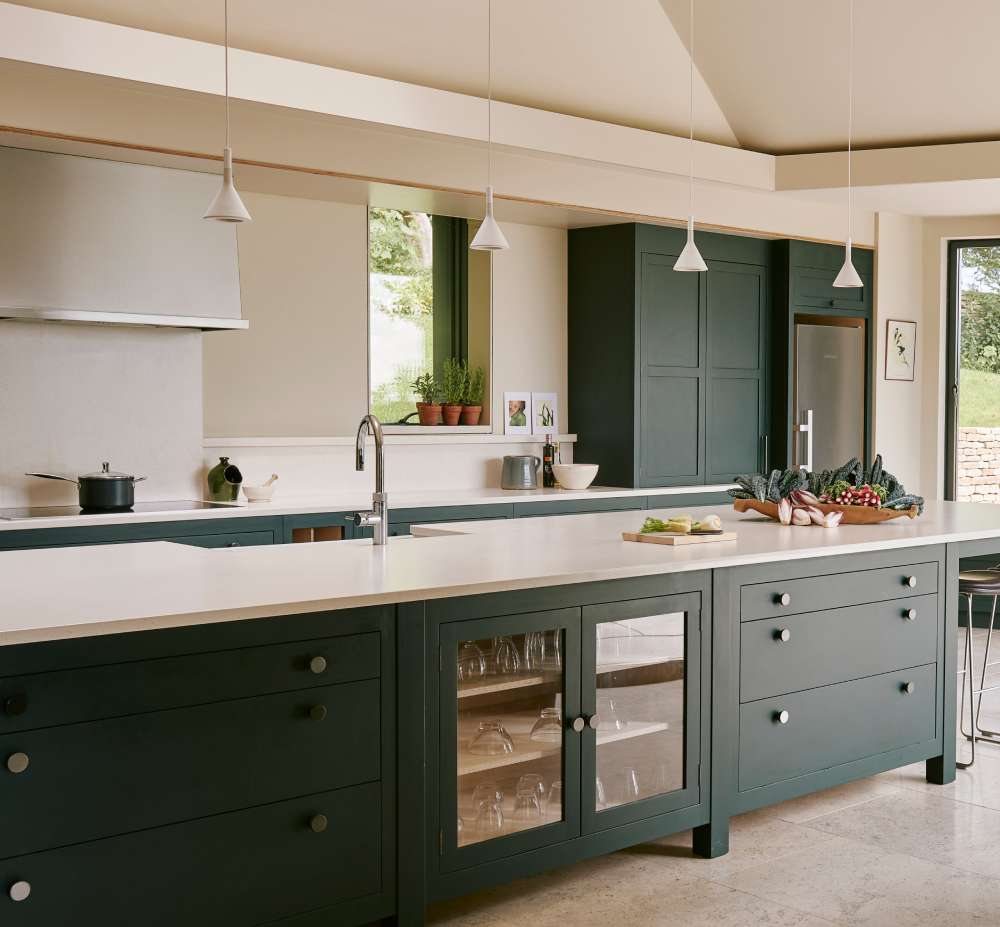
A teal kitchen island does something most kitchen colors cannot: it holds its ground between blue and green without committing to either.
That balance is exactly why teal kitchen islands have moved from niche choice to one of the most searched island color decisions in residential kitchen design.
But picking the right teal shade, countertop, hardware finish, and lighting is tricky. Get one element wrong and the whole thing falls flat.
This guide covers everything, from defining the teal color range and matching it to your kitchen style, to sizing, seating, paint methods, and where to buy at every budget.
What Is a Teal Kitchen Island

Image source: Studio 6 Architects
A teal kitchen island is a painted or factory-finished island unit that falls within the blue-green color spectrum, typically ranging from hex #008080 (pure teal) through muted, dusty variants near #2E8B8B. It sits at the exact midpoint between blue and green, which is what makes it behave so differently from either color alone in a kitchen setting.
Charlotte Cosby, head of creative at Farrow & Ball, described teal as “a very balanced, versatile shade that shifts between blue and green in varying levels of light.” That light-responsiveness is the whole point. A teal island reads cooler in north-facing kitchens and richer in rooms with direct afternoon sun.
Teal is not the same as duck egg blue, peacock blue, or sage green, even though all four appear in similar color families. The distinction matters when selecting paint.
- Duck egg blue: softer, more pastel, less green in the mix
- Peacock blue: deeper, more saturated, closer to jewel-tone territory
- Sage green: warmer undertone, no blue presence worth noting
- Teal: equal blue-green balance, often with a cool gray undertone in muted versions
Benjamin Moore lists Aegean Teal 2136-40 and Newburg Green as two of its most-used teal-adjacent cabinet colors. Sherwin-Williams Tidewater and Farrow & Ball Mizzle cover the muted, grayed-teal end of the range. These are not interchangeable; each shifts differently depending on your lighting and perimeter cabinet color.
Finish type affects how the color reads. Matte teal appears earthier and more restrained. Satin teal picks up light and looks cleaner. Two-tone configurations, where the island is teal and the upper cabinets are white or greige, are the most common way this color enters a kitchen without overwhelming the space.
The 2024 Houzz Kitchen Trends Study found that blue remains a top pick for contrast island cabinets at 25%, with green-toned islands (which includes teal) jumping from 5% to 10% year over year. That shift reflects growing confidence in bold island color choices.
What Styles Work Best With a Teal Kitchen Island

Image source: S / Wiley Interior Photography
Teal kitchen islands fit 4 distinct kitchen styles well. Outside these, the color tends to clash with existing design logic rather than complement it.
The 2024 Houzz Kitchen Trends Study reported that 54% of homeowners use their island for entertaining post-renovation. That shift toward the island as a social centerpiece explains why bold island colors have gained traction. A teal painted island draws attention in a way white or gray simply does not.
| Kitchen Style | Teal Variant That Works | Key Pairings |
|---|---|---|
| Farmhouse | Muted, dusty teal | Shiplap, open shelving, brass hardware |
| Coastal | Lighter, soft teal | Natural rattan stools, white subway tile |
| Modern | Deep, saturated teal | Flat-front drawers, matte black fixtures |
| Transitional | Gray-toned muted teal | White perimeter cabinets, quartz countertops |
Farmhouse Teal Island
Best teal variant: muted, dusty teal (Farrow & Ball Mizzle or similar).
Farmhouse kitchens work with teal because the style already leans on contrast and collected character. Teal against white shiplap is one of the cleaner two-tone combinations in this category. Brass hardware pulls the warmth back in and stops the island from reading too cold.
Open shelving above the perimeter cabinets pairs well here. The visual breathing room offsets the color weight of a teal island. A farmhouse sink integrated into the teal island reinforces the farmhouse design language without requiring additional accent colors.
Modern Teal Island
Deep teal with flat-front Shaker or slab-door drawers. That is the combination.
Matte black hardware only. Chrome or brushed nickel reads too cool against most saturated teal tones and creates an unresolved contrast. Matte black creates a sharp, intentional line between the island surface and the hardware without competing with the color itself.
This version of a teal kitchen island suits modern kitchen design because teal functions as the single accent in an otherwise restrained palette. White or concrete-look quartz countertops complete the look. Skip decorative corbels or molding detail. Keep the island geometry clean.
Coastal Teal Island

Image source: Jennifer Chapman Designs
Lighter teal, not dusty and not jewel-toned. Think Benjamin Moore Oasis Blue territory.
- White subway tile backsplash on the perimeter
- Natural rattan or whitewashed wood bar stools
- Soft white quartz or honed marble countertop
This combination fits coastal interior design because the lighter teal references sea glass and ocean tone without copying them directly. It reads fresh, not themed. Avoid dark hardware here. Brushed gold or unlacquered brass keeps the warmth calibrated.
What Colors Pair With a Teal Kitchen Island
Teal is one of the more forgiving accent colors in a kitchen, but only if the surrounding palette is resolved before the island color is chosen. It does not fix a poorly coordinated kitchen. It amplifies whatever is already there.
According to Homes & Gardens, teal “pairs well with warm neutrals” and works “beautifully on cabinetry when combined with warm wood tones.” That warm-cool tension is the entire design logic behind a teal painted island in a kitchen with natural wood floors or butcher block.
Wall Colors That Work
Three wall colors consistently work with teal island cabinetry:
- Benjamin Moore Chantilly Lace: pure white, no yellow cast, high contrast without harshness
- Warm greige (agreeable gray territory): softens the cool island tone, reads more collected
- Soft black or deep charcoal: high-impact, suits modern teal island kitchens only
Avoid cool gray walls. They compete with the blue component of teal and flatten both colors. The range of colors that pair with teal is wider than most people expect, but cool grays are a consistent problem pairing in this specific context.
Countertop and Hardware Pairings

Image source: Ashli Mizell Inc.
Countertop choice does a lot of work here. The wrong surface pulls the teal in an unintended direction.
| Countertop | Effect With Teal | Best Style Match |
|---|---|---|
| Butcher block | Warm contrast, grounding | Farmhouse, transitional |
| White quartz (Calacatta) | Clean, graphic contrast | Modern, coastal |
| Honed Carrara marble | Softer finish, less visual tension | Transitional, coastal |
| Soapstone | High-contrast, sophisticated | Modern, farmhouse |
| Concrete | Matte texture matches matte teal finishes | Modern, industrial |
For hardware: brass and unlacquered brass are the most versatile finish with teal. Matte black works in modern contexts. Brushed gold suits muted or gray-toned teal. Chrome and polished nickel tend to read cold alongside teal’s green component and are best avoided.
A teal kitchen island also pairs well with blue cabinetry and gold hardware combinations, particularly when the perimeter cabinets carry a related blue-green tone and the island is the deeper, more saturated version.
What Size Teal Kitchen Island Fits Different Kitchen Layouts
Getting island size wrong is one of the most common kitchen planning mistakes. The National Kitchen & Bath Association (NKBA) recommends a minimum work aisle width of 42 inches for one cook and 48 inches for multiple cooks. These are non-negotiable clearances. The island dimensions come after these numbers are confirmed, not before.
The 2024 Houzz Kitchen Trends Study found that 42% of homeowners chose islands 7 feet or longer, up 10 points since 2020. That trend toward larger islands is real, but it only works in kitchens with the square footage to support the clearance requirements around them.
Small Teal Kitchen Islands

Image source: Diespeker Terrazzo & Marble
Dimensions: 24 x 36 inches to 30 x 48 inches.
These fit kitchens under 150 square feet, including galley kitchens with at least 12 to 13 feet of total width. A small teal freestanding island is the most practical entry point here. IKEA HEMNES and VADHOLMA are two commonly used freestanding bases in this size range.
One thing worth knowing: lighter teal tones are better in smaller kitchens. A very saturated or deep teal island in a compact space advances visually and makes the room feel tighter. Muted, grayed teal reads as an accent without adding perceived weight.
Medium Teal Kitchen Islands
36 x 60 inches to 48 x 72 inches. Best for L-shaped and U-shaped kitchens between 150 and 250 square feet.
- Supports 2 to 3 bar stools (24 inches of width per seat, per NKBA guidelines)
- Can accommodate an integrated sink or prep area
- Most common size for built-in teal kitchen islands
This is the sweet spot for a kitchen island with seating on two sides, where the teal cabinetry becomes a genuine design centerpiece and not just a color experiment.
Large Teal Kitchen Islands
48 x 84 inches and above. Open-plan kitchens over 250 square feet only.
At this scale, a teal painted island takes on a furniture-like presence in the room. Deep, saturated teal works better here because the island has the visual mass to carry it. A large luxury kitchen format often uses this scale of island as the primary focal point, with the rest of the design playing a supporting role. Integrated plumbing, seating overhangs, and wine fridges are standard additions at this size.
What Countertop Materials Work on a Teal Kitchen Island

The countertop surface does more work than people expect on a teal island. It either reinforces the color story or creates an unresolved visual conflict. Five countertop materials consistently work. Several do not.
Butcher Block
The most popular pairing with teal. Warm wood tones against a cool-green cabinet create the contrast that makes a two-tone kitchen island look intentional rather than accidental.
The relationship between green-toned cabinetry and butcher block countertops follows the same logic as teal: warm wood against a cool-green base creates resolution. It works for farmhouse and transitional teal islands specifically.
White Quartz
Best performance choice for modern and coastal teal islands.
Calacatta-style and Carrara-style quartz keep the surface clean without adding the maintenance demands of natural marble. They contrast sharply with deep teal, which is exactly what modern kitchen island design requires.
Honed Marble and Soapstone
Honed Carrara marble reduces the visual tension between surface and cabinet color. The matte finish softens the contrast without eliminating it.
Soapstone takes a different approach. Its dark gray surface creates a high-contrast pairing that suits sophisticated, design-forward teal kitchen islands. Less common than quartz but more distinctive. Works particularly well with contemporary kitchen island formats where the countertop is meant to read as a design element.
What to Avoid
Heavily veined multicolor granite and busy quartzite patterns. Both compete with teal for attention and create a visually noisy surface. The island color and the countertop pattern end up fighting each other. Pick one to lead and let the other support it.
What Hardware Finishes Suit a Teal Kitchen Island

Hardware finish is the detail that confirms or undercuts the island’s design logic. Get it wrong, and the teal reads cold or unresolved. Four finishes work consistently with teal cabinetry.
In 2024, personalized hardware emerged as a clear kitchen trend, with homeowners moving away from standard chrome toward “bold gold, gleaming silver, and mixed metallic accents” (Seacoast Cabinets, 2024). That shift directly benefits teal island design, where warmer metal finishes outperform cooler ones.
Brass and Unlacquered Brass
The most versatile choice. Adds warmth that the teal needs, works across farmhouse, coastal, and transitional teal island styles.
Unlacquered brass develops a patina over time. That aged quality works better with muted, earthy teal tones than with bright or saturated ones. Standard lacquered brass stays consistent and suits more polished kitchen finishes. Both outperform every other metal finish on teal cabinetry.
Matte Black
Best for modern teal islands. Creates a sharp, graphic contrast without adding warmth.
A common pairing in green and teal cabinetry with black hardware combinations. Works with both light and deep teal tones, making it the most flexible choice for modern-leaning kitchens where brass would feel out of place.
Brushed Gold and Antique Copper
Brushed gold: softer than brass, suits muted or gray-toned teal islands. Bridges the gap between warm and cool without the boldness of unlacquered brass.
Antique copper: heritage-specific. Use only with farmhouse teal islands where the design language already includes aged or patinated materials. Outside farmhouse context, it reads as a style mismatch.
Freestanding Teal Kitchen Islands vs. Built-In Teal Kitchen Islands

Image source: Supple Homes, Inc
The structural type changes the cost, installation requirements, and how permanent the commitment to teal actually is. These are not equivalent choices.
According to Remodeling’s 2024 Cost vs. Value Report, minor kitchen updates return an average ROI of 96%, while major kitchen overhauls return closer to 50%. A freestanding teal island sits firmly in the minor update category. A custom built-in teal island is a major renovation decision.
Freestanding Teal Kitchen Islands
Movable. Lower cost range of $300 to $2,500. No plumbing or electrical integration.
- Best for renters and temporary spaces
- IKEA HEMNES and VADHOLMA: most-used freestanding bases at this price point
- Can be painted teal after purchase, which expands color options
- Limited countertop size; most freestanding islands cap at 48 inches in length
The tradeoff is stability. Freestanding islands shift over time in high-traffic kitchens and cannot integrate a sink or cooktop without structural anchoring. For a teal kitchen island that serves primarily as a prep surface and visual accent, freestanding is a completely viable option.
Built-In Teal Kitchen Islands
Cost range: $1,500 to $10,000 and above for custom or semi-custom builds. Integrated plumbing and electrical are possible. The island becomes a fixed part of the kitchen.
Custom built-in teal islands through brands like KraftMaid or Waypoint Living Spaces allow full control over door style, drawer configuration, and finish. This is where a farmhouse sink integrated into a teal island becomes a real option, or where a wine fridge within the island base makes functional sense.
For resale value, a built-in teal island contributes more than a freestanding one, but only if the color and design remain current at the point of sale. The 2024 NAR/NARI Remodeling Impact Report noted kitchen upgrades earn a perfect 10/10 satisfaction score. Built-in islands that anchor a well-designed kitchen contribute to that satisfaction directly.
How Teal Kitchen Islands Are Finished and Painted

A teal finish can be applied to a kitchen island 3 ways: factory-painted cabinetry, professional spray application in a workshop, or DIY brush-and-roller painting. The method changes the durability, finish quality, and color options available to you.
Sherwin-Williams recommends their Extreme Bond Primer paired with Emerald Urethane Trim Enamel for kitchen island painting projects. Benjamin Moore’s equivalent combination is Fresh Start High-Hiding Primer with Advance Interior Paint. Both are self-leveling formulas, which matters on flat-front cabinet doors where brush marks are most visible.
Factory-Painted and Workshop-Sprayed Finishes
Factory-painted: most consistent finish, applied in controlled conditions, limited to the manufacturer’s available teal options.
Workshop spray: professional painter applies teal off-site using HVLP equipment. Wider color range, including custom mixes. Smoother than brush-and-roller and closer to factory quality. This is how most professional kitchen repaints are done.
The color options here are broad. Benjamin Moore Aegean Teal 2136-40 and Newburg Green are two widely used teal shades in professional cabinet finishing. Farrow & Ball Mizzle covers the muted, gray-toned teal end of the range.
DIY Brush-and-Roller Painting
Achievable, but tricky on raised-panel or flat-front doors where surface imperfections show clearly.
4-step primer sequence that actually matters:
- Degrease the island surface with a TSP cleaner before any sanding
- Sand with 100 to 150-grit to scuff the existing finish, then wipe clean
- Apply oil-based primer for MDF or previously stained wood; shellac primer for tough stains
- Sand again with 220-grit after primer dries, then apply teal paint in 2 thin coats
According to Benjamin Moore’s cabinet painting guide, paint needs at least 24 hours drying time before reinstallation, with 2 to 3 days recommended for a fully cured, chip-resistant finish. Rushing this step is the most common reason painted island finishes fail in the first year.
What Lighting Works Above a Teal Kitchen Island

Image source: Fran Kerzner- DESIGN SYNTHESIS
Pendant lighting above a teal island does two jobs at once: it provides task lighting for prep work and reinforces the island’s role as the kitchen’s focal point. Getting the finish and scale wrong undercuts the color choice below it.
The standard hanging height for kitchen island pendants is 30 to 36 inches above the countertop surface, per design guidelines from Golden Lighting and Residence Supply. Below 30 inches creates a visual barrier across the island. Above 36 inches reduces task lighting effectiveness on the work surface.
Pendant Finish Pairings for Teal Islands
Brass and gold pendants are the most popular pairing. The warm-cool contrast between the metal and teal cabinetry is intentional and consistent with the hardware logic covered earlier.
Matte black pendants suit modern teal islands where everything else in the kitchen follows a restrained, graphic palette. They pair with pendant lighting styles that feature clean geometric shapes rather than decorative elements.
Rattan and wicker pendants work only in coastal and farmhouse contexts. Outside those two styles, they read as a style mismatch with teal.
Scale and Quantity Rules
Pendant diameter formula: subtract 12 inches from the island width. The result is your maximum pendant diameter per fixture (Residence Supply, 2024).
- Islands under 5 feet: one oversized pendant centered over the island
- Islands 6 to 7 feet: two pendants, spaced evenly with at least 18 inches between fixtures
- Islands 8 feet and above: three pendants for even light distribution across the full prep surface
Bulb temperature matters with teal. Use 2700K to 3000K warm white bulbs. Cooler color temperatures (4000K and above) push the teal toward blue and flatten the color. Warm white light holds the teal-green balance that makes the color work in the first place.
Teal Kitchen Island Ideas by Budget

Image source: Rae Duncan Interior Design | RDID
Minor kitchen remodels return an average ROI of 113% nationally, according to the 2026 Zonda Cost vs. Value Report. A teal kitchen island, when executed at the right price point for your kitchen’s overall value, falls comfortably within minor update territory.
The 3 budget tiers below reflect real price ranges from current retailers and custom cabinet builders.
| Budget Tier | Price Range | Best Sources | Teal Finish Method |
|---|---|---|---|
| Entry | Under $500 | IKEA, Wayfair, secondhand furniture | DIY paint after purchase |
| Mid-range | $500 to $2,500 | Home Depot, World Market, Pottery Barn | Pre-finished or workshop spray |
| Custom | $2,500 and above | KraftMaid, Waypoint, local cabinet shops | Factory-painted, full color control |
Under $500 Teal Island Options
IKEA HEMNES and VADHOLMA are the most-used freestanding bases at this price point. Neither comes in teal from the factory, but both take paint well with the right primer preparation.
Best approach: buy unpainted or white, apply shellac primer, and finish with 2 coats of Benjamin Moore Aegean Teal or Sherwin-Williams Tidewater. Total project cost including paint and supplies stays well under $500 for a standard freestanding base.
$500 to $2,500 Mid-Range Options
Wayfair carries the widest in-stock selection of pre-finished colored islands at this price range. Color options vary by season, so teal availability is not guaranteed year-round.
Pottery Barn and World Market offer better finish quality than Wayfair at the higher end of this range, with more consistent hardware and door construction. The tradeoff is a smaller color selection and longer lead times for in-demand styles.
Custom Built-In Teal Islands
Above $2,500, local cabinet shops and semi-custom brands give full control over door profile, color, drawer count, and countertop edge detail.
This is where a teal island with a waterfall countertop edge becomes practical, or where a teal island with integrated open shelving can be specified to exact dimensions. Cost factors that shift pricing include sink rough-in, induction cooktop wiring, drawer count, and countertop material selection.
What Seating Fits a Teal Kitchen Island

Image source: Nathan Taylor for Obelisk Home
Stool height is set by the island surface height. The formula is fixed: subtract 10 to 12 inches from the counter height to get the correct seat height (Lowe’s, Whirlpool). Getting this wrong by even 2 to 3 inches makes seated dining noticeably uncomfortable.
The NKBA recommends 24 inches of seating width per stool. A 48-inch island supports 2 stools. A 72-inch island supports 3. Use counter length divided by 24 as your stool count starting point.
Counter Height vs. Bar Height Seating
Counter height (34 to 36 inches): most common for kitchen islands. Requires stools with a 24 to 26-inch seat height.
Bar height (40 to 42 inches): found in raised islands and home bar configurations. Requires stools with a 28 to 30-inch seat height. Better for separating the prep zone from the social zone in open-plan kitchens.
A teal island with a raised bar section is the most design-forward configuration at this seating height. The two-level surface creates a visual break that also hides prep mess from seated guests.
Stool Materials That Work With Teal
Natural wood stools are the strongest material contrast to teal cabinetry. Light oak and walnut both work. Whitewashed wood suits coastal teal islands specifically.
Black metal stools suit modern teal islands where everything else in the kitchen follows a hard-edge, graphic aesthetic.
For upholstered seats: cream, cognac leather, and natural linen are the 3 safest fabric choices. Avoid busy patterns. The teal island already carries enough visual information. The stool fabric should support it, not compete with it.
Where to Buy a Teal Kitchen Island

Image source: Buckenmeyer Architecture
Six purchase channels cover the full range from budget freestanding to custom built-in. No single source is best across all budgets and kitchen types. The right channel depends on whether you need a finished product, a paintable base, or a fully custom build.
The 2024 Houzz Kitchen Trends Study found that kitchens and guest bathrooms were the most popular renovation categories at 24% each. That demand drives a competitive retail market with real differences in quality, lead time, and customization between channels.
Online Retailers
Wayfair has the widest in-stock selection of pre-painted teal islands across multiple price points. Quality varies significantly by brand within the platform. Read reviews on construction material specifically: particle board versus solid wood versus MDF makes a real difference in long-term durability.
IKEA is the strongest budget option for paintable bases. The HEMNES and VADHOLMA lines are structurally sound and widely recommended for DIY teal paint projects. Lead times are predictable and return policies are straightforward.
Mid-Range and Specialty Retailers
Pottery Barn and Williams Sonoma Home offer better construction quality than Wayfair at the $800 to $2,500 range. Teal availability is seasonal. Worth checking during sale periods for the best value.
World Market carries island options at the lower end of this tier with a broader color selection than most mid-range retailers, including some teal and teal-adjacent finishes in their regular rotation.
Home Improvement Stores and Custom Shops

woImage source: Jordan Design Studio, Ltd.
Home Depot and Lowe’s carry ready-to-assemble islands with inconsistent teal availability. Best used as a source for paintable white or wood-tone bases that you finish yourself.
Local cabinet shops are the right source for built-in islands constructed from standard cabinet carcasses. They offer the highest quality control, full color customization including any teal shade you specify, and the longest lead times (typically 6 to 12 weeks). Etsy custom furniture makers fill the same role at lower price points for simpler island configurations without plumbing or electrical integration.
FAQ on Teal Kitchen Islands
What colors go with a teal kitchen island?
White, warm greige, and soft black wall colors all work well. For countertops, butcher block and white quartz are the strongest pairings. Brass and unlacquered brass hardware complete the combination better than chrome or polished nickel.
Is teal a good color for a kitchen island?
Yes. Teal sits at the midpoint between blue and green, making it one of the more versatile accent colors for a painted kitchen island. It works across farmhouse, coastal, modern, and transitional kitchen styles without requiring a full redesign.
What is the difference between teal and duck egg blue on a kitchen island?
Duck egg blue is softer and more pastel, with less green in the mix. Teal has equal blue-green balance, often with a cool gray undertone in muted versions. The two read very differently under kitchen lighting, particularly in north-facing rooms.
What countertop goes best with a teal kitchen island?
Butcher block adds warm contrast against the cool-green cabinet tone. White quartz, honed Carrara marble, and soapstone are the next strongest options. Busy multicolor granite competes with teal and is best avoided on a painted island.
How do I paint a kitchen island teal?
Degrease, sand with 100 to 150-grit, then apply oil-based or shellac primer. Follow with two thin coats of teal paint. Benjamin Moore Aegean Teal and Sherwin-Williams Tidewater are two reliable color choices for cabinetry finishing.
What size should a teal kitchen island be?
Small islands run 24 x 36 to 30 x 48 inches. Medium islands fit most kitchens at 36 x 60 to 48 x 72 inches. Always confirm 42 to 48 inches of clearance around the island before finalizing dimensions, per NKBA guidelines.
What hardware looks best on a teal kitchen island?
Brass and unlacquered brass are the most versatile finish across all teal tones. Matte black hardware suits modern kitchens specifically. Brushed gold works with muted, gray-toned teal. Chrome and polished nickel consistently underperform against teal’s green undertone.
Can I have a teal island with white cabinets?
Yes. This is one of the most common two-tone kitchen configurations. White perimeter cabinets with a teal island create contrast without overwhelming the space. Benjamin Moore Chantilly Lace is the most-used white in this pairing.
What pendant lights work over a teal kitchen island?
Brass and gold pendants are the strongest match. Hang them 30 to 36 inches above the countertop. Use 2700K to 3000K warm white bulbs. Cooler bulb temperatures push the teal toward blue and flatten the color under artificial light.
Where can I buy a teal kitchen island?
Wayfair has the widest in-stock selection. IKEA HEMNES and VADHOLMA work as paintable freestanding bases. Pottery Barn and World Market cover the mid-range. Local cabinet shops and custom builders are the right source for built-in teal kitchen islands.
Conclusion
This conclusion is for an article presenting the full picture of what makes a teal painted island work in a real kitchen, from color definition and countertop selection through sizing, hardware, and finish method.
The decisions are connected. A muted duck egg tone behaves differently than a deep, saturated peacock blue-green, and each demands a different countertop, stool material, and pendant finish.
Get the clearance dimensions right. Match the Shaker cabinet style to your perimeter cabinets. Choose butcher block or white quartz based on your kitchen’s warmth balance, not trend alone.
Whether you buy a freestanding IKEA base and paint it Aegean Teal, or commission a custom built-in through a local cabinet shop, the approach is the same: resolve the details first, then commit to the color.

- Paint Colors That Go with Gray Floors - August 20, 2026
- What Color Bedding Goes with Dark Wood Furniture - August 18, 2026
- What Color Walls Go with Oak Floors - August 16, 2026